
India’s presence at Eurosatory, the world’s largest exhibition
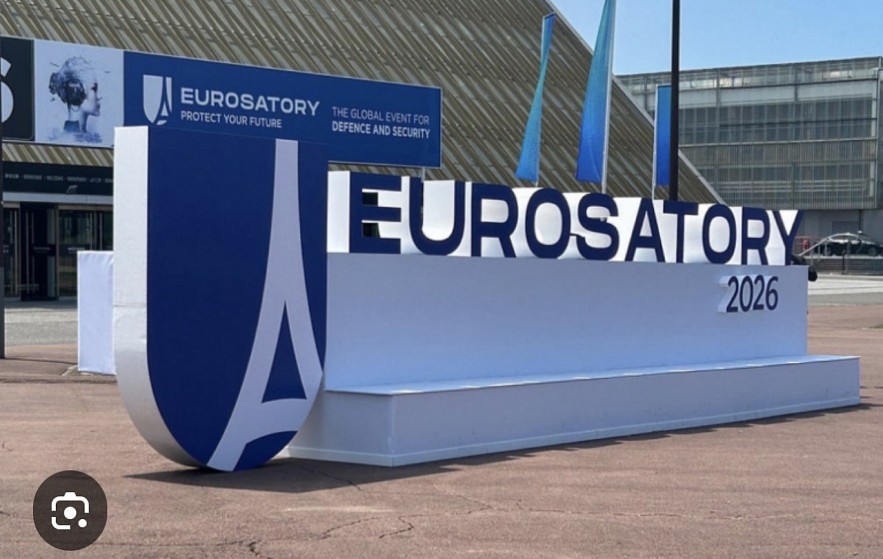 |
The exhibition halls of Paris-Nord Villepinte have long served as a showcase for the world’s most advanced military technologies.
In 2026, amid more than 2,000 exhibitors representing over 60 countries, India’s pavilion stood out not simply for its scale but for the confidence with which it presented a rapidly evolving defence industry.
India’s participation in Eurosatory 2026 reflected a broader transformation in its defence manufacturing sector.
Backed by indigenous innovation, expanding export capabilities, and increased collaboration between public and private sectors, the country showcased an impressive portfolio of advanced defence technologies designed not only for domestic requirements but also for global markets.
The exhibition highlighted how India is steadily strengthening its position as an emerging supplier of sophisticated defence systems, reinforcing the country’s growing role in the international defence ecosystem.
A stronger presence on global defence stage
Held at the Paris-Nord VillepinteExhibition Centre near Charles de Gaulle Airport, Eurosatory remains the premier international platform for land and air-land defence technologies.
The 2026 edition brought together more than 2,000 exhibitors from 61 countries, attracting defence ministries, armed forces, procurement agencies and industry leaders from across the world.
India’s representation was among its strongest ever. Thirty-one entities, including the Ministry of Defence, participated in the exhibition, presenting a wide spectrum of indigenous capabilities.
The delegation included prominent organisations such as the Defence Research and Development Organisation (DRDO), Bharat Electronics Limited (BEL), Kalyani Strategic Systems Limited (KSSL), Tonbo Imaging, SMPP, MKU Ltd, Ashoka Manufacturing, Armoured Vehicles Limited and Mech Components.
The scale of participation reflected India's expanding industrial capabilities as well as its ambition to become an increasingly important contributor to the global defence supply chain.
Rather than focusing on individual products alone, the Indian pavilion projected the breadth of a defence ecosystem that now encompasses research, design, manufacturing, electronics, armoured systems, surveillance technologies, ammunition and protective equipment.
Indigenous innovation takes centre stage
One of the strongest messages emerging from India's participation was the growing maturity of indigenous defence innovation.
DRDO showcased several advanced systems developed within India, including the Pinaka long-range guided rocket system, the Very Short Range Air Defence System (VSHORAD), the Advanced Lightweight Torpedo and the Rudramanti-radiation missile.
Together, these systems illustrated India's expanding capabilities across multiple operational domains, including missile technology, naval warfare and air defence.
The exhibition also highlighted India's advances in defence electronics, electro-optics, communications systems and modern battlefield technologies.
Indian manufacturers presented solutions ranging from surveillance equipment and electronic warfare systems to protective gear and specialised components.
The diversity of technologies on display demonstrated that India's defence manufacturing ecosystem has evolved well beyond conventional equipment production into a sophisticated network capable of delivering integrated technological solutions.
Public and private industry drive a common vision
India's exhibition strategy also reflected the increasingly collaborative nature of its manufacturing ecosystem.
The presence of both Defence Public Sector Undertakings and private manufacturers illustrates how the country's industrial base has diversified over recent years.
Public institutions continue to provide strong research and manufacturing capabilities, while private companies are increasingly contributing innovation, specialised engineering and export-oriented production.
Companies such as Tonbo Imaging have established expertise in advanced electro-optical technologies, while Bharat Electronics Limited continues to expand its portfolio in communications, surveillance and electronic warfare systems.
Similarly, firms specialising in armoured mobility, ballistic protection, military textiles and precision engineering showcased products designed to meet international standards.
The combination of public-sector research capabilities and private-sector manufacturing has created a more comprehensive defence ecosystem capable of addressing increasingly sophisticated global requirements.
Exports reflect expanding international confidence
India's strong presence at Eurosatorycomes against the backdrop of rapidly expanding defence exports.
According to official figures, India's defence exports reached a record ₹38,424 crore during Financial Year 2025-26, representing a remarkable 62.66 percent increase over the previous year.
At the current exchange rate of ₹94 to one US dollar, this amounts to approximately USD 4.09 billion, underscoring the growing international demand for Indian-made defence equipment.
Defence Public Sector Undertakings contributed approximately USD 2.24 billion in exports, while private companies accounted for around USD 1.85 billion, reflecting balanced growth across both segments of the industry.
Indian products are now exported to more than 80 countries, while the number of authorised exporters has increased from 128 to 145 within a single year.
These figures demonstrate the growing acceptance of Indian technologies across international markets and illustrate the increasing competitiveness of India's manufacturing sector.
Strengthening international partnerships
Beyond showcasing products, exhibitions such as Eurosatory play an important diplomatic and commercial role.
The event provides Indian companies with opportunities to engage directly with procurement agencies, officials and industry representatives from across Europe, the Middle East, Africa and other regions.
Such interactions facilitate discussions on technology partnerships, industrial collaboration, joint production and long-term business relationships.
For India's industry, these engagements help expand market access while enhancing visibility among prospective international customers.
The exhibition also enables Indian manufacturers to demonstrate compliance with international standards, interoperability requirements and modern operational doctrines, all of which strengthen confidence among overseas buyers.
Supporting India's long-term defence vision
India's growing visibility at major international exhibitions reflects broader developments taking place within its defence sector.
Government policies encouraging indigenous manufacturing, greater participation by private industry, stronger research capabilities and export-oriented production have collectively contributed to the emergence of a more globally competitive ecosystem.
The increasing sophistication of Indian technologies is allowing manufacturers to participate in segments traditionally dominated by established global suppliers.
Simultaneously, expanding exports are strengthening industrial capabilities, encouraging further investment in research and development, and supporting the growth of advanced manufacturing across multiple sectors.
International exhibitions such as Eurosatory therefore serve not only as commercial platforms but also as indicators of the country's broader industrial transformation.
A confident global manufacturer
India's participation at Eurosatory 2026 highlighted the industry that is increasingly defined by technological capability, manufacturing excellence and international engagement.
As global demand for reliable and technologically advanced defence systems continues to evolve, India's expanding presence at leading international exhibitions reflects a country that is steadily establishing itself as a significant contributor to the global defence marketplace.






Popular article
 Economy
Microsoft consortium to build India-Southeast Asia undersea cable
 Economy
XTransfer Unveils New Malaysia Office
 Economy