
The 1946 General Election: A Choice Made by Leaders for the Nation’s Future
 | Vietnamese-origin Females Run for Local Elections in Belgium |
| 2024 US Presidential Election: Voters Focus on Economy, Social Security, and Housing |
- The significance of Vietnam’s first General Election in 1946 has been discussed many times. From your own perspective, beyond the values that have already been widely recognized, are there any new aspects that can be seen from today’s standpoint?
- Vietnam’s first General Election is an event that history has recorded in particularly bold strokes, especially in terms of its foundational values, such as establishing the legitimacy of the revolutionary state, affirming the sovereignty of the People, and opening the way for a constitutionally legitimate representative institution. However, viewed from today’s perspective, I believe this event also offers several additional aspects that merit deep reflection.
First, it reflects the institutional vision of a state born under extremely arduous circumstances. When independence was still fragile and the country faced threats from both within and without, the decision to organize a general election based on universal suffrage was not only a bold political move but also a demonstration of long-term vision: laying the foundations for a power structure based on authorization by the People, rather than on imposed force or purely revolutionary legitimacy. This is a highly relevant lesson today, when institutional reform must still move one step ahead to pave the way for development.
Second, the 1946 General Election shows that democracy is not a reward bestowed by wealth or stability, but a conscious choice made by leaders for the future of the nation. It reminds us that democracy is not something that “exists first and is practiced later,” but something that must be persistently built, safeguarded, and made increasingly substantive under the country’s specific conditions.
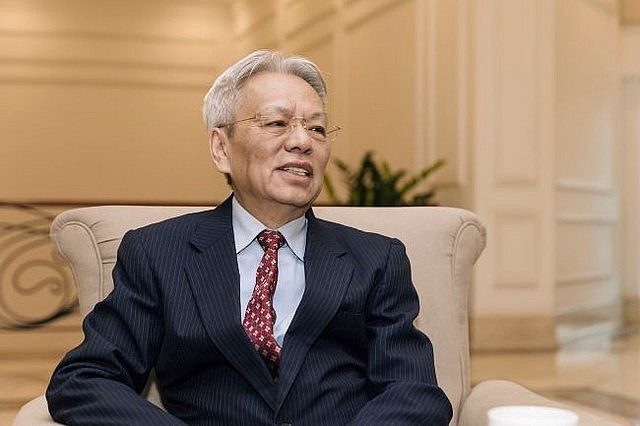 |
| Dr. Nguyen Si Dung: Fostering the spirit of the General Election is also about nurturing today’s democratic culture and civic responsibility |
Third, from today’s vantage point, I believe this event also poses a consistent and enduring requirement: democracy must be institutionalized, not merely affirmed in spirit. The formation of the Vietnamese National Assembly through the first General Election transformed the People’s power from a political–ethical value into a concrete operational structure of the state. This offers an important insight for current efforts to reform national governance: every aspiration and every slogan must be “anchored” in institutions and mechanisms for implementation.
It can be said that the most enduring value of the first General Election lies in the fact that it continues to illuminate the path toward perfecting a rule-of-law state, advancing democracy, and shaping the nation’s future in a new phase.
- Eighty years is not a short period of time, yet the spirit of the first General Election remains intact. In your view, what is the core, enduring content that we need to strengthen our awareness of inheriting and further cultivating?
- In my view, the most essential and enduring principle that needs to be inherited and vigorously fostered from the spirit of the first General Election is the principle that power belongs to the People and must be organized and exercised in a substantive manner.
Eighty years ago, the greatest value of the General Election did not lie merely in the fact that people held a ballot for the first time, but in the transformation of that ballot into a concrete representative institution, where the will of the People became the foundation of state power. That spirit has run throughout our constitutional and legislative history and remains fully relevant in today’s context.
Inheriting that spirit today is not simply about recalling history, but about continuously deepening the relationship between the People and the State: The People are not only those who confer power, but also those who exercise oversight, participate in, and benefit from the outcomes of national governance. This requires institutions, first and foremost the Vietnamese National Assembly, to constantly renew themselves so that they truly serve as a convergence point for the will, aspirations, and intellect of the entire people.
Fostering the spirit of the General Election therefore also means nurturing a democratic culture and a sense of civic responsibility, in which every major policy decision is closely linked to the interests of the People, and every step of development is measured by how well people are served, how much more their voices are heard, and how much greater trust they place in the system.
That is the most practical way for the spirit of the first General Election to remain vibrant in the present and to continue radiating into the future.
- As someone who has closely followed changes in the highest organ of state power, in your view, if distilled to their essence, what major transformations has the Vietnamese National Assembly undergone in the field of lawmaking over the long course of its development?
- If distilled to their essence, I believe that in the field of lawmaking, the Vietnamese National Assembly has experienced three major, foundational transformations throughout its development.
First is the shift from situational lawmaking to systematic and strategic lawmaking. In the early stages, legislation primarily served immediate needs, such as safeguarding the nascent government and organizing social life. Gradually, the National Assembly developed a programmatic and sector-based approach to lawmaking, closely aligned with the country’s long-term development strategies, especially from the Renewal (Doi moi) period to the present.
Second is a qualitative change in the very conception of lawmaking. Law is increasingly regarded not merely as a tool of administration, but as an institution that safeguards human rights and citizens’ rights, and creates an enabling environment for development. This is clearly reflected in the Constitution and many important laws that place people, enterprises, and the market at the center, while emphasizing the transparency, feasibility, and stability of the legal system.
Third is the professionalization of the legislative process and the expansion of participation in lawmaking. The National Assembly has placed growing emphasis on independent appraisal, policy critique, and broad consultation with experts, scientists, and those directly affected by legislation. As a result, lawmaking has gradually moved away from a closed process and has increasingly become one of policy dialogue.
It can be said that, from making laws primarily to “manage,” the National Assembly has been moving toward making laws to foster and enable development. This represents the most profound and enduring transformation in the legislative journey of the Vietnamese National Assembly.
- As the entire nation is about to enter a new National Assembly election, what needs to be done for the National Assembly to truly meet the aspirations and expectations of voters?
- In my view, for the Vietnamese National Assembly to genuinely meet voters’ aspirations and expectations in the new term, focus should be placed on three core tasks.
First, improving the quality of National Assembly deputies. Voters expect the National Assembly to be a convergence of intellect, integrity, and a strong sense of responsibility. Therefore, the process of selecting and nominating candidates must be more substantive, placing greater emphasis on legislative capacity, the ability to engage in policy debate, public-service ethics, and a spirit of service to the People, rather than relying mainly on structure or formality.
Second, undertaking a strong renewal of the National Assembly’s modes of operation. The National Assembly should continue shifting from “passing many laws” to “passing high-quality laws” that are stable, feasible, and predictable. Each law must clearly answer the questions: what real-life problems does it address, what obstacles does it remove for citizens and businesses, and whether it creates additional space for development.
Third, deepening the relationship between the National Assembly and voters. Listening should not stop at formal meetings, but must be translated into concrete legislative and oversight actions. When voters see their voices reflected in parliamentary debates and public policies, trust in the National Assembly will be sustainably strengthened.
In other words, meeting voters’ expectations is not achieved through promises, but through a National Assembly that is increasingly professional, close to the people, attentive to their voices, and willing to take responsibility. This is also the most practical way to carry forward the spirit of the first General Election in the country’s new context.
- The upcoming 14th National Congress of the Communist Party of Vietnam is a particularly important event, marking Vietnam’s entry into a new era of development. How should deputies of the 16th National Assembly perceive the responsibilities they bear?
- The 14th National Party Congress opens a new phase of national development, with higher, faster, and more sustainable requirements. In this context, deputies of the 16th National Assembly must be clearly aware that they are not merely undertaking an ordinary term of office, but are shouldering the responsibility of laying the institutional foundations for an entire era of development.
First and foremost is the responsibility to elevate the quality of legislation. Each law passed during this term should be viewed as a “foundation stone” for the country’s long-term future, ensuring stability, transparency, feasibility, and encouragement of innovation. Lawmaking should not be solely about management, but about opening pathways, unlocking resources, and protecting legitimate initiatives.
Next is the responsibility of oversight and accompaniment in the implementation process. In a new era of development, the gap between policy intentions and reality must be narrowed through effective oversight, candid policy dialogue, and a spirit of full accountability to voters.
Most importantly, deputies of the 16th National Assembly must embody, at the highest level, the awareness of representation and service to the People. Every legislative or oversight decision not only affects the present, but also shapes development opportunities for future generations.
Put succinctly, the greatest responsibility of deputies of the 16th National Assembly is to transform the development aspirations articulated at the 14th National Party Congress into concrete institutions, laws, and operational mechanisms, so that the new era is not merely a declaration, but becomes a vivid reality in the life of the nation.
- Thank you very much.
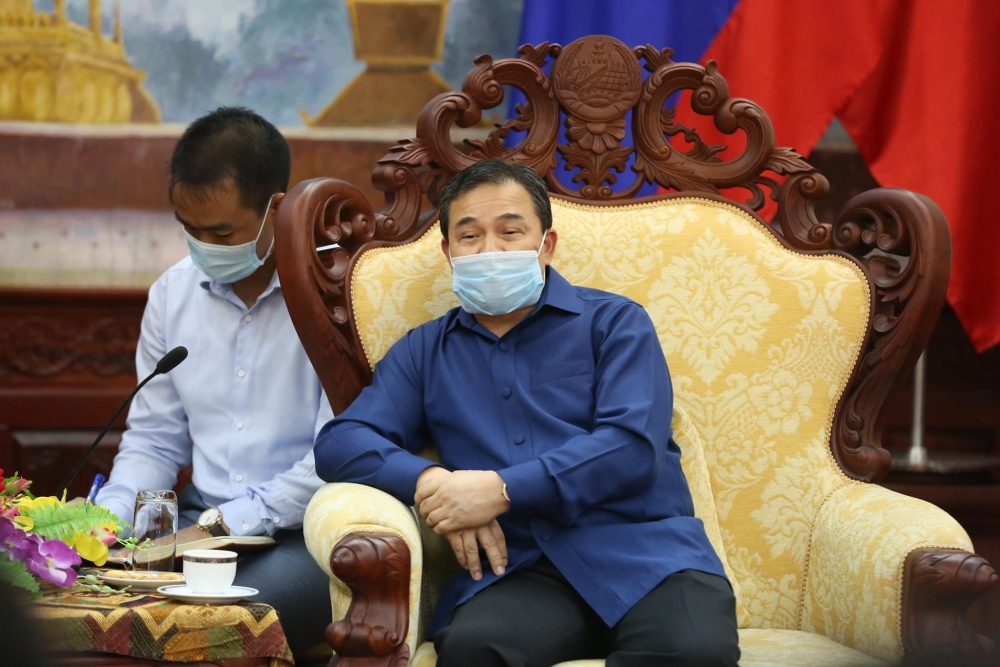 | Lao ambassador believes in success of Vietnam’s general elections Ambassador to Vietnam Sengphet Houngboungnuang expects Vietnam's elections, slated for May 23, to be a resounding success |
 | Elections demonstrate Vietnamese people's strength: top legislator The general elections have created a vivid illustration of the Vietnamese people’s strength. |





Related Stories
 National
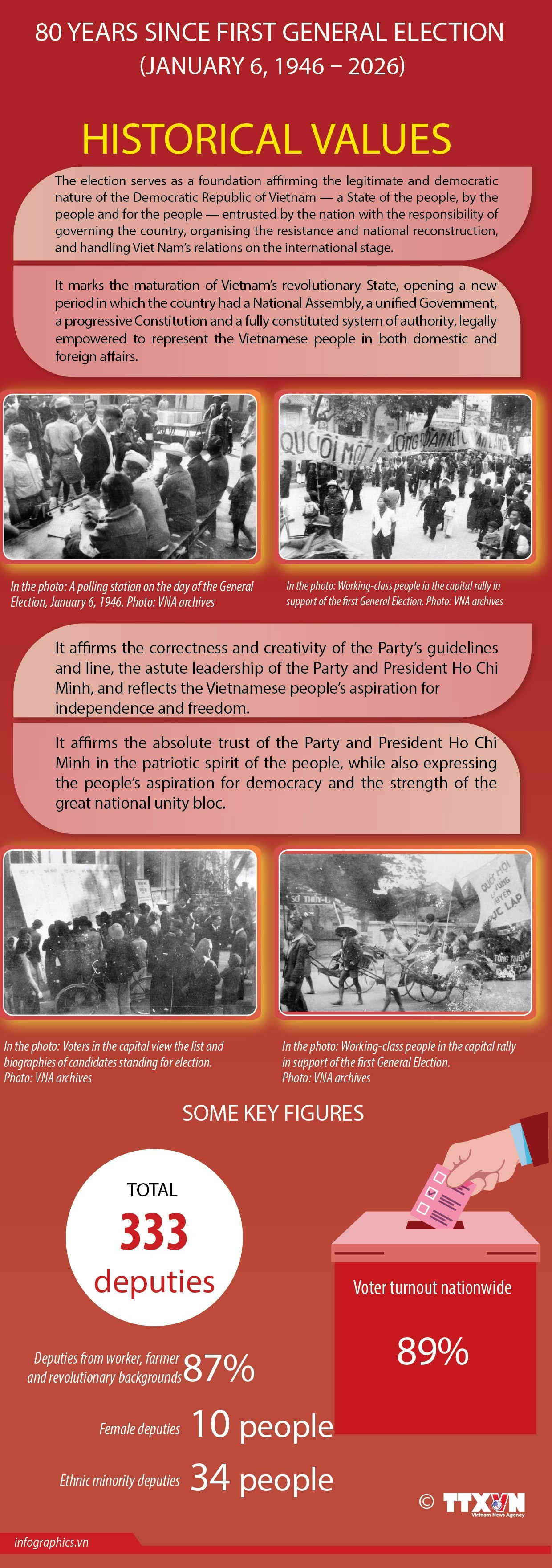
80 years of Vietnam’s first General Election
 National
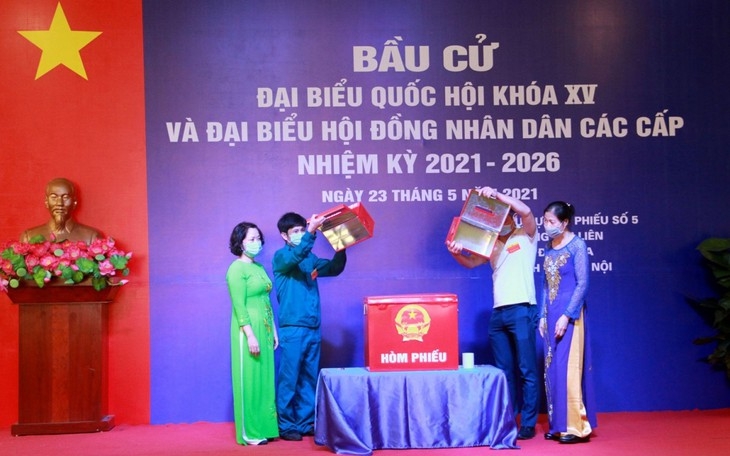
Elections demonstrate Vietnamese people's strength: top legislator
 Viet's Home
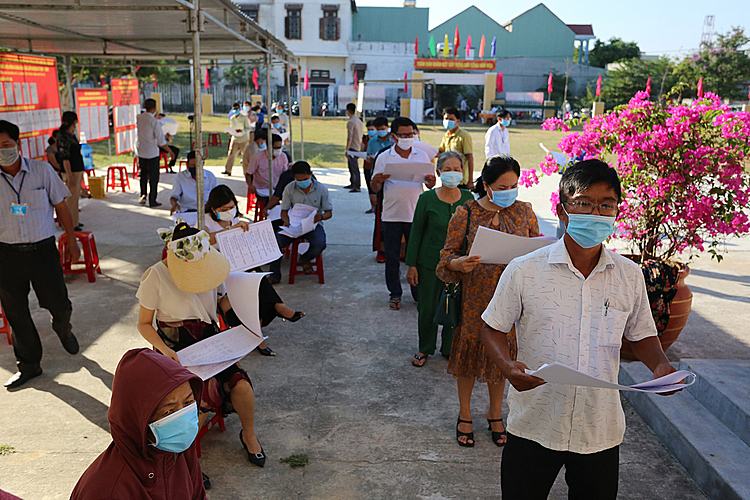
Voting begins in 80,000 polling stations nationwide
 Friendship
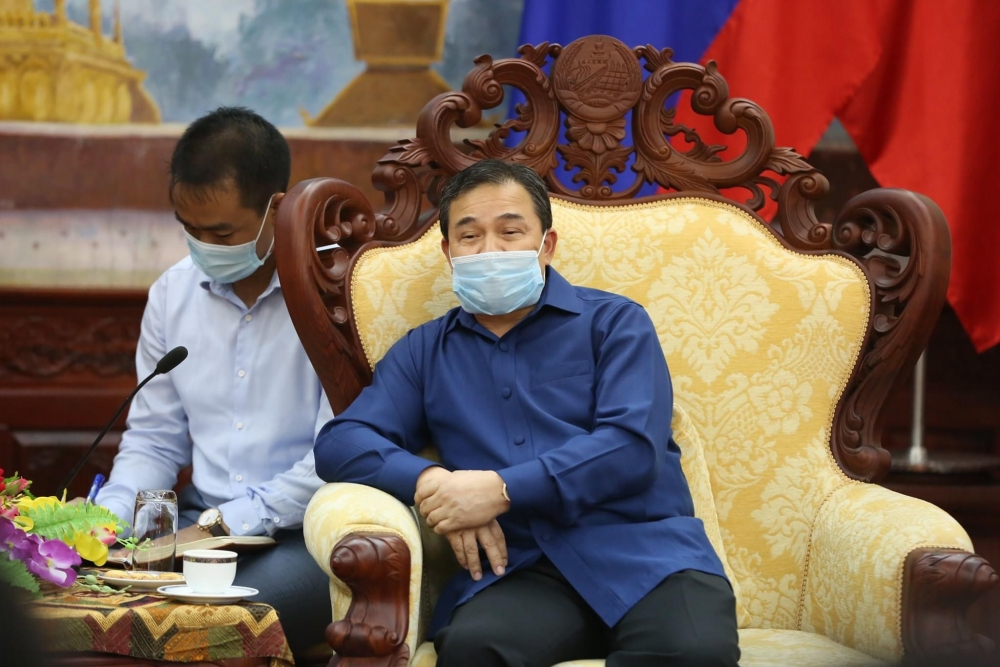
Lao ambassador believes in success of Vietnam’s general elections
Recommended
 National
Vietnam News Today (July 5): Vietnam Supports Global Efforts for Energy Efficiency at IEA Conference
 National
Vietnam News Today (July 4): International Tourist Arrivals to Vietnam Rise Nearly 15% in First Half of 2026
 National
500-Day Campaign: Hope of Reunion Through DNA Evidence
 National
Ho Chi Minh City Marks 50 Years with 3D Mapping Light Show
Popular article
 National
Full Remarks by General Secretary, President To Lam at 50th Anniversary of Sai Gon-Gia Dinh Named After President Ho Chi Minh
 National
New Advances in DNA Technology for Identifying Fallen Soldiers
 National
Foreign Affairs Should Better Serve National Development: Top Leader
 National