
Viet Nam-Philippines: Building Bridges Through Education
On October 1 in Hanoi, the Viet Nam-Philippines Friendship Association, in coordination with the Embassy of the Philippines in Viet Nam, held a roundtable titled “Effectiveness of Viet Nam-Philippines Educational Cooperation: 50 Years of Milestones and Future Directions.” The event took place in a year when the two countries celebrate the 50th anniversary of the establishment of diplomatic relations (1976-2026), as well as the elevation of bilateral ties to an Enhanced Strategic Partnership.
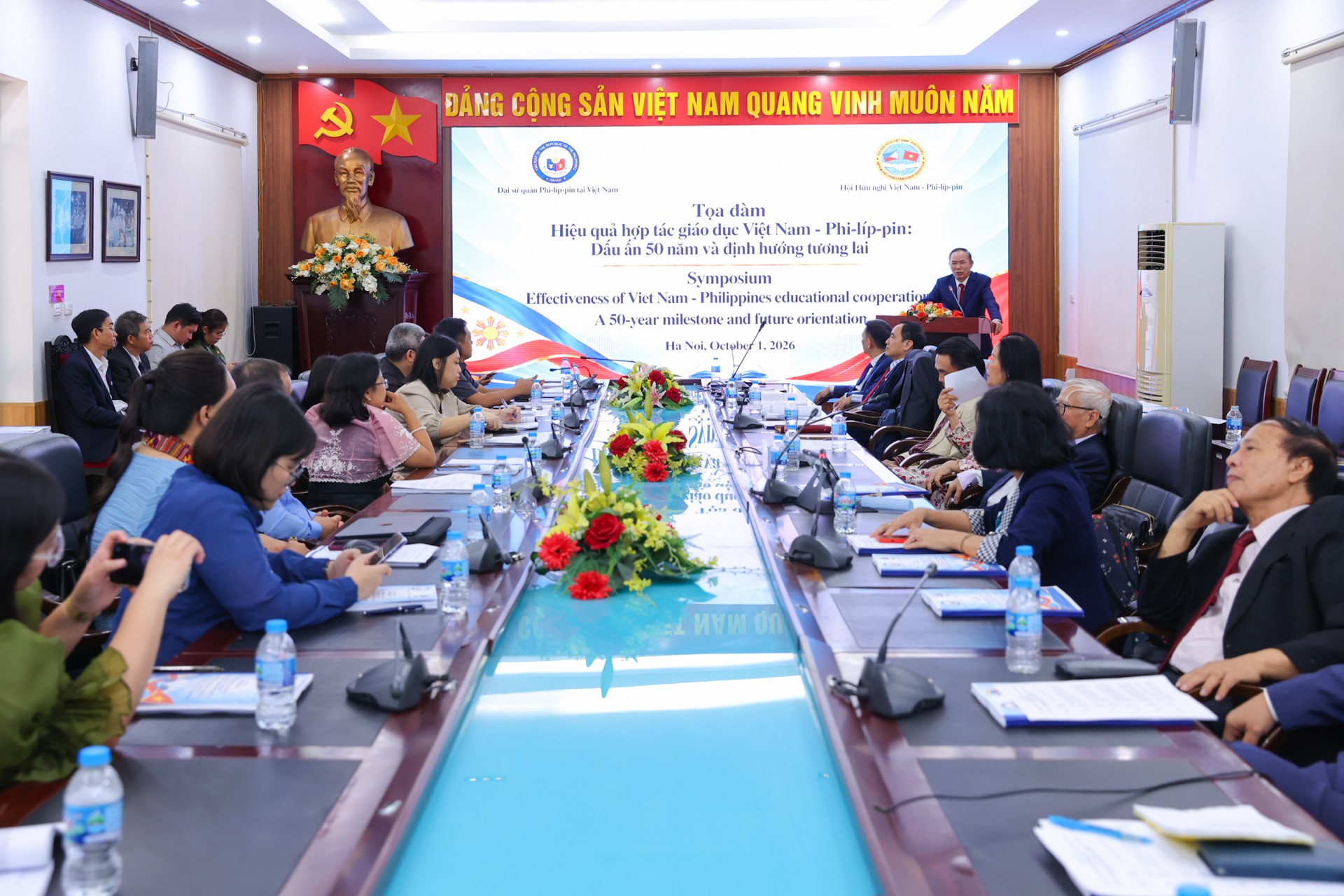 |
| Participants at the roundtable “Effectiveness of Viet Nam-Philippines Educational Cooperation: 50 Years of Milestones and Future Directions,” held in Hanoi on October 1, 2026. (Photo: Dinh Hoa) |
In his opening remarks, President of the Viet Nam-Philippines Friendship Association Phung Duc Tien said that, within the diverse cooperation between Viet Nam and the Philippines, education and training have consistently affirmed their role as a sustainable pillar and a profound humanitarian bridge connecting the intellect and hearts of the two peoples. He said the flow of knowledge between the two countries has become increasingly vibrant and reciprocal. For many years, the Philippines has been a destination for Vietnamese students and trainees pursuing training in English, management and vocational skills. Filipino students are also studying at various educational institutions in Viet Nam.
In the digital era and amid the trend of globalization, Phung Duc Tien said that the demand for developing high-quality human resources requires the two countries to further strengthen their traditional friendship. Educational cooperation should not stop at the achievements already made but should also open up new breakthroughs. He proposed expanding cooperation across educational levels, research and vocational skills training, while paying attention to equivalency recognition, credit transfer and mutual recognition of vocational skills certificates.
Philippine Ambassador to Viet Nam Francisco Noel R. Fernandez III said that an increasing number of Filipino students and graduate students are studying in Viet Nam, while Vietnamese young people continue to travel to the Philippines to study English and pursue university programmes. According to the Ambassador, living and studying in the other country helps young people gain a deeper understanding of its culture, identity and community. He emphasized that people are the “lifeblood” of relations between the two countries and the driving force behind people-to-people exchanges. Therefore, the two sides should continue creating opportunities and conditions to consolidate the achievements built over the past 50 years, translate high-level agreements into reality, and serve the development and prosperity of the peoples of both countries.
Learners become bridges between the two countries
Discussions at the roundtable focused on expanding opportunities for study, exchange and internships; strengthening connections between educational institutions and professional practice; and promoting the role of former international students and long-term cooperation networks between the two countries.
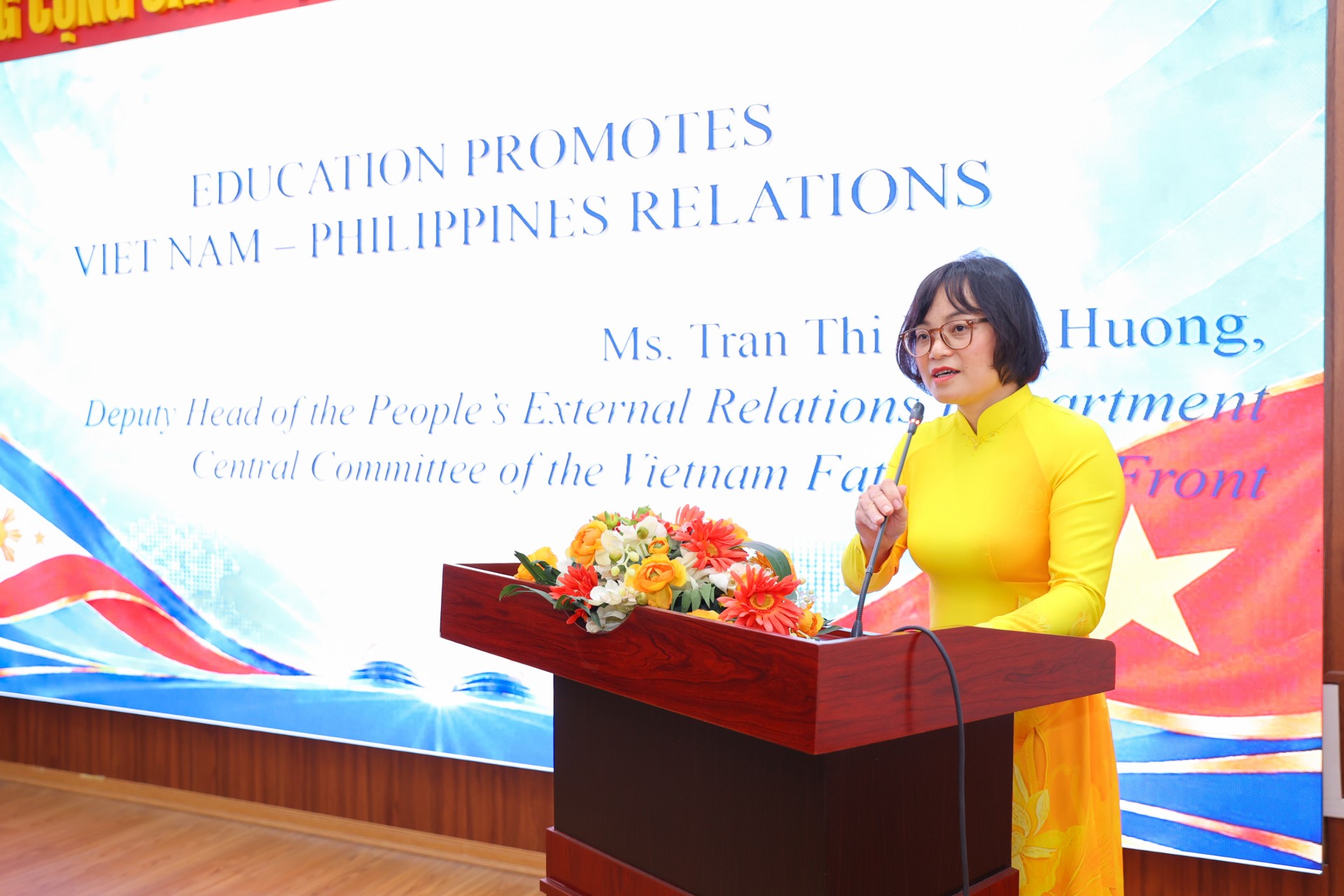 |
| Tran Thi Minh Huong, Deputy Head of the People's External Relations Department under the Central Committee of the Viet Nam Fatherland Front, presents her paper. (Photo: Dinh Hoa) |
Presenting her paper, “Education promoting Viet Nam-Philippines relations,” Tran Thi Minh Huong, Deputy Head of the People's External Relations Department under the Central Committee of the Viet Nam Fatherland Front, began with her own experience. In 2007, during an admissions interview for the Master of Development Management programme at the Asian Institute of Management (AIM), she was surprised when the professor spent considerable time asking her about President Ho Chi Minh, General Vo Nguyen Giap, the Dien Bien Phu Victory and Viet Nam’s history of its struggle for independence.
Huong recalled that classes, group discussions, field studies and cultural exchanges at AIM helped participants gain a deeper understanding of history, society and how each country addresses development issues.
Nearly two decades later, many of her international classmates remain in contact, exchanging professional information and keeping one another updated on developments in their respective countries. According to her, a course may end after several months, but the friendships, trust and networks formed during that time can last for many years.
Huong proposed expanding exchanges among students, lecturers, scholars and young officials; increasing internship, volunteer and youth exchange programmes; and creating more links among universities, research institutes and social organizations. Areas she suggested include public administration, digital transformation, innovation, community development, gender equality and responses to climate change.
She also proposed promoting the role of former international students. Those who have studied in Viet Nam or the Philippines have first-hand experience of the host country’s society and culture and can continue to build connections in academia, research, investment and people-to-people exchanges. She described them as “people’s ambassadors” shaped through education.
Francis Geren Sta. Ana first came to Viet Nam on a scholarship. After completing her studies and internship, she chose to work in international education. Francis currently oversees international relations, admissions and global partnerships, while also serving as a lecturer at the International School of Thai Nguyen University.
Francis believes that scholarships should be accompanied by opportunities for students to gain exposure to the local professional and social environment. At the International School, Filipino students take part in internships, work-experience programmes, academic seminars, cultural exchanges and activities with Vietnamese partners. Through these activities, learners develop adaptability, communication and teamwork skills, as well as the ability to work in multicultural environments.
Francis’s own experience as an international student has also influenced her current work. She is involved in identifying partners, developing admissions pathways, introducing scholarship opportunities, coordinating academic exchanges and supporting international students throughout their studies.
Dr. Mai Anh Khoa, Head of the Department of Science, Technology and External Relations at Thai Nguyen University, said that since 2007, the university has established relations with more than 60 Philippine universities and colleges and implemented around 20 transnational joint training programmes. Nearly 2,000 Vietnamese students and trainees have graduated from bachelor’s, master’s and doctoral programmes, while hundreds of Vietnamese lecturers and students have travelled to the Philippines to study and improve their professional expertise and English proficiency.
According to information presented at the roundtable, since 2011, nearly 300 Filipino students have also received scholarships from Thai Nguyen University. On October 1, a university delegation comprising more than 12 Filipino students also attended the event.
Linking education and training with practical needs
Prof. Evelyn O. Katigbak, Director of the Carlos P. Romulo School of Diplomacy under the Philippine Foreign Service Institute (FSI), focused on the gap between knowledge acquired at educational institutions and the demands of practical work.
Since 2024, FSI has organized the Conference of Higher Education Institutions on International Relations and International Studies (CHEIIRS), bringing together institutions that provide training in international relations with diplomats and practitioners. The conference provides a forum for sharing teaching experience and enables the two groups to engage directly on professional requirements.
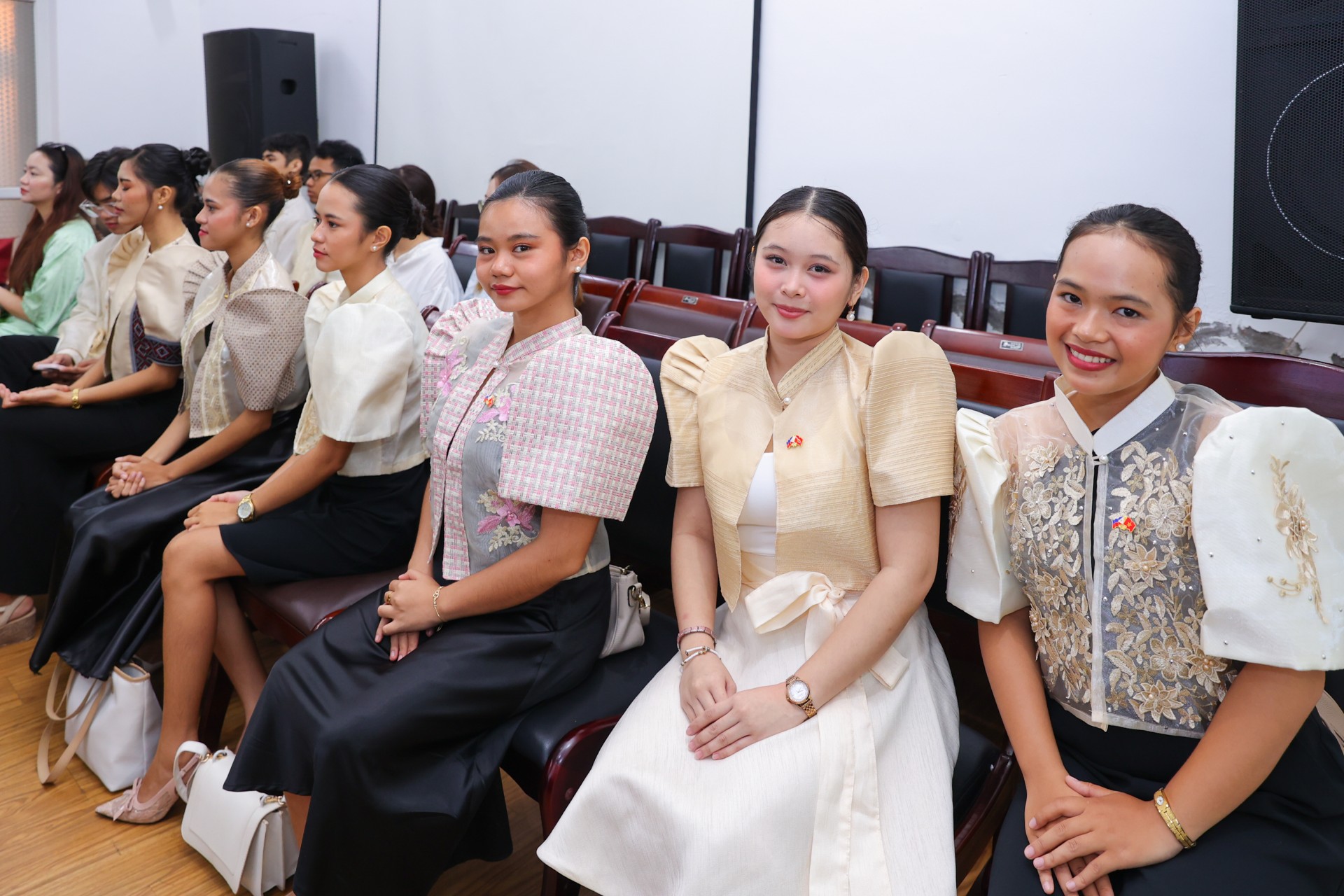 |
| The group of Filipino students from Thai Nguyen University attends the roundtable. (Photo: Dinh Hoa) |
At the 2024 and 2025 editions, practical simulation activities for students were emphasized. According to Prof. Katigbak, it is difficult to prepare students for the professional environment if they lack opportunities to handle situations closely resembling real-world work while they are still at university.
FSI also organizes meetings among ASEAN diplomatic academies to exchange experiences in training, research and emerging issues. The first meeting took place in 2024. By September 2026, the programme had been recognized as a side event during the year the Philippines serves as ASEAN Chair, with representatives of the Diplomatic Academy of Viet Nam attending that edition.
According to Prof. Katigbak, an important outcome is maintaining an environment in which academics and practitioners can regularly exchange views. Such dialogues help educational institutions update their curricula to better reflect professional requirements.
At the roundtable, Dr. Mai Anh Khoa proposed establishing a Viet Nam–Philippines Scholarship Programme and Young Human Resources Development Network. The proposed programme would include scholarships, training, learner exchanges, research, internships, university-business linkages and an alumni network, with the participation of universities, diplomatic missions, the Viet Nam-Philippines Friendship Association and relevant partners.
Thai Nguyen University has also identified agriculture, biodiversity, environmental science, climate change, information technology and sustainable development as priority areas, while proposing increased exchanges of lecturers and students, expanded scholarships for Filipino students, and greater academic cooperation through digital platforms.
Concluding the roundtable after four thematic sessions and 12 interventions, President of the Viet Nam-Philippines Friendship Association Phung Duc Tien called on the two sides to further increase exchanges among school students, university students, master’s students and doctoral students; review supporting mechanisms and policies; and strengthen connections between universities and diplomatic missions.
He also called for stronger focal-point coordination between the Viet Nam-Philippines Friendship Association and the Philippines-Viet Nam Friendship Association, thereby creating more favorable conditions for educational activities, exchanges and human-resource connections between the two countries to be implemented in a more substantive manner.
 Three Priorities for Advancing Viet Nam-Philippines People-to-People Relations Three Priorities for Advancing Viet Nam-Philippines People-to-People Relations Expanding connections from major cities to local communities and remote areas; leveraging people-to-people diplomacy channels to connect business associations, startups, and localities while supporting cooperation in high-tech agriculture and the digital economy; and establishing networks for young leaders, young scholars, and entrepreneurs from both countries to promote initiatives in education, digital capacity, and sustainable development. These are the three priorities for advancing Viet Nam-Philippines people-to-people relations proposed by Phan Anh Son, President of the Viet Nam Union of Friendship Organizations (VUFO), at the Friendship Gathering marking the 50th anniversary of diplomatic relations between Viet Nam and the Philippines, held in Hanoi on July 10. |
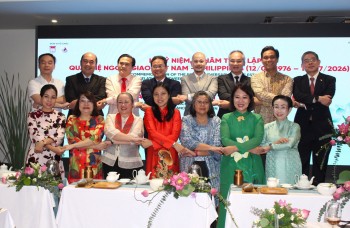 50 Years of Viet Nam-Philippines: Friendship and Cooperation 50 Years of Viet Nam-Philippines: Friendship and Cooperation The Ho Chi Minh City Union of Friendship Organizations, in coordination with the Ho Chi Minh City Viet Nam–Southeast Asia Friendship Association, held a ceremony on September 16, marking the 50th anniversary of the establishment of diplomatic relations between Viet Nam and the Philippines (July 12, 1976 - July 12, 2026). |


Related Stories
 Friendship
Seoul (Republic of Korea) Expands Employment Support for Vietnamese International Students
 Friendship
For Impact That Lasts Beyond the Project
 Overseas Vietnamese
Vietnam, Brunei Strengthen Education and Training Cooperation
 Overseas Vietnamese
More Opportunities for Vietnamese Community to Connect and Promote Vietnam-New Zealand Relations
Recommended
 Friendship
American Friends Help Ease the Pain of Agent Orange
 Friendship
65 Years of the Agent Orange Disaster: Dialogue to Spur Action
 Friendship
Aris Alip: The Filipino Friend Who Helped Build the TYM Fund
 Friendship
Viet Nam Union of Friendship Organizations Wins Seven Awards in Party Ideological Foundation Protection Contest
Popular article
 Friendship
Spreading Responsibility for Safeguarding Party’s Ideological Foundation from Viet Nam to International Community
 Friendship
DAFO Launches Activities to Promote Responsible Business Practices
 Friendship
NA President Meets with Chinese Friendship Figures in Beijing
 Friendship