
Vietnam, Brazil Review Economic and Trade Cooperation in First Half of 2026
 | Vietnam, Brazil look to boost agricultural trade |
| Promote People-to-people Exchanges and Diverse Cooperation between Vietnam, Brazil Friendship Associations |
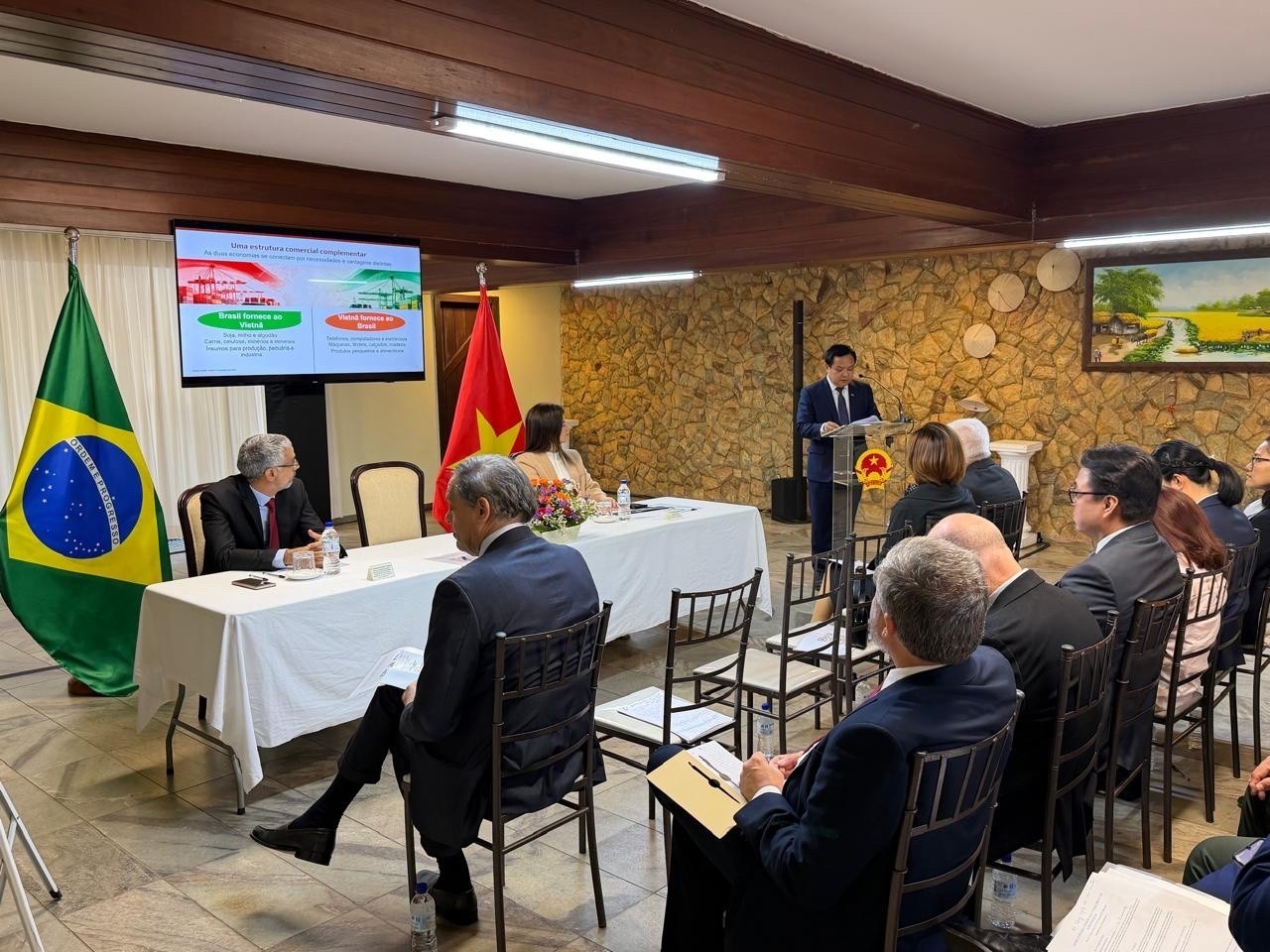
Speaking at the seminar, Ambassador Extraordinary and Plenipotentiary of the Socialist Republic of Vietnam to Brazil Bui Van Nghi said that, according to Brazilian statistics, two-way trade between Vietnam and Brazil reached approximately US$4.22 billion in the first six months of 2026, up about 16.8% compared to the same period in 2025.
Brazil's exports to Vietnam totaled around US$2.104 billion, up 16.6%, while Brazil's imports from Vietnam reached approximately US$2.114 billion, an increase of 17%. Brazil remains an important supplier of agricultural products, raw materials, and strategic commodities to Vietnam, including soybeans, corn, cotton, meat, cellulose, ores, and minerals.
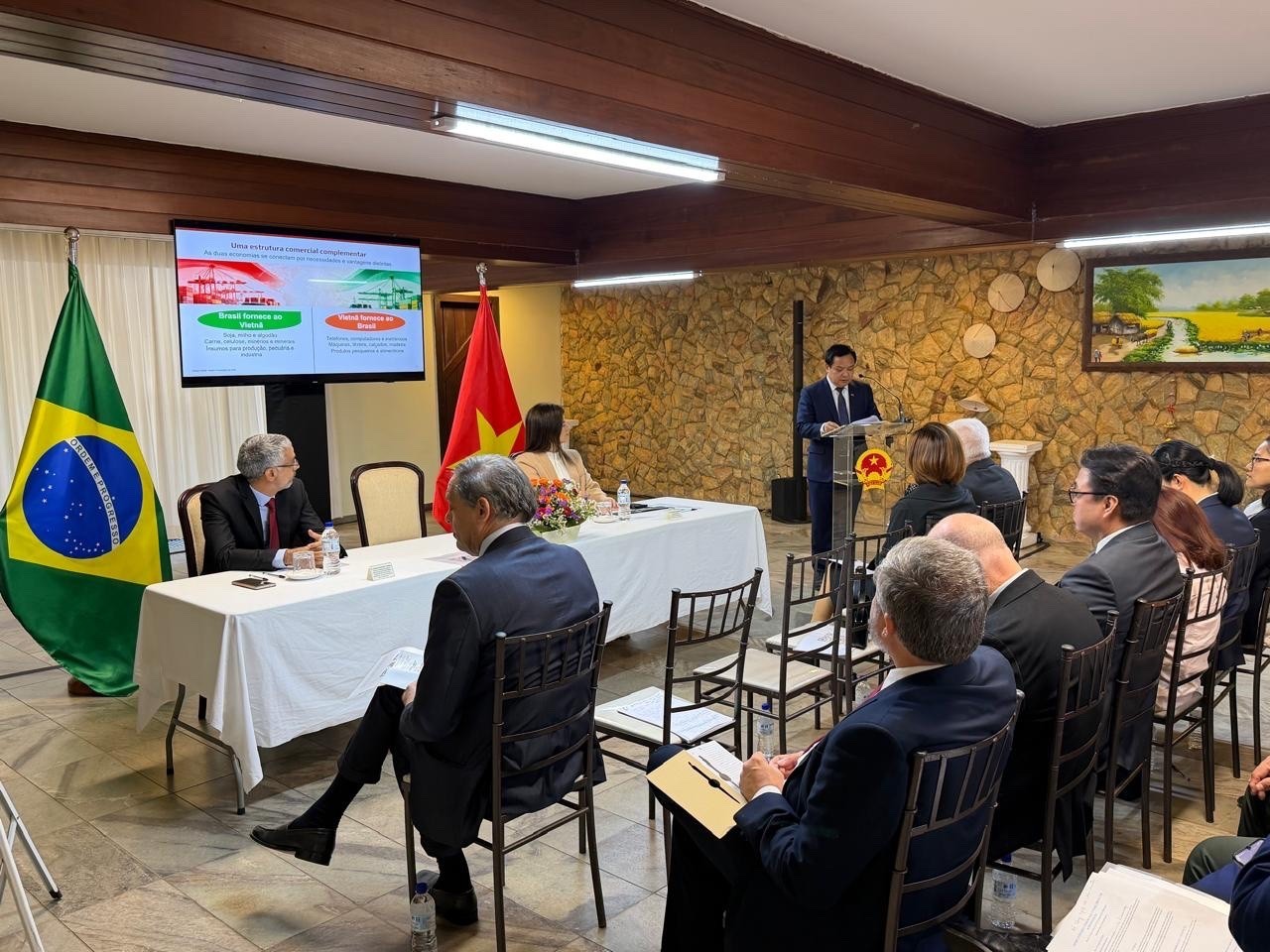 |
| Ambassador Extraordinary and Plenipotentiary of the Socialist Republic of Vietnam to Brazil Bui Van Nghi speaks at the seminar. (Photo: Embassy of Vietnam in Brazil) |
Conversely, Vietnam supplies the Brazilian market with key products such as mobile phones and components, computers, electronic equipment, machinery, textiles and garments, footwear, wooden products, seafood, and processed food products. This provides a solid foundation for expanding not only merchandise trade but also deeper cooperation in investment, processing, logistics, distribution, technology, and value chains.
The Ambassador noted that the two economies are highly complementary. While Brazil is a major supplier of agricultural products, raw materials, meat, pulp, and minerals, Vietnam primarily exports manufactured goods, electronics, machinery, textiles and garments, footwear, wood products, seafood, and processed food. However, he acknowledged that significant challenges remain in expanding bilateral cooperation. Among the main obstacles are low levels of direct investment, a trade structure concentrated in a limited number of sectors, high logistics costs, the lack of direct shipping routes, the need for greater information exchange between businesses, and further dialogue on quarantine measures and regulatory issues.
Looking ahead, the Ambassador supported the establishment of permanent mechanisms for information sharing between governments and businesses, stronger cooperation between Brazilian states and Vietnamese provinces, expanded partnerships in renewable energy, biofuels, logistics, digital transformation, biotechnology, and green industries, as well as accelerating negotiations on a trade agreement between Vietnam and Mercosur.
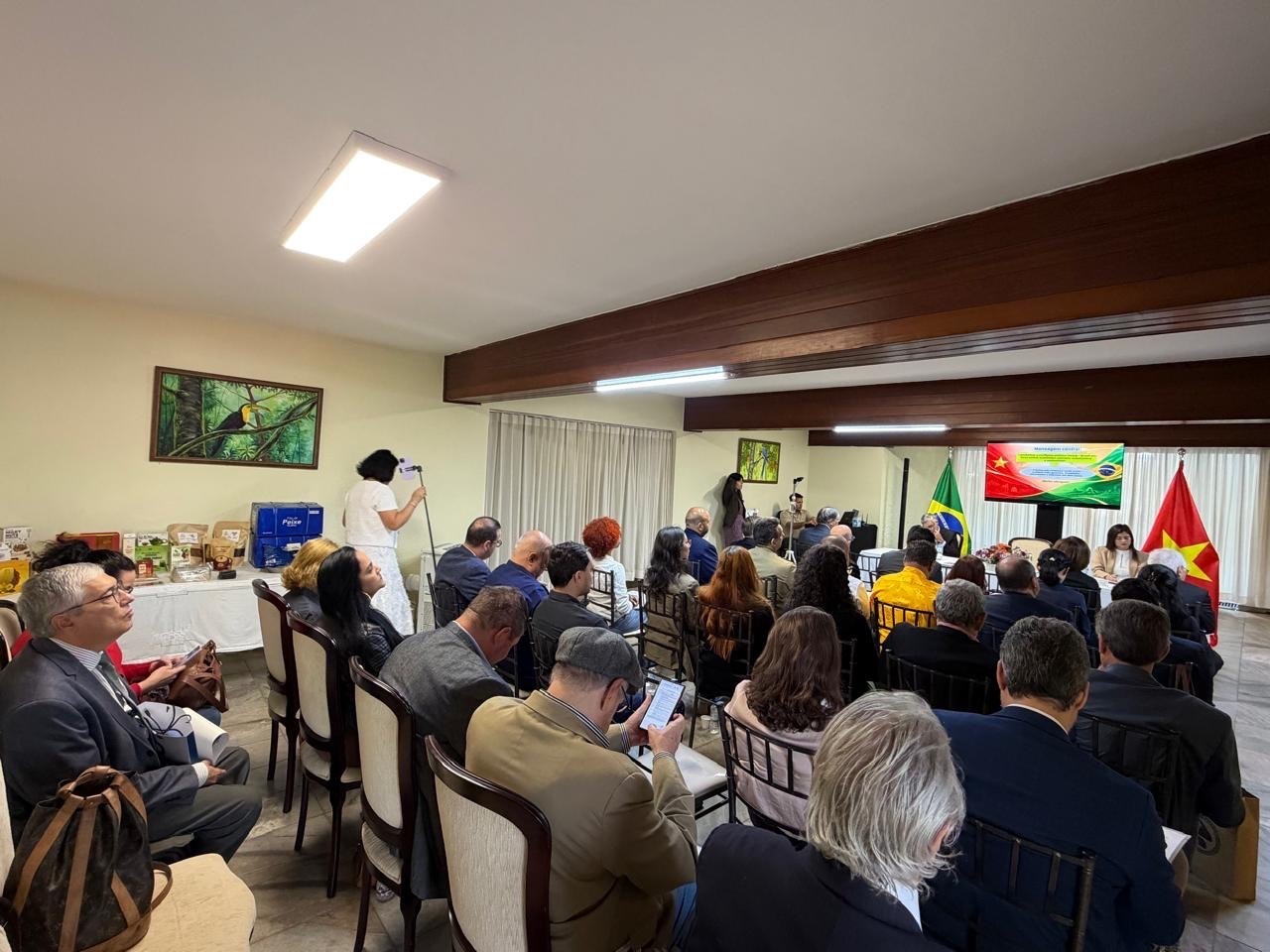 |
| Overview of the seminar. (Photo: Embassy of Vietnam in Brazil) |
Nhu Van Can, Deputy Director General of the Department of Fisheries and Fisheries Surveillance under Vietnam's Ministry of Agriculture and Environment, presented Vietnam's state management framework for aquaculture, quarantine, food safety, traceability, and quality control of exported seafood. The report highlighted Vietnam's relatively comprehensive management system, including broodstock management, feed and aquaculture environmental treatment products, farming conditions, food safety certification, production records, traceability, and the promotion of standards such as VietGAP, GlobalGAP, ASC, and BAP.
Representing Brazil, Thamires Quinhoes, Executive Director of the Brazilian Aquaculture Development Association (ABRAPES), presented an overview of Vietnamese seafood imports into Brazil, current market conditions, and challenges facing import activities. She noted that Vietnam has become an important seafood supplier to the Brazilian market. However, seafood imports, particularly tilapia, are facing legal and policy challenges, including Bill No. 6,331/2025 proposing a ban on tilapia imports, as well as certain state-level measures that may create uncertainty for businesses.
Thamires Quinhoes affirmed that Brazil's seafood import community supports a transparent, stable, predictable, and science-based regulatory environment. Brazilian businesses also seek closer cooperation with Vietnamese associations, enterprises, and authorities to exchange technical information, promote institutional dialogue, and reinforce the role of Vietnamese seafood as a complementary supply source for the Brazilian market.
Speaking at the seminar, Robson Cardoch Valdez, economist, Doctor of International Strategic Studies at the Federal University of Rio Grande do Sul, researcher at the Latin American Studies Center of the Institute of International Relations at the University of Brasília, and Professor of International Relations at the Brazil Institute of Education, Development and Research in Brasília, said that Vietnam-Brazil economic relations are moving from untapped potential toward an increasingly mature and strategically significant partnership.
According to Robson C. Valdez, bilateral trade nearly tripled between 2016 and 2025, rising from around US$3 billion to more than US$7.4 billion. The trade structure reflects strong complementarity, with Brazil supplying food, agricultural inputs, minerals, and primary commodities, while Vietnam exports manufactured goods, industrial equipment, electronic components, and technology-intensive consumer products.
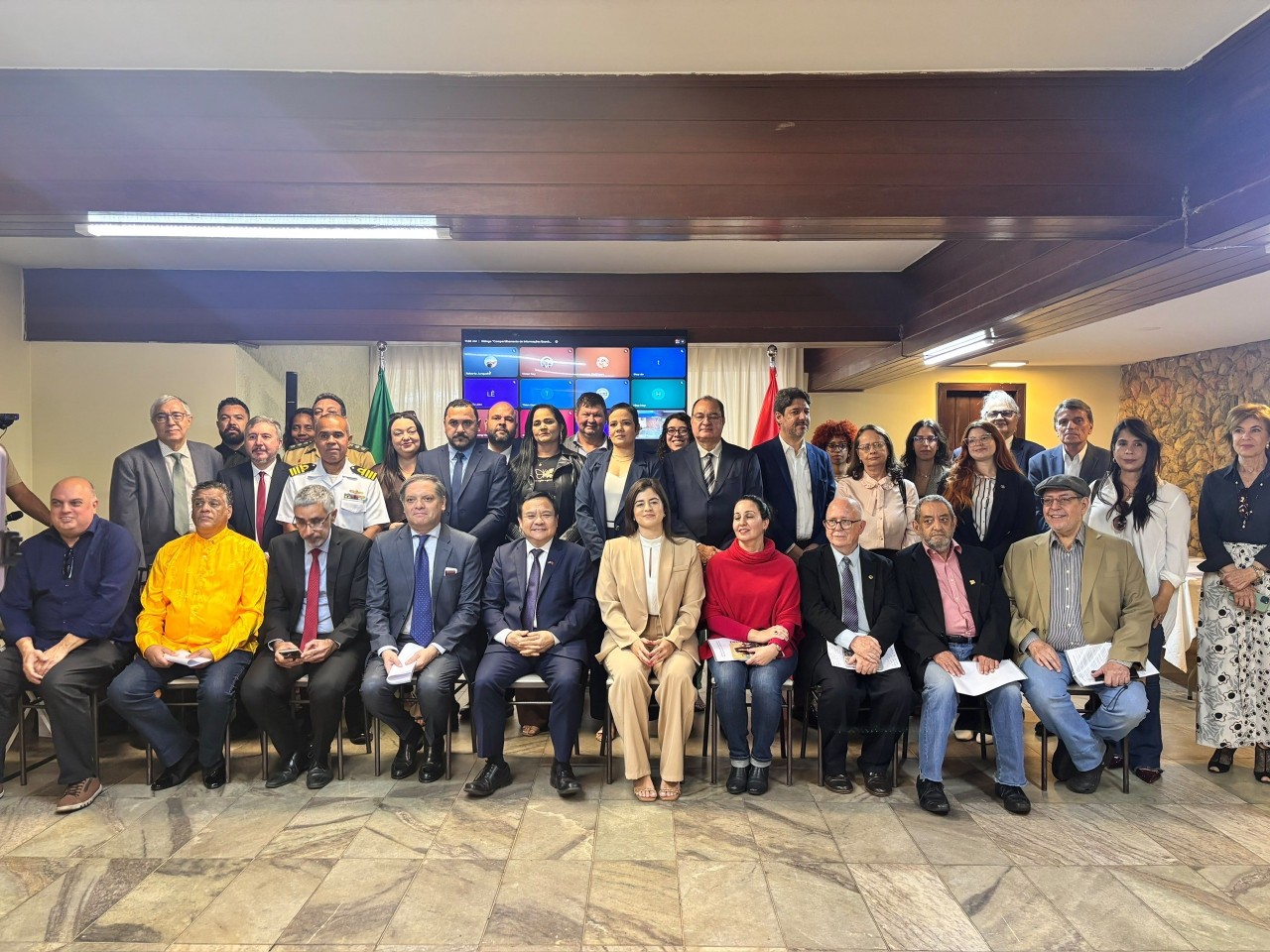 |
| Delegates attend the seminar. (Photo: Embassy of Vietnam in Brazil) |
The Brazilian expert said the two countries have significant potential for cooperation in agriculture and food processing, food security, energy transition and biofuels, the digital economy, semiconductors and electronics, logistics and infrastructure, strategic minerals, innovation, and the green economy. The Vietnam-Brazil Strategic Partnership provides an important framework for turning these opportunities into concrete projects in investment, innovation, and production linkages.
The seminar concluded successfully. It marked another practical economic diplomacy initiative by the Embassy of Vietnam in Brazil in 2026 to enhance market understanding, strengthen trust between businesses and localities in both countries, promote more substantive, effective, balanced, and sustainable cooperation, and contribute to the effective implementation of the Vietnam-Brazil Strategic Partnership and the 2025-2030 Vietnam-Brazil Bilateral Action Plan.
 | Vietnam, Brazil enhance comprehensive cooperation Deputy Prime Minister and Foreign Minister Pham Binh Minh expressed Vietnam’s wish to continue strengthening its comprehensive cooperation with Brazil during talks with Brazilian Minister ... |
 | Vietnam-Brazil: Strengthening Cooperation in Renewable Energy On June 16, 2026, in Brasília, the Embassy of Vietnam in Brazil successfully organized a seminar entitled “Vietnam-Brazil 2026: Strengthening Cooperation in Renewable Energy.” |
Related Stories
 Economy
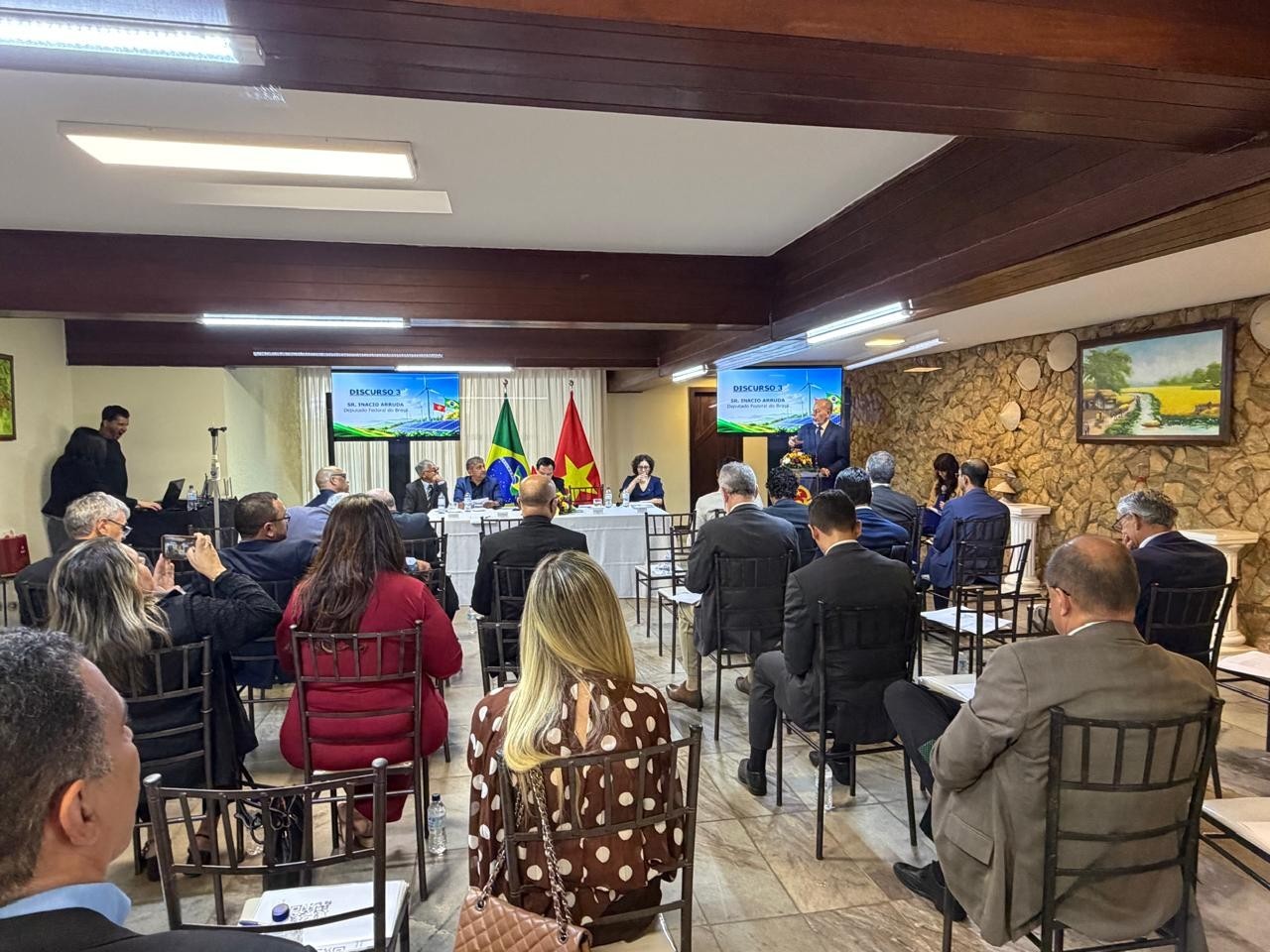
Vietnam-Brazil: Strengthening Cooperation in Renewable Energy
 Economy
Promoting Vietnam-Tunisia Trade Cooperation
Recommended
 Economy
Vietnam, Brazil Review Economic and Trade Cooperation in First Half of 2026
 Economy
World Bank Supports India’s Solar Rooftop Program
 Economy
Vietnam, Armenia Promote Air Connectivity to Expand Access to New Markets
 Economy
Quang Ngai Expands Cooperation with France on Green Industry and Clean Energy
 Economy