Vietnam, Malaysia promote smart business connectivity
A trade promotion forum held in Kuala Lumpur on May 15 highlighted growing efforts by Vietnam and Malaysia to deepen business connectivity and strengthen integration among enterprises from both countries.
Speaking at the event, Ngo Quang Hung from the Vietnam Trade Office in Malaysia said Malaysia remains Vietnam’s largest trading partner in the Association of Southeast Asian Nations (ASEAN), with two-way trade hitting 7 billion USD in the first four months of 2026.
He noted that the strong trade momentum puts both countries on track to realise the 20 billion USD bilateral trade target set by their Prime Ministers during talks late last year.
Hung stressed that the two economies are highly complementary, with Vietnam excelling in agricultural produce, seafood, processed food and textiles, while Malaysia has strengths in manufacturing technology, chemicals, logistics and the Halal sector.
Focusing on regional supply chains, Hambali Mukhlas, Vice Chairman of the Vietnam Malaysia Business Association (VMBIZ), said ASEAN nations must build more resilient value chains amid geopolitical tensions and rising logistics costs.
He said closer strategic coordination among ASEAN members would help create stronger, more competitive regional supply networks capable of competing globally, according to VNA.
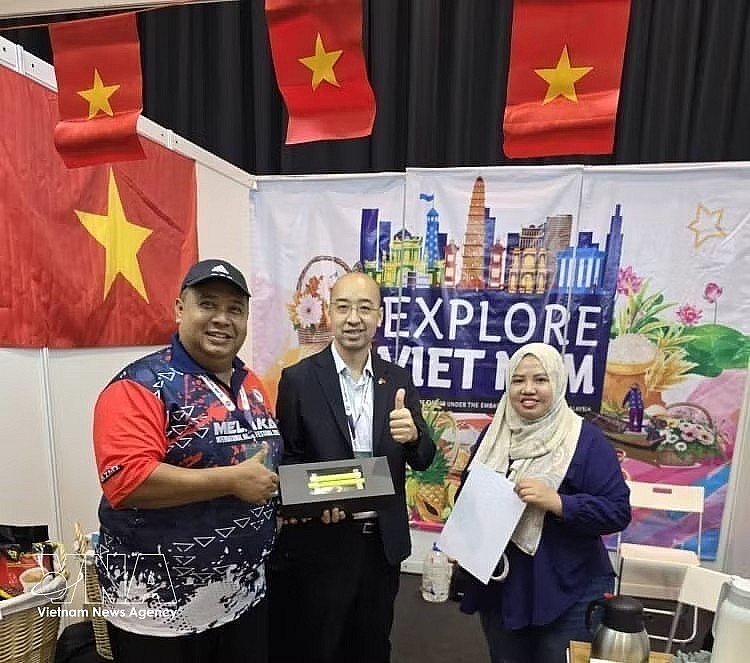 |
| Ngo Quang Hung, representative of the Vietnam Trade Office in Malaysia, introduces Vietnamese products at the Melaka International Halal Fair, held from May 16-19, 2026. (Photo: VNA) |
Hambali also pointed to the strong potential for cooperation between Vietnam’s agricultural resources and Malaysia’s established Halal certification system and logistics capabilities to tap deeper into the global Muslim market.
He added that Malaysia is paying close attention to Vietnam’s Doi Moi (Renewal) reforms, particularly in land policies, rice production technologies and seafood industry development, as both sides seek to expand practical cooperation.
Meanwhile, Suneil Dutt Sharma, Secretary-General of the International Society for Small and Medium Enterprises (ISSME), described SMEs as the driving force of the global economy, accounting for more than 90% of businesses worldwide and generating over half of global jobs.
He said SMEs must evolve into “smart enterprises” integrated into global value chains and capable of leading green growth and circular economy transformation.
According to Sharma, this transformation should be built on five pillars: digital transformation, innovation and research, deeper regional integration, adherence to ESG and sustainability standards, and stronger partnerships linking governments, academia and businesses.
He also commended Vietnamese firms for their adaptability, highlighting their rapid digitalisation and increasing competitiveness in global manufacturing markets.
Participants at the forum agreed that stronger trade promotion and business cooperation would help drive the Vietnam–Malaysia economic partnership forward, especially in digital economy development, green industries and sustainable supply chains, while contributing to ASEAN’s long-term prosperity.
Vietnam looks to expand fiscal space to support double-digit growth
As Vietnam targets economic growth of at least 10% in 2026, fiscal policy is expected to shift from a traditional budget-balancing role to a more proactive driver of growth, with spending efficiency emerging as the decisive factor.
State budget revenue in the first four months of 2026 was estimated at 1.11 quadrillion VND (42.1 billion USD), equal to 44% of the projection, up 15.2% year-on-year, indicating still-positive fiscal space. However, economists say the key issue is no longer how much the State collects, but how effectively it spends to generate spillover effects, boost investment, expand production capacity, and sustain sustainable economic growth momentum.
Vietnam’s GDP grew 7.83% in the first quarter, a solid result amid global uncertainties, but still below the government’s target scenario. To achieve full-year growth of 10%, the remaining quarters will need to accelerate significantly, with growth projected at over 10.5% in the second quarter and rising further in the second half of the year.
According to Deputy Director of the Ministry of Finance's state budget department Dinh Xuan Ha, fiscal policy in 2026 must serve a dual purpose - supporting growth while expanding fiscal space. Key priorities include tackling revenue losses, transfer pricing, and tax evasion, while diversifying funding sources for development investment as spending demand rises.
Public investment is expected to remain a key growth driver, acting as “seed capital” to unlock long-term productive capacity. Major projects such as Long Thanh International Airport, high-speed railways, ring roads, expressways, and the Olympic sports urban area are set to receive substantial funding, with strong anticipated spillover effects.
Studies suggest that each unit of public investment could generate 1.5–2 units of indirect added value by reducing logistics costs, improving connectivity, and expanding business space.
However, uneven disbursement and delays remain a bottleneck, limiting the effectiveness of capital flows. This underscores the need for continued administrative reform and stricter implementation discipline.
On the revenue side, policy is shifting toward broadening the tax base rather than raising rates, while closing loopholes that lead to revenue losses. E-commerce, estimated at 31 billion USD, has emerged as a key area requiring tighter management due to its fragmented and hard-to-track transactions.
The informal economy, accounting for around 30% of GDP, also presents significant untapped potential if gradually formalised. Despite having about 5 million household businesses nationwide, the rate of conversion into formal enterprises remains limited, constraining tax base expansion.
At the same time, tax authorities are stepping up efforts to control transfer pricing in the FDI sector and refining tax incentives to prioritize high value-added industries such as semiconductors, green economy, and high technology, according to VNA.
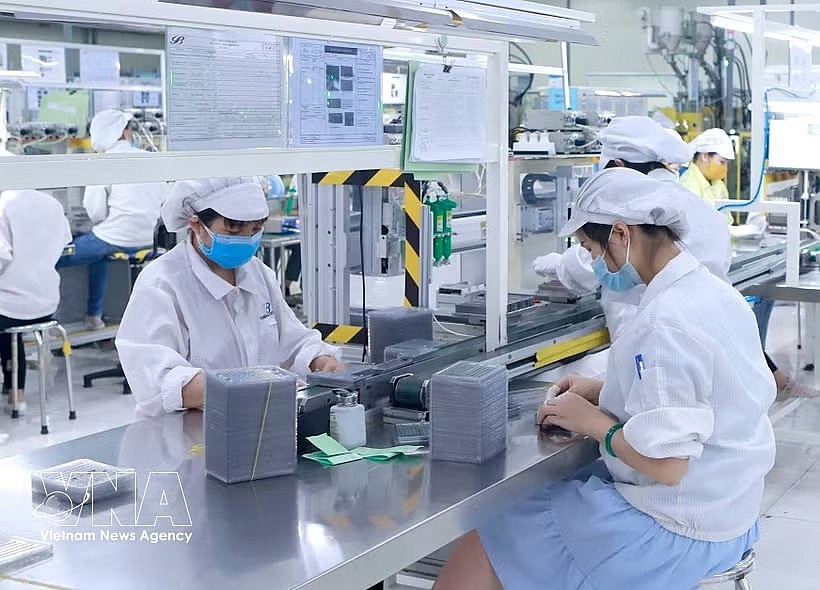 |
| The Ca Ty Riverside apartment project in Lam Dong province, with a total investment of 798 billion VND, is being accelerated in construction (Photo: VNA) |
Support measures, including VAT reductions, land rent relief, and higher revenue thresholds for household businesses, will continue to be implemented to stimulate demand and support enterprises, while tax administration is being modernized through digital transformation.
Experts emphasize that fiscal policy should move beyond a supportive role to actively lead growth. Continued and selectively expanded tax and fee reductions could directly ease cost pressures on businesses, enabling them to sustain operations and expand investment.
In the context of rising investment needs, public debt and budget deficits are also being managed more flexibly. A reasonable level of deficit is considered acceptable if investment efficiency is high enough to generate growth and offset debt increases.
Alongside long-term government bond issuance, Vietnam is expanding access to international concessional finance for green transition and large-scale infrastructure projects, while exploring new avenues such as carbon credit markets and digital asset exchanges to enhance long-term fiscal capacity.
Economists note that such growth is not a short-term goal but the result of sustained accumulation over time, requiring each unit of public spending to function as an investment that creates added value for the economy.
Vietnam pledges support for Laos ahead of SEA Games 2031
Vietnam has pledged to support Laos in upgrading sports infrastructure, training athletes, and sharing international event management experience as the neighboring country prepares to host the 2031 Southeast Asian Games (SEA Games).
The commitment was reaffirmed during talks in Vientiane on May 13 between Vietnamese Minister of Culture, Sports and Tourism Lam Thi Phuong Thanh and Lao Minister of Education and Sports Thongsalith Mangnormek
SEA Games 2031 will mark the second time Laos hosts the regional sporting event after previously organising the tournament in 2009. Laos is now accelerating preparations in infrastructure, human resources, and technical expertise to deliver a more competitive and professionally organised event.
As part of the preparation process, Laos has requested Vietnam’s continued support in several key areas, particularly the renovation of the National Sports Training Center - a facility originally supported by Vietnam for the 2009 SEA Games but now deteriorating after years of use.
Laos also expressed interest in receiving support to build a Sports Science Center aimed at improving athlete training, physical recovery, and overall performance ahead of SEA Games 2031, reported VOV.
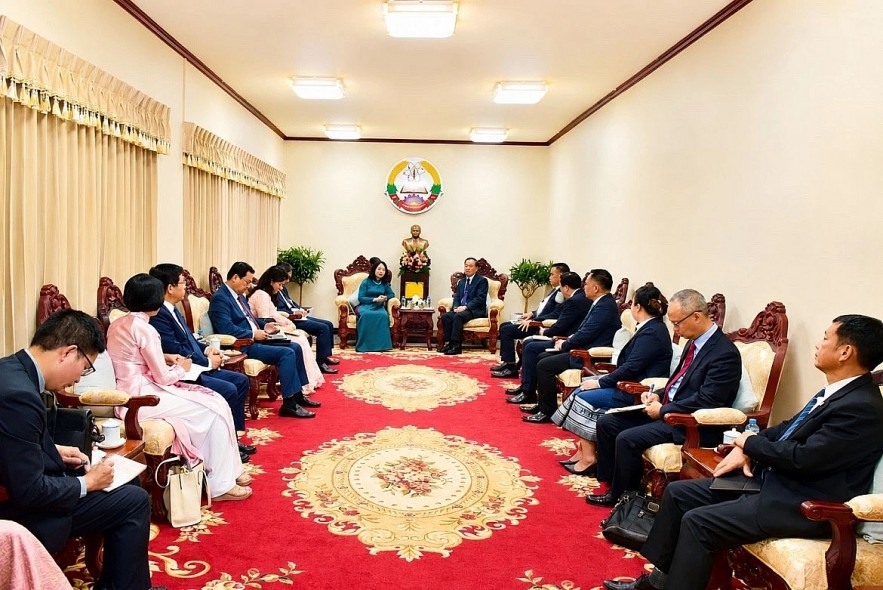 |
| Talks in Vientiane on May 13 between Vietnamese Minister of Culture, Sports and Tourism Lam Thi Phuong Thanh and Lao Minister of Education and Sports Thongsalith Mangnormek. |
Beyond infrastructure, athlete and coach development remains a central pillar of long-term sports cooperation between the two countries.
Under the proposed plan, around 35 to 60 Lao athletes will travel to Vietnam annually for training and professional development. During the peak SEA Games preparation period between 2029 and 2030, the number could rise to 70 to 100 athletes per year.
Vietnam is also expected to send sports experts to Laos to assist with training in key disciplines while expanding cooperation in disability sports, school football, sports management, and grassroots sports development.
Mangnormek highly appreciated Vietnam’s role in supporting the country’s sports sector over recent years, especially in human resource development and sports infrastructure projects.
Vietnam’s support plays an important role in Laos’ strategy to strengthen national sports capabilities and successfully host SEA Games 2031, he said.
For her part, Thanh emphasized that sports cooperation remains a key pillar in the broader relationship between Vietnam and Laos.
She also noted that Vietnam is actively implementing strategies to develop the sports economy, upgrade international tournaments, and improve sports infrastructure as part of its long-term ambition to host major continental sporting events in the future.
In addition to sports cooperation, both sides discussed expanding collaboration in culture and tourism, including efforts to address issues related to “zero-dollar tours.
Vietnam’s beach tourism gains momentum in summer peak season
Vietnam’s coastal tourism market is entering the 2026 summer peak season on a strong note, with popular destinations including Da Nang, Nha Trang, Phu Quoc, Ha Long and Cat Ba recording robust visitor growth from early May.
Tourism operators said summer demand has arrived earlier than usual this year, as bookings for late May and early June surged, mainly from families and short-break travellers. With transport and travel costs remaining relatively high, tourists are tending to favour nearby destinations with convenient access, helping seaside tourism centres sustain strong post-holiday demand.
Da Nang has emerged as one of the standout performers. According to the city Department of Culture, Sports and Tourism, the central locality welcomed more than 1.46 million visitors from April 25 to May 3, marking a year-on-year increase of over 35%. A series of beach tourism opening events, cultural and sporting activities, and promotional programmes are expected to further energise the market throughout the summer.
Elsewhere, other coastal destinations are also maintaining solid visitor flows. Ha Long Bay continues to attract large crowds on weekends, while travel agencies in Nha Trang and Phu Quoc reported rising demand for family holidays, short beach getaways and combined leisure-entertainment packages.
Nguyen Van Tai, CEO of VietSense Travel, said the growing appeal of coastal tourism is being driven not only by seasonal demand but also by increasingly modern infrastructure, from transport systems and accommodation facilities to entertainment services, VNA reported.
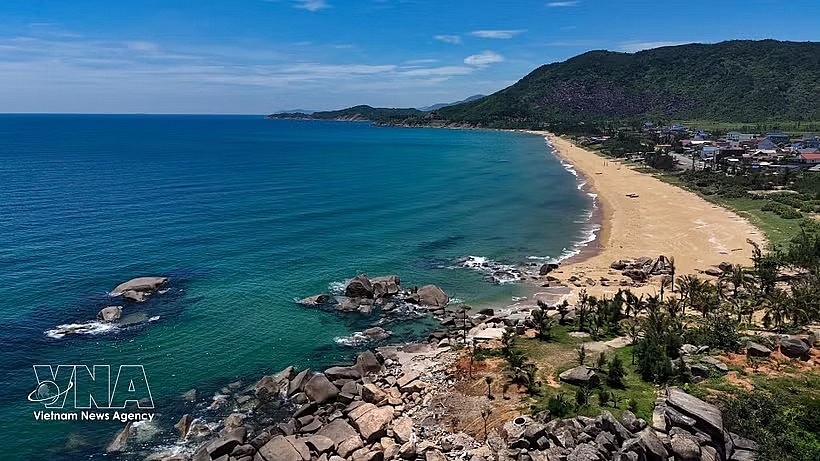 |
| Ky Xuan Beach in Ha Tinh province features a long coastline, smooth sand and an unspoiled natural landscape. (Photo: VNA) |
He noted that many beach destinations are also benefiting from the return of international tourists from the Republic of Korea, China, India and several Southeast Asian markets, creating additional momentum for the summer season.
Travel businesses said tourists are becoming more selective, placing greater emphasis on convenience, accommodation standards, dining quality and overall travel experiences instead of focusing mainly on pricing.
In Quang Ninh province, visitor numbers continued to climb in May, particularly at weekends, while tourist arrivals are showing signs of becoming more evenly spread rather than concentrating solely around short public holidays.
Hoang Van Cong, manager of Paradise Delight cruise, said the company has completed preparations for the peak season, including staffing, operations and service quality management. The cruise currently welcomes around 700 passengers daily on average, with numbers forecast to rise significantly between June and August.
To attract more visitors, the company has introduced additional onboard entertainment activities such as LED dance shows, DJ performances, film screenings and acoustic music programmes alongside bay sightseeing tours.
Meanwhile, Vu Thi Mo, Director of Paradise Suites Hotel, said room occupancy rates in May have remained positive, especially on weekends. The hotel has streamlined operations, adjusted supply procedures and strengthened staff training to ensure service quality during the busy summer period.
Minh Anh, a tourist from Hanoi, said destinations with convenient transport connections are becoming increasingly popular among families with limited travel time this summer.
 | Vietnam News Today (May 11): Right Time for India, Vietnam to Forge Cooperation: IVCCI Chairman Vietnam News Today (May 11): Right time for India, Vietnam to forge cooperation: IVCCI Chairman; Vietnamese businesses in Singapore work to expand homegrown brands abroad; ... |
 | Vietnam News Today (May 12): Vietnam Seeks Deeper Fintech, Innovation Ties With Switzerland Vietnam News Today (May 12): Vietnam seeks deeper fintech, innovation ties with Switzerland; Vietnam and Japan’s Yamanashi shift local ties toward green energy, agri-tech; Prime ... |