Viet Nam-France ties deepen with focus on more substantive cooperation
Viet Nam-France ties are gaining fresh momentum, with the two countries stepping up efforts to turn their Comprehensive Strategic Partnership into more substantive cooperation across economic, scientific, technological, energy, defense and other strategic areas.
The message was highlighted at a ceremony in Paris on September 18 to mark the 81st anniversary of Vietnam’s National Day (September 2). The functions brought together French parliamentarians and government officials, members of the diplomatic corps, partners and friends of Viet Nam, as well as a large Vietnamese community living and working in France.
Addressing the ceremony, Vietnamese Ambassador to France Trinh Duc Hai highlighted the historical significance of September 2, 1945, when President Ho Chi Minh read the Declaration of Independence, and reviewed Vietnam’s development and growing international integration.
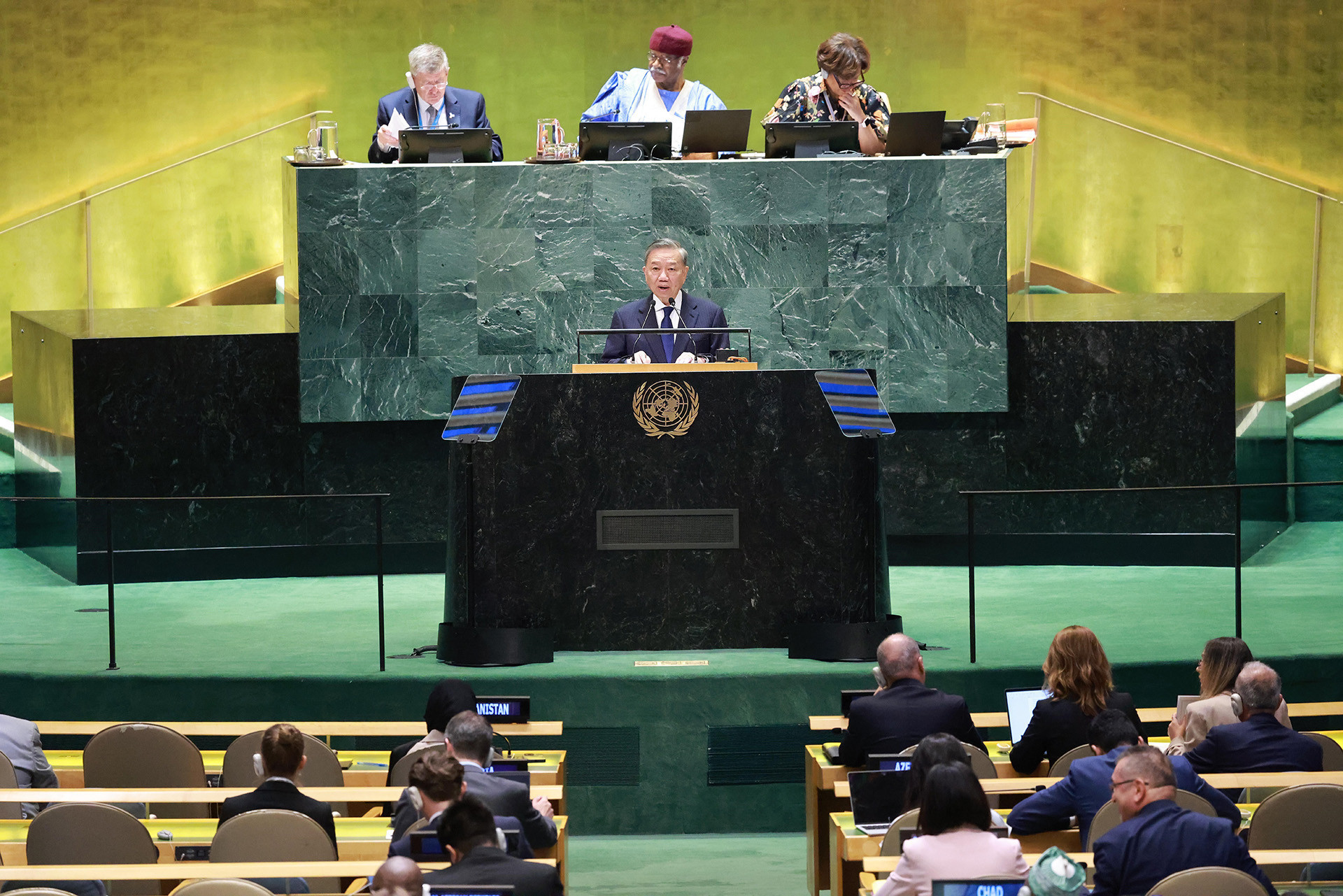
He said Viet Nam-France relations have considerable potential for further development in depth and substance. General Secretary of the Communist Party of Viet Nam Central Committee and President To Lam’s official visit to France on September 10-11 also gave fresh impetus to the implementation of the two countries’ Comprehensive Strategic Partnership, reported VOV.
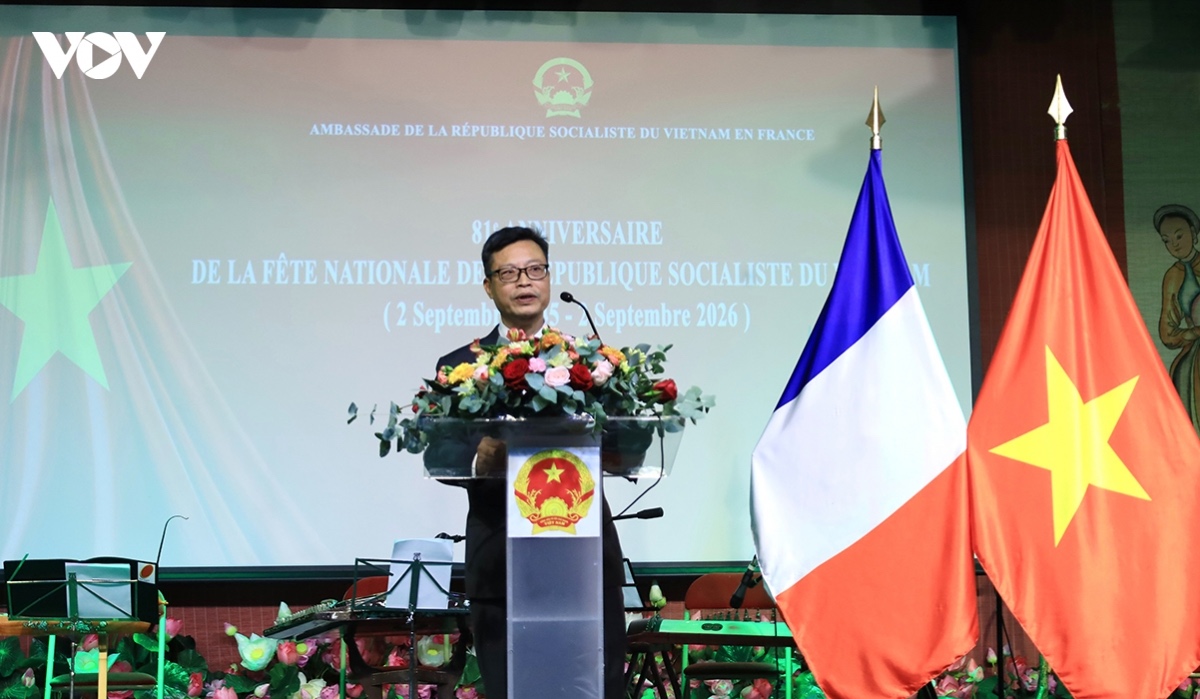 |
| Vietnamese Ambassador to France Trinh Duc Hai reviews Vietnam’s development and growing international integration, as well as the positive development of Viet Nam - France Comprehensive Strategic Partnership. |
During the visit, the two sides welcomed and adopted the 2026-2028 action plan to implement the Comprehensive Strategic Partnership framework, providing a basis for translating their strategic commitments into more concrete cooperation.
The new action plan builds on broad areas of convergence, including sustainable development, multilateralism and respect for international law. It also sets out priorities for expanding cooperation in areas of strategic importance, from trade, investment and defense to science and technology, energy, infrastructure and emerging fields.
As an honourary guest at the National Day celebration, Jean-Michel Jacques, chairman of the French National Assembly’s Defense and Armed Forces Committee, highlighted the significance of Viet Nam-France relations and the similarities in the two countries’ priorities.
According to Jacques, Viet Nam and France share an emphasis on international law, freedom of navigation, peace, regional stability and multilateralism. He noted that bilateral ties are not limited to Paris and Hanoi, but also extend to local authorities and are reinforced by people-to-people links.
This message is consistent with the direction set out in the 2026-2028 action plan, which places emphasis on strengthening connections and translating the Comprehensive Strategic Partnership into practical cooperation.
At the people-to-people level, the experiences of French guests who have lived and worked in Viet Nam offer another perspective on the depth of the relationship.
Air Force General Didier Oustric, who served as France’s military attaché in Hanoi from 2008 to 2012, spoke warmly of his long-standing connection with Viet Nam. He recalled travelling across many parts of the country and retaining fond memories of places ranging from Ha Giang and Ha Long to central Viet Nam, Hoi An, the Mekong Delta, Phu Quoc and the Central Highlands.
For him, being invited by the Vietnamese Embassy each year to events marking Vietnam’s National Day and traditional Lunar New Year is an honour and an opportunity to maintain his connection with the country and its people.
Such memories highlight the continuing importance of people-to-people exchanges as a social foundation for Viet Nam-France ties. Beyond high-level visits, cooperation mechanisms and agreements between the two governments, the relationship is also strengthened by the experiences and personal bonds of those who have lived, studied or worked in either country.
General Secretary and State President To Lam’s official visit to France earlier this month came at a time when the two sides were seeking to give greater depth to their Comprehensive Strategic Partnership. They agreed on a range of directions for putting the framework into practice, including stronger cooperation in economic, scientific and technological, energy, infrastructure and other strategic areas.
In this context, the National Day celebration in Paris was more than an occasion for the Vietnamese community and French friends to mark Vietnam’s national holiday. It also provided an opportunity to reflect on the foundations connecting the two countries – from high-level political trust and expanding areas of cooperation to the people-to-people ties built over generations.
Viet Nam, Belgium share experience in addressing pressing policy issues
A delegation from the National Assembly (NA)’s Committee on Cultural and Social Affairs, led by its Deputy Chairman Ta Van Ha, paid a working visit to Belgium from September 15-19, focusing on policy experiences in child protection online, cultural heritage preservation and cultural industry development.
At a meeting with representatives from the Belgian Chamber of Representatives’ Committee on Justice, the delegation discussed policies and practices related to protecting children in the digital environment. Belgian lawmakers affirmed their willingness to share their experiences, both successes and difficulties, during the law making and enforcement process.
They highlighted a multi-layered legal framework combining national legislation with European Union (EU) regulations, notably the Digital Services Act (DSA) and the General Data Protection Regulation (GDPR).
The framework requires online platforms to assess and mitigate systemic risks, enhance accountability and algorithmic transparency, and curb harmful content. It also imposes strict requirements on personal data protection and targeted advertising to children, while promoting a “safety by design” approach.
Ha and delegation members showed particular interest in coordination between legislative and regulatory bodies in supervising platform compliance, as well as practical issues such as age verification and parental responsibility. They said Viet Nam is working to further improve its legal framework for child protection online, making Belgian and EU experience valuable references, reported VNA.
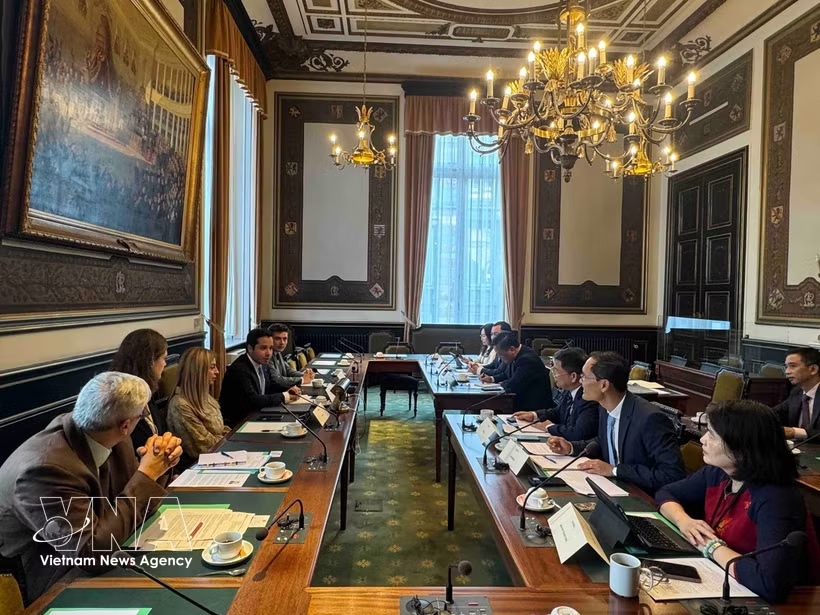 |
| An overview of the meeting between representatives from the National Assembly’s Committee on Cultural and Social Affairs and the Belgian Chamber of Representatives’ Committee on Justice. (Photo: VNA) |
The two sides shared the view that protecting children in cyberspace requires a comprehensive approach combining stronger legislation, greater platform responsibility and enhanced children’s own digital safety skills.
In Bruges, a UNESCO World Heritage city since 2000, the delegation studied heritage management amid heavy tourism pressure. With around eight million visitors annually and a population of just over 110,000, the city has integrated heritage preservation into urban planning, tourism development and environmental protection. Measures include strict control over architecture and renovations, visitor management, traffic restrictions and the development of satellite tourism routes. Heritage data has also been digitised to support management, research and education.
Regarding cultural industries, the delegation explored Belgium’s combination of public policies and market mechanisms to foster a creative ecosystem, including tax incentives and the ST’ART investment fund, which provides equity financing, loans and credit guarantees to creative enterprises.
At the Vietnamese Embassy in Belgium, Ambassador Nguyen Huong Tra briefed the delegation on bilateral and Viet Nam-EU relations, and proposed stronger policies to support the more than 13,000 Vietnamese people in Belgium, particularly in maintaining the Vietnamese language and cultural identity among younger generations.
Ha said the committee will study and incorporate the recommendations into its work on policymaking and oversight.
Substantive cooperation drives Viet Nam-US relations: US professor
All visits and interactions between Viet Nam and the US are part of efforts to concretise their Comprehensive Strategic Partnership, according to Professor Piper Campbell, Chair of the Department of Foreign Policy and Global Security at American University’s School of International Service.
Speaking to a Viet Nam News Agency correspondent in Washington DC ahead of General Secretary of the Communist Party of Viet Nam Central Committee and President To Lam’s attendance at the High-level General Debate of the 81st Session of the United Nations General Assembly (UNGA 81) and bilateral activities in the US from September 20, Campbell described 2026 as an active year in Viet Nam-US relations.
She cited General Secretary and President Lam’s visit to Washington DC in February to attend the inaugural meeting of the Gaza Board of Peace, as well as a series of US activities in Viet Nam, including Deputy Secretary of State Christopher Landau’s visit to Hanoi in June for the ASEAN Future Forum, the visit of the USS George Washington aircraft carrier in July, and that of the Commander of the US Pacific Command in August, cited VNA.
 |
| Professor Piper Campbell, Chair of the Department of Foreign Policy and Global Security at American University’s School of International Service. (Photo published by VNA) |
Campbell stressed the importance of direct exchanges between strategic partners such as Viet Nam and US leaders on international issues, particularly amid the US administration’s busy diplomatic agenda and preparations for the November midterm elections.
The two sides have discussed deepening their Comprehensive Strategic Partnership in areas ranging from trade and investment, energy and defence-security to science and technology, innovation, critical minerals and aviation. They have also highlighted the need to expand substantive cooperation and people-to-people exchanges while addressing differences, including trade-related issues, in an open and constructive manner.
According to the professor, Viet Nam remains an important and attractive market for US businesses. She noted that both US and Vietnamese officials are interested in reaching a trade agreement.
Campbell highlighted semiconductors, telecommunications infrastructure, energy cooperation, including liquefied natural gas (LNG), and critical minerals as promising areas. She expressed her hope that the two countries will develop Vietnam’s critical-minerals sector in an efficient, transparent and environmentally friendly manner.
Regarding Vietnam’s role in strengthening US-ASEAN economic and trade ties, Campbell pointed to the ASEAN Digital Economy Framework Agreement (DEFA), expected to be signed at the 49th ASEAN Summit in November, as a major opportunity. The agreement covers digital trade, cross-border data flows, paperless transactions, e-commerce, cybersecurity and digital payments.
She also welcomed renewed interest in the ASEAN Power Grid and closer regional energy cooperation, saying greater US engagement in energy initiatives and the bloc’s cooperation roadmap could open up further opportunities for collaboration.
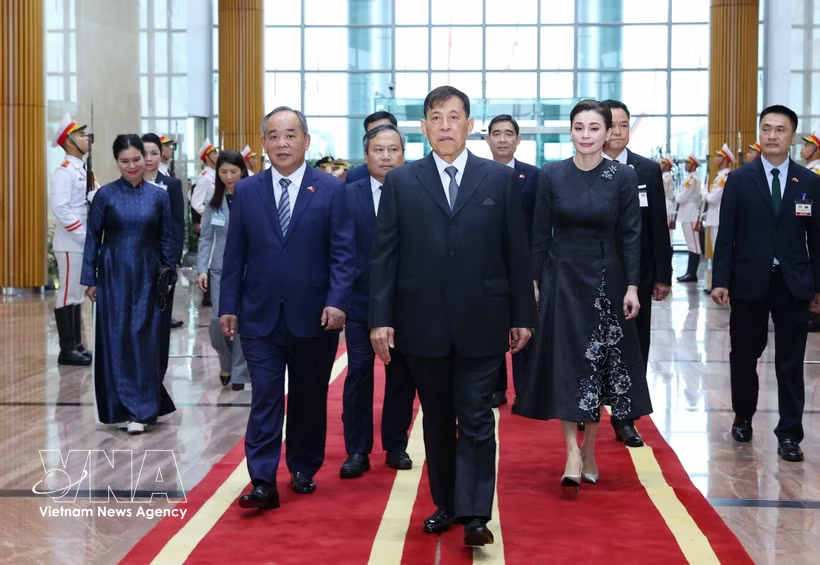 Viet Nam News Today (Sep. 15): Thai King, Queen Arrive in Hanoi for State Visit to Viet Nam Viet Nam News Today (Sep. 15): Thai King, Queen Arrive in Hanoi for State Visit to Viet Nam |
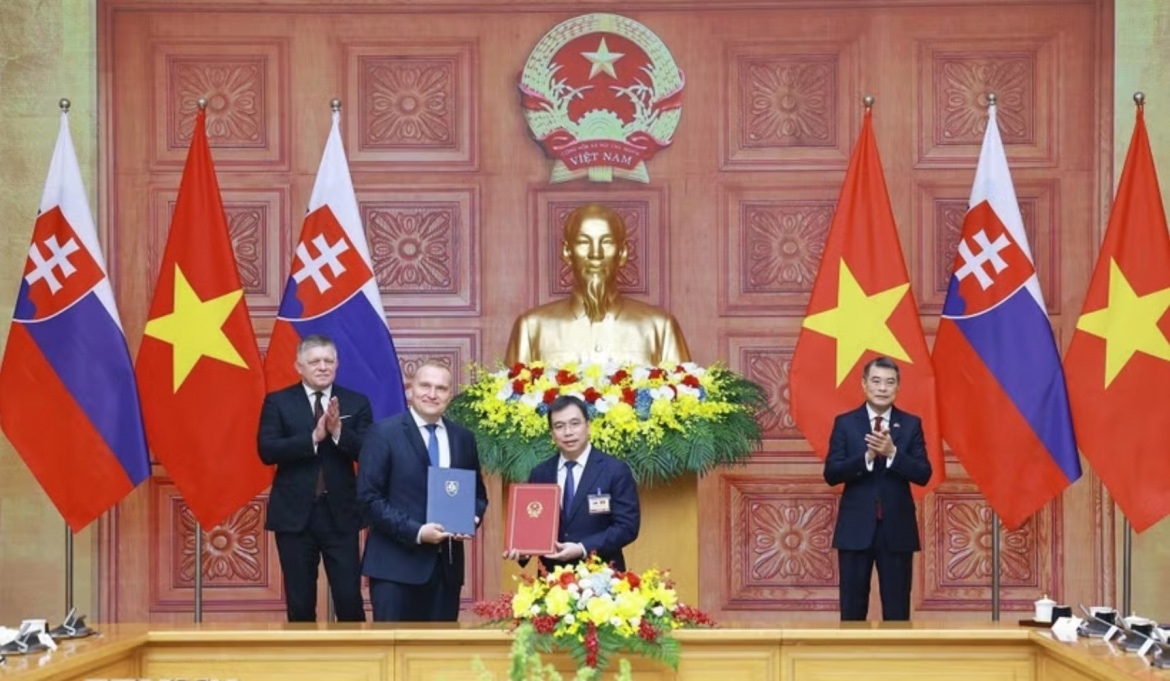 Viet Nam News Today (Sep. 16): Upgraded Bilateral Ties Open New Space for Viet Nam-Slovakia Cooperation Viet Nam News Today (Sep. 16): Upgraded Bilateral Ties Open New Space for Viet Nam-Slovakia Cooperation |