
Why India’s strategic partnership with Israel continues to deepen
 |
Shared concerns over terrorism, regional instability, and security challenges have brought the two countries closer. For India, Israel has demonstrated its reliability as a defense and technological partner, even as New Delhi has maintained strong ties with Arab states as part of its broader Middle East strategy.
Although initial contacts date back to the early 1950s, full diplomatic relations came only in 1992. Despite this, Israel quietly supported India during several critical moments. It supplied needed laser-guided weapons and military equipment when many other countries hesitated. Similar support during 1965 and 1971 reinforced Israel’s image in New Delhi as a dependable partner in times of crisis.
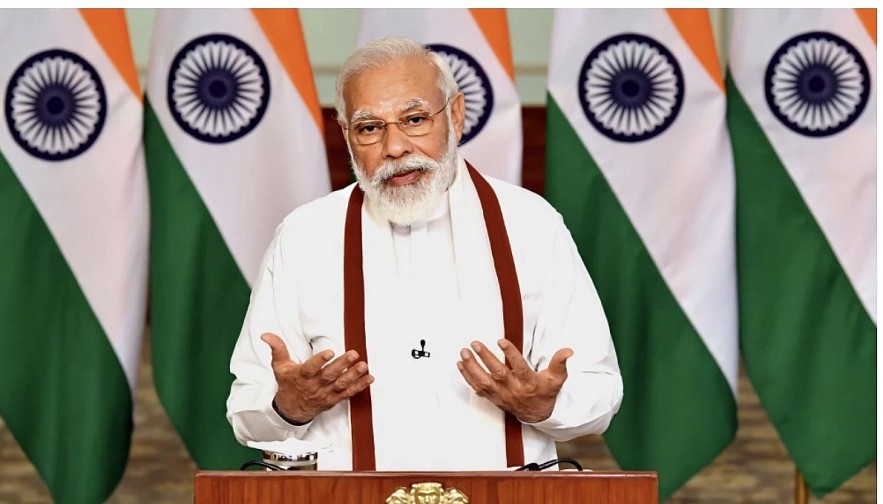
The relationship received renewed momentum after Indian Prime Minister Narendra Modi visited Israel in 2017, followed by subsequent engagements between the leaders of the two countries. Modi’s recent visit to Israel further deepened the partnership, particularly in defense cooperation.
A 2025 memorandum of understanding on joint development and co-production marks a significant shift in the relationship. This transition reflects converging strategic interests. For Israel, collaboration with India helps diversify partnerships and mitigate vulnerabilities in a volatile regional environment. For India, it aligns with efforts to reduce dependence on foreign suppliers and strengthen indigenous defense capabilities under initiatives such as Make in India. Co-production and technology transfer have thus become central pillars of the relationship, and Israel now ranks among India’s most important defense partners. Intelligence cooperation, counterterrorism strategies, and border security technology have also become important pillars as both countries face hostile challenges.
Over the past decade, India has also expanded its partnerships with the United Arab Emirates, Saudi Arabia, and other regional actors in trade, investment, energy, and security cooperation. Several Gulf Arab states have conferred their highest civilian honors on Modi to recognize his role in expanding bilateral relations.
Even under a different government, cooperation with Israel likely would have expanded due to national security considerations and the practical benefits of technological and defense collaboration. Pragmatic leadership naturally drives cooperation in line with national interests. For instance, in 2005, the Indian National Congress-led government voted against Iran at the International Atomic Energy Agency over concerns regarding its nuclear program—a decision shaped by strategic considerations.
Still, the Modi administration has embraced the bilateral relationship with enthusiasm. As India’s External Affairs Minister Subrahmanyam Jaishankar has noted, “Israel is a country with which we have a strong record of cooperation in national security. It has also stood by us at different moments when our national security was under threat.”



Most read



Recommended
 World
World
Vietnam Reaffirms Support for Effective Implementation of ASEAN's Five-Point Consensus
 World
World
Algeria Shares Healthcare Expertise to Advance Africa's Pharmaceutical Self-Reliance
 World
World
Modi's Asia-Pacific tour highlights India's regional engagement
 World
World
Australia-India Partnership on Cyber, Critical Technologies and Supply Chains
Popular article
 World
World
Venezuela Declares Seven Days of National Mourning for Earthquake Victims
 World
World
Europe Faces Historic Heatwave, More Than 1,000 Deaths Reported
 World
World
Myanmar Destroys Over 50 Tons of Drugs on International Anti-Drug Day
 World
World