
Against foreign competitors, Vietnamese man perseveres in putting homeland ceramics on map
One Ho Chi Minh City resident has spent the last decade making a name for his Vietnam-made ceramic products in a domestic market dominated by Japan and China.
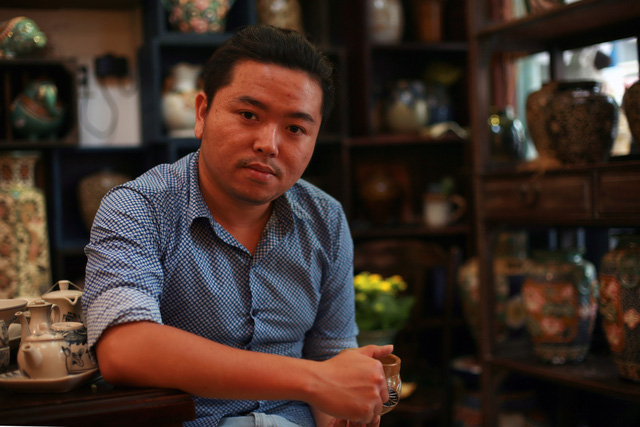 |
Hoang Viet Hai. Photo: Tuoi Tre
Hoang Viet Hai, 30, has spent ten years turning his company, Yen Lam, into a household name in Ho Chi Minh City.
Over 100 restaurants, many of which are famous in the southern city, and a number of local residents use Yen Lam products.
The company’s path to success was not an easy one, however.
Against foreign competitors, Vietnamese man perseveres in putting homeland ceramics on map
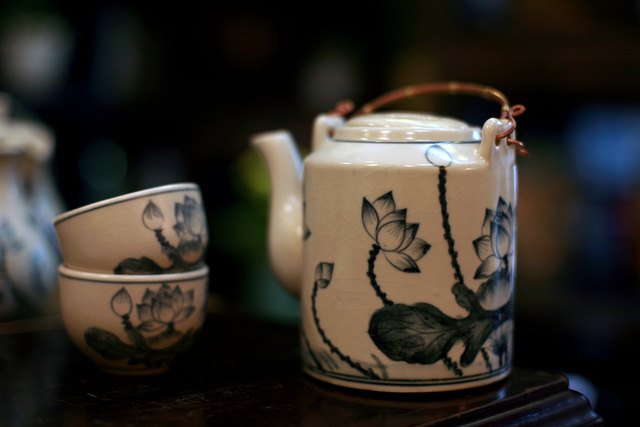
Cups and a teapot produced by Yen Lam, Hai's brand name. Photo: Tuoi Tre
Periods of intense competition often forced Hai to draw on his creative prowess to keep the business alive.
Hai’s first failure occurred after he opened a shop specializing in traditional Vietnamese ceramics on a street in District 5, an area where Chinese ceramics have already replaced Vietnamese pottery.
The entrepreneur was undeterred by competition and created a line of aroma lamps, then unavailable in the local market, which garnered numerous orders from essential oil producers and put his company on the map.
However the appearance of Chinese-made lamps that sold at half the price sent his business in a downward spiral.
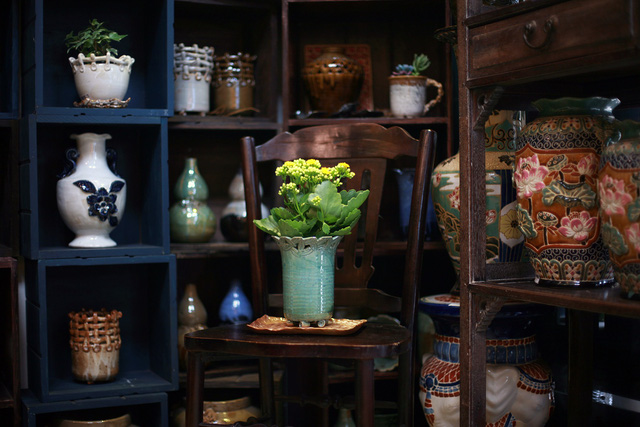
Hai's pottery. Photo: Tuoi Tre
About five years ago, his business suffered another blow when Japanese pottery became a hot item in Vietnam.
Resignedly facing the reality, Hai became more inventive in his approach to the pottery business, introducing novel designs for a variety of ceramic products, each with its own distinctive signature beauty.
Now, with a catalogue of bowls, jars, plates, flower vases, tea pots, decorative items, and telephone rests, Yen Lam’s reputation is at an all-time high.
But success, in his view, is ultimately not for the sake of wealth. Self-enrichment was never the intent of Hai’s pottery aspirations.
“The only reason I set up the business is for the Vietnamese and for Vietnamese-made pottery,” Hai said.
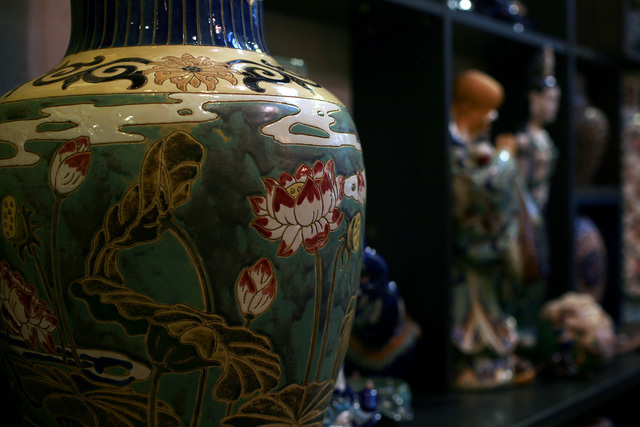
A large Yen Lam enamel vase with a lotus pattern. Photo: Tuoi Tre
He defines “rich” as relating, first and foremost, to his role in preserving the beauty of Vietnamese pottery, followed by the ability to do what one likes and help their employees.
Traditional ceramics and their philosophy have always fascinated him, with the former appealing to him from an early age.
Recognizing the esthetic advantage of Vietnam’s unique style of ceramics, he notes that it is characterized by natural but not very bright colors that help convey the fashioner's care and ingenuity, while Chinese counterparts tend to present elaborate patterns and colors and Japanese pottery shows drawings not quite familiar to the Vietnamese./.
VNF/TTO


Most read




Recommended
 Handbook
New VAT Refund Rules for Goods Purchased by Foreigners and Overseas Vietnamese upon Departure from Vietnam
 Handbook
Conclusion No. 57-KL/TW: Highest Priority to the Search, Recovery, and Identification of Fallen Soldiers' Remains
 Handbook
Elderly to Receive Free Annual Health Check-ups at Least Once a Year In Vietnam
 Handbook
Hanoi Recognizes Additional Historical and Scenic Sites
Popular article
 Handbook
Plan for Organizing “Vietnam Culture Day” for 2026-2030 Period
 Handbook
Photo Exhibition by Three French Photographers on Vietnam
 Handbook
Free Film Week for International Children's Day Held Nationwide
 Handbook