
Applying Ho Chi Minh's Ideology to People-to-People Diplomacy in Can Tho
 | President Ho Chi Minh's Ideology on Farmers Popularized at Bangladesh Seminar |
| Some Reflections on Implementing Ho Chi Minh’s Ideology on Vietnam’s People-to-People Diplomacy over the Past 80 Years |
People-to-people diplomacy - Strength from the people and international friendship
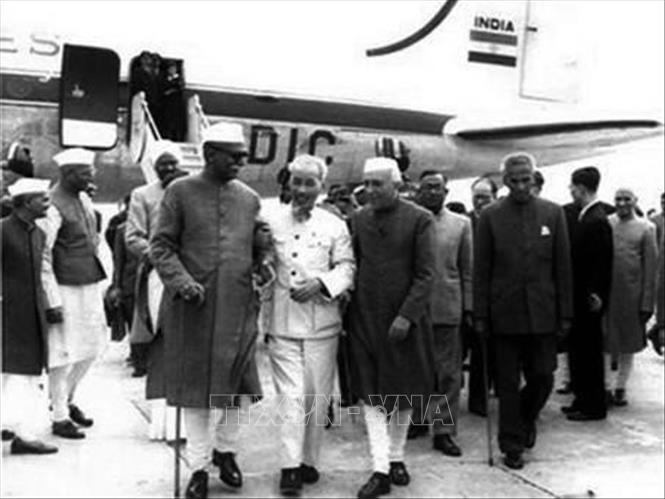 |
| President Ho Chi Minh at New Delhi Airport during his friendship visit to India on February 4, 1958. (Documentary Photo) |
Viet Nam’s people-to-people diplomacy originated in the early 20th century and is closely associated with Ho Chi Minh’s journey to seek a path for national salvation. While working in France, he deeply understood the role of international public opinion and the people of the world in the struggle for national liberation. From there, he gradually built a broad international solidarity front, mobilizing the support and sympathy of progressive people worldwide for Viet Nam’s revolutionary cause.
According to Ho Chi Minh’s ideology, people-to-people diplomacy is an essential component of Viet Nam’s comprehensive foreign affairs framework. Together with Party diplomacy and State diplomacy, it forms a combined force in foreign relations. People-to-people diplomacy is not only a bridge of friendship among nations but also an effective means of enhancing mutual understanding, building trust, gaining international consensus, and mobilizing resources for national development.
Ho Chi Minh consistently advocated the principle of “making more friends and fewer enemies,” placing sincerity, goodwill, and humanity at the center of international relations. This principle was reflected throughout his diplomatic activities, which embodied the spirit of peace, friendship, cooperation, and mutual respect. As a result, people-to-people diplomacy became a particularly important channel for connecting hearts and peoples, helping to build a peaceful and stable environment for development.
Core elements of Ho Chi Minh’s ideology on people-to-people diplomacy
One of the most prominent aspects of Ho Chi Minh’s ideology is his emphasis on the role and power of the people in foreign affairs. He believed that the people are both the makers of history and the source of lasting strength in international relations. For this reason, people-to-people diplomacy possesses unique advantages that other diplomatic channels cannot easily replace, particularly its ability to influence through emotions, sincerity, and trust.
Ho Chi Minh also strongly emphasized the combination of patriotism and genuine internationalism. He advocated linking national unity with solidarity among peoples worldwide, viewing this as an essential condition for generating collective strength for the revolutionary cause. His belief that “workers of all countries are brothers” and his principle of “making our country have as few enemies and as many allies as possible” remain highly relevant today.
He further affirmed the necessity of close coordination among Party diplomacy, State diplomacy, and people-to-people diplomacy. While each channel has its own functions and responsibilities, all share the common goal of safeguarding national interests and contributing to national development and defense.
Another important aspect of his ideology is the mobilization of broad public participation in foreign affairs activities. According to Ho Chi Minh, people-to-people diplomacy should not be the responsibility of specialized organizations alone; it requires the involvement of the entire society, including socio-political organizations, mass associations, intellectuals, artists, businesspeople, and overseas Vietnamese communities.
In particular, he valued flexibility and creativity in people-to-people diplomacy. Cultural, educational, sports, scientific, and technological exchanges, humanitarian activities, and international aid mobilization were all regarded as effective means of enhancing mutual understanding and friendship among peoples.
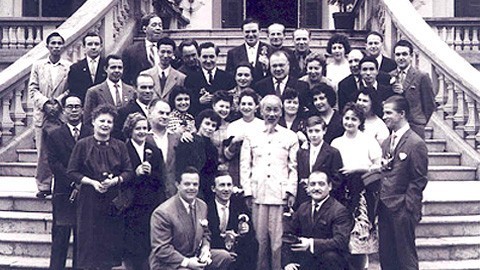 |
| President Ho Chi Minh poses for a commemorative photo with international friends. (Documentary Photo) |
Applying Ho Chi Minh’s ideology to people-to-people diplomacy in Can Tho
As the core organization responsible for people-to-people diplomacy in the city, the Can Tho Union of Friendship Organizations has consistently identified studying and following Ho Chi Minh’s ideology as a central and ongoing mission.
In recent years, the Union has proactively renewed both the content and methods of its activities to ensure greater practicality, effectiveness, and alignment with international integration requirements. From organizing people-to-people and cultural exchanges and receiving international delegations to mobilizing foreign non-governmental aid, all activities aim to strengthen friendship, promote cooperation, and attract resources for the city’s socio-economic development.
In line with Ho Chi Minh’s principle of “making more friends and fewer enemies,” the Union has actively maintained and expanded relations with bilateral friendship associations, international organizations, foreign non-governmental organizations, and overseas Vietnamese communities. As a result, Can Tho’s network of international friends has continued to grow, helping to promote the city’s image as dynamic, friendly, compassionate, and internationally integrated.
In particular, mobilizing foreign non-governmental aid remains one of the Union’s key priorities. As a trusted bridge between international organizations and beneficiary institutions, the Union has contributed to implementing numerous practical programs and projects in education, healthcare, environmental protection, social welfare, and support for vulnerable groups. These achievements have not only brought direct benefits to local residents but have also strengthened understanding, trust, and connections between the people of Can Tho and international partners.
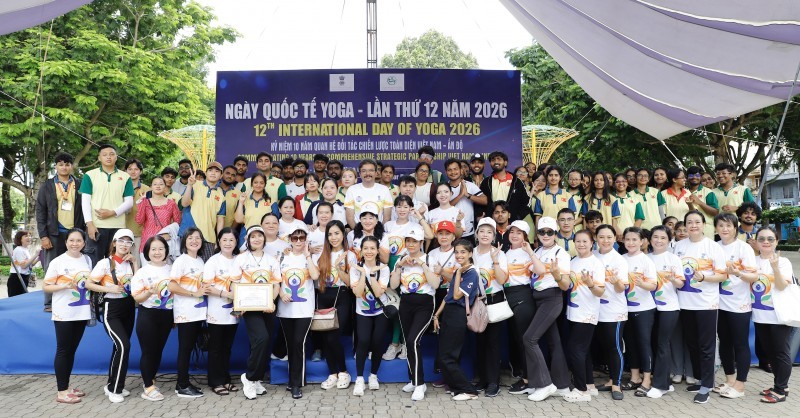 |
| Delegates pose for a commemorative photo during the 12th International Day of Yoga in 2026. (Photo: HT) |
Promoting synergy and innovation in the era of integration
Guided by Ho Chi Minh’s ideology on combining the strengths of different diplomatic channels, the Can Tho Union of Friendship Organizations places great emphasis on close coordination with government departments, agencies, local authorities, member organizations, and relevant institutions in implementing people-to-people diplomacy activities.
At the same time, the Union continues to leverage the contributions of friendship associations, intellectuals, artists, entrepreneurs, volunteers, and overseas Vietnamese communities in spreading messages of peace, friendship, and international cooperation. These groups play an important role in enhancing the effectiveness and sustainability of people-to-people diplomacy in the new context.
In response to the demands of the digital era and deeper international integration, the Union is gradually modernizing its methods of operation, increasing the use of information technology, strengthening external communications in the digital environment, and promoting the image of Viet Nam, its people, and Can Tho City to international audiences.
People-to-people exchange activities are organized in a practical and community-centered manner. Through cultural, artistic, and sports exchanges, youth cooperation programs, humanitarian initiatives, and international friendship activities, solidarity and mutual understanding between the people of Can Tho and people around the world continue to grow stronger.
Continuing to promote Ho Chi Minh’s values in people-to-people diplomacy
More than half a century has passed, yet the values embodied in President Ho Chi Minh’s ideology on people-to-people diplomacy remain highly relevant today. These values include peace, friendship, cooperation, and development; the principle of placing the people at the center; and the art of harmonizing national interests with international responsibilities.
For the Can Tho Union of Friendship Organizations, continuing to study, learn from, and creatively apply Ho Chi Minh’s ideology is not only a political and ideological requirement but also a key driver for improving the quality of people-to-people diplomacy in the new era. Building on the traditions of solidarity, friendship, and international integration, the Union will continue to fulfill its role as a bridge in people-to-people diplomacy, actively engage in economic, cultural, and science-and-technology diplomacy, expand its network of international partners, strengthen the mobilization of foreign non-governmental aid, and accelerate digital transformation in foreign affairs activities.
At the same time, it will continue to promote the potential and strengths of Can Tho as a growth center of the Mekong Delta. These priorities are also highlighted in Resolution No. 59-NQ/TW, which seeks to enhance the effectiveness of international integration in the country’s new stage of development, contributing to the building of a civilized, modern, and culturally rich city while making positive contributions to Viet Nam's people-to-people diplomacy.
 | Ho Chi Minh's Ideology on Revolutionary Moral Education for Students Vietnamese youth today have better environments and conditions to study, train, mature, improve their qualifications, form revolutionary ideals, morality, and cultural lifestyle, gradually completing their ... |
 | Uncle Ho in Hearts of Young Generation in Guangzhou, China On the afternoon of May 31, at the headquarters of the Consulate General of Vietnam in Guangzhou, the Party Cell of the Consulate General of ... |
Related Stories
 Viet's Home
Ca Mau Enhances Capacity of Officials to Effectively Mobilize International Aid
 Friendship
People-to-People Bridges Across 50 Years of Vietnam-Philippines Relations
Recommended
 Friendship
Vietnam-Russia Friendship Association of Bac Ninh Expands Network Following Reorganization
 Friendship
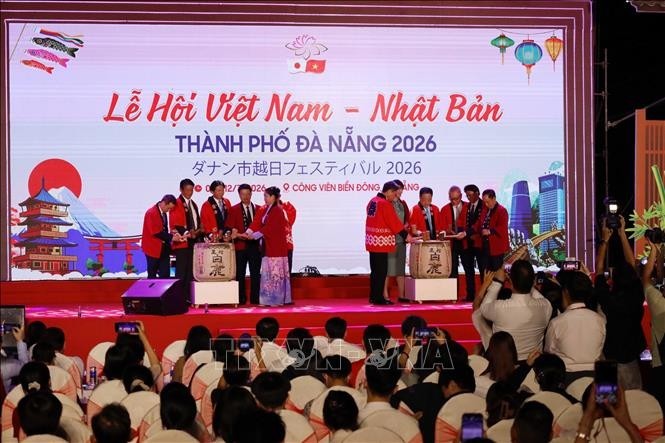
Vietnam-Japan Festival 2026 Launched
 Friendship
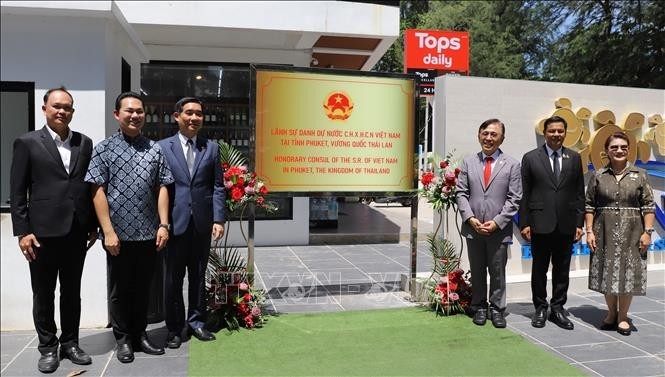
Vietnam Establishes First Honorary Consulate in Thailand
 Friendship
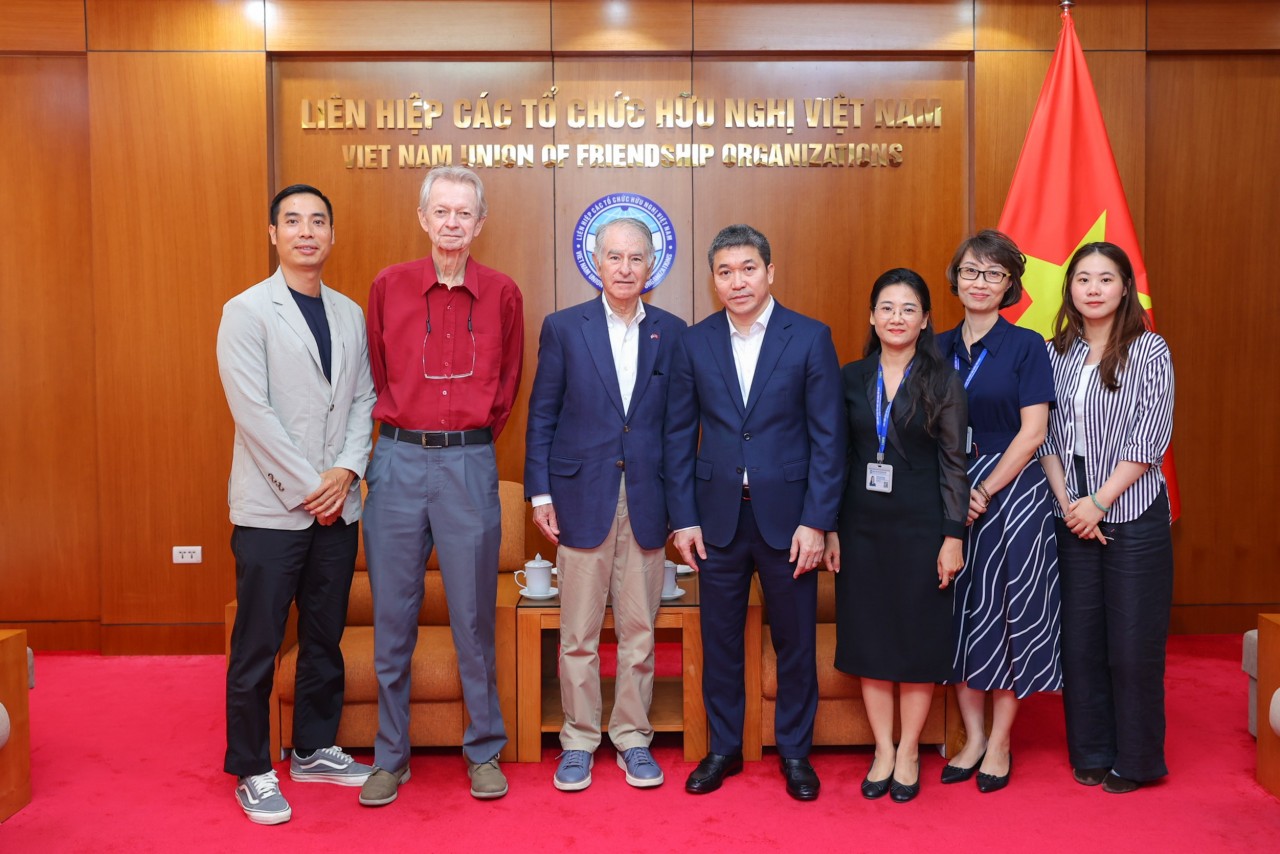
Friends of Project RENEW Continues Supporting War Consequence Remediation Efforts in Viet Nam
 Friendship
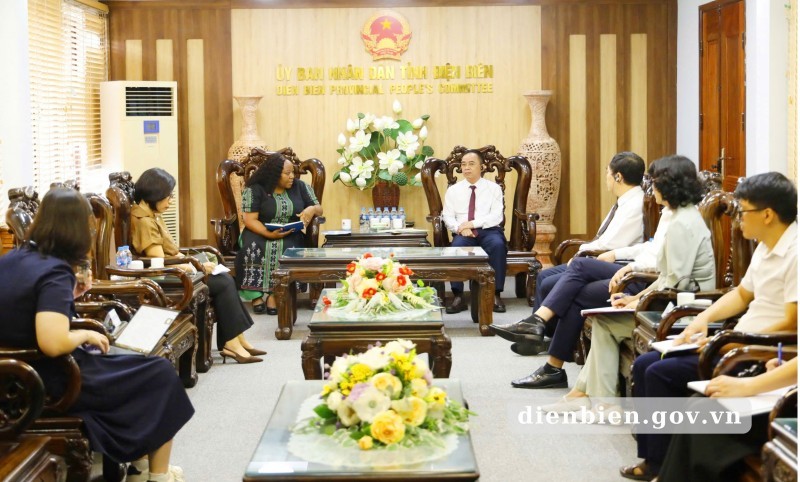
UN Women Reaffirms Cooperation with Dien Bien Province
 Friendship
Vietnamese Ambassador to the Philippines: People-to-People Diplomacy Geared Toward Practical Cooperation and Benefits for the People
 Friendship
Vietnam-Thailand Friendship Association Coordinates with Nghe An Province to Prepare for 50th Anniversary of Vietnam-Thailand Diplomatic Relations
 Friendship