
Last solar eclipse of the decade wows across Asia
| Southeast Asia's largest solar power complex inaugurated in Tay Ninh | |
| 48-MW solar farm in Binh Thuan starts operation | |
| Total solar eclipse mesmerizes America |


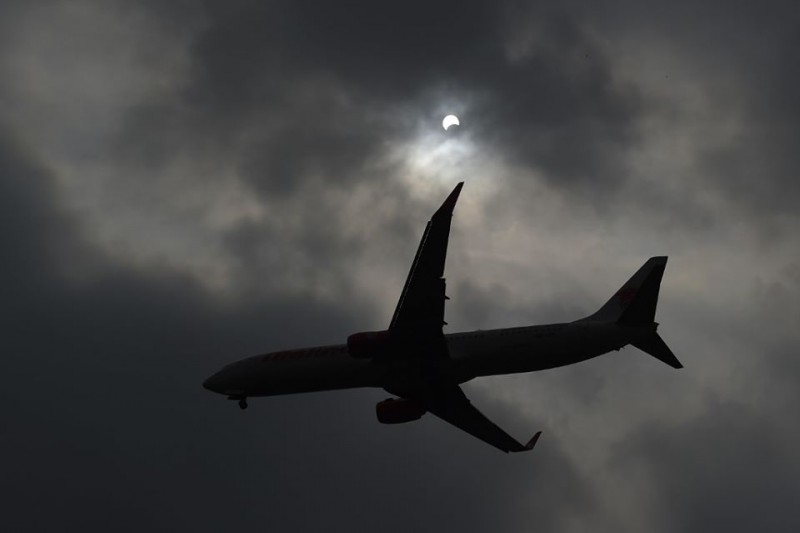 |
| An airplane flies past as the moon moves to cover the sun in a solar eclipse as seen from Hanoi. Photo: AFP |
People across Asia watch in awe as the moon moves to cover the sun, forming a rare annular solar eclipse on December 26.
An annular solar eclipse happens when the moon covers the sun's centre, leaving the sun's visible outer edges forming a ring around the moon. It occurs when the moon is farthest from the earth and appears smaller, hence not blocking the entire view of the sun, according to the National Aeronautics and Space Administration (NASA).
While these types of eclipses occur every year or two, they are only visible from a narrow band of Earth each time and it can be decades before the same pattern is repeated.
While these types of eclipses occur every year or two, they are only visible from a narrow band of Earth each time and it can be decades before the same pattern is repeated.
Depending on weather conditions, this year's astronomical phenomenon was set to be visible from the Middle East across southern India and Southeast Asia before ending over the northern Pacific.
 |
| Monks wearing solar filter glasses watch a "ring of fire" solar eclipse at the Gaden monastery in a Tibetan colony in Teginkoppa, 50km south of Dharwad in India's southern Karnataka state, on Dec 26, 2019. Photo: AFP/Rakesh Nagar |
In southern India, people gathered on the beaches in Tamil Nadu to watch the event.
But in New Delhi, cloud and pollution blocked the view.
The eastern state of Odisha declared a public holiday, with all government offices, courts, schools and colleges closed.
In Indonesia, hundreds of people gathered outside Jakarta Planetarium to watch the event using protective glasses supplied by the planetarium, hoping for clear skies at the time of maximum eclipse.
Outside the narrow band where the "Ring of fire" effect can be observed, skywatchers would see a partial solar eclipse.
It is dangerous to look at the sun through binoculars or telescopes without special filters as it can cause permanent eye damage.
The next annual eclipse in June 2020 will be visible to a narrow band from Africa to northern Asia.
The following one in June 2021 will only be seen in the Arctic and parts of Canada, Greenland and the remote Russian far east.
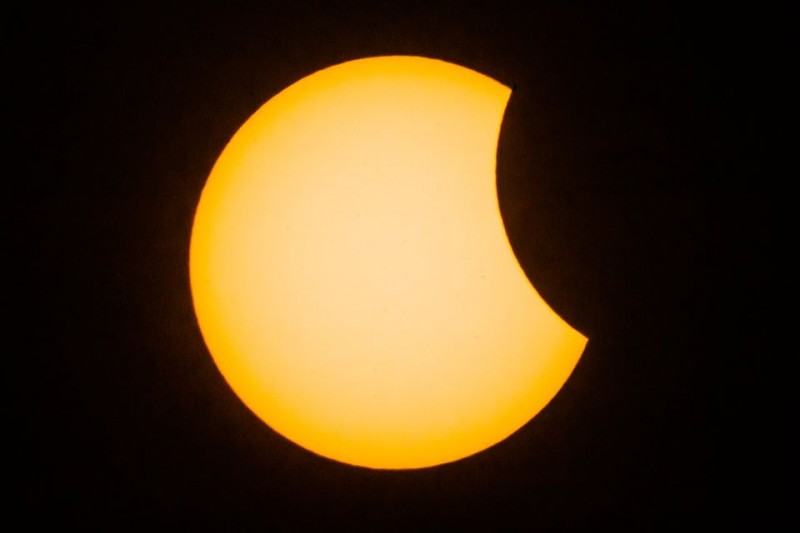 |
| The moon moves to cover the sun. Photo: Tân Trần |
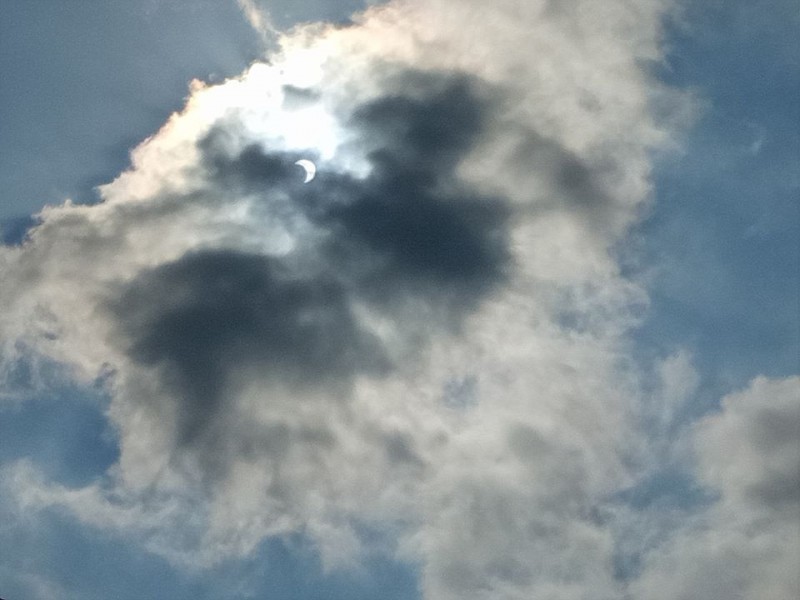 |
| View of the annular solar eclipse taken from Vietnam. Photo: Ngân Nhum |
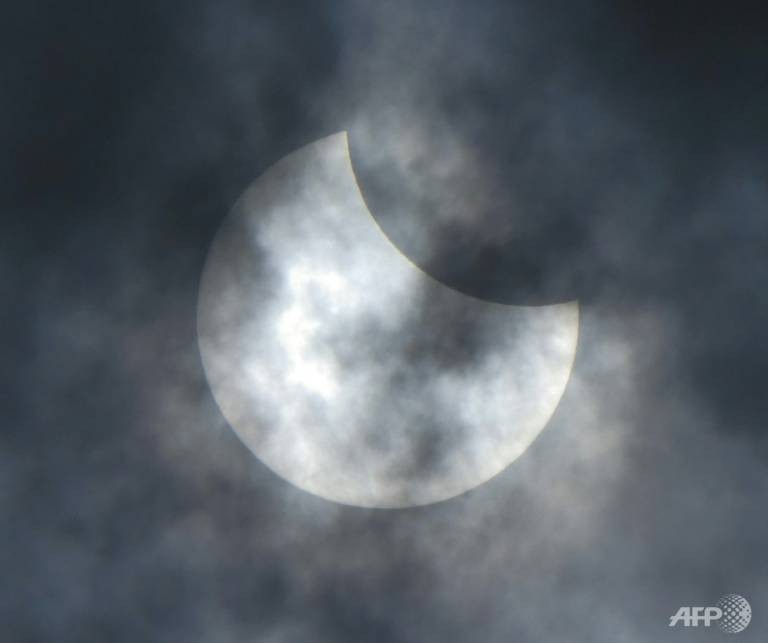 |
| The moon moves in front of the sun during the start of the rare "ring of fire" solar eclipse in Jakarta. Photo: AFP/Bay Ismoyo |
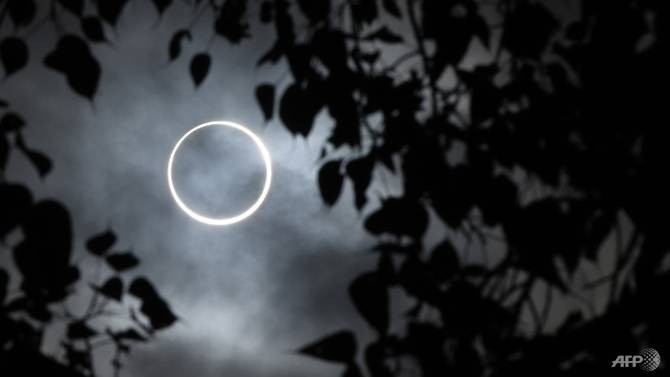 |
| The moon totally covers the sun in a rare "ring of fire" solar eclipse as seen from the south Indian city of Dindigul in Tamil Nadu state on Dec 26, 2019. Photo: AFP/Arun Sankar |
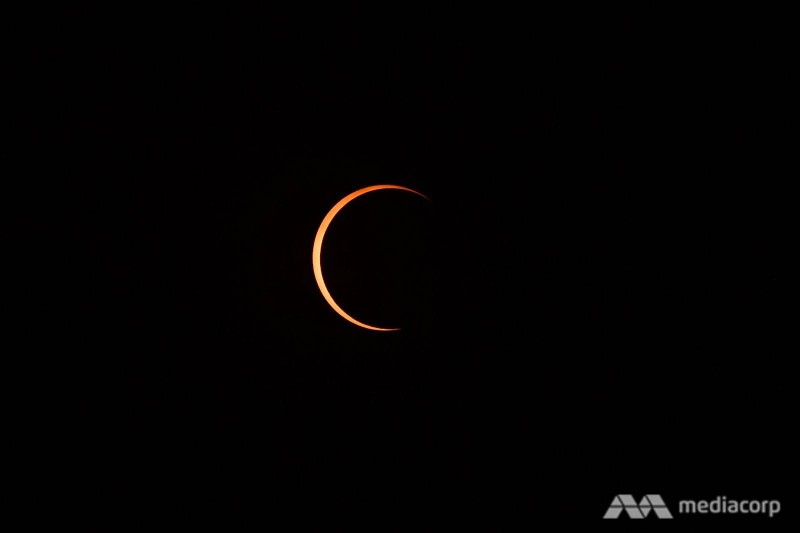 |
| View of the eclipse taken at Marina Barrage. Photo: Jeremy Long |



Most read




Related Stories
 Handbook
Vietnam’s Growing Economic Influence Highlighted by Indonesian Media
 National
Vietnam News Today (May 24): Vietnam, Finland Discuss Ways to Boost Labor Cooperation
 National
Vietnam News Today (Apr. 6): Vietnam Ranked 6th Among Fastest Growing Asian Economies in 2024
 Viet's Home
Markspersons Bring Back More Successes to Vietnam
Recommended
 World
World
Thailand Updates Visa-free Rules
 World
World
Vietnam Reaffirms Support for Effective Implementation of ASEAN's Five-Point Consensus
 World
World
Algeria Shares Healthcare Expertise to Advance Africa's Pharmaceutical Self-Reliance
 World
World
Modi's Asia-Pacific tour highlights India's regional engagement
Popular article
 World
World
Australia-India Partnership on Cyber, Critical Technologies and Supply Chains
 World
World
Venezuela Declares Seven Days of National Mourning for Earthquake Victims
 World
World
Europe Faces Historic Heatwave, More Than 1,000 Deaths Reported
 World
World