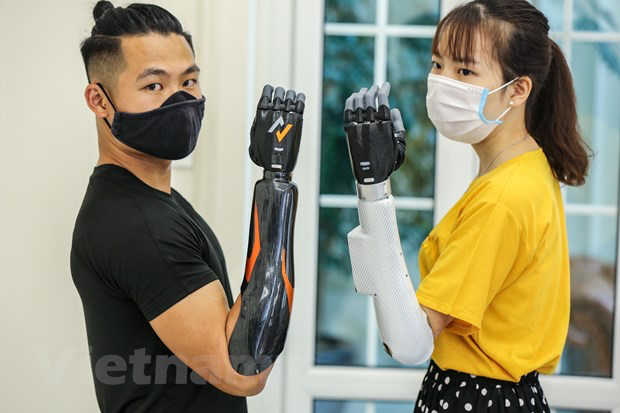
The 'made in Vietnam' robotic arm project has officially been realized. Photo: Vietnamplus
With a desire to help people with disabilities integrate into the community, Khanh Ha, founder of Vulcan, wishes to bring useful products to the less fortunate. Together with CEO Rafael Masters, Khanh Ha embarked on a robotic arm project in 2018.
In 2019, along with startups from all over the world, Vulcan's project was the only representative from Southeast Asia to participate in The Venture contest. This start-up from Vietnam, making prosthetic arms for the disabled, was honored in the Top 10.
The main product of Vulcan Augmetics is a gripable prosthetic arm. In addition, the company has also developed modules for doing push-ups or helping people with disabilities to use computers and do waitress jobs.
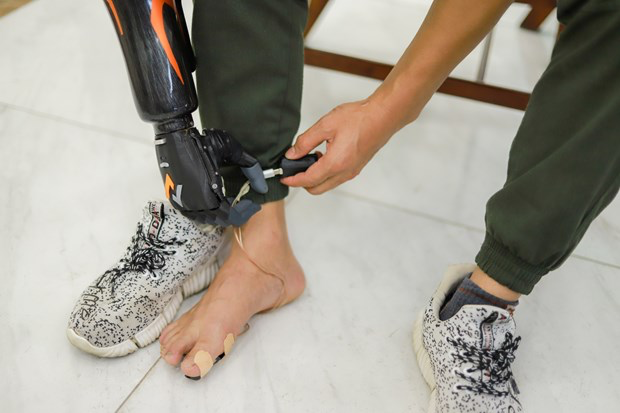
The company's robotic arm has a built-in Bluetooth connection. To use, users wear sensors at the ankle and control through touching their toes. This robotic arm can not only hold items abd drive, but also rotate the wrist 360 degrees.
An electric hand with a similar function costs from 60 million to several hundred million abroad, and with a 360-degree rotation function can cost up to billions of dong. However, the first robotic hand product "made in Vietnam," researched and developed by Vulcan Augmetics. costs only VND 23-25 million.
The product launched in early 2021 and has immediately signed distribution contracts at 17 orthopedic centers and hospitals nationwide.
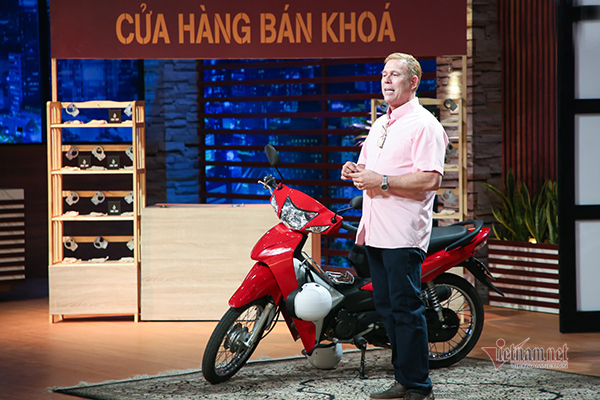
To develop the next stage for the product in Vietnam, Trinh Khanh Ha and Rafael went on the Shark Tank teleision show to call for an investment of VND 5 billion for a 5% stake.
Video: Vietnamplus
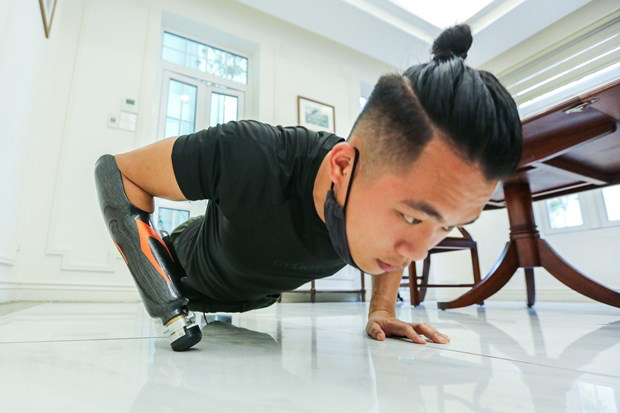
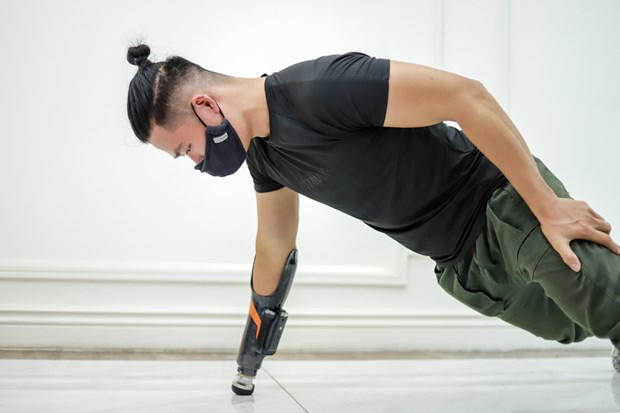
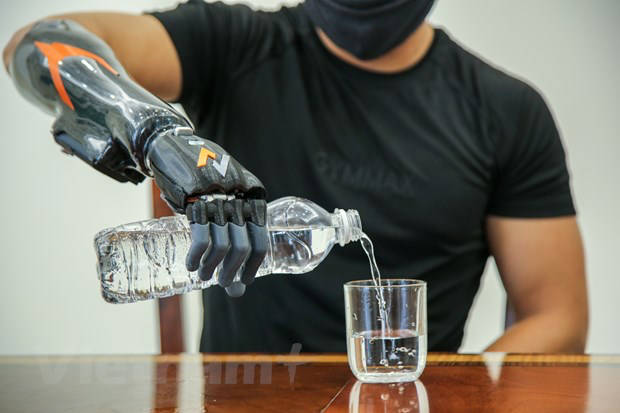
Thanks to the robotic arm, 28-year-old Hoang Van Dung can do push-ups, exercise and even drive himself to work. Photo: Vietnamplus
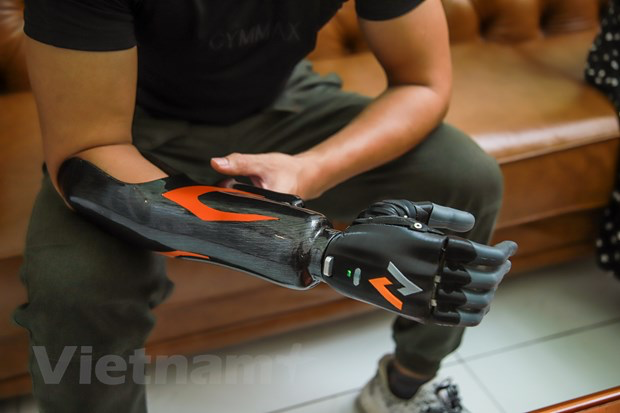
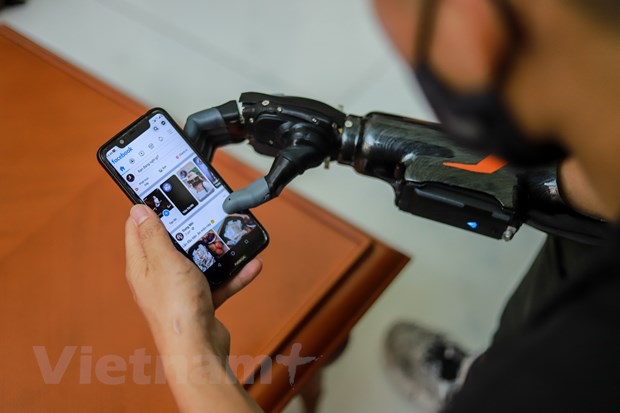
Inspired by Marvel superheroes, the Vietnamese-made robotic arm provides users with a combination of grasping, driving, 360-degree wrist rotation and bluetooth connectivity Photo: Vietnamplus
The arm is fully charged and controlled by foot movement. Photo: Vietnamplus
Between the user's body and the robotic arm, there is a socket connector that is measured and manufactured separately for each person. Photo: Vietnamplus
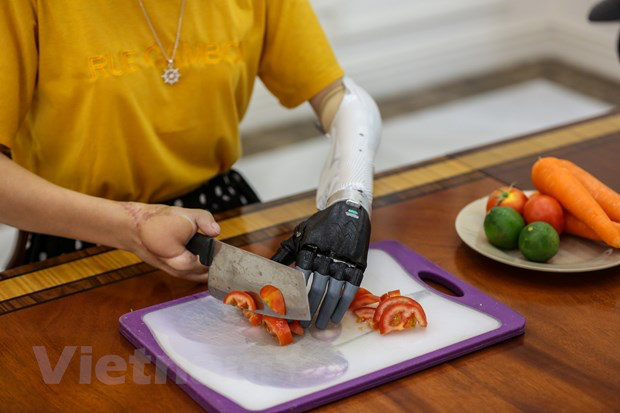
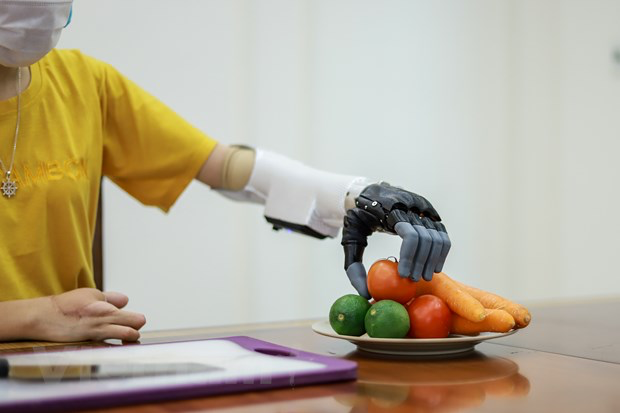
The hand is covered with silicone to increase friction to help users easily grip objects of various sizes and materials. Photo: Vietnamplus
The wrist lock set can be rotated 360 degrees, adjusting the grip position to suit each movement. Photo: Vietnamplus
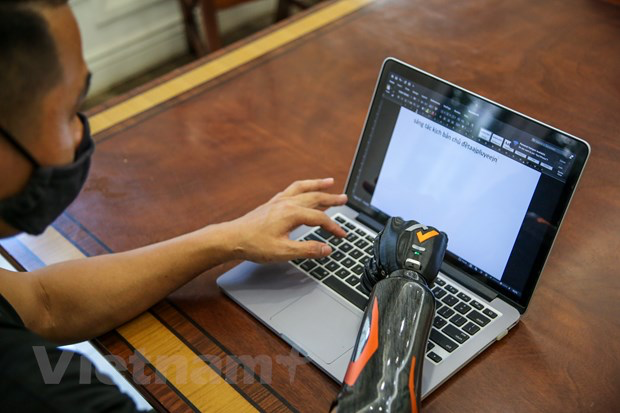
This arm can support users to type on a computer keyboard. Photo: Vietnamplus
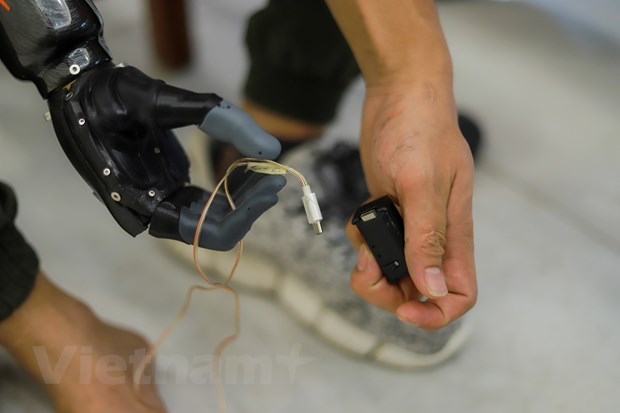
A compact sensor box is connected to the sole of the control shoe, sending a signal to close or open the hand. Photo: Vietnamplus
The control system is integrated into two push buttons with opening and closing commands. Photo: Vietnamplus.
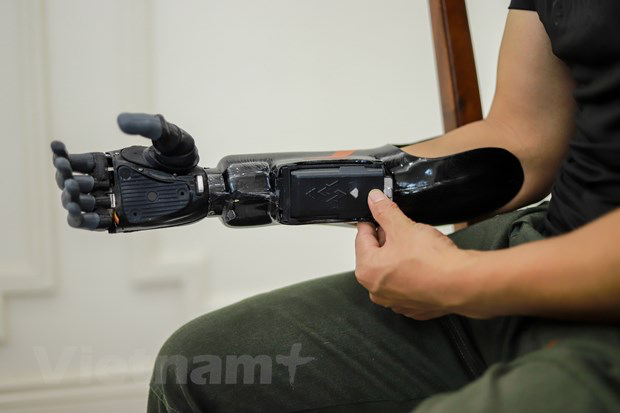
The arm and hand connection allows the user to easily disassemble the module. Photo: Vietnamplus
The manufacturer said that a compactly designed battery box on the arm will provide active power for the hand parts. Photo: Vietnamplus
Two push buttons are connected to the compact bluetooth transmitter box. The bluetooth signal from this transmitter box will be transmitted to the central controller of the hand Photo: Vietnamplus
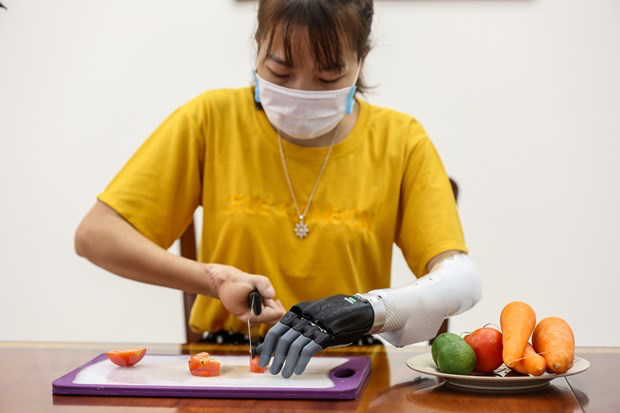
Ly Thi Khe, 23, from Cao Bang, has been using a robotic arm for 2 years. Photo: Vietnamplus
For Ly Thi Khe, the robotic arm helped her to step into a new page of her life. Photo: Vietnamplus
The COVID-19 pandemic has certainly accelerated the development of cross-border e-commerce, and Vietnamese online sellers need to be prepared to capitalise on the new opportunities ...
Vietnam News Today (Jun. 29): Vietnam, Singapore eye stronger cooperation to build ASEAN Halal value chain; Vietnam joins world's top 30 most competitive economies, eyes further reforms; Vietnam moves beyond production hub to higher-value link in global value chain: French expert; Lower airfares give Vietnam's summer tourism a timely boost.
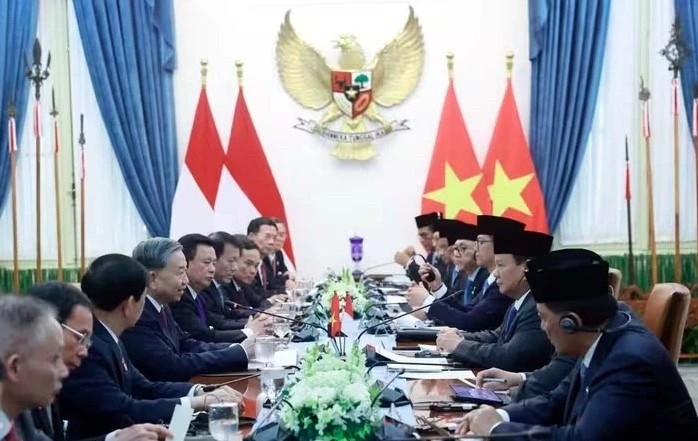
Vietnam News Today (Mar. 11): Vietnam, Indonesia elevate ties to Comprehensive Strategic Partnership; Vietnam, Japan strengthen cooperation for mutual growth; “Made in Vietnam” animated films to go global; Vietnam-China bilateral trade reaches 31 billion USD in first two months.
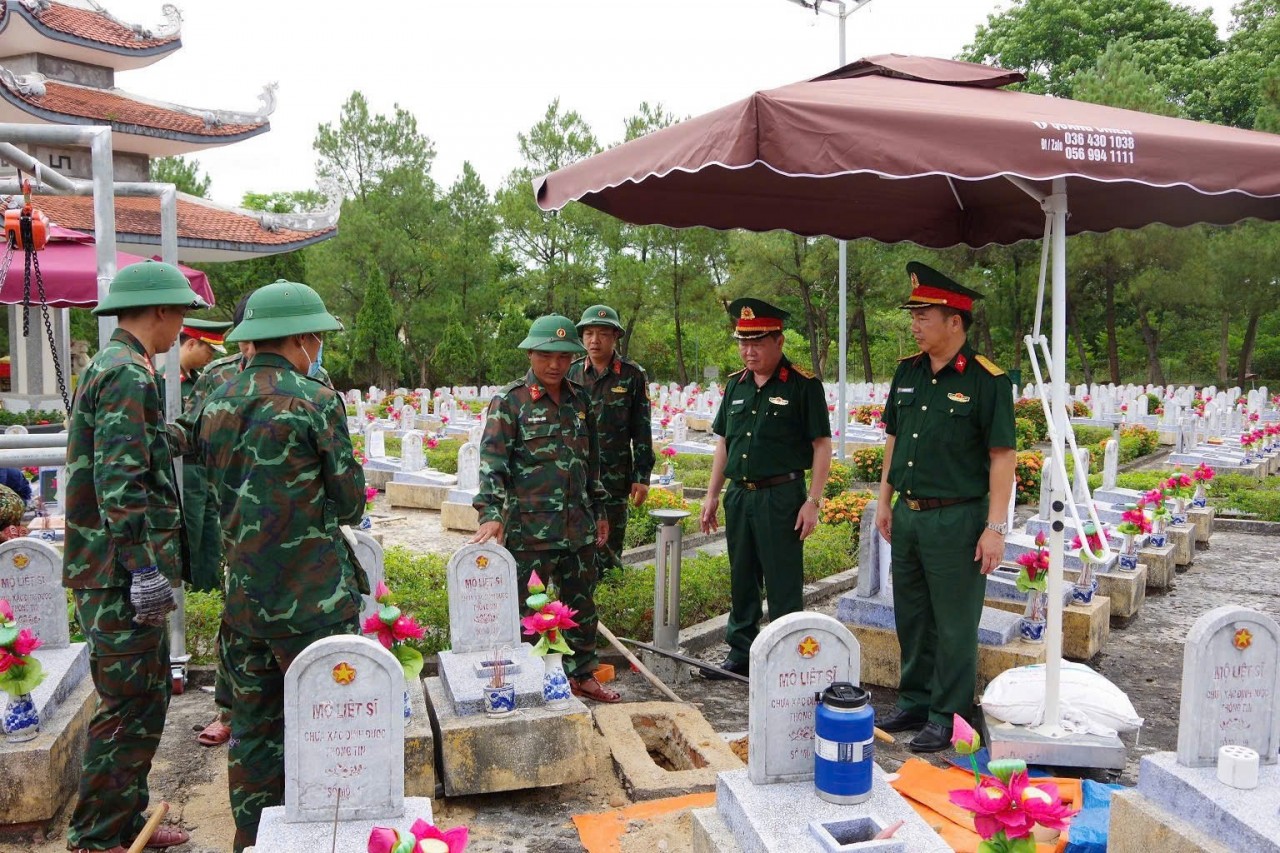
After 111 days of implementing the "500-Day Campaign to Accelerate the Search, Recovery, and Identification of Fallen Soldiers' Remains," authorities have recovered the remains of more than 1,300 fallen soldiers, collected samples from over 27,000 martyrs' graves, and accelerated unexploded ordnance clearance efforts, gradually advancing the goal of reuniting Vietnam's fallen heroes with their families and comrades.
More and more highland communities develop tourism products upon natural landscapes, traditional crafts, and lifestyles to tell the story of their local cultures.
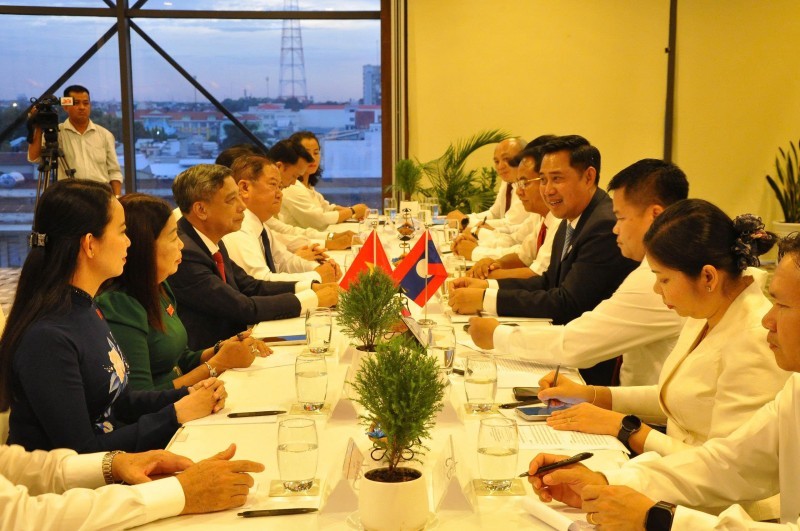
Dong Van Thanh, Member of the Party Central Committee, Permanent Deputy Secretary of the Can Tho Party Committee, and Chairman of the Can Tho People's Council, together with the city's Vice Chairpersons of the People's Council, received a delegation from the People's Council of Champasak Province, Laos, led by Alounxay Sounnalath, Member of the Central Committee of the Lao People's Revolutionary Party, Secretary of the Champasak Provincial Party Committee, and Chairman of the Champasak People's Council, during their working visit to Can Tho on the afternoon of June 30.
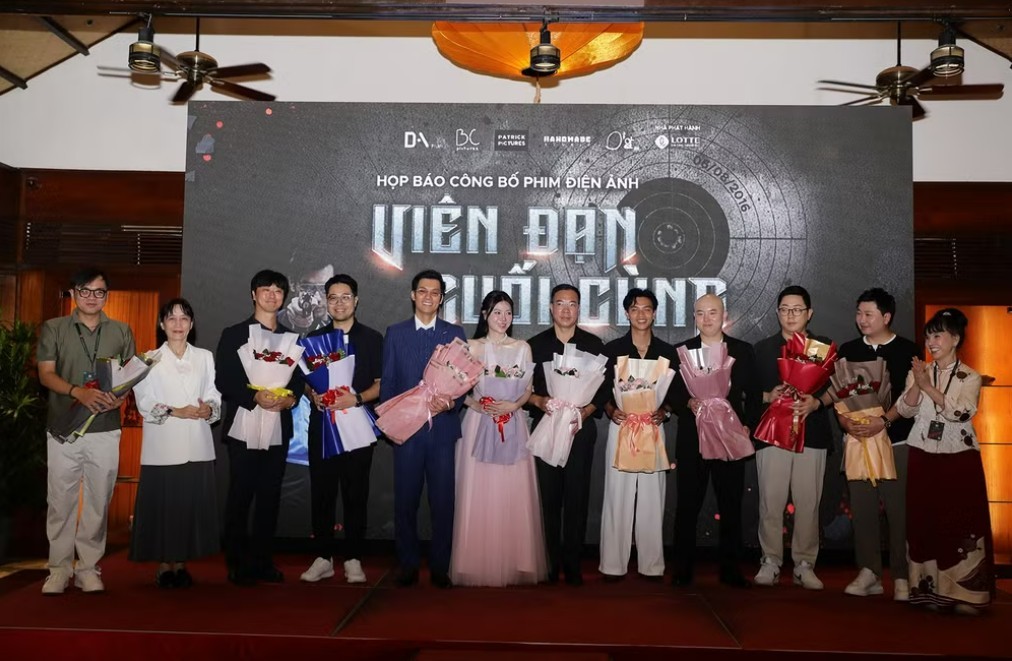
On June 29th, the Vietnamese-Republic of Korea (RoK) co-production film "The Last Bullet", inspired by Olympic gold medalist shooter Hoang Xuan Vinh, was officially announced.
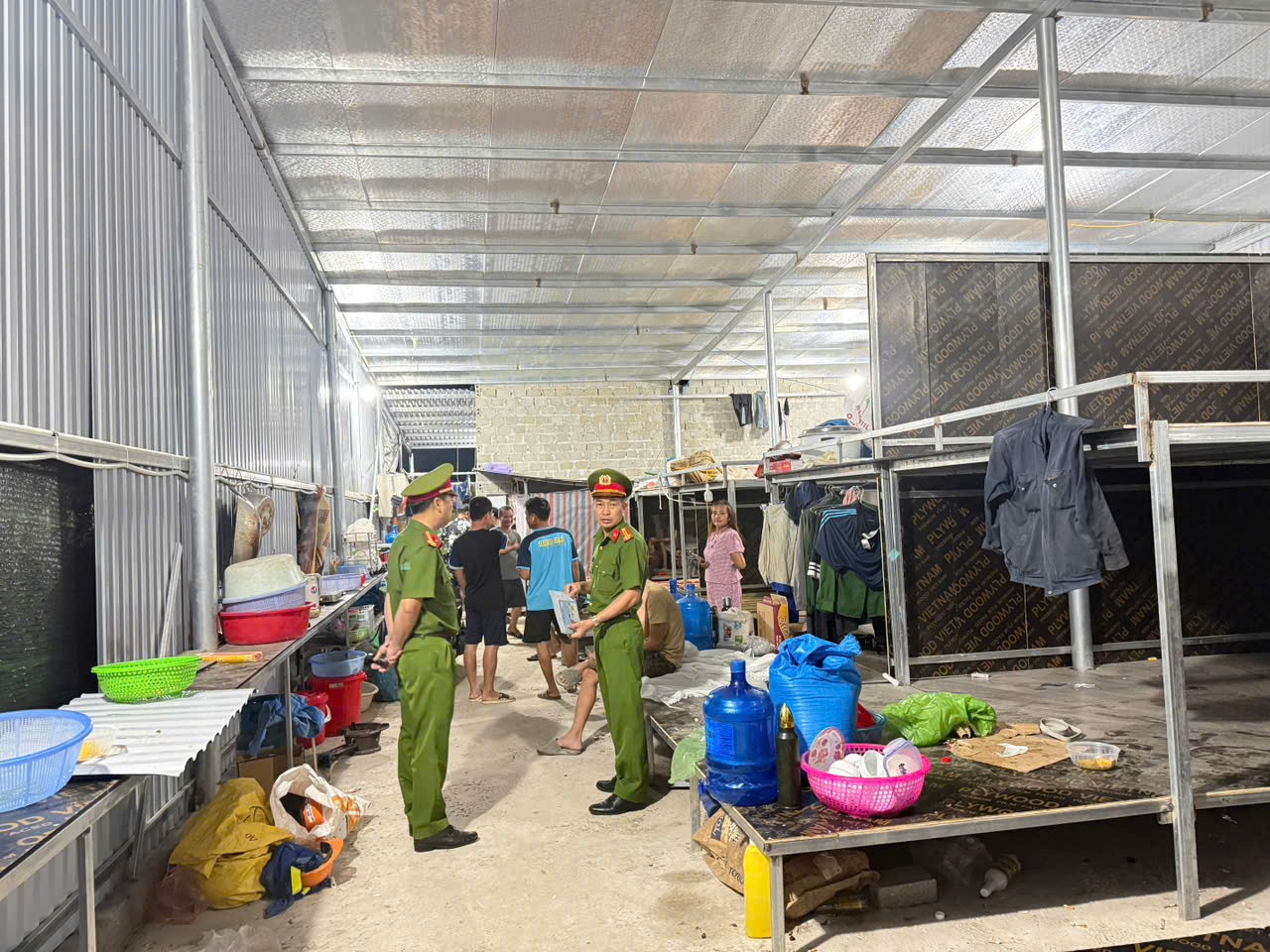
The issue of drug abuse and related criminality is evolving, characterized by a distinct spatial shift. As security at traditional accommodation establishments, offenders are exploiting the privacy of private apartments and vacation rentals, to conduct illicit activities, effectively bypassing conventional law enforcement monitoring.
On June 26th, the Steering Committee for the Search, Collection, and Identification of Martyrs' Remains in Quang Tri Province (the Steering Committee) launched its 2026-2027 dry season mission amidst a growing scarcity of information regarding martyrs' burial sites. Local authorities will mobilize various resources, intensify data collection, collect biological samples, digitize information, and expand domestic and international cooperation to enhance the effectiveness of the search and identification of martyrs' remains.
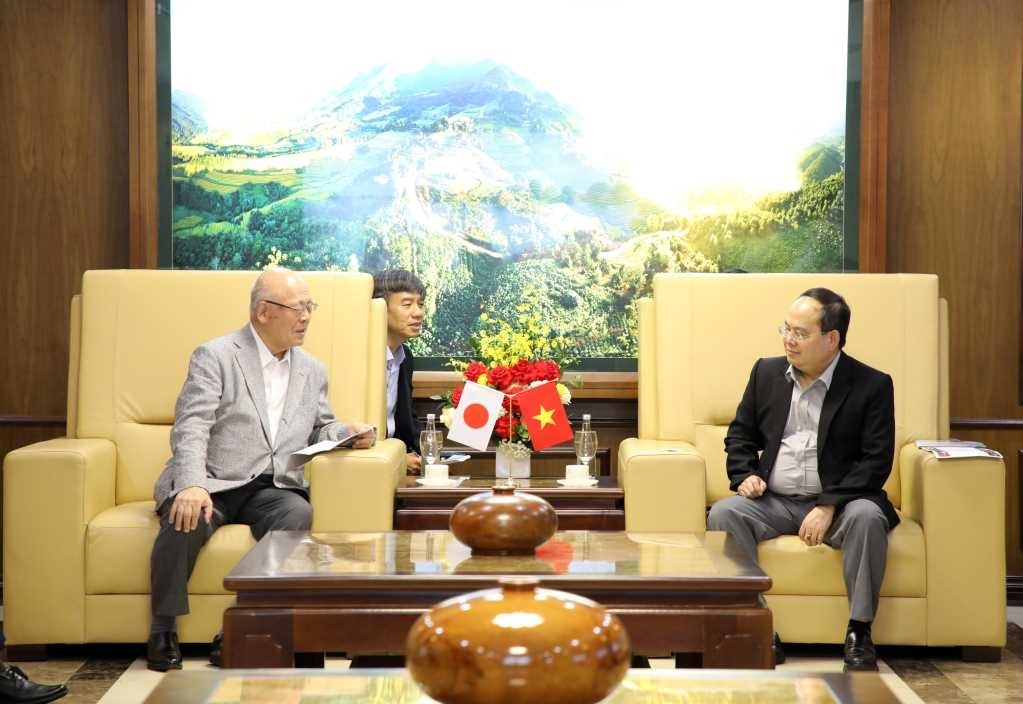
On June 23, a meeting between Quang Ninh Provincial Party Secretary and Head of the National Assembly Delegation Quan Minh Cuong and Special Advisor to the Japan-Vietnam Parliamentary Friendship Alliance and Special Advisor to Ha Long University Takebe Tsutomu was held in Quang Ninh.
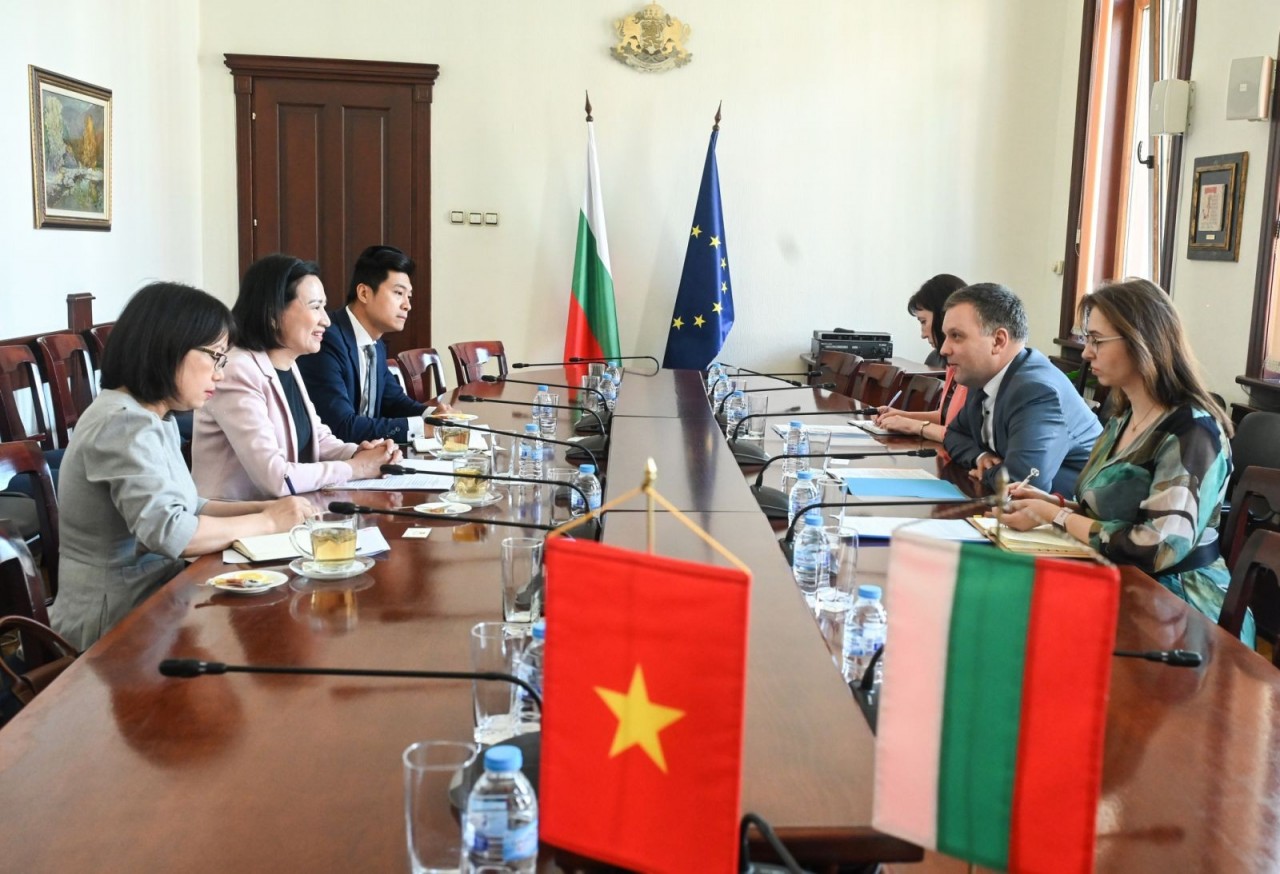
A meeting between Vietnamese Ambassador to Bulgaria Nguyen Thi Minh Nguyet and Bulgarian Minister of Justice Nikolay Naydenov was recently held. The two sides discussed measures to strengthen legal and judicial cooperation between the two countries in the new phase.




 National
 National
 Viet's Home
 Viet's Home
 Viet's Home
 Viet's Home
 Viet's Home
 Viet's Home
 Viet's Home
 Viet's Home