
Pho and the Bridges That Lead Back Home
| Nearly 40,000 Phone Calls Are Made To “500-day Campaign” Hotline Hai Phong: Focusing Resources on Key Programs |
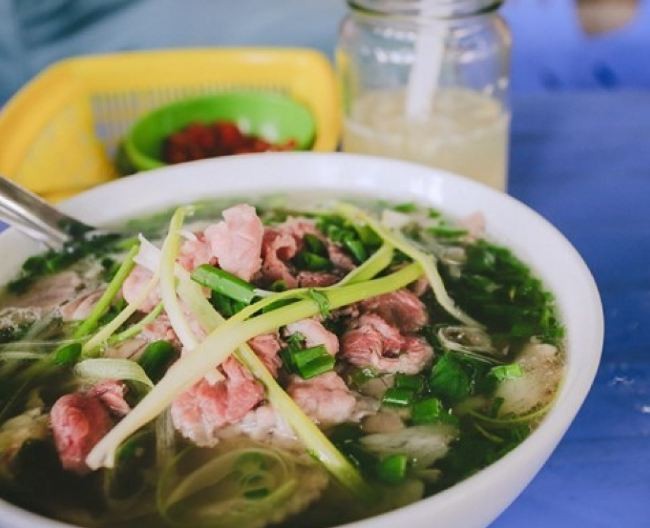 |
| When these small points connect to form a network, Pho tells more than just a culinary story. Behind it lies memories, community, generations born far from their homeland, a very natural way for Viet Nam to connect with the world (Photo: Getty Image). |
Reconnecting with home through a scent
In a Hanoi café on a rainy day, Mai Hai Lam enthusiastically talked about…Pho in Europe.
It started as just a story about a dish. But the more the story unfold, the more meaningful layers that behind those bowls of Pho: stories of people who had lived away from Viet Nam for decades; stories of Vietnamese children born in Europe; stories of restaurants located thousands of kilometers apart trying to connect with each other.
Above all of that, there is a feeling of nostalgia.
At the age of 18, Mai Hai Lam left Hanoi to study in Poland. He initially thought he would return home after graduation. However, the upheavals in Eastern Europe in the early 1990s led his life in a different direction: he stayed, established a career, started a family, and has remained connected to Poland to this day.
Having lived away from home for more than two-thirds of his life, some things in his memory remain vivid. The small streets. The neighborhood loudspeakers. The misty Hanoi mornings. And the smell of Pho.
He recalled the subsidy era, when a bowl of Pho was sometimes a treat for a sick child. The lunch container was opened, steam rose, the broth was clear, subtly sweet, and the aroma filled the room.
People can travel, but one’ s memories have their own paths to bring them home. For those living abroad, the homeland sometimes doesn't appear as a border on a map. It can be a voice, a song, a dish, or even just a scent unexpectedly encountered in a city thousands of miles away from home.
Many years later, at the 12th European Vietnamese Business Forum in Budapest (Hungary), Mai Hai Lam proposed the idea of organizing a Pho Week in Europe.
The idea quickly found like-minded individuals. These included Dao Hong Hai with Hanoi Station in Brussels; Thai Tran, who works in the distribution of Vietnamese agricultural products and food in the UK; Nguyen Thi Viet Ha in Italy; Jolie Stanser in Sweden; Bui Diep Quynh and Khanh Tran in Germany; artist Quynh Iris de Prelle in Belgium; Thang Tran with PhoCkaren in Slovakia; Tran Nguyen with Mova; Dang Linh and Ngo Diem Le in the Netherlands and so on.
They live in different cities, do different jobs, and have different paths leading far from home, but they share one thing in common.
“I believe that the love for Pho, for Vietnamese cuisine, is the common denominator of those who have been, are, and will be involved in the network. It's not just my love or the love of any individual. It's 'our' love for our homeland,” Mai Hai Lam said.
Therefore, the original name, I Love Pho, was changed to We Love Pho. Just a change of pronoun. But the shift from “I” to “we” represents the distance from a personal longing to a shared story.
The stakeholders contribute business experience, connection, technology to introduce Vietnamese products into distribution systems. From individuals who initially worked alone, a network gradually formed.
| VIETNAMESE PEOPLE ABROAD Over 6.5 million people Over 130 countries and territories Resolution No. 23-NQ/TW dated August 2, 2026, of the Politburo identifies the Vietnamese community abroad as an inseparable part and a resource of the Vietnamese nation; it also requires the continued development of the community's potential, strengths, and connecting role in the new period. Source: Resolution 23-NQ/TW; State Committee for Overseas Vietnamese, Ministry of Foreign Affairs. |
When small kitchens connect to form a map
The journey of We Love Pho didn't begin in grand halls. It started where Pho was already a part of everyday life in Europe: a restaurant in Warsaw, an eatery in Prague, a Vietnamese kitchen in Slovakia, or a culinary establishment in Brussels.
Each place is just a tiny dot. But when those tiny dots are connected, a map begins to emerge.
European Pho Week was one of the first experiments. According to We Love Pho, from December 8-14, 2025, more than 250 locations in 23 countries participated in activities celebrating Pho Day on December 12.
There isn't a single stage. Each restaurant finds its own way to tell its story: introducing the history of the dish, demonstrating Pho cooking, recreating a Pho stall, interacting with the chef; besides beef Pho and chicken Pho, there are also Pho rolls, mixed Pho, vegetarian Pho, and variations that better suit local tastes.
An interesting cultural aspect to culture is that: Going out into the world doesn't mean confining yourself to the past. Maintaining your core values while engaging in dialogue with new environments is how a cultural value continues to thrive.
From these individual initiatives, We Love Pho aims to build a “European Pho map,” connecting approximately 5,000 Vietnamese restaurants, chefs, businesses, and food professionals.
If realized, the value of that map would lie not only in helping people find a place to eat Pho. A restaurant in Berlin could be where a German first learns to pronounce the word “Pho.” A restaurant in Prague could be where a Vietnamese child hears their parents tell stories about Hanoi. A kitchen in Warsaw could bring cinnamon, star anise, rice, fish sauce, and many other Vietnamese products into a new supply chain.
A single dish can lead to a story about the land where it was made. Curiosity about a dish can lead to curiosity about a country. And sometimes, curiosity starts a journey.
That's one of the many ways that soft power works, not necessarily through big messages, but through countless small touchpoints, close enough that people naturally want to learn more.
The Pho Cultural Roadshow Europe 2026 clearly demonstrates how these small points can be reconnected. Over nearly three weeks, from June 26th to July 15th, 2026, the journey will pass through seven stops in six countries: Prague (Czech Republic), Warsaw (Poland), Bratislava/Trnava (Slovakia), Vienna (Austria), Budapest (Hungary), Bochum and Berlin (Germany).
Eight Vietnamese artisans, chefs, and culinary experts are participating in the journey. But the Roadshow isn't designed solely for cooking and serving Pho.
In Warsaw, there were activities to share professional skills and network within the culinary business. In Slovakia, the delegation participated in Viet Nam Day. In Vienna, there were diplomatic exchange activities. Budapest connected the Vietnamese expatriate community and businesses. Berlin became the final dot of the journey.
The same bowl of Pho, but in each place, it sparks a different conversation.
| PHO CULTURAL ROADSHOW EUROPE 2026 20 days: June 26 - July 15, 2026 6 countries: Czech Republic - Poland - Slovakia - Austria - Hungary - Germany 7 stops: Prague - Warsaw - Bratislava/Trnava - Vienna - Budapest - Bochum - Berlin 8 Vietnamese artisans, chefs, and culinary experts participated in the journey. The activities combine culinary demonstrations, sharing of traditional crafts, community interaction, business networking, and promotion of Vietnamese culture. Source: Pho Cultural Roadshow Europe 2026; State Committee for Overseas Vietnamese; Viet Nam News. |
From a bowl of Pho to bridges of human connection
In Prague, many diners patiently queue to enjoy bowls of Pho prepared by artisans from Viet Nam.
But in events like these, sometimes the most memorable thing goes beyond the dish itself.
Many Vietnamese families bring their young children. Children born and raised in Europe get to hear Vietnamese, see traditional clothing, observe their grandparents' dishes, and taste flavors they might have only known in their own family kitchens before.
“What we are most proud of is that we have preserved our national cultural identity. Second and third generations still have access to Vietnamese culture through cuisine, traditional clothing, and Vietnamese language classes,” shared Nguyen Duy Vu, President of the Association of Vietnamese People in Slovakia.
That detail adds another dimension to the story of Pho. Cuisine not only brings Vietnam to the world but can also bring Vietnam back to generations of Vietnamese people growing up outside the country's borders.
Mai Hai Lam spoke about the Roadshow in a rather simple way: “Pho is not the destination. Pho is a cultural gateway.”
Through that door, a foreigner can learn more about Vietnam. A Vietnamese child in Europe, through that same door, can find part of the answer to the question of where they come from, and Vietnamese people living far from home can find each other.
Perhaps the lasting value of the “Pho map” doesn't lie in whether it ultimately contains 500, 1,000, or 5,000 addresses. More importantly, behind each dot on the map is a person.
Someone who left Hanoi more than thirty years ago still remembers the steam rising from the thermos of Pho from their childhood. A family brings their child to the festival so the child can hear a few more Vietnamese phrases. A chef wants to cook Vietnamese food more authentically. A businessman wants to bring his hometown's products to the local market.
Or simply, a European diner picking up chopsticks for the first time, bending down to a bowl of hot Pho and asking, “Where does Pho come from?”
There are bridges built of steel and concrete. There are bridges opened through diplomacy and commerce. And there are invisible bridges, built from memories, trust, and human relationships.
In a European city thousands of kilometers away from Vietnam, that bridge sometimes begins simply with the steam rising from a bowl of Pho.
 Vietnamese and Republic of Korean Students Join Hands for Children in Hai Phong Vietnamese and Republic of Korean Students Join Hands for Children in Hai Phong On August 2 in Quyet Thang commune, Hai Phong city, 70 Vietnamese and Republic of Korea students concluded a seven-day volunteer journey under the Hyundai Happy Move Global Youth Volunteers Programme 2026, carrying out a range of activities to improve learning conditions and support local children. |
 Expanding Opportunities for Cooperation with Foreign NGOs Expanding Opportunities for Cooperation with Foreign NGOs Nearly 300 representatives from around 100 foreign non-governmental organizations (NGOs), along with representatives from ministries, sectors and localities, met in Hai Phong on October 1. The conference focused on addressing institutional obstacles while connecting international resources with Viet Nam’s new development priorities, including science and technology, digital transformation, green growth and human resource development. |
Most read

Proactively Identifying Development Needs to Expand Cooperation with Foreign NGOs


Viet Nam, US Strengthen Technological Cooperation and Use of Archival Records to Search for Fallen Soldiers’ Remains


Related Stories
 Overseas Vietnamese
Fukuoka to Host “Vietnamese Village” at 2026 Unity Festival
 Overseas Vietnamese
Vietnamese Community Becomes Japan’s Second-Largest Foreign Community
 Overseas Vietnamese
Harnessing Strengths of Overseas Vietnamese to Drive New Momentum in Viet Nam-Russia People-to-People Diplomacy
 Overseas Vietnamese
Promoting Important Role of Vietnamese Youth in Japan
Recommended
 Overseas Vietnamese
Book Launch Of "Back To The Realm Of Memories" By Vietnamese And Bulgarian Authors Held in Hanoi
 Overseas Vietnamese
Vietnamese Cuisine Builds Cultural Bridges in Hwaseong
 Overseas Vietnamese
Hungary Hosts Great National Unity Festival for the First Time
 Overseas Vietnamese
Japan Law Quiz Awards Presented to Vietnamese Community in Japan
Popular article
 Overseas Vietnamese
Vietnamese Community in India Strengthen Community Ties and Preserve Language
 Overseas Vietnamese
“Honorary Citizen of Seoul” Tran Ngoc Lam Appointed Prosecutor of Seoul Migrant Network
 Overseas Vietnamese
Vietnamese Community Makes Positive Contributions to Host Society
 Multimedia