
Turning International Resources into Viet Nam’s Maritime Strength
| India Maritime Week 2025: Charting a confident course toward a global blue economy future Promoting Love for Vietnam’s Seas and Islands in Dak Lak |
Themed “International cooperation and integration in building Viet Nam into a strong maritime nation,” the forum was hosted by the Diplomatic Academy of Viet Nam. The event brought together leaders of central and local Party and State agencies, representatives of diplomatic missions, international organizations and development partners, as well as experts, research institutes, universities, and domestic and international businesses. Senior Lieutenant General Nguyen Doan Anh, Member of the Party Central Committee and Vice Chairman of the National Assembly, attended and delivered the opening remarks.
The event took place as Viet Nam began implementing Resolution No. 20-NQ/TW, dated July 28, 2026, of the 14th Party Central Committee on building and developing Viet Nam into a strong maritime nation. The Resolution sets out targets for 2030 with a vision to 2045, along with nine groups of tasks and solutions, emphasizing the role of the people and businesses in the development process.
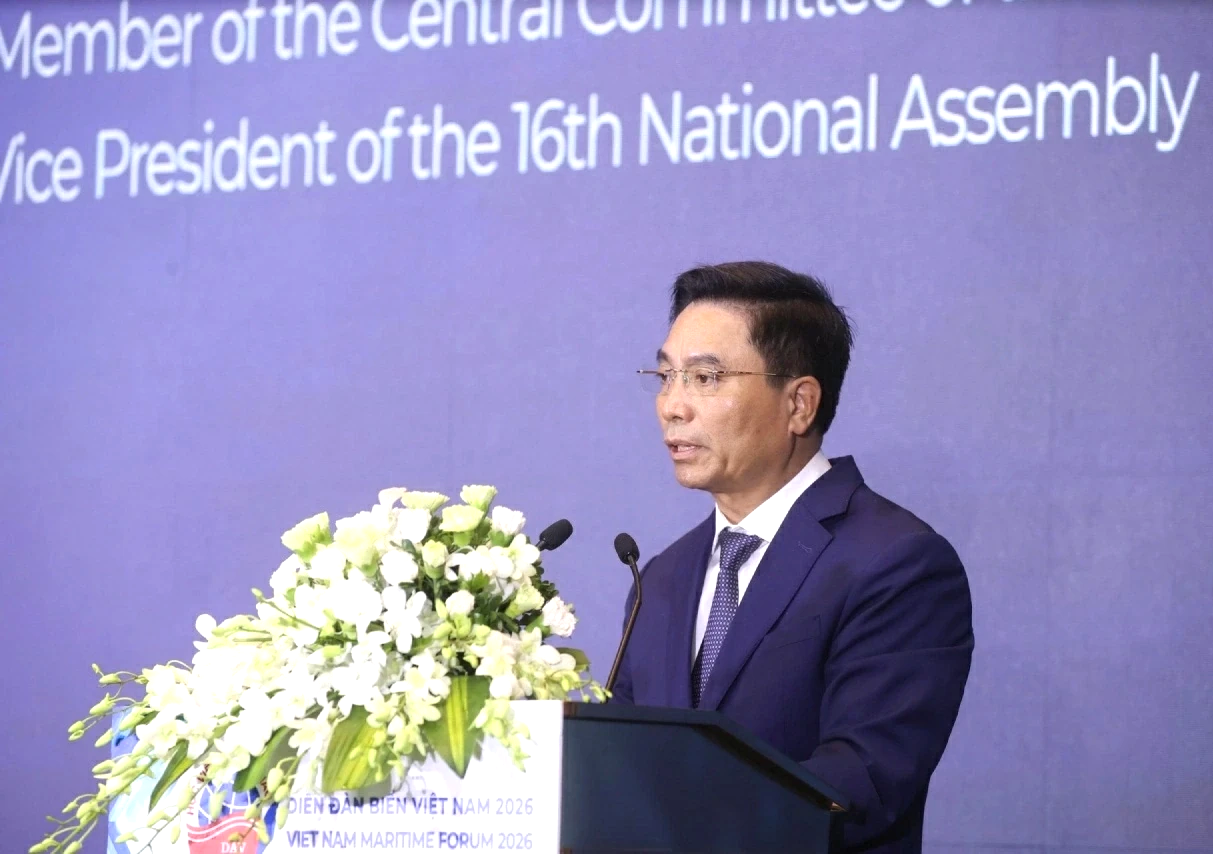 |
| Vice Chairman of the National Assembly Nguyen Doan Anh delivers the opening remarks at the Forum. (Photo: Bao Ngoc). |
Turning cooperation resources into domestic capacity
In his opening remarks, Vice Chairman of the National Assembly Nguyen Doan Anh emphasized that Resolution No. 20-NQ/TW marks a strategic shift in thinking about the sea, identifying the sea as an important foundation of the nation’s overall strength. He said that building Viet Nam into a strong maritime nation is a long-term development strategy closely associated with the country’s aspirations for development.
The Forum was therefore organized not only to discuss maritime potential, but also to focus on identifying forms of cooperation capable of delivering concrete results. The Vice Chairman of the National Assembly called on delegates to clarify how international cooperation and integration could contribute to the implementation of Resolution No. 20-NQ/TW, while identifying Viet Nam’s role in helping build a peaceful, cooperative, connected and sustainably developing maritime space.
At the high-level orientation session, “From the maritime strategy to the 2026-2030 action program,” delegates discussed priorities for implementing the Resolution, the potential for mobilizing resources, and ways to promote international cooperation. One key requirement emphasized was that cooperation must deliver concrete results in terms of capital, technology, knowledge, human resources, infrastructure, governance, markets and environmental protection, while enhancing Viet Nam’s ability to participate in and contribute to mechanisms for maritime and ocean cooperation and governance.
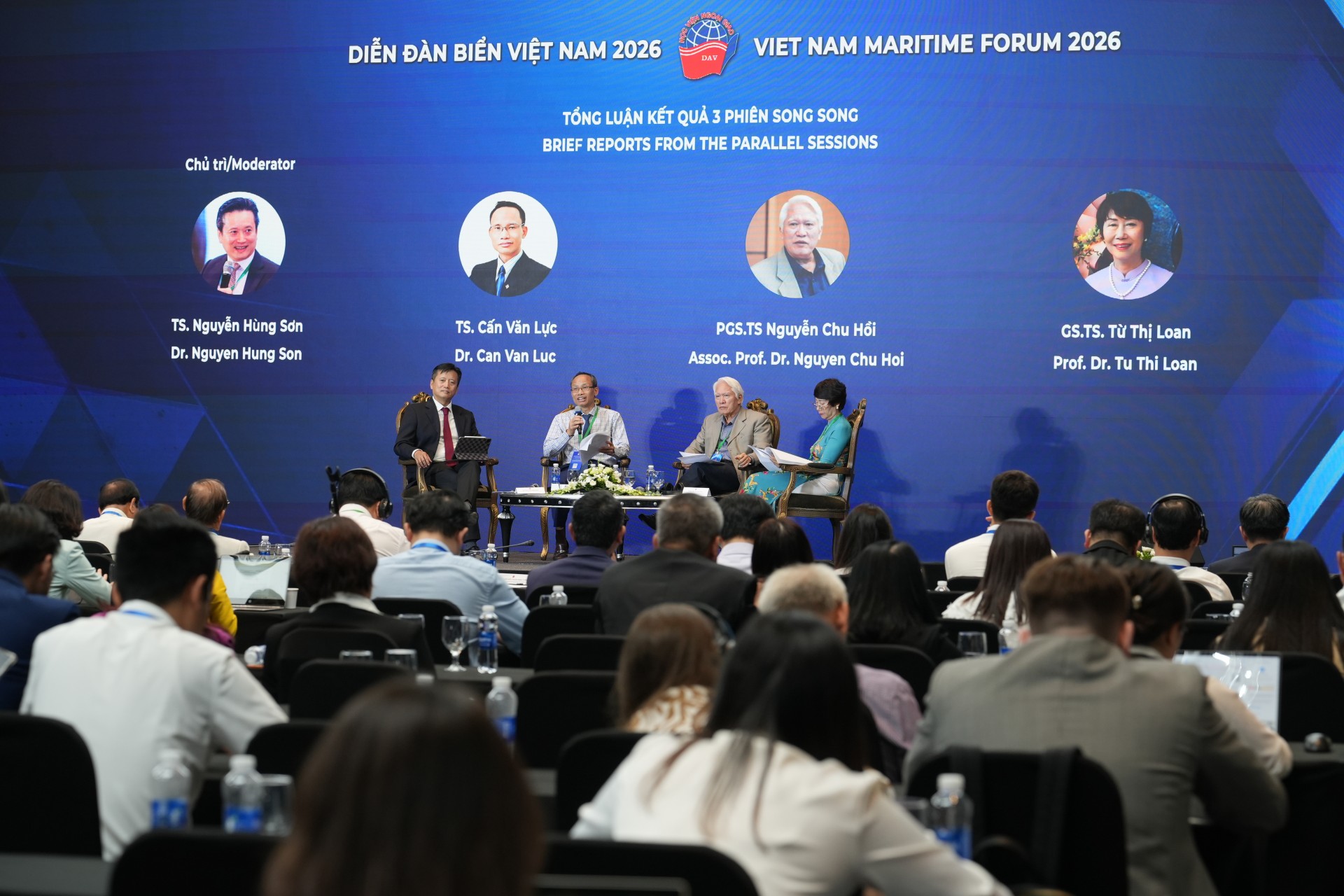 |
| 2026 Viet Nam Maritime Forum. (Photo: Diplomatic Academy of Viet Nam) |
Following the high-level orientation session, three thematic sessions focused on mobilizing resources and strengthening international connectivity; science, technology and maritime governance; and international cooperation at the local level linked to environmental protection and promoting the value of coastal communities. The Forum featured more than 20 presentations and dozens of exchanges, offering policy recommendations.
Science, technology, innovation and digital transformation were identified by many delegates as important drivers for creating new momentum for the marine economy. Discussions addressed the study of establishing inter-provincial marine tourism clusters and developing multifunctional marine tourism centers into growth poles, while ensuring harmony between economic development and environmental protection, national defense and security.
International cooperation was also viewed from the perspective of human development and coastal communities. Pauline Tamesis, United Nations Resident Coordinator in Viet Nam, affirmed the United Nations’ commitment to accompanying Viet Nam in implementing the action program, strengthening its capacity to implement the United Nations Convention on the Law of the Sea (UNCLOS) and the Agreement on the Conservation and Sustainable Use of Marine Biological Diversity of Areas beyond National Jurisdiction (BBNJ), while supporting the mobilization of finance and technology and promoting benefits for coastal communities, fishermen, women and youth.
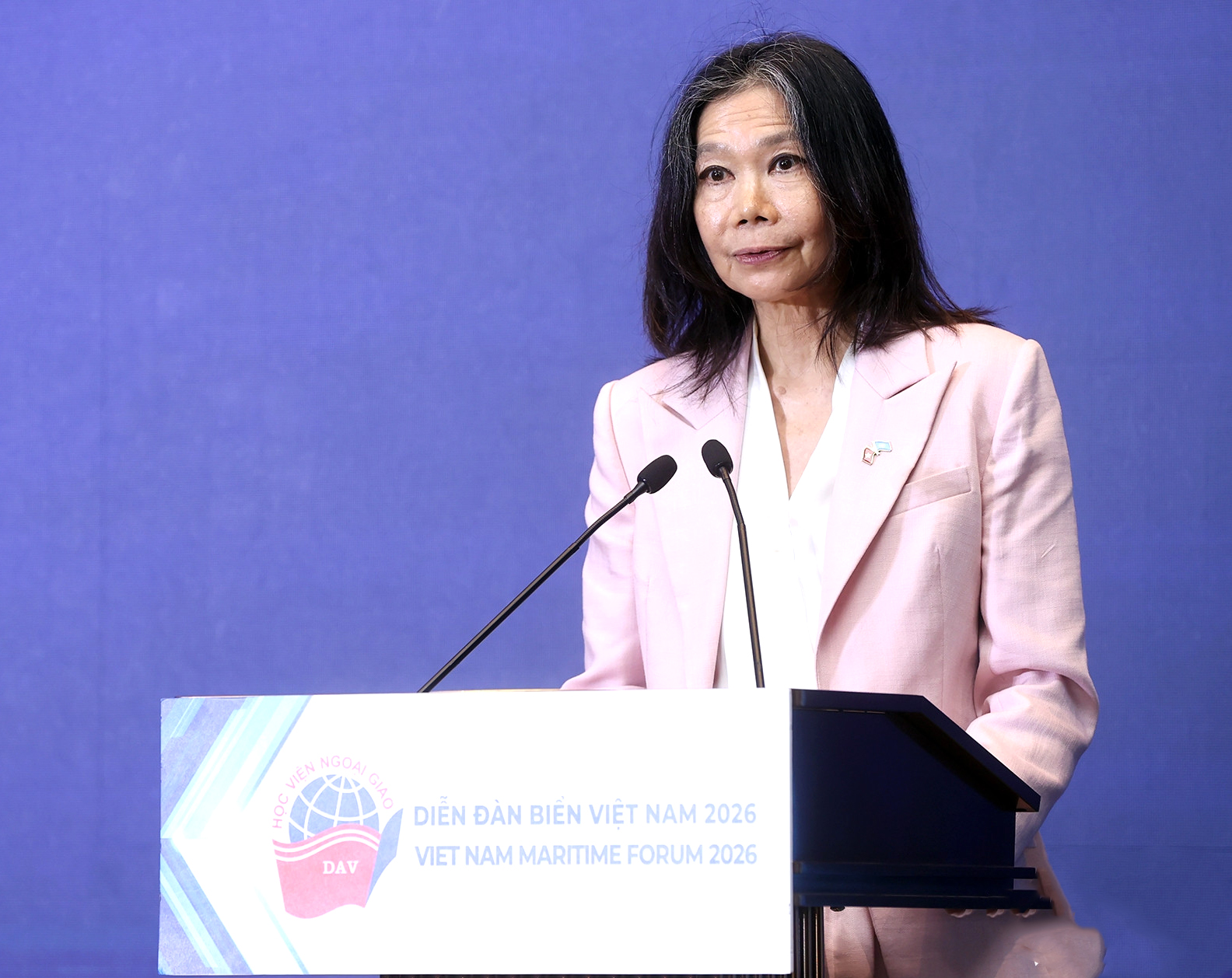 |
| Pauline Tamesis, United Nations Resident Coordinator in Viet Nam, speaks at the Forum. (Photo: Bao Ngoc). |
In his closing remarks, Member of the Party Central Committee and Deputy Minister of Foreign Affairs Nguyen Manh Cuong said that one key requirement emerging from the discussions was that international cooperation must be transformed into Viet Nam’s own capacity. Capital, technology and knowledge from abroad can only become maritime strength when they help build domestic teams, data, processes and the capacity for self-operation.
Four key takeaways on international cooperation and integration in maritime affairs
Drawing on the keynote remarks and thematic discussions, Deputy Minister Nguyen Manh Cuong outlined four key takeaways:
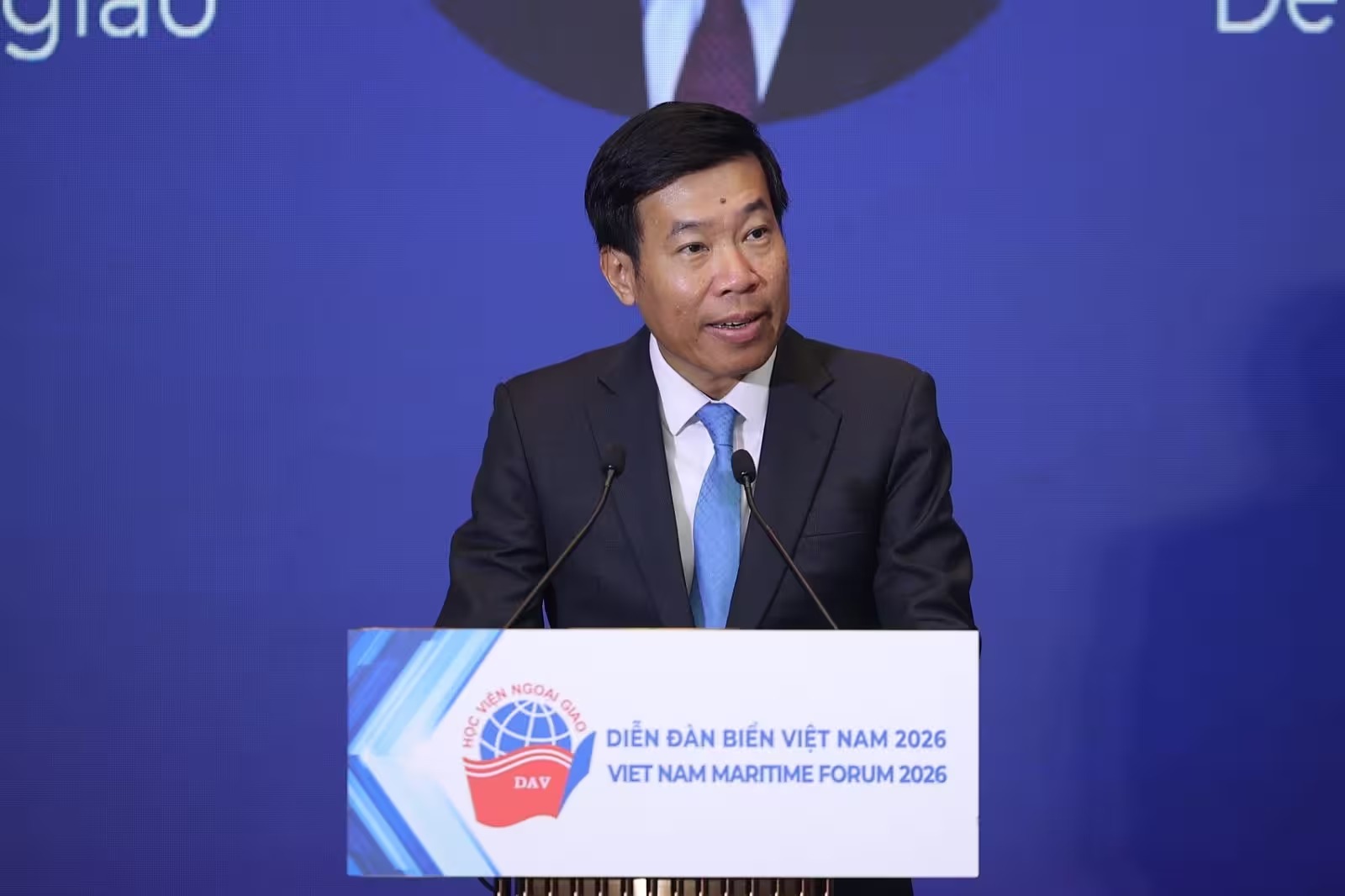 |
| Deputy Minister of Foreign Affairs Nguyen Manh Cuong speaks at the Forum. (Photo: Ministry of Foreign Affairs) |
First, international cooperation and integration are a pillar of efforts to harness maritime strength. As maritime challenges become increasingly complex and cross-border in nature, no country can address them through unilateral action. The Deputy Minister pointed to one notable consideration: advantages arising from Viet Nam’s position on the regional maritime map are a condition, not yet an outcome. A geographic position only truly becomes a strategic position when it is translated into concrete contributions and functions that Viet Nam can effectively undertake.
Second, international cooperation and integration should be transformed into resources for developing a green, modern and globally competitive maritime economy. Viet Nam needs to take a more proactive role in shaping cooperation and selecting projects that bring in investment, contribute to technology transfer, develop human resources and strengthen linkages with domestic businesses.
Third, science, technology, innovation and marine data should serve as the foundation for modern maritime governance. Marine data and knowledge are becoming strategic resources for governance, forecasting and policymaking. Scientific and technological cooperation should not stop at academic exchanges, but must generate technologies, products, governance models and new capabilities for Viet Nam.
Fourth, people, communities, businesses and ecosystems should be placed at the center of international cooperation and integration for a sustainable maritime space. International cooperation should help people gain access to green technologies, support businesses in meeting international standards, and create sustainable livelihoods, while also promoting maritime culture as a soft resource connecting Viet Nam with the world.
According to Deputy Minister Nguyen Manh Cuong, international cooperation should contribute to strengthening domestic capacity; and with that capacity, Viet Nam can make more substantive contributions to the region and the international community. He reiterated the direction of discussions at the 2026 Viet Nam Maritime Forum: A stronger Viet Nam at sea must also be a Viet Nam that contributes more to peace, cooperation and sustainable development.
Deputy Minister Nguyen Manh Cuong expressed his hope that the discussions would continue to be translated into research programs, policy proposals and cooperation projects with partners. The Ministry of Foreign Affairs will take the comments into consideration and coordinate with ministries, sectors and localities to consolidate recommendations for submission to competent authorities to support the implementation of Resolution No. 20-NQ/TW; at the same time, it will connect specific proposals with interested partners and explore the possibility of making the Viet Nam Maritime Forum an annual event.
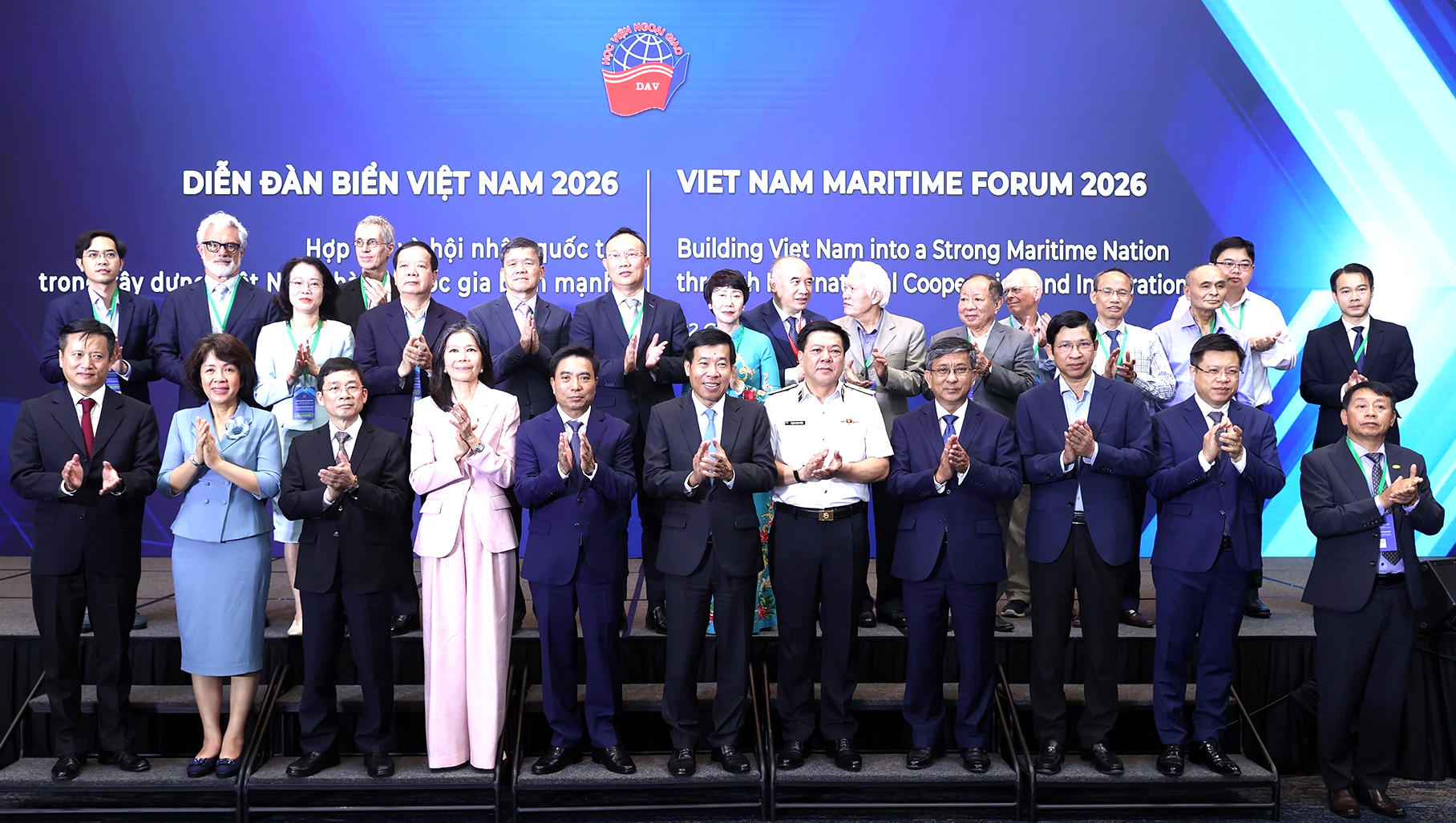 |
| Delegates pose for a commemorative photo. (Photo: Bao Ngoc) |
At the conclusion of the Forum, Deputy Minister Nguyen Manh Cuong expressed his hope that the discussions would continue to be translated into research programs, policy proposals and cooperation projects with partners. The Ministry of Foreign Affairs will take the comments into consideration and coordinate with ministries, sectors and localities to consolidate recommendations for submission to competent authorities to support the implementation of Resolution No. 20-NQ/TW; at the same time, it will connect specific proposals with interested partners and explore the possibility of making the Viet Nam Maritime Forum an annual event.
| Dr. Marcel Marchand, expert at the Deltares Institute for Applied Research (the Netherlands): Integrated planning to strengthen coastal resilience Fundamentally, the challenge to the resilience of Viet Nam’s coastal areas is a matter of space. Coastal areas are being “squeezed” as sea levels rise, while human development activities are increasingly expanding toward the shoreline. At the same time, the natural resilience of coastal areas, shaped by sand dunes, mangroves, lagoons and tidal zones, is steadily declining. One solution is to establish building setback boundaries; another is to apply nature-based solutions such as restoring mangrove forests and replenishing beach sand. Both solutions require a shift in mindset: not every problem along the coastline can be addressed through hard engineering structures. Viet Nam needs truly integrated planning for coastal areas, in which the voices of local communities are heard and economic development does not undermine the resilience of coastal zones. Rear Admiral Pham Minh Tuan, Deputy Commander of the Viet Nam People’s Navy: Strengthening maritime protection, self-reliance and cooperation During the 2026-2030 period, efforts should focus on three groups of tasks. First, Viet Nam needs to strengthen its capacity for maritime protection and governance, continuing to build an all-people national defense posture linked with the people’s security posture and the “people’s hearts and minds posture” at sea; and integrating national defense, security and foreign affairs with marine economic development. Second, Viet Nam needs to develop self-reliant capacity in science and technology and an applied marine economy, prioritizing data infrastructure, marine observation and monitoring, and linking investment in technology with the training of high-quality human resources. Third, people should be placed at the center while Viet Nam proactively promotes international cooperation and integration, making full use of the role of defense diplomacy in the maritime domain and focusing on practical areas such as maritime security and safety, search and rescue, humanitarian assistance, environmental protection, marine scientific research and information sharing. Pauline Tamesis, United Nations Resident Coordinator in Viet Nam: Promoting Viet Nam’s bridging role and maritime experience Viet Nam can contribute to global efforts in four areas. First is its role as a bridge connecting Southeast Asia, the broader Indo-Pacific region and the Pacific Island countries around shared interests in the 1982 United Nations Convention on the Law of the Sea (UNCLOS), sustainable fisheries and resilience to climate change. Viet Nam can also share its experience in modernizing fisheries and combating illegal, unreported and unregulated (IUU) fishing, as well as its experience in responding to sea-level rise, saltwater intrusion and the impacts of climate change on communities and ecosystems. At the same time, Viet Nam can contribute its voice to promoting a balance between new opportunities for economic development and scientific foundations, a long-term vision and the requirements of equity. |
 Vietnam and Bulgaria Hold Great Potential for Cooperation in the Maritime Sector Vietnam and Bulgaria Hold Great Potential for Cooperation in the Maritime Sector On July 24-25, Vietnamese Ambassador to Bulgaria Nguyen Thi Minh Nguyet paid a working visit to the city of Varna - the “maritime capital” and the largest hub for marine economic development in Bulgaria. |
 Building and Developing Viet Nam into A Strong Maritime Nation Building and Developing Viet Nam into A Strong Maritime Nation On behalf of the Party Central Committee, General Secretary and State President To Lam signed and promulgated the resolution of the third plenum of the 14th Party Central Committee on building and developing Viet Nam into a strong maritime nation (Resolution No. 20-NQ/TW, dated July 28, 2026). |
Most read


Related Stories
 National
Viet Nam News Today (Oct. 24): European Media Highlights Substantive Progress in Vietnam-EU Relations
 Seas and islands
Promoting Love for Vietnam’s Seas and Islands in Dak Lak
 Seas and islands
Unity For a Peaceful and Prosperous East Sea
 National
Vietnam News Today (Sep. 10): Vietnam’s Economic Growth Remains Resilient in 2025
Recommended
 Seas and islands
Vinh Long Province: Fisherman Rescued After Suffering Gas Poisoning at Sea
Popular article
 Seas and islands
2026 Mid-Autumn Festival: Brings Care to Disadvantaged Children
 Seas and islands
Coast Guard Region 2 Launches IUU Fishing Crackdown
 Seas and islands
Mobilizing Resources to Support Officers, Soldiers, and Residents in Border and Island Areas
 Seas and islands