
Vietnam-Brazil: Strengthening Cooperation in Renewable Energy
 | Vietnam and Brazil Strengthen Cooperation in Smart Agriculture |
| Tightening Vietnam-Latin America Ties, Deepening Cooperation with Brazil and Guyana |
The seminar attracted the participation of more than 50 delegates, including leaders of Brazilian government agencies, members of the Brazilian National Congress, representatives of ministries, sectors, research institutes, universities, businesses, diplomatic missions, representatives from several states such as Maranhão, Goiás, Amazonas, Tocantins, and Ceará, as well as international friends interested in energy cooperation between the two countries.
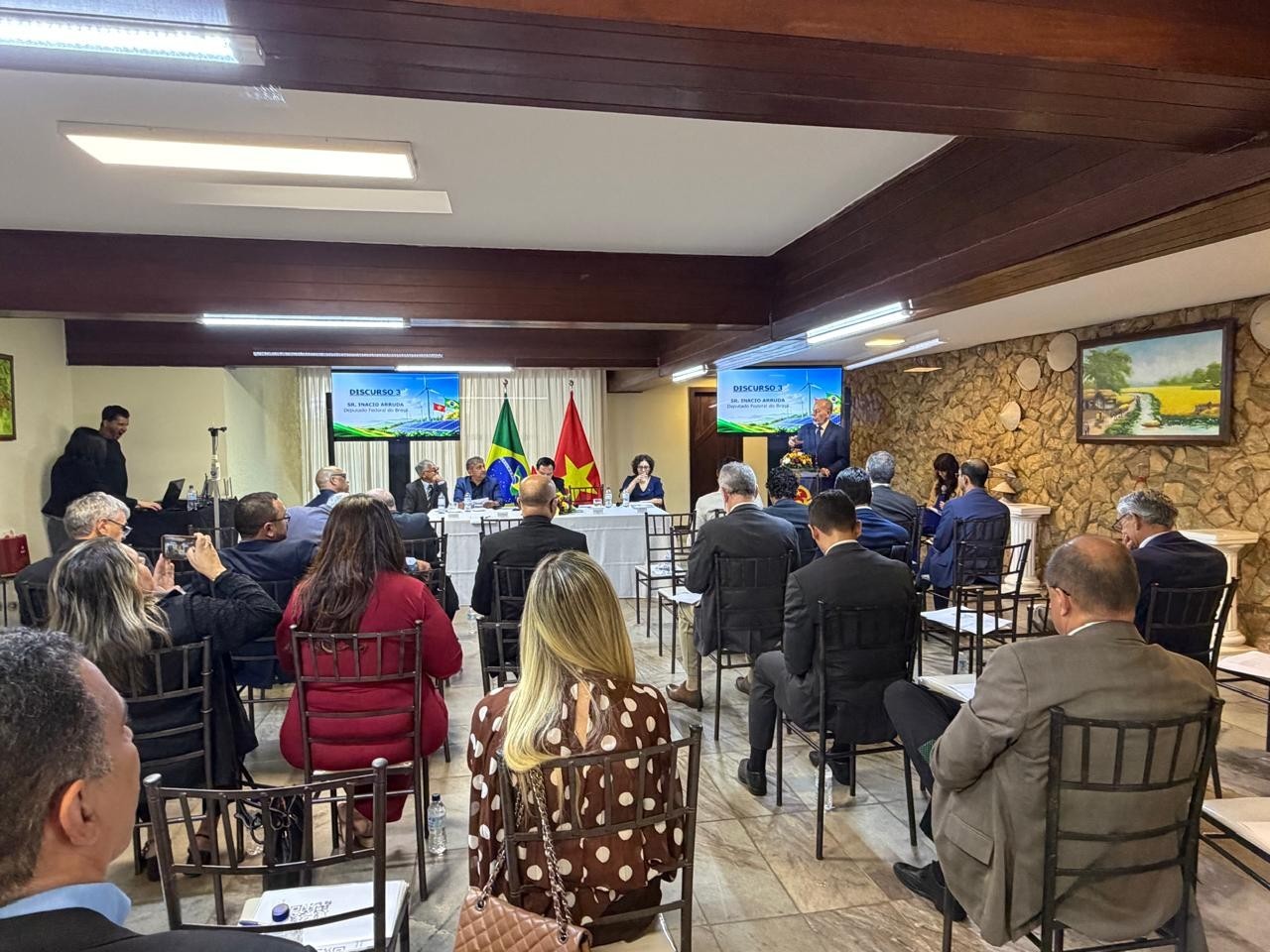 |
| Overview of the event. (Photo: Embassy of Vietnam in Brazil) |
In his opening remarks, Vietnamese Ambassador to Brazil Bui Van Nghi proposed four priority areas of cooperation between the two countries: developing renewable energy and biofuel technologies; promoting green and sustainable agriculture; enhancing green finance and carbon market connectivity; and strengthening cooperation in science and technology as well as the training of high-quality human resources.
In her presentation on Vietnam’s renewable energy market, Pham Hong Trang, Vietnam’s Trade Counselor in São Paulo, stated that Vietnam is entering a phase of large-scale renewable energy development with enormous investment demand in offshore wind power, solar power, biomass, energy storage systems, green hydrogen, and other clean fuels. According to her, Vietnam is expected to require approximately USD 135 billion in investment for the power sector by 2030 and is seeking international partners with experience, technology, and financial capacity to participate in its energy transition process. She emphasized the complementary nature of the two economies, noting that Vietnam possesses a rapidly growing energy market, while Brazil has strengths in technology, management experience, and biofuel development, creating numerous opportunities for investment cooperation and technology transfer between businesses of the two countries.
At the seminar, Inácio Arruda, former Deputy Minister of Science, Technology and Innovation and Federal Deputy representing the state of Ceará, Brazil, described energy as the foundation of development and national sovereignty. He noted that Brazil has invested heavily in science, technology, and innovation to build one of the cleanest energy systems in the world. He stressed that the energy transition requires investment, technological innovation, and extensive international cooperation, while affirming that Vietnam and Brazil have significant potential to strengthen cooperation in energy, science, technology, and innovation toward a green, sustainable, and prosperous future for both countries.
Helberth Oliveira, Director of Coop Ethanol Brasil Group, introduced the potential for cooperation between Vietnam and Brazil in ethanol and biofuels. He noted that industrial sweet potatoes are a highly promising feedstock for ethanol production due to their high yields, short production cycles, and suitability for household farming models. He proposed that the two sides explore pilot projects on biofuel production from industrial sweet potatoes, thereby creating new bioenergy value chains and contributing to socio-economic development in rural areas of both Vietnam and Brazil.
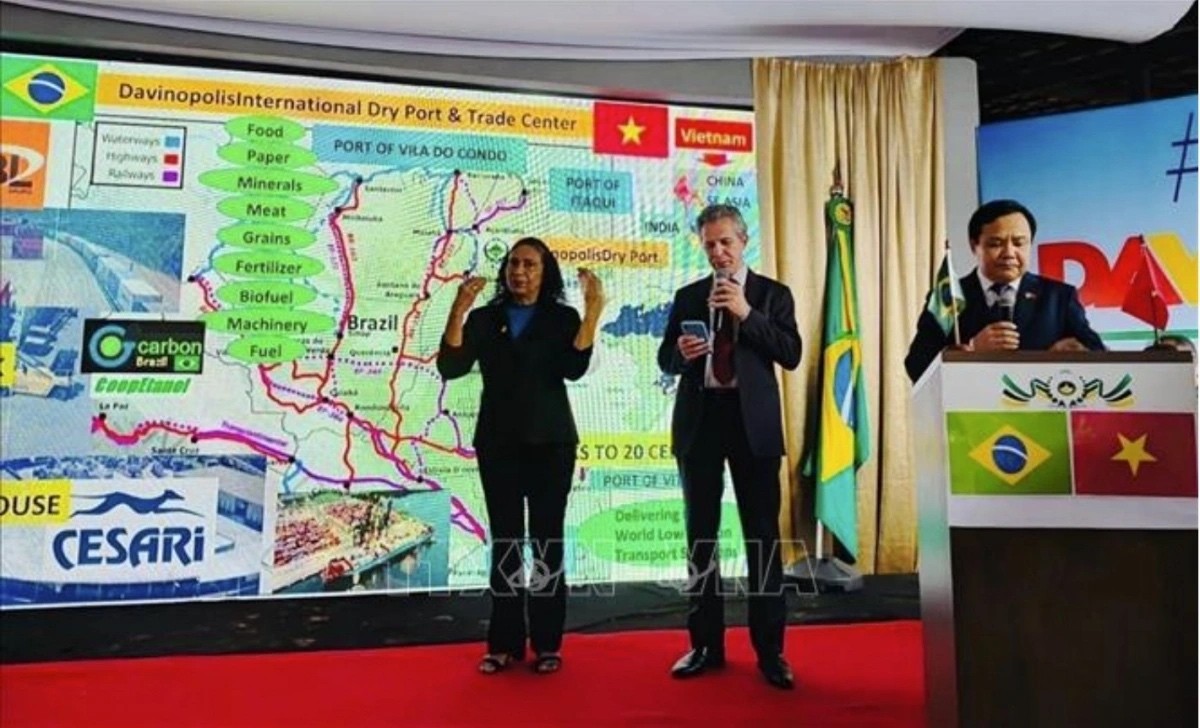
On this occasion, the Mayor of Davinópolis City, Maranhão State, also attended and addressed the event. He stated that the city is preparing to organize a delegation to visit and work in Vietnam in the near future to explore the market, promote partner connections, and discuss cooperation opportunities in various sectors, including renewable energy.
Representing Brazil’s academic community, Professor Fabiano Disconzi Wildner of the Federal University of Rio Grande do Sul (UFRGS) presented the university’s research capabilities in renewable energy, automation, and technological innovation. He highlighted the development potential of wind power, solar energy, biomass, and biogas in southern Brazil, while also introducing the “Ventos de Libra” project, jointly implemented by UFRGS and Petrobras to study offshore wind power potential in Brazil’s pre-salt region. The professor expressed his desire to strengthen cooperation with Vietnamese educational and research institutions through academic exchange programs, joint research, and technology development in the field of renewable energy.
During the discussion session, participants assessed that Vietnam and Brazil possess significant complementary potential in renewable energy, biofuels, green agriculture, environmental technologies, and climate finance. Many delegates proposed enhancing connections among government agencies, businesses, research institutes, and universities of the two countries in order to transform this potential into concrete cooperative projects in the coming period.
 | Recognizing Contributions of Ambassador Marco Farani to Promoting Vietnam-Brazil Relations During the tenure of Ambassador Marco Farani of Brazil to Vietnam, the frequency of high-level meetings and exchanges between the two countries increased markedly; Vietnam-Brazil ... |
 | Spreading Ho Chi Minh’s Legacy in Brazil On the occasion of the 136th birth anniversary of President Ho Chi Minh (May 19, 1890-May 19, 2026) and the 37th anniversary of the establishment ... |
Related Stories
 Overseas Vietnamese
Spreading Ho Chi Minh’s Legacy in Brazil
 National
Vietnam News Today (Mar. 3): Vietnam, Brazil Push Cooperation in Agriculture, Energy and Biotechnology
Recommended
 Economy
Legal Reforms Facilitate Corporate Securities Issuance
 Economy
Import Procedures for Goods Entering the New Zealand Market
 Economy