Vietnamese nationwide pay tribute to ancestors on Hung Kings’ Commemoration Day
From north to south, Vietnamese people on April 26 (the 10th day of the third lunar month) solemnly marked the Hung Kings’ Commemoration Day, turning their hearts toward the nation’s roots.
In Ho Chi Minh City, leaders, residents, overseas Vietnamese, students and pupils offered incense and flowers in tribute to the Hung Kings and Nguyen Huu Canh, credited with opening up the Sai Gon – Gia Dinh area. Rituals were conducted with full traditional rites, including ceremonial processions, offerings of banh chung, banh giay (square and round glutinous rice cakes), fruits and southern specialties, and formal sacrificial ceremonies.
Speaking at the event, municipal Party official Nguyen Phuoc Loc said the act of offering incense reaffirms the sacred value of national origins and the millennia-long tradition of nation-building and defence, while fostering patriotism, self-reliance and responsibility for safeguarding the country.
He noted that as the city enters a new development phase, it is accelerating efforts to become a modern service–industrial hub and a leading center for the digital economy, governance and society, aiming for a prominent position in Southeast Asia by 2030 and global-city status by 2045. Science, technology, innovation and digital transformation are seen as strategic breakthroughs, with people at the heart of all policies. The year 2026 is designated as a period of acceleration to realise Party Congress goals.
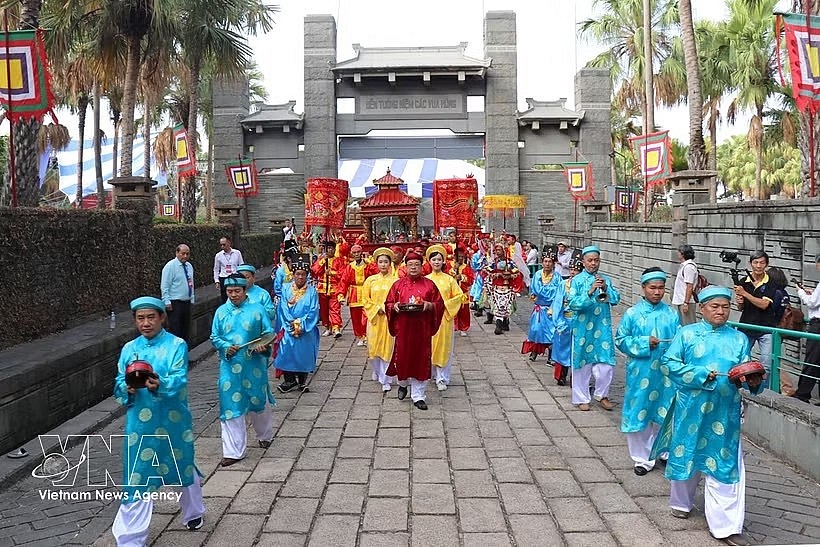 |
| A ceremonial procession presents offerings, fruits and southern specialties to the Hung Kings. (Photo: VNA) |
The city also hosted a wide range of cultural activities, including a traditional banh chung wrapping and cooking contest, folk music performances, art programs and book fairs. A highlight was the 17th “Proud of Dragon and Fairy Descendants” youth camp, featuring incense offerings, tent design contests, cultural performances and a sacred fire procession at the Hung Kings memorial site, VNA reported.
In Ca Mau province, provincial Party Secretary Nguyen Ho Hai led the opening incense ritual at the Hung Kings Temple. Provincial leaders later offered incense and ceremonial items from Ca Mau and Phu Tho provinces, in a solemn atmosphere reflecting deep reverence for the ancestors.
In Thai Nguyen, the Hung Kings worship tradition continues to thrive at the century-old Hung Vuong Communal House. Originally a small shrine, it became a place of Hung Kings worship after 1945 when sacred incense was brought from the Hung Temple in Phu Tho. Each year, hundreds gather here for rituals such as processions and offerings. A notable feature is a performance by students portraying the 100 children of Lac Long Quan and Au Co, symbolising the origin of the Vietnamese people.
Vice Chairman of the People’s Committee of Phan Dinh Phung ward Tran Dinh Thin said the ceremony helps instil patriotism, strengthen national unity, and promote local cultural values to residents and visitors.
In Vinh Long province, a ceremony at the Hung Kings shrine within the provincial museum featured traditional rites, including offerings and incense burning. Chairman of the provincial People’s Committee Tran Tri Quang stressed the importance of building on ancestral traditions to drive local development and international integration.
The province also organised a series of cultural activities at the museum, blending ceremonial and festive elements to engage the public and deepen awareness of national heritage.
Meanwhile, in Lam Dong province, thousands of locals and tourists attended a ceremony at the Au Lac Temple in the Prenn Waterfall tourist area in Da Lat. Festivities included folk performances, traditional games, rural markets and chess competitions, alongside exhibitions on Vietnamese tea culture, calligraphy and folk paintings.
Preparatory events such as flower arrangement and ceremonial offering contests were also held, drawing strong public interest and highlighting enduring traditions of paying tribute to the Hung Kings.
Vietnamese engineering unit excels in mission at UN Peacekeeping Operation
Vietnam’s Engineering Unit Rotation 4 has worked effectively with the United Nations Interim Security Force for Abyei (UNISFA) and local authorities to complete the comprehensive upgrade of the key Abyei–Agok road in Africa within 85 days — 35 days ahead of schedule.
The official handover of the Abyei–Agok road took place on April 22, marking a significant milestone in Vietnam’s international peacekeeping efforts in Abyei.
Stretching 37 kilometres, the route serves as a critical transport artery connecting central Abyei with Agok and plays a vital role in the region’s overall development. However, due to harsh natural conditions — particularly the characteristic “black cotton soil” and prolonged heavy rains — the road had deteriorated severely after years of use. This not only disrupted transportation but also affected UN patrol operations, hindered humanitarian relief efforts, and complicated daily travel and livelihoods for local residents.
Fully aware of the road’s strategic importance, Engineering Unit Rotation 4 promptly developed a plan upon receiving its assignment from the mission and requests from local authorities. The unit mobilized maximum manpower and equipment, implementing synchronized measures to accelerate progress, cited NDO.
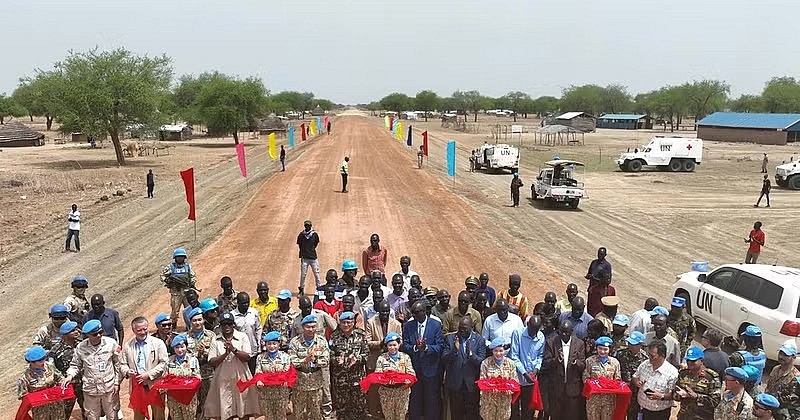 |
| The handover ceremony for the vital route linking Abyei and Agok was held in a celebratory atmosphere shared by the UN mission, Engineering Unit Rotation 4, and local residents. (Photo: To Tram) |
At the handover ceremony, Major General Ganesh Kumar Shrestha, Force Commander of the Abyei mission, affirmed that since the mission’s establishment in 2011, this was the largest and most significant project undertaken for the benefit of local people.
The Force Commander praised Engineering Unit Rotation 4 for completing the project ahead of schedule despite challenging terrain and weather conditions. He emphasised: “The completion of this road is an unprecedented achievement, opening up opportunities for infrastructure connectivity and enhanced security in the region. The efforts of Engineering Unit Rotation 4 are truly commendable and deserve recognition as an outstanding accomplishment.”
Representing the local administration, Arop Deng Kuol, Deputy Chief Administrator of Abyei, stated: “Today, I am here not only to attend the inauguration ceremony but also to convey, on behalf of the people of Abyei, our sincere gratitude for the significant contributions of Vietnam’s Engineering Unit Rotation 4. We have worked alongside you and witnessed your dedication, resilience, and disciplined spirit throughout the construction process. Thanks to these efforts, a once dilapidated road has been transformed into one of the most modern routes in the region, contributing to improved security, transportation, and living conditions for local residents.”
At the ceremony, Engineering Unit Rotation 4 was honoured to receive a letter of commendation from the Chief Administrator of Abyei in recognition of its outstanding contributions to infrastructure development in the area.
The commendation highlighted that these achievements have helped improve infrastructure, promote socio-economic development, and strengthen stability in the locality, while highly appreciating the unit’s determination in overcoming challenges.
On this occasion, Engineering Unit Rotation 4 also carried out meaningful humanitarian activities, including donating 10 hospital beds, essential supplies, and educational materials to local residents, contributing to improved living conditions and stronger ties with the community.
Vietnamese students leave strong impression at World Cultural Festival in Beijing
Vietnamese students left a strong impression through cultural activities at the 21st World Cultural Festival held on April 25 at Beijing Language and Culture University, helping spread the image of Vietnam among international friends.
The festival brought together students from many countries and territories, with three main activities, including a parade, art performances and cultural booths. The Vietnamese delegation took part fully and actively.
During the parade, the Vietnamese flag and traditional costumes drew attention from attendees. A fan dance performance set to the song Made in Vietnam combined modern elements with traditional identity and received positive responses from international students.
The Vietnamese booth, themed “Dong Ho folk painting exhibition,” attracted large numbers of visitors throughout the event. Designed as a small exhibition space, it introduced well-known folk paintings such as “Rat’s Wedding,” “Vinh Hoa – Phu Quy” and “Yin–yang pigs,” alongside interactive activities including puzzle games, explanations of the paintings’ meanings and exchanges with visitors.
The booth welcomed a wide range of visitors, from children and international students to members of the Vietnamese community in Beijing. Some families with Vietnamese parents brought their children to learn more about Vietnamese culture, hoping to help them better understand their roots and preserve cultural identity while living abroad.
Speaking about the activity, Tran Xuan Loc, a master’s student and secretary of the Vietnamese student group at Beijing Language and Culture University, said participation in the festival was not only an extracurricular activity but also an opportunity for Vietnamese students to promote national culture. He noted that Vietnam received positive attention from international participants through their interest, interaction and feedback. In the context of deeper international integration, he said each student can act as a cultural bridge, helping improve mutual understanding among countries.
Meanwhile, Nguyen Thu Huong, a doctoral student in international Chinese language education at Beijing Language and Culture University, said taking part in preparing and operating the Vietnamese booth helped participants better understand traditional cultural values. Choosing Dong Ho paintings as the theme introduced a distinctive folk art form reflecting Vietnamese life, thinking and aesthetics across generations.
She said the strong interest from international students was the most encouraging outcome, with many asking about the meanings, colours, materials and cultural context of the paintings, cited VOV.
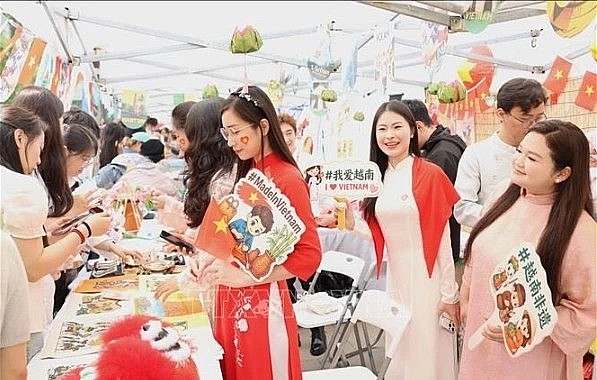 |
| Vietnamese booth at the 21st World Cultural Festival. |
These exchanges created an active atmosphere, helping spread Vietnamese cultural values more widely. She added that promoting traditional culture in an international environment helps enhance the country’s image and allows Vietnamese students to strengthen their identity and connection to their roots.
The festival concluded in a lively atmosphere, leaving positive impressions on international students. Through diverse activities, Vietnam’s image was further spread, contributing to people-to-people exchanges and greater cultural understanding.
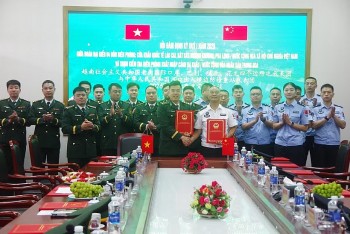 | Vietnam News Today (Apr. 23): Vietnam–China Border Forces Hold Talks, Confer Friendship Envoy Title Vietnam News Today (Apr. 23): Vietnam’s top leader hosts welcome ceremony for RoK President; Vietnam values ties with Estonia – a Baltic gateway; Vietnam proposes ... |
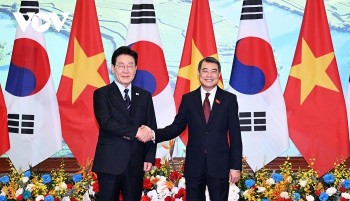 | Vietnam News Today (Apr. 24): Vietnam and RoK Advance Value Chain, Innovation-Driven Partnership Vietnam News Today (Apr. 24): Vietnam and RoK advance value chain, innovation-driven partnership; Vietnam, China demonstrate high-level political trust: spokesperson; Vietnam–EFTA FTA seen as increasingly ... |