Vietnam achieves outstanding results under Party’s leadership: Russian Party official
At every stage of Vietnam’s development, the Communist Party of Vietnam has demonstrated its capacity, strength, intellectual potential, determination and political will to set out sound and highly specific tasks, delivering economic growth that is a source of pride, said Dmitry Georgievich Novikov, first vice chairman of the Communist Party of the Russian Federation (KPRF) and a member of the State Duma.
In an interview with Vietnam News Agency correspondents in Russia ahead of the 14th National Congress of the Communist Party of Vietnam (CPV), Novikov stressed that under the leadership of late President Ho Chi Minh, the CPV built a new Vietnamese state and defeated attempts by external forces to subjugate the Vietnamese people.
He affirmed that the CPV is the leading force of Vietnamese society, shaping the country’s development vision. It sets socio-economic and political objectives, as well as directions for the development of science, education, healthcare and culture. Across all these fields, Vietnam has achieved outstanding results. Even when the economy suffered a severe shock following the collapse of the Soviet Union, Vietnam not only overcame the difficulties but continued to make progressive advances.
According to Novikov, left-wing forces, including the KPRF, have always welcomed Vietnam’s development achievements. He expressed hope that the decisions to be adopted at the 14th Congress would guide the country confidently into the future – a socialist future. For Russian communists this is also a particularly important moment, as Vietnam’s success affirms that socialism has fulfilled its historic promise, the senior party official said.
Commenting on the 14th National Party Congress, Novikov said he was confident that the goals set out would further consolidate and strengthen the Party, enabling it to move forward and helping the Government and people achieve new results and successes in the years ahead. He hoped these achievements would go hand in hand with the further development of cooperation between Vietnam and Russia.
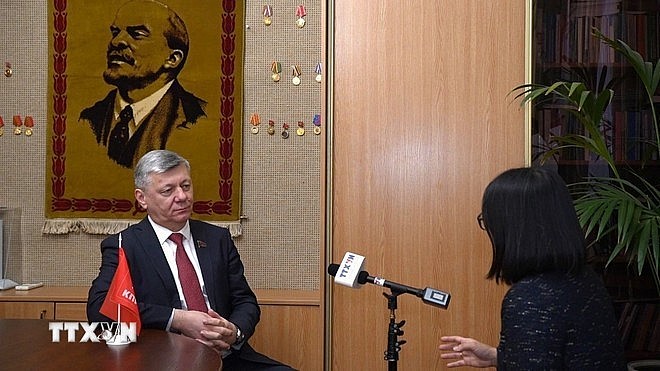 |
| Dmitry Georgievich Novikov, first vice chairman of the Communist Party of the Russian Federation (KPRF) and a member of the State Duma, in an interview with a Vietnam News Agency correspondent in Russia. (Photo: VNA) |
Having overcome numerous challenges, the two countries are developing relations across a wide range of fields. Agreements establishing a common trade area have been in place for more than a decade, with tangible results. In the oil and gas sector, alongside Vietsovpetro, the newer joint venture RusVietPetro has enabled Russian and Vietnamese experts to work together in Russia on oil and gas production projects. Novikov described this as a highly promising and interesting area of cooperation.
He expressed the hope that the objectives outlined at the Congress would be closely linked to national development and the expansion of economic cooperation across multiple sectors, including the further development of trade and economic ties with Russia. The official added that the KPRF’s parliamentary group in the State Duma would continue to use its political resources, authority and influence within Russian society to strengthen the bilateral relations, according to VNA.
Novikov said there were ample grounds to forecast that relations between the CPV and the KPRF would continue to develop strongly in the coming period. At present, the Russian side is actively discussing its work plan for the year ahead, and the two parties may soon begin preparations for a third joint forum.
He voiced confidence that under the CPV leadership, Vietnam would continue to write a bright future, and that the 14th National Party Congress would be a success, adopting important and effective decisions.
Vietnam navigates challenges with steadfast reform: Argentine politician
Marcelo Rodriguez, head of the Commission for Foreign Affairs of the Communist Party of Argentina Central Committee, highlighted the Communist Party of Vietnam (CPV)’s steadfast commitment to the country’s “Doi moi” (renewal) and development process, noting that Vietnam confidently overcame challenges to drive national development over the past four decades.
In a recent interview with the Vietnam News Agency correspondent in Argentina on the occassion of the CPV's 14th National Congress, Rodriguez underscored the CPV Central Committee’s important role in leading the renewal process, while sharing insights on the outstanding achievements of the Party during the 13th Party Congress term.
Rodriguez, who also serves as Director of the Center for Marxist Studies (CEFMA) under the Communist Party of Argentina, said Vietnam’s achievements reflect the soundness of the policies and guidelines set by the CPV, even as many key tasks will still need focused attention in the years ahead.
He noted that the material and spiritual well-being of the Vietnamese people continue to improve, the direct and comprehensive leadership of the CPV Central Committee has been strengthened, and Vietnam’s international standing and reputation are rising, reported VNA.
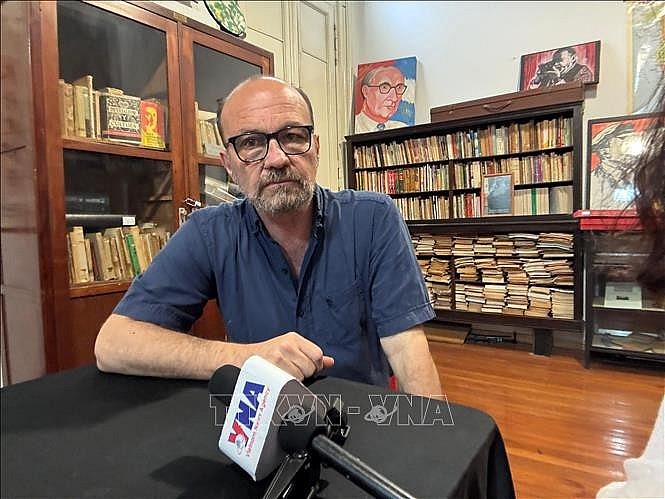 |
| Marcelo Rodriguez, head of the Commission for Foreign Affairs of the Communist Party of Argentina Central Committee (Photo: VNA) |
Rodriguez highly valued Vietnam’s Party building and rectification, noting that the work is being carried out in a coordinated and determined manner, reflecting seriousness, perseverance, and comprehensiveness.
The process has affirmed the political mettle, leadership capacity, and self-renewal and self-rectification spirit of the CPV in the new era, he said.
Referring to Vietnam’s foreign policy, he highlighted Vietnam’s consistence in pursuing a foreign policy of independence, self-reliance, diversification, and multilateralization of international relations, and comprehensive international integration, stressing that this diplomatic approach balances principled steadiness with strategic flexibility, contributing to safeguarding national independence, sovereignty, and territorial integrity, while fostering a peaceful, stable, and favourable environment for the nation’s development.
Rodriguez noted that Vietnam’s foreign policy has played a key role in enhancing the country’s role, position, and reputation in the international arena, he noted, saying that Vietnam maintains dialogue and cooperation with many countries and partners, even amid differences, based on mutual respect, equality, and shared benefit; and always prioritises the interests of the nation and its people.
According to him, this reflects the CPV’s distinctive contribution to managing complex and volatile international relations.
The Argentine politician also spotlighted Vietnam’s anti-corruption efforts amid a complex and unpredictable regional and global context, and the CPV’s strong political determination in implementing coordinated measures to prevent, detect, and strictly handle corruption and misconduct, following the principle of resolute, persistent action with no forbidden zones or exceptions.
He said Vietnam’s proactive and rigorous approach to tackling corruption has strengthened discipline within the Party and the political system, reinforced public trust, and demonstrated the CPV’s mettle, combat strength, and leadership credibility.
He expressed confidence that continued anti-corruption efforts will remain a crucial element, providing a strong foundation for Vietnam’s sustainable development in the new era.
Vietnam’s cultural diplomacy: Soft power at its strategic best
Cultural diplomacy has helped Vietnam boost its international reputation while advancing its long-term national goals with global resonance.
The achievements of Vietnamese cultural diplomacy since the 13th National Party Congress have not only elevated the country’s global image, but also generated new strategic momentum for its journey toward long-term national milestones - including the centennial anniversaries of the Communist Party’s founding and national independence.
Post-Congress, cultural diplomacy was officially recognized as one of the three pillars of Vietnam’s modern, comprehensive diplomacy. The focus has shifted to bolstering national soft power and promoting the Vietnamese identity worldwide - key to reinforcing political trust and expanding Vietnam’s international credibility in an era of deepening integration, cited VNN.
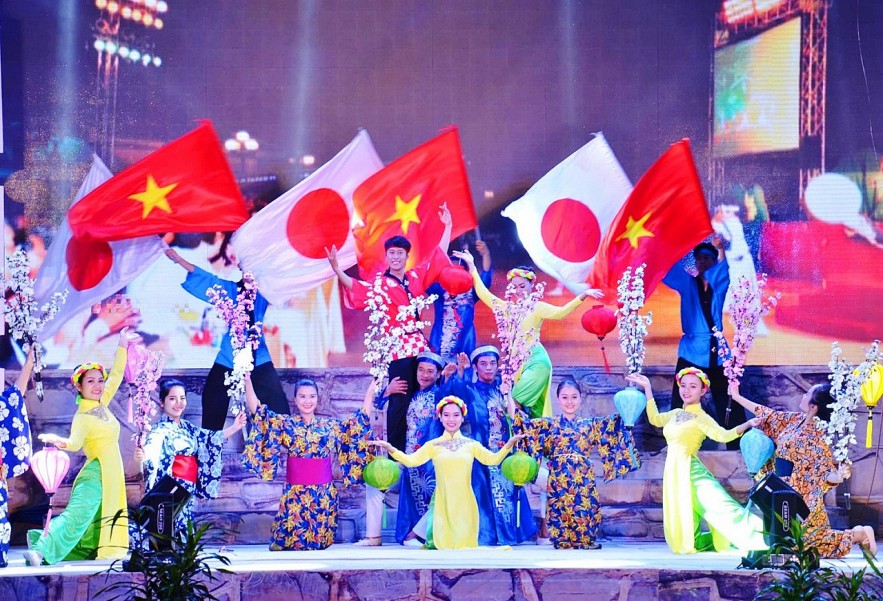 |
| In the context of globalization and deep international integration, cultural diplomacy has become one of the three key pillars of modern diplomacy, alongside political and economic diplomacy. |
The 13th Party Congress resolution laid out the foreign policy vision for 2021–2030: “Continue the independent, self-reliant, multilateral and diversified foreign policy; actively and proactively integrate into the world in a comprehensive, extensive, and effective manner; maintain a peaceful and stable environment; and constantly elevate Vietnam’s international standing.” Cultural diplomacy has since advanced significantly under this strategic framework.
Cultural diplomacy: A bright spot in high-level foreign policy
Vietnam’s cultural diplomacy in recent years has been implemented broadly and methodically, engaging the entire political system. High-level diplomatic missions led by Party and State leaders have left lasting impressions, strengthening strategic trust with international partners.
At the same time, programs such as Vietnam Days and Weeks abroad, global tributes to President Ho Chi Minh, and cultural exchange events have been revitalized, spreading the values of Vietnamese culture far beyond its borders.
Efforts have also expanded beyond central-level activities. Provinces, businesses, and local communities have become active players, with nearly 9,000 festivals annually and numerous international cultural cooperation programs. These grassroots initiatives present a rich, approachable image of Vietnam to the world.
Cultural diplomacy has emerged as a vital “soft power weapon,” helping global audiences understand the character, spirit, and identity of the Vietnamese people - thereby earning broader support for Vietnam’s independent and self-reliant foreign policy.
UNESCO milestones signal rising soft power
In 2023, Vietnam made significant strides in cultural influence. UNESCO recognized the Cat Ba Archipelago as a World Heritage Site, added Hoi An and Da Lat to its Creative Cities Network, and honored Hai Thuong Lan Ong as a global cultural figure.
Vietnam now holds the position of Vice President of the UNESCO General Conference and is a member of all five key UNESCO mechanisms - making it one of the few nations with significant influence in global cultural, educational, and scientific policy.
As of now, Vietnam holds 67 UNESCO-recognized heritage titles and honors, well beyond its target of 60 by 2030.
These accolades not only boost Vietnam’s international stature but also have tangible economic and social benefits. In Ninh Binh, for instance, the Trang An World Heritage Site has helped transform the local economy - cutting the agricultural labor force to just 10% while doubling 2023 tourism revenues compared to 2019.
In 2024 and 2025, Vietnamese culture reached new territories. For the first time, Vietnam Days were held in Latin America - where Brazilian children were captivated by water puppetry.
In Saudi Arabia, Vietnamese culture lit up the desert as locals experienced traditional to he figurine sculpting and watched artists craft Vietnamese-style camels. Such exchanges revealed the finesse and humanity of Vietnamese culture to the wider world.
Artistic initiatives like the Vietnam–Japan Festival, the 2024 International Dance Festival, performances in Italy, and the Vietnam Film Week in France continued to spotlight Vietnamese cultural vitality and its capacity for dialogue with the world’s great artistic traditions.
Vietnam is emerging as one of Asia’s most attractive cultural destinations. At the 2024 World Travel Awards, it was named Asia’s Leading Destination, Leading Heritage Destination, and Leading Nature Destination.
That same year, Vietnam welcomed 17.5 million international visitors - a 38.9% increase over 2023, one of the highest growth rates in the region.
According to the Lowy Institute’s Asia Power Index 2024, Vietnam’s overall national power rose by 1.2%, with the strongest gains in diplomatic and cultural influence.
Strategic breakthroughs as the Congress term ends
According to Nguyen Phuong Hoa, Director General of the International Cooperation Department, 2025 marks a strategic turning point for Vietnamese cultural diplomacy, shaped by visionary thinking and bold initiatives.
Among the highlights is Vietnam’s pioneering proposal of the “International Decade of Culture for Sustainable Development” at MONDIACULT 2025, with participation from 163 countries. The initiative was approved by UNESCO for submission to the United Nations - demonstrating Vietnam’s leadership in shaping post-2030 global development discourse.
Domestically, the first World Cultural Festival in Hanoi drew over one million visitors from 48 countries, featuring 30 performances, 34 films, and raising over $100,000 for charity. Organizers hope to make it an annual event, positioning Hanoi as a new crossroads of global civilization.
At the high-level diplomatic front, the Ministry of Culture, Sports and Tourism staged seven major performances to support visits by top Vietnamese leaders to other countries. It also organized performances for welcoming foreign heads of state and celebrating the 80th anniversary of National Day.
Vietnam’s national pavilion at EXPO 2025 Osaka won two international awards and attracted nearly 1.7 million visitors in six months - further boosting the country’s global image.
Vietnam continues to play an active role in UNESCO, ASEAN, and other multilateral platforms. In 2025, it was re-elected to the Intergovernmental Committee of the 2005 UNESCO Convention. The Yen Tu–Vinh Nghiem–Con Son, Kiep Bac complex was added to the World Heritage list, while Phong Nha–Ke Bang was expanded to become Vietnam and Laos’ first transboundary World Heritage Site.
Ho Chi Minh City officially joined UNESCO’s Creative Cities Network in the field of cinema, opening new avenues for collaboration in the cultural industries.
Within ASEAN, Vietnam is contributing to the ASEAN Community Vision 2045 and frameworks for sustainable creative economic development, while hosting numerous culture and sports events in Hanoi.
These cultural diplomacy achievements have not only strengthened Vietnam’s global position but also laid a strong foundation as the country approaches the centennial milestones of Party and nation.
Cultural diplomacy has become and will continue to be a cornerstone of modern Vietnamese diplomacy - a resilient soft power force that spreads the Vietnamese identity worldwide while fostering peace, cooperation, and development.
Japan Coast Guard patrol vessel Akitsushima visits Da Nang
Japan Coast Guard patrol vessel, the Akitsushima, with 60 officers and crew members on board, docked at Tien Sa Port, the central coastal city of Da Nang, on January 19 beginning a five-day visit to Vietnam.
The vessel led by Rear Admiral and Japan Coast Guard Vice Commander Takashi Toru is to visit Da Nang from January 19 to 23. The visit is part of regular exchange and cooperation activities between the maritime law enforcement agencies of Vietnam and Japan.
During the visit, the officers and sailors of the Japan Coast Guard will pay courtesy calls to the leaders of the Da Nang municipal People's Committee, the Vietnam Maritime Search and Rescue Coordination Centre No. 2, the Vietnam Coast Guard Zone 2, and tour around local cultural sites in Da Nang city.
The port call reflects ongoing efforts by both sides to enhance mutual understanding, build trust and promote practical cooperation between their maritime law enforcement forces, contributing to the strengthening of the Vietnam–Japan Comprehensive Strategic Partnership for peace and prosperity.
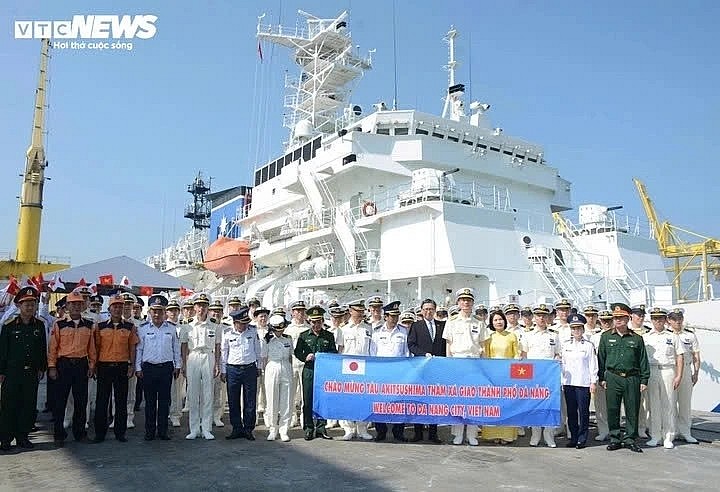 |
| The officers and sailors of the Akitsushima are on a five-day visit to Vietnam. (Photo: vtcnews.vn) |
A representative of the Vietnam Coast Guard Region 2 reaffirmed Vietnam’s commitment to expanding cooperation with Japan, particularly in areas such as maritime security and safety, search and rescue, and law enforcement at sea.
Representatives of the Japanese delegation expressed their desire to further deepen exchanges, joint training and operational coordination, with a view to contributing to peace, stability and maritime security in the region. Vietnam–Japan relations have continued to grow in depth in recent years, with defense and maritime security cooperation emerging as a key pillar of bilateral ties.
The Akitsushima (PLH32) is a large patrol vessel of the Japanese Coast Guard, capable of conducting maritime patrols, search and rescue operations, and humanitarian assistance missions. It is approximately 150m long, 17m wide, with a displacement of up to 6,500 tonnes. It can simultaneously carry two helicopters. In addition, this patrol vessel is equipped with two 20mm cannons and two 40mm cannons.
 | Vietnam News Today (Jan. 15): Vietnam, Laos Foster Strategic Connectivity in New Context Vietnam News Today (Jan. 15): Vietnam, Laos foster strategic connectivity in new context; 14th National Party Congress of Vietnam seen as historic milestone amid global ... |
 | Vietnam News Today (Jan. 16): Vietnam Shows Leading Role in ASEAN’s Digital Strategy Vietnam News Today (Jan. 16): Vietnam seeks Japan’s support in science and technology infrastructure development; Developing ties with China a strategic priority in Vietnam’s foreign ... |