ADB Country Director breaks down Vietnam's 2025 success and 2026 prospects
Country Director of the Asian Development Bank (ADB) in Vietnam Shantanu Chakraborty provided a detailed analysis of Vietnam’s economic performance in 2025 and its 2026 prospects in an interview recently granted to the Vietnam News Agency (VNA).
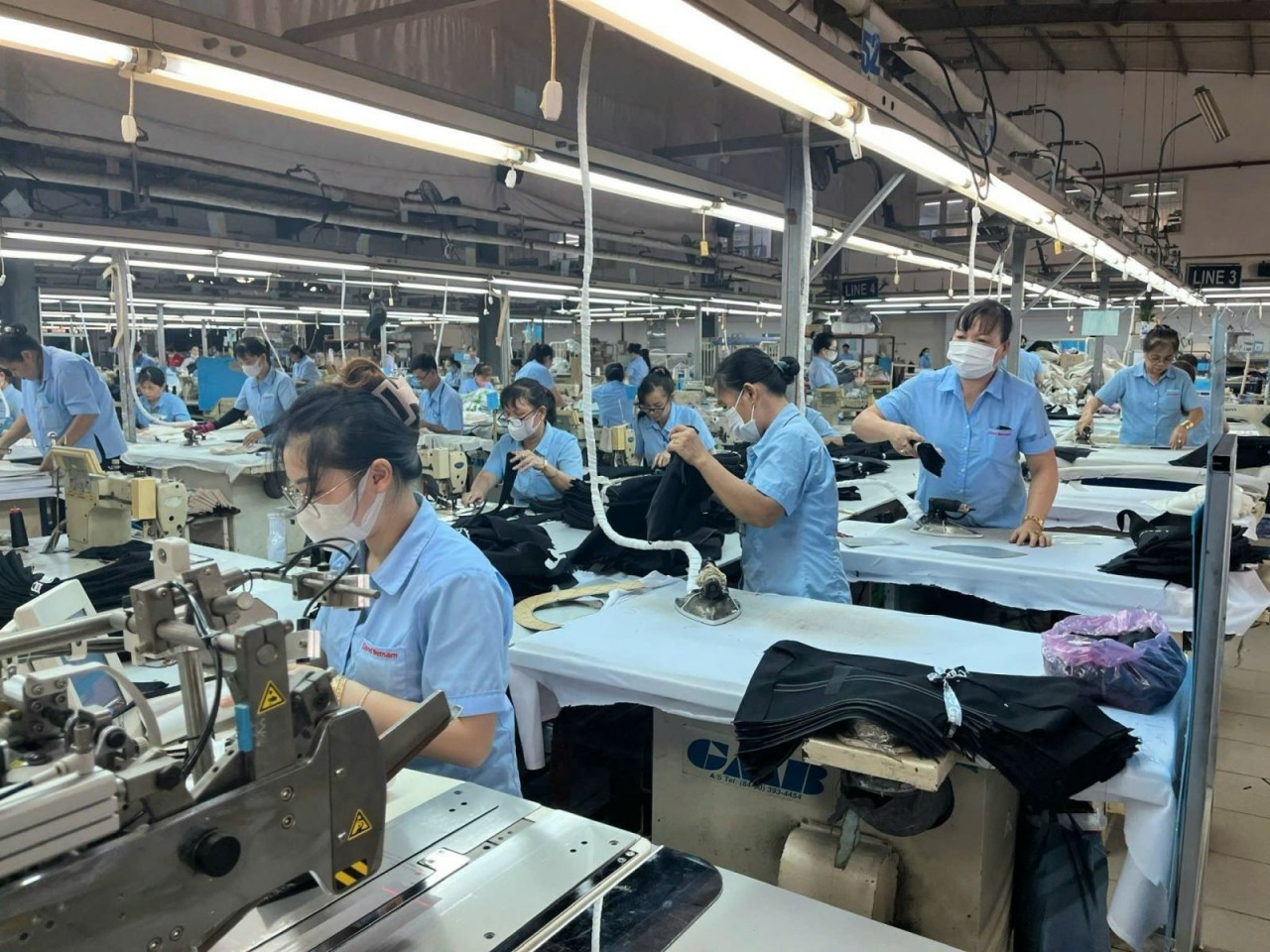
Chakraborty described Vietnam's 2025 results as highly impressive despite global challenges. GDP expanded 7.9% in the first nine months, well above the 6.8% pace a year earlier, with quarterly acceleration. Inflation stayed contained at about 3.3%, while credit growth surged to an estimated 18–19% for the year, topping the 16% target.
Trade and investment remained key drivers. Exports hit US$430 billion through the end of November, up 16.1% year-on-year, while imports totalled US$410 billion, up 18.4%, yielding a US$20.5 billion surplus. Realized foreign direct investment (FDI) climbed 8.9% to US$23.6 billion in the first 11 months. Domestic investment also hiked, backed by expanded fiscal policies for public investment and a real estate rebound. Services also gained from eased visa rules and major commemorative events.
Still, Chakraborty highlighted vulnerabilities. Natural disasters, including storms and floods, inflicted roughly US$4 billion in losses, or nearly 0.8% of GDP. Heavy dependence on international trade and foreign investment inflows exposes the economy to external shocks, especially geopolitical tensions and uncertainties in global trade policies.
Fast credit expansion has raised liquidity strains and funding costs, and the FTSE emerging-market upgrade notwithstanding, the stock market saw persistent foreign selling amid peer competition, compounded by the depreciation of the Vietnamese dong against the US dollar.
Looking ahead, he advised Vietnam to accelerate its capital market development to ease pressure on bank credit, while bolstering foreign exchange reserves as a shield against external shocks.
Chakraborty pointed out three key opportunities that Vietnam could capitalise on. First, ongoing structural reforms stand out as a powerful catalyst. By improving the business environment, fine-tuning the institutional apparatus, and facilitating smoother market operations, Vietnam can boost labor productivity and unlock the momentum needed for fast and sustainable growth.
Second, Vietnam's digital transformation paired with its young, tech-savvy workforce represents a golden ticket. This demographic edge positions the country to supercharge sectors like digital services, fintech, e-commerce, and smart logistics. Relentless upskilling and cultivating a vibrant innovation ecosystem will pivot toward a high value-added, knowledge-driven economy.
Third, amid global supply chain reshuffling, Vietnam is ideally placed to attract quality FDI in electronics, high-tech manufacturing, and green industries, tied to investments in renewable energy and climate-resilient infrastructure.
However, the road ahead is not without challenges, he warned. Externally, a potential global slowdown, escalating economic and geopolitical tensions, and disruptions to supply chains could weaken demand in major markets, directly affecting Vietnam’s exports. Domestically, mounting pressures around structural reforms, infrastructure buildup, especially green projects, and private sector expansion demand bold and decisive actions; otherwise, Vietnam’s ability to fully seize these opportunities could be constrained.
On ambitions for 10% average annual GDP growth during 2026–2030 en route to high-income status by 2045, Chakraborty called them vital as a policy compass, VOV reported.
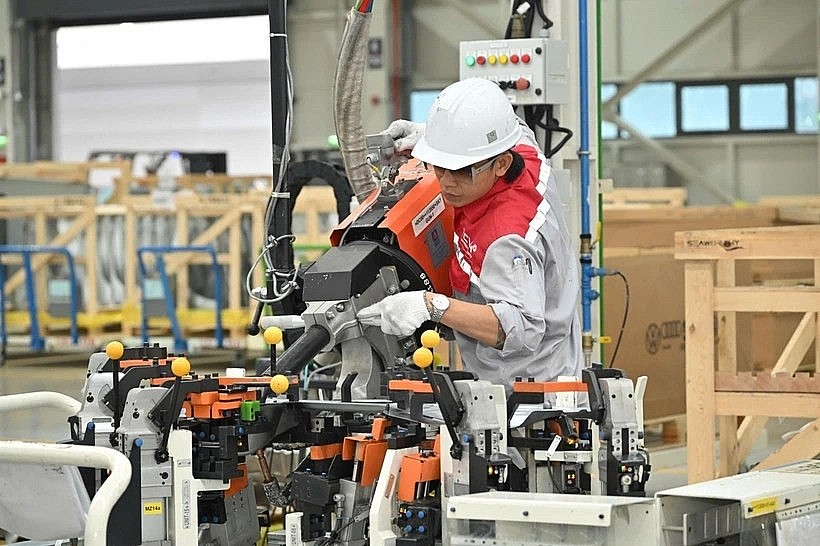 |
| Vietnam's GDP expanded 7.9% in the first nine months, well above the 6.8% pace a year earlier. (Illustrative photo: VNA) |
Near-term, ramping up public investment will spur growth, but success hinges on rigorous project vetting and swift rollout to maximise returns and safeguard fiscal health. Monetary policy must flexibly balance growth support with price stability, alongside better financial markets for capital flow optimisation. All of this require tight coordination to fuel economic expansion, curb inflation, and fortify the overall financial system.
Over the longer horizon, quality infrastructure spending will help lure private and foreign capital, supercharging Vietnam's competitiveness. Investments in clean energy infrastructure and power grid upgrades will not only support Vietnam’s net-zero commitments but also unlock more efficient green financing flows.
However, it should be stressed that fiscal stimulus measures or monetary easing will only truly drive sustainable economic growth if paired with tangible improvements in business environment and greater regulatory transparency. Vietnam must also double down on innovation by developing a dynamic sci-tech market, encouraging entrepreneurship, and accelerating digital transformation, he said.
Finally, another critical factor is heavy investment in workforce, with training in digital, technical, and green skills. At the same time, stronger social security system will build resilience and drive inclusive growth. Improving labor productivity is the core element to successfully transform the country’s growth model, he added.
Vogue ranks Vietnam among standout destinations for 2026
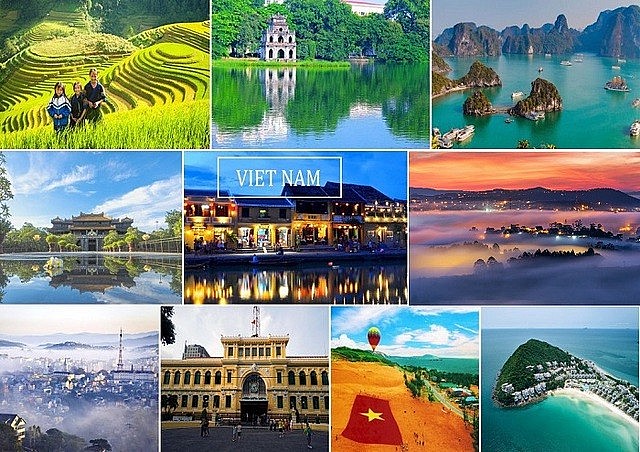
Vietnam is emerging as one of Asia’s most popular travel destinations in 2026, thanks to its unique blend of spectacular natural landscapes, rich cultural heritage and vibrant modern cities, according to France’s Vogue magazine.
The magazine said, the country continues to reopen strongly to international visitors after the COVID-19 pandemic, offering diverse experiences while maintaining its distinctive identity.
Iconic attractions such as Quang Ninh province's Ha Long Bay and Ninh Binh province highlight Vietnam's natural beauty, while heritage sites in Hue, the caves of Phong Nha in Quang Tri province, the mountains of Sa Pa in Lao Cai province, and the beaches and islands of Phu Quoc in An Giang province and Con Dao in Ho Chi Minh City appeal to visitors seeking culture, nature and relaxation.
Major cities also add to the country's appeal. Ha Noi impresses with its mix of tranquil lakes, historic quarters, colonial architecture and lively street food culture, alongside a growing nightlife scene. Ho Chi Minh City stands out as a dynamic metropolis, where modern skyscrapers coexist with historic buildings, reflecting its creativity, openness and entrepreneurial spirit.
High-end resorts along Vietnam's coastline, combined with improved air connectivity, including direct flights by Vietnam Airlines from Paris to Ha Noi and HCM City have further enhanced the country's accessibility and tourism profile.
With its balanced combination of heritage, nature, modern urban life and increasingly developed tourism infrastructure, Vogue ranks Vietnam among the standout destinations for 2026, catering to travelers seeking authentic, sustainable and memorable experiences, VGP reported.
 |
| Photo: VGP |
According to the Vietnam National Authority of Tourism (VNAT), in the first 11 months of 2025, the country welcomed more than 19.1 million international visitors, up 20.9 percent year-on-year and surpassing its pre-pandemic peak in 2019.
A ceremony marking the arrival of the 20 millionth foreign visitor was held in Phu Quoc Special Zone, in the southern province of An Giang, on December 15. This is the first time in the tourism industry's 65-year history that such as milestone has been achieved in a single year.
The positive performance in 2025 reflects the sector's persistence in implementing strategic policies, including visa reform, product diversification, digital transformation and targeted promotion in key source markets such as Europe, India, China, the U.S., Australia, the Republic of Korea and Japan.
Localities welcome first foreign arrivals of 2026
On the morning of January 1, at the Huu Nghi International Border Gate, the Lang Son Center for Investment, Trade and Tourism Promotion, in coordination with relevant agencies, held a ceremony to welcome the first foreign visitors to the province this year.
The northeastern mountainous province of Lang Son and Hoi An ward in the central city of Da Nang have marked a positive start to their tourism activities in 2026 by welcoming the first international tourist delegations of the year.
On the morning of January 1, at the Huu Nghi International Border Gate, the Lang Son Center for Investment, Trade and Tourism Promotion, in coordination with relevant agencies, held a ceremony to welcome the first foreign visitors to the province this year.
Hoang Xuan Thuan, Director of the center, affirmed that Lang Son will continue efforts to improve the tourism environment, ensure security and safety, and better service quality. At the same time, it will focus on developing distinctive tourism products so that every journey to the province brings visitors positive experiences and lasting impressions.
In 2025, Lang Son welcomed an estimated 4.4 million tourist arrivals, including more than 300,000 international tourists, with total tourism revenue reaching approximately 4.5 trillion VND (171.1 million USD), according to the center.
Notably, the province has identified border tourism as one of the key pillars of the sector’s development strategy. It has actively promoted tourism cooperation with the Guangxi Zhuang Autonomous Region of China, including the successful development of a two-day, one-night tour for travellers using laissez-passers – a concrete outcome of the two sides’ agreements on cross-border tourism cooperation, cited VNA.
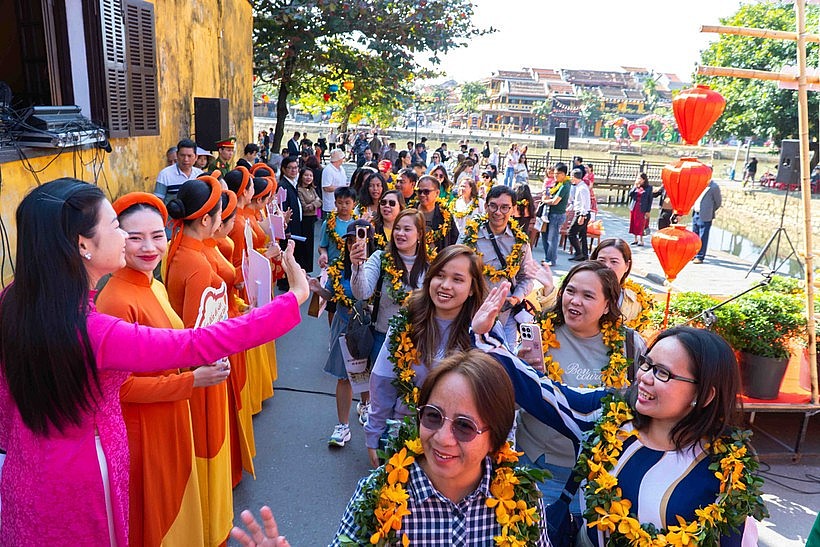 |
| Tourists from the Philippines receive a warm welcome in the Hoi An ancient town. (Photo: VNA) |
Also on January 1, at Chua Cau (Japanese Covered Bridge) in Hoi An ward, the Da Nang Department of Culture, Sports and Tourism, together with local authorities and residents of the ancient town, organized an event to greet the first tourist group to visit Hoi An this year.
The group consisted of 29 holiday makers from the Philippines, organized by Visit Indochina – one of 2025’s top 10 international tour operators bringing tourists to Vietnam.
For Hoi An, the Philippines is considered a promising market for cultural and heritage tourism, particularly experiences closely associated with the daily life of the ancient town and local culture.
Pham Phu Ngoc, Director of the Hoi An World Cultural Heritage Conservation Center, noted that in 2026, his center plans to launch a series of new cultural and tourism products, with a focus on distinctive and novel experiences, and develop a creative tourism ecosystem linked with Hoi An's status as a member of UNESCO's Network of Creative Cities in the field of crafts and folk art.
 | Vietnam News Today (Dec. 28): Official calls for stronger Vietnam – RoK economic, locality-to-locality links; Vietnam calls for stronger information cooperation with Russia; Vietnam boasts ... |
 | Vietnam News Today (Dec. 29): Vietnam, Laos Strengthen Cooperation in Border Management, Development Vietnam News Today (Dec. 29): Vietnam, Laos strengthen cooperation in border management, development; Vietnam-France friendship association marks 70 years of people-to-people ties; New bridge inaugurated ... |