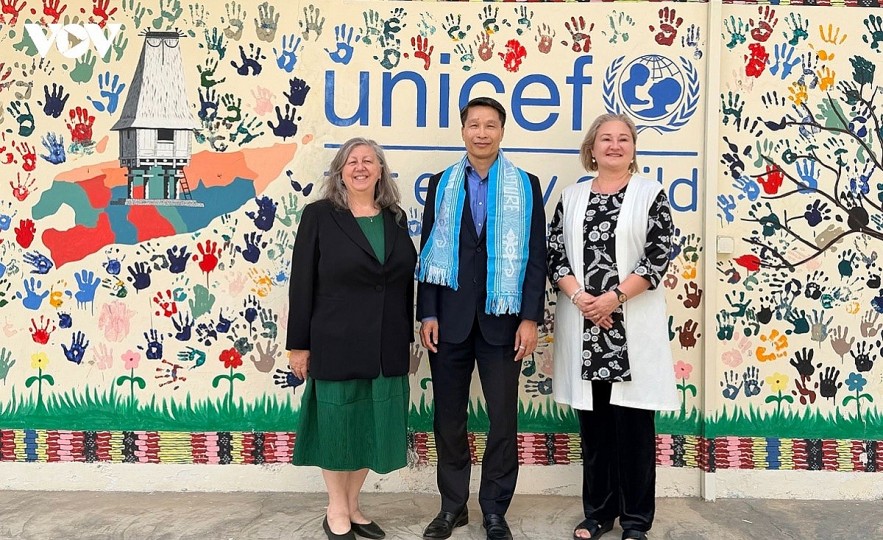
WB offers strategic recommendations as Vietnam enters upper-middle-income group
Vietnam's recent reclassification by the World Bank (WB) Group as an upper-middle-income economy marks an important milestone in the country’s development trajectory, said Mariam J. Sherman, WB Director for Vietnam, Cambodia, and Lao PDR, noting that while the upgrade reflects Vietnam's remarkable progress, it also brings a new set of growth challenges as the country pursues its ambition of becoming a high-income economy by 2045.
According to the WB Group’s latest annual country income classification, Vietnam's gross national income (GNI) per capita increased from 4,490 USD in 2024 to 4,970 USD in 2025. The figure officially surpasses the new upper-middle-income threshold of 4,636 USD established under the WB's classification system. Among the 218 economies assessed this year, Vietnam was one of only six to be upgraded to a higher income category by the WB Group. The move marks a notable milestone after 17 years in the lower-middle-income group, where Vietnam had remained since 2009.
“It reflects the remarkable transformation Vietnam has achieved through decades of sustained reforms, strong economic growth and rising living standards,” Sherman noted.
Over the past years, Vietnam has consistently been one of the fastest-growing economies in the region, supported by resilient foreign investment, surging exports, and growing domestic services, she said.
According to the WB, Vietnam's average annual GNI growth of 10% during the 2021–2025 period ranks among the strongest and most sustained in the region. The country's robust performance has also been underpinned by a sharp rebound in trade and economic activity. Exports expanded by more than 15% in both 2024 and 2025, while GDP growth reached 7% and 8%, respectively.
This milestone can further help reinforce international confidence in Vietnam's long-term economic prospects and the country’s position as a destination for investment, reported VNA.
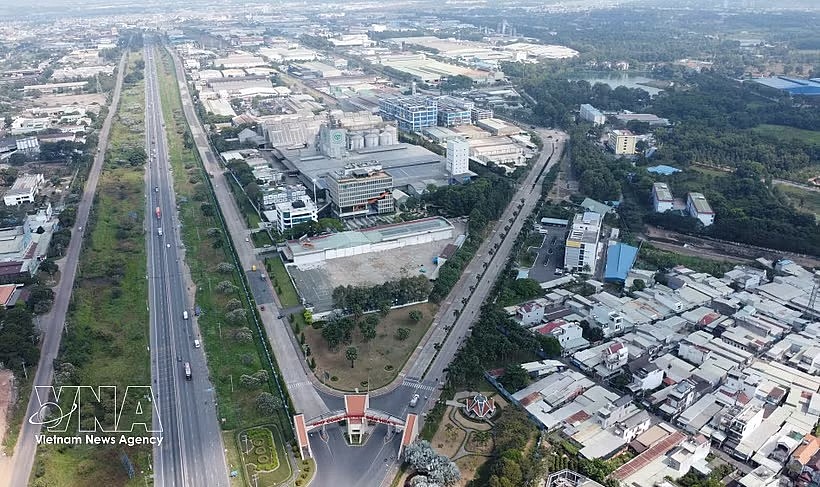 |
| A corner of Bien Hoa 2 Industrial Park in Dong Nai province. (Photo: VNA) |
She is also cautious that the significance of this upgrade goes well beyond the classification itself. As countries develop, the nature of the growth challenges also changes. The drivers that helped Vietnam reach upper-middle-income status will remain important, but the journey ahead remains a significant one. Based on this year's thresholds, Vietnam's GNI per capita would need to nearly triple to reach high-income status. That helps explain why, since 1990, only 27 economies have successfully transitioned from middle- to high-income status, and more than a third of those benefited from unique circumstances such as accession to the European Union or significant natural resource wealth.
To sustain growth and avoid the middle-income trap, the next chapter will be defined not only by how fast Vietnam grows but also by the quality of that growth, Sherman stressed, adding that sustaining future growth will increasingly depend on productivity, innovation, stronger domestic enterprises, and the ability to generate greater value across the economy.
Turning the 2045 vision into reality will require addressing several important challenges. One is the growing divergence between foreign-invested and domestic firms. According to the WB official, while foreign investment has been a powerful driver of Vietnam's success, the next stage of development will depend on strengthening domestic enterprises, particularly SMEs, so they can innovate, grow, and create more quality jobs while participating more deeply in global value chains. Vietnam also operates in an increasingly uncertain global environment.
As one of the world's most open economies, maintaining resilience to external shocks while continuing to diversify the drivers of growth will become increasingly important.
According to the WB official, public investment is becoming one of key levers for growth, with planned volume for the 2026 – 2030 period nearly triple those of the previous five-year period. But public investment needs to move from faster disbursement to higher impact. This means better project selection, stronger preparation, more efficient procurement, and mechanisms to de-risk and crowd-in private investment. Infrastructure will play a central role in supporting the next stage of development. The Government's ambitious public investment program can help address critical infrastructure bottlenecks, but public resources alone will not be sufficient to meet Vietnam's long-term infrastructure ambitions.
Sherman said, this is where the WB Group is working with the Government to rethink how infrastructure financing is approached, creating the conditions to mobilise private capital through well-prepared, bankable projects. Together, public and private investment can help deliver the transport, energy, and digital infrastructure needed to sustain future growth.
Long-term growth will also require deeper and more diversified sources of finance beyond the banking system. Continued capital market reforms can help ensure that capital and bank credit flow to the most productive and dynamic firms, including smaller enterprises with the potential to grow. Building on the recent FTSE Russell upgrade, continued reforms can further strengthen Vietnam's capital markets, broaden the investor base, and reinforce the country's position in global financial markets.
At the same time, capable firms need capable people. As Vietnam moves toward high-income status, continued investment in innovation, skills development, and technology adoption will be essential to help businesses move up the value chain, compete in higher value-added activities, and create more and better jobs.
More importantly, she affirmed, better rules are necessary but not sufficient. Vietnam has made meaningful regulatory progress, but sustainable growth ultimately depends on systemic commitment: every level of government, every institution, every stakeholder aligned behind the same direction towards the same goal.
While implementing the required policy reforms will demand sustained effort and navigating significant challenges, the encouraging news is that Vietnam already has many of the essential ingredients in place. The country has a young and talented workforce, macroeconomic stability, a strategic location at the heart of Asia's growth region, and, perhaps most importantly, a strong ambition and demonstrated willingness to reform and adapt. These are advantages that many countries do not have. These will serve as critical foundations for Vietnam as it embarks on the next phase of its development journey toward achieving high-income, developed-country status by 2045, she noted.
Vietnam Travel Day 2026 to attract 150 international travel companies
Vietnam Travel Day 2026, scheduled to take place in Gia Lai province, is expected to welcome around 550 delegates, including representatives from about 150 international travel companies, as part of efforts to promote destinations, enhance business connections and expand Vietnam's international tourism market.
The Vietnam Tourism Association and the Gia Lai Provincial People's Committee announced the second Vietnam Travel Day at a press conference on July 11.
The event, a key activity under National Tourism Year – Gia Lai 2026, will be held from August 13 to 17, with the opening ceremony planned for August 15. It will highlight Gia Lai's tourism potential, products and development strategy, while providing a platform for businesses to seek partnerships and develop new domestic and international markets.
Participants are expected to include representatives from tourism authorities, professional associations, travel companies, tourism promotion agencies and media organizations, cited VOV.
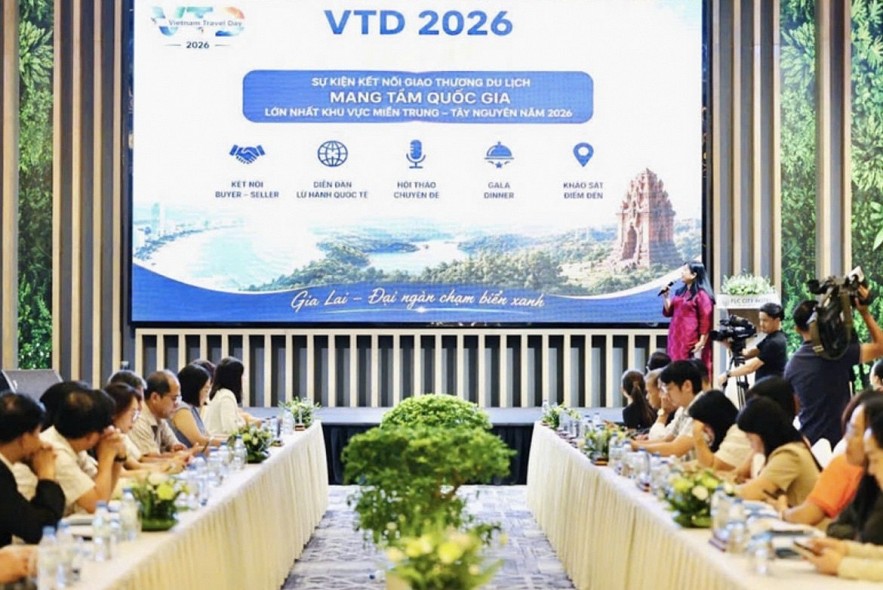 |
| Overview of the press conference announcing the second Vietnam Travel Day 2026. (Photo: Organizers) |
The international delegation will include around 150 travel companies from the Republic of Korea, Japan, China, the Philippines, Thailand, Malaysia, India, Russia and Commonwealth of Independent States (CIS) countries. The event will also bring together approximately 200 domestic travel companies and 200 tourism service providers in accommodation, resorts, transportation, restaurants, entertainment and related fields.
A key highlight of Vietnam Travel Day 2026 will be a series of tourism promotion activities, business networking sessions and destination surveys. Participating travel companies will explore major attractions in Gia Lai to develop new tours and travel products,
The business-to-business (B2B) networking program is expected to generate thousands of direct meetings between travel operators, service providers and potential partners, creating opportunities to promote products, establish cooperation and sign commercial agreements.
The event will also include an International Travel Forum along with discussions on measures to increase international arrivals to Gia Lai.
 | Vietnam News Today (July 7): Vietnam welcomes US–Iran peace deal, expects stronger cooperation with Iran; Vietnam, United States seek to deepen comprehensive strategic partnership; Vietnam ... |
 | Vietnam News Today (July 9): Vietnam, Japan Seek New Strides in Defense Cooperation Vietnam News Today (July 9): Vietnam, Japan seek new strides in defense cooperation; Vietnam and Mexico move towards new bilateral partnership framework; Vietnamese, Chinese firms ... |