| Vietnam News Today (Jun. 6) notable headlines Vietnam–Laos special relationship remains top priority in foreign policy of both countries: Ambassador Vietnam, Russia expand energy cooperation Potential for Vietnam-China cooperation in pollution-control technologies Vietnamese technology draws major attention at leading global robotics forum Vietnam remains a magnet for international tourists Vietnamese electric taxi service launched in India Top leader seeks global support for Vietnam’s AI ecosystem development 500-day campaign helps strengthen Vietnam – Laos special relations: Lao official Cambodian PM’s visit expected to inject new momentum into Vietnam–Cambodia relations |
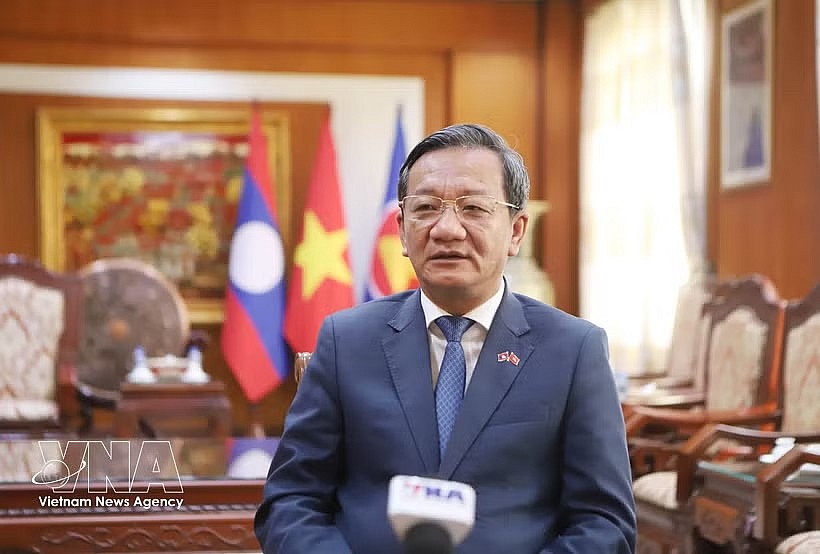 |
| Vietnamese Ambassador to Laos Nguyen Minh Tam grants an interview to the Vietnam News Agency. (Photo: VNA) |
Vietnam–Laos special relationship remains top priority in foreign policy of both countries: Ambassador
The upcoming official visit to Vietnam by Lao Prime Minister Sonexay Siphandone and his attendance at the third ASEAN Future Forum from June 7–9 will help strengthen the great friendship, special solidarity, comprehensive cooperation, and strategic cohesion, according to Vietnamese Ambassador to Laos Nguyen Minh Tam.
In an interview granted to the Vietnam News Agency (VNA)'s resident correspondents in Vientiane ahead of the visit, Tam described the trip as particularly significant as both countries are entering a new development phase following the successful organisation of Party congresses, National Assembly elections and the consolidation of senior leaders for their new terms.
The ambassador noted that the visit follows the recent state visits by the top leaders of the two countries earlier this year and reflects the determination to deepen the bilateral ties across all fields. He emphasised that the visit will translate the concept of “strategic cohesion” into concrete cooperation outcomes.
According to the Ambassador, Vietnam remains one of the priority destinations in PM Sonexay’s diplomatic agenda, underscoring the special nature of the bilateral relationship and reaffirming that ties between Vietnam and Laos continue to occupy a foremost position in the foreign policy of each country.
The visit is also expected to provide an opportunity for leaders of the two nations to review the implementation of high-level agreements and bilateral cooperation mechanisms, including outcomes of the annual meeting between the two Politburos and the 48th meeting of the Vietnam–Laos Intergovernmental Committee for Bilateral Cooperation. These discussions are anticipated to help identify new measures to enhance the effectiveness and depth of bilateral collaboration.
The attendance of the Lao PM in two of the three ASEAN Future Forum editions in 2024 and 2026, underscores Laos’s strong support for Vietnam’s initiative to promote strategic dialogue on the future of ASEAN. Laos’s active engagement not only reflects the increasingly close coordination between the two countries on regional issues, but also demonstrates their shared commitment to building a united, resilient, innovative and people-centred ASEAN, and upholding the bloc’s centrality in the evolving regional architecture, cited VNA.
Against a backdrop of profound geopolitical, geo-economic and technological shifts, the visit conveys a clear message that Vietnam and Laos will continue to stand side by side, share strategic interests, support each other’s development efforts and work closely together to address common challenges. It is expected to provide fresh momentum for implementing high-level agreements and further advancing the strategic cohesion between the two countries, contributing to the continued growth of their special relationship for the benefit of their people and for peace, stability and development in the region and the world, said Tam.
Regarding the bilateral ties, the diplomat shared that economic cooperation is one of the key pillars of the bilateral partnership. Tam observed that bilateral economic cooperation is increasingly shifting from a traditional assistance-based model towards a long-term development partnership centred on strategic cohesion. Priority is being given to three major areas: infrastructure connectivity, energy cooperation and institutional and market integration. Strategic projects such as the Hanoi–Vientiane Expressway, the Vientiane–Vung Ang railway, smart border gates and East–West economic corridors are expected to create new opportunities for growth while strengthening regional connectivity.
Energy cooperation has emerged as a particularly bright spot. Vietnam has approved plans to import more than 4,250 MW of electricity from Laos, while several hydropower and wind power projects are already supplying electricity to the Vietnamese market. These projects are contributing to Vietnam’s energy security and generating significant revenue for Laos, supporting its socio-economic development.
Investment and trade relations have also expanded steadily. Vietnam currently has nearly 7 billion USD invested in approximately 289 active projects in Laos, making it one of the country’s largest foreign investors.
Tam highlighted that economic cooperation not only generates tangible benefits for businesses and local communities but also reinforces political trust and strengthens people-to-people bonds between the two neighbouring countries.
Regarding regional cooperation, the Ambassador stressed that both Vietnam and Laos remain active and responsible members of ASEAN and have consistently coordinated closely within regional and international mechanisms. Their cooperation has contributed to strengthening ASEAN's unity, safeguarding the bloc’s core principles and enhancing its role in regional and global affairs.
Regarding the ASEAN Future Forum, the diplomat shared that the forum, themed “Shaping Our Future Together: Peace, Prosperity and People-Centred,” is expected to provide a platform for discussions on resilience, digital transformation, energy security, emerging technologies and sustainable development.
Looking ahead, he said Vietnam and Laos will continue to work closely to uphold ASEAN’s fundamental principles, including solidarity, consensus, respect for international law and ASEAN's centrality. Both countries are also expected to intensify cooperation in new priority areas such as green transition and digital transformation, sustainable development, human resources development and regional resilience.
He expressed his confidence that the visit will create fresh momentum for implementing high-level agreements, advancing strategic cohesion and elevating the Vietnam–Laos special relationship to new heights, contributing to peace, stability, cooperation, and sustainable development in the region.
Vietnam, Russia expand energy cooperation
Deputy Prime Minister Pham Gia Tuc held working sessions with Russian Deputy Prime Minister Alexander Novak and Saint Petersburg Governor Alexander Beglov on the sidelines of the 29th Saint Petersburg International Economic Forum on June 5.
Both sides reaffirmed the importance of the Vietnam–Russia Comprehensive Strategic Partnership and reviewed progress in bilateral energy cooperation, particularly in the oil and gas sector. Novak highlighted the long-standing cooperation between the two countries, describing Vietsovpetro and Rusvietpetro as symbols of successful collaboration, and called for effective implementation of the Ninh Thuan 1 Nuclear Power Plant project.
Pham affirmed that energy and oil and gas remain traditional areas of strategic cooperation between the two countries. He proposed that enterprises from both sides strengthen cooperation in gas-fired power, wind power and other energy projects in line with the development priorities of Vietnam and Russia.
The two sides agreed to support joint ventures in exploring new cooperation opportunities, address outstanding issues in existing projects, and accelerate the development of new energy initiatives.
Beglov praised Vietnam's recent development achievements and expressed confidence in the country's future growth under the leadership of the Communist Party of Vietnam.
The Saint Petersburg governor reaffirmed his commitment to strengthening relations with Vietnamese localities, promoting cultural exchanges and people-to-people diplomacy, and supporting the Vietnamese community living, working and studying in the city.
Three major directions for SPIEF cooperation
Earlier, at the opening session of the 29th Saint Petersburg International Economic Forum (SPIEF), focusing on connectivity, technological adaptation and resilience. Deputy Prime Minister Pham Gia Tuc proposed three major directions for cooperation to help ensure a stable future for the region and the world.
According to the Deputy Prime Minister Pham, when the world faces volatility and uncertainty, dialogue and cooperation remain an effective way to narrow differences, strengthen trust and create new momentum for future development.
First, strengthening the stability and effectiveness of cooperation frameworks. Countries should enhance connectivity rather than separation, maintain a free, open, transparent, inclusive and rules-based trade and investment environment, strengthen essential supply chains, and create conditions for developing countries to gain more equitable access to markets, technology and development resources.
Pham noted that the Eurasian region is increasingly affirming its role as a strategic bridge linking major growth centers and serves as an important driver of regional and global economic connectivity. He affirmed that Vietnam wishes and stands ready to contribute actively to efforts to enhance connectivity between ASEAN and Eurasian partners for peace, stability and shared prosperity.
Second, enhancing the capacity to adapt to rapid advances in science and technology. Digital technologies, particularly artificial intelligence, need to serve as a driver of productivity, innovation and inclusive development rather than creating new technological divides.
Greater cooperation is needed in science, technology and innovation, along with harmonized technological standards, expanded knowledge-sharing and high-quality workforce training, and stronger support for developing countries to participate more effectively in the digital economy, according to VGP.
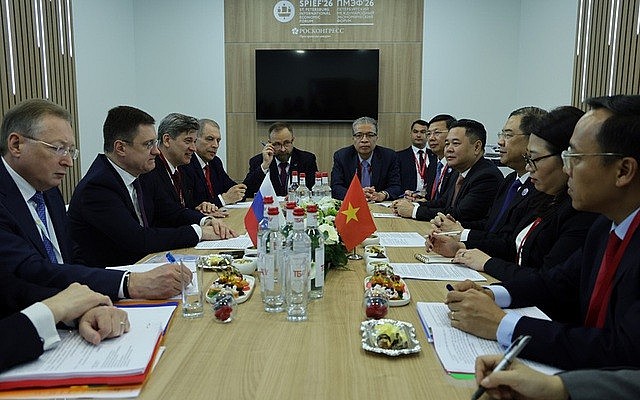 |
| Deputy Prime Minister Pham Gia Tuc (second, left) attends the 29th Saint Petersburg International Economic Forum (SPIEF) in Russia, June 5, 2026. Photo: VGP |
Third, strengthening resilience and responsiveness to global challenges such as climate change, natural disasters, pandemics and other non-traditional security risks.
The Deputy Prime Minister said this requires closer coordination among countries, particularly in forecasting, response efforts, experience-sharing, technology transfer and financial support.
Development strategies must place people at the center and recognize them as the primary beneficiaries and drivers of development, ensuring that every country and every individual is better able to adapt, become more self-reliant and share in the benefits of sustainable development.
Potential for Vietnam-China cooperation in pollution-control technologies
China and Vietnam boast huge potential to bolster cooperation and share technologies for treating emissions, wastewater, noise pollution, solid waste and hazardous waste, according to Zheng Zewen, an official with the Environmental Protection Bureau of Guangzhou in China’s Guangdong province.
Speaking to the press in China, Zheng said greater cooperation in environmental technologies could help reduce negative impacts on ecosystems, strengthen biodiversity conservation and promote a more harmonious relationship between people and nature.
According to Zheng, Vietnam’s development goals, like China’s, place people at the centre. In that context, Guangzhou’s experience, and China’s experience more broadly, is able to provide useful reference points. He identified the integration of environmental protection into economic development, stronger legal and policy safeguards, and greater emphasis on pollution prevention through practical measures as among the key lessons learned.
Guangzhou has accumulated extensive experience in environmental protection and that both sides can enhance exchanges, connectivity and practical cooperation in this field. He also noted that many entrepreneurs from Guangdong are interested in the Vietnamese market and frequently visit Vietnam to explore business opportunities, exchange views and pursue cooperation, contributing positively to relations between the two sides, VOV reported.
 |
| Electronic waste recycling technology. (Illustrative image) |
As climate change and environmental challenges continue to intensify, promoting green development, protecting ecosystems and using natural resources more efficiently have become common priorities for many countries.
Vietnam and China both attach importance to sustainable development and people-centred growth, thus providing further opportunities for cooperation in areas such as green transition, pollution control, biodiversity conservation and climate change response.
Expanding the sharing of experience, technologies and environmental management models could help support higher-quality development in both countries while contributing to a more sustainable ecological environment across the region.
Vietnamese technology draws major attention at leading global robotics forum
Two Vietnamese technology companies presented humanoid robots developed by Vietnamese engineers at the International Conference on Robotics and Automation (ICRA) 2026 in Vienna, showcasing Vietnam’s growing capabilities in technology design, systems integration and participation in the global robotics value chain.
The International Conference on Robotics and Automation (ICRA) 2026, held in Vienna from June 1 to 5, attracted leading scientists, technology companies, research institutes and universities from around the world specialising in robotics and automation.
Under the theme “Robots for All”, the conference is regarded as one of the world’s leading robotics forums, providing a platform for researchers, businesses and innovation centres to present the latest advances in robot design, motion control, sensors, artificial intelligence (AI) and intelligent automation systems.
This year’s event took place as robotics and AI continue to move rapidly from laboratory research to applications in manufacturing, services, smart cities and everyday life.
Vietnam was represented by VinRobotics and VinDynamics, two technology companies under Vingroup. The companies showed humanoid robots developed by Vietnamese engineering teams, helping introduce the country’s capabilities in technology design, systems integration and participation in the global robotics value chain.
Vietnamese Ambassador to Austria Vu Le Thai Hoang visited the exhibition area of the two companies, exchanging views with and encouraging their engineers and staff.
After learning about the development process, core technologies and planned applications of the robots, the ambassador praised the creativity and determination of the engineering teams. He said the presence of Vietnamese companies at a leading international robotics forum such as ICRA showed that Vietnam is gradually becoming more deeply involved in emerging high-value technology sectors.
Among the products on display, VinRobotics introduced VR-H3, the company’s third-generation humanoid robot platform. Designed for both industrial and everyday environments, the robot can operate in open spaces, move flexibly, interact with people, transport objects and perform certain assembly tasks. The platform represents a step forward in efforts to develop “Make in Vietnam” humanoid robots, with many key components researched and developed by Vietnamese engineers, cited VOV.
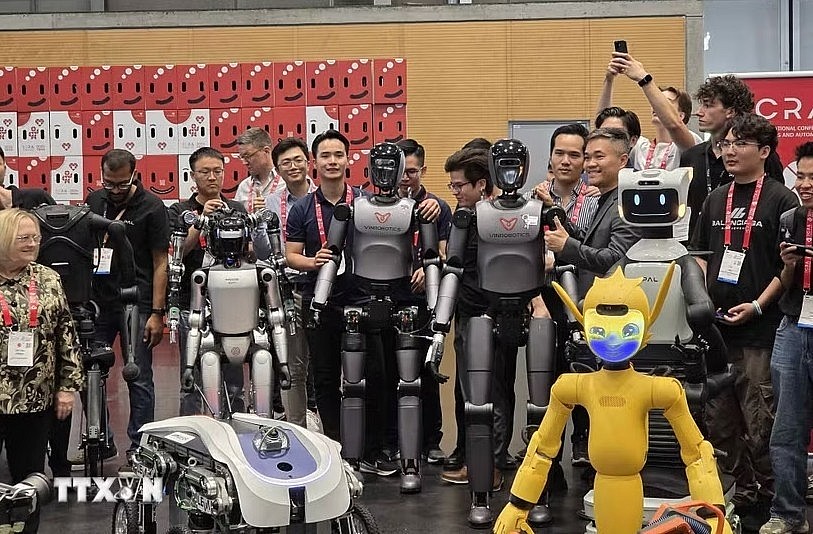 |
| VinRobotics’ VR-H3 robot takes part in the robot parade at ICRA 2026. (Photo: VNA) |
VinRobotics Chief Executive Officer Ngo Quoc Hung said the company’s participation in ICRA 2026 sends a message that Vietnam is gradually moving beyond contract manufacturing to play a deeper role in technology development. Vietnamese engineers can make meaningful contributions to global technology when provided with an environment that is sufficiently large, open and challenging, he added.
According to Pham Quynh Dao, Head of Cooperation and Strategic Partnerships at VinRobotics, robotics is evolving rapidly, making continuous learning and adaptation essential. The company is currently focusing on solutions for manufacturing, automation and operational support in industrial environments such as factories and warehouses.
VinDynamics introduced Dyno, its first humanoid robot designed for everyday applications. The robot is intended to serve as a versatile assistant in modern environments, with potential uses in security support, visitor guidance and services in urban areas, schools, tourism facilities, hotels and mixed-use complexes, while gradually expanding into household support functions.
In addition to the completed Dyno robot, VinDynamics showcased key technologies within its humanoid robotics ecosystem, including specialised actuator systems, robotic hands developed to meet international standards for dexterity, and AI training datasets optimised for real-world applications.
The participation of VinRobotics and VinDynamics at ICRA 2026 was more than a corporate exhibition. As humanoid robotics gains momentum in major technology centres around the world, the presence of Vietnamese companies at a leading international forum reflects their ambition to play a deeper role in emerging technology fields, particularly robotics, embodied AI and intelligent automation.
A highlight of the event was a robot parade featuring platforms developed by participating organisations. The activity gave visitors an opportunity to observe robots operating in real-world conditions and demonstrated the diversity of approaches currently shaping the future of robotics.
ICRA 2026 not only highlighted the latest achievements in global robotics but also marked an important milestone for the presence of Vietnamese technology on the international robotics stage.
The participation of VinRobotics and VinDynamics, together with the support and engagement of the Embassy of Vietnam in Austria, demonstrated ongoing efforts by Vietnamese companies to move into high-technology sectors where research, design, systems integration and practical applications will play an increasingly important role in the global digital economy.
Vietnam remains a magnet for international tourists
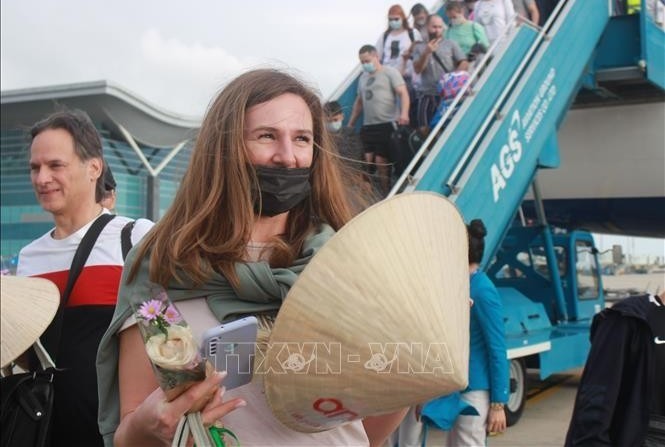
Vietnam recorded robust growth in international arrivals during the first five months of 2026, reinforcing its position as one of Asia’s most attractive travel destinations.
The country welcomed nearly 1.8 million foreign visitors in May, up 16.5% year-on-year, according to the Vietnam National Authority of Tourism.
During the first five months of the year, international arrivals reached a record 10.6 million, the highest figure ever recorded for the period. The result represents 42% of the sector’s target of 25 million international visitors for 2026.
At a time when global tourism continues to face challenges stemming from geopolitical tensions, regional conflicts and economic difficulties in many countries, Vietnam is recognised as a safe, stable and appealing destination. Political and social stability, competitive travel costs, expanding international air connectivity and increasingly favourable visa policies have strengthened the country’s competitiveness in the global tourism market.
Although May is traditionally considered a low season for international tourism as many source markets enter their domestic summer holiday period, a record number of foreign arrivals highlights the growing appeal of Vietnam.
The 10 largest source markets during the first five months were China, the Republic of Korea, Russia, Taiwan (China), Cambodia, the US, India, Japan, the Philippines and Australia. China and the RoK remained the two largest markets, accounting for nearly 40% of total international arrivals.
Cambodia rose to the fifth place among Vietnam’s top source markets, reflecting growth potential from neighbouring countries. Rising demand for tourism, shopping, family visits and business exchanges between the two nations has helped stimulate cross-border travel, the authority said.
Russia ranked third among the largest source markets. Following a strong recovery, the number of Russian visitors during the first five months reached about 90% of the total recorded in 2019, indicating that Russia is rapidly regaining its position as one of Vietnam’s key tourism markets.
Meanwhile, India continued to emerge as a highly promising market with strong growth momentum, raising the prospect of reaching one million visitors to Vietnam in 2026.
Japan, while remaining among the leading markets, slipped to the eighth place due to slower growth compared to the overall average. Japanese arrivals rose 11.8% during the period, below the overall growth rate of 14.9% for international visitors.
Southeast Asia is still an important driver of tourism growth. Arrivals from the Philippines surged 71.9%, helping the country move into the ninth place among Vietnam’s largest source markets. Other markets also posted fast expansion, including Cambodia with 40.2%, Indonesia 28.7%, Singapore 28.5%, and Malaysia 21%.
In South Asia, arrivals from India soared by 50.4%, highlighting the market’s significant growth potential, cited VNA.
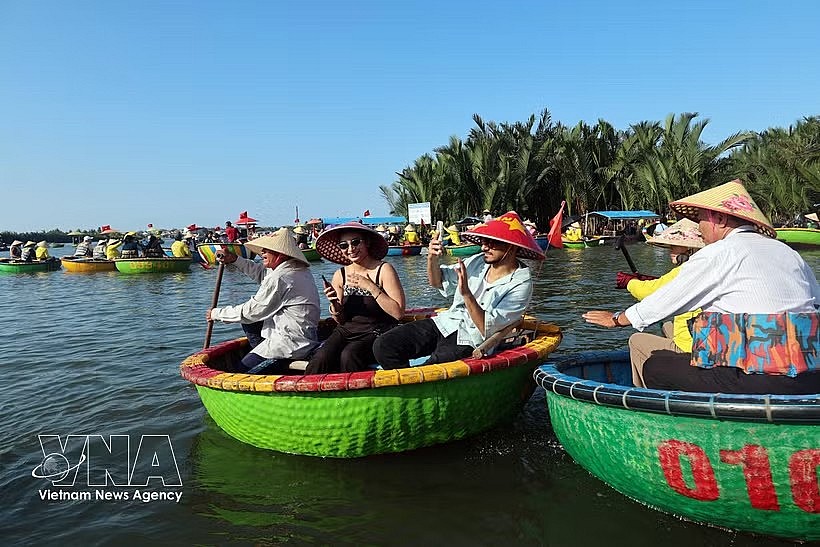 |
| International visitors enjoy riding traditional basket boats through the coconut palm waterways of Cam Thanh village, named among the world's 50 most beautiful villages in 2025. (Photo: VNA) |
Tourism experts said geographical proximity, convenient air connectivity and the growing popularity of short-haul regional travel have made Southeast Asia one of the most important growth engines for Vietnam’s tourism industry.
Europe showed the highest growth rate among all regions during the first five months, with arrivals increasing 54.8%. Strong growth continued from several Western and Northern European markets, including Germany, France, the UK, Italy, Denmark, Norway and Sweden. Visitors from Poland rose 51.7%, Switzerland 25.7%, and the Czech Republic 18.1%, helping expand Europe’s share of Vietnam’s international visitor market.
Long-haul markets also delivered positive results, with arrivals from Australia going up 21.2% and those from the UA rising 18.8%, indicating Vietnam’s growing attractiveness among international travelers.
With over 10.6 million international visitors during January–May, Vietnam's tourism industry has gained a solid boost toward the goal of attracting 25 million foreign travelers this year. The performance not only demonstrates the sector’s strong recovery but also contributes to economic growth, services development and trade expansion, supporting the country’s broader socio-economic development goals.
 | Vietnam News Today (Jun. 1): General Secretary and President To Lam Arrives in Manila for State Visit to Philippines Vietnam News Today (Jun. 1): General Secretary and President To Lam arrives in Manila for state visit to Philippines; Shangri-La Dialogue: Vietnam’s vision praised as ... |
 | Vietnam News Today (Jun. 2): Vietnam-Philippines Economic Cooperation Should Move to New Level Vietnam News Today (Jun. 2): Vietnam-Philippines economic cooperation should move to a new level; Vietnam, US step up humanitarian cooperation on war legacy issues; Bilingual ... |