Vietnam News Today (Jun. 1): General Secretary and President To Lam Arrives in Manila for State Visit to Philippines

Vietnam News Today (Jun. 1): General Secretary and President To Lam arrives in Manila for state visit to Philippines; Shangri-La Dialogue: Vietnam’s vision praised as strategic, practical, forward-looking; Thousands attend Vesak 2026 celebrations across Vietnam; Vietnam tourism shifts from budget destination to high-value travel experience.
June 01, 2026 | 07:00
Vietnam News Today (May 27): Vietnam, US Foster Deeper, More Substantive Legislative Ties
Vietnam News Today (May 31): Vietnam, Australia foster Comprehensive Strategic Partnership

Vietnam News Today (Jun. 1) notable headlines

General Secretary and President To Lam arrives in Manila for state visit to Philippines

Shangri-La Dialogue: Vietnam’s vision praised as strategic, practical, forward-looking

Thousands attend Vesak 2026 celebrations across Vietnam

Vietnam tourism shifts from budget destination to high-value travel experience

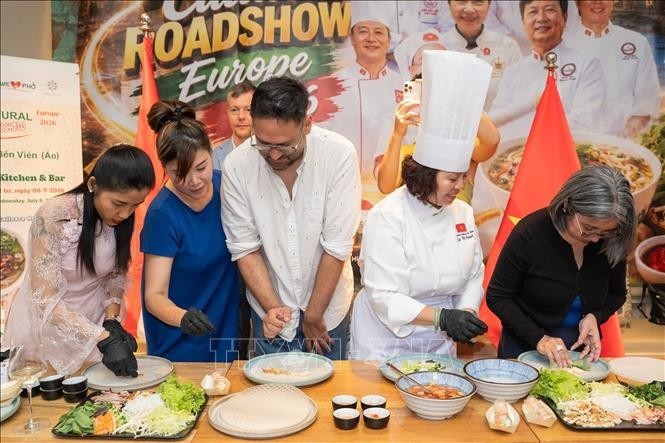
Cooperation program launched to spread Vietnamese culture on digital platforms

French photographer chronicles Vietnam pagodas amid urban change

Vietnam-Philippines ties poised for new chapter as top leader To Lam begins state visit

Philippines looks to top leader To Lam’s visit to shape future bilateral relations

Vietnam maintains good relations with major powers, does not side with any country: Top leader

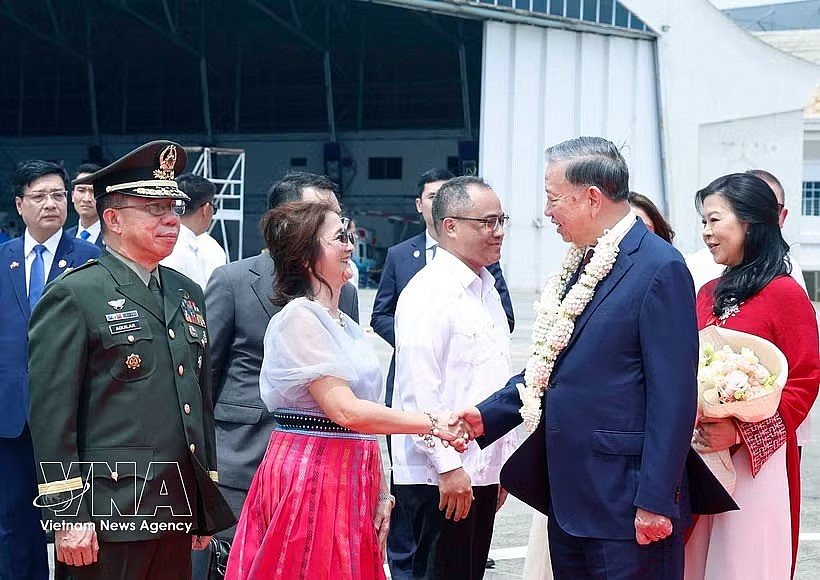
Party General Secretary and State President To Lam and his spouse Ngo Phuong Ly are welcomed at Villamor Airbase on May 31 afternoon. (Photo: VNA)

General Secretary and President To Lam arrives in Manila for state visit to Philippines

General Secretary of the Communist Party of Vietnam Central Committee and President of Vietnam To Lam, his spouse Ngo Phuong Ly, and a high-ranking Vietnamese delegation arrived in Manila on May 31 afternoon, beginning a state visit to the Philippines until June 1.

The visit is made at the invitation of President Ferdinand Romualdez Marcos Jr. and his spouse.

Those welcoming the Vietnamese leader, his spouse, and his entourage at Villamor Airbase included Philippine Secretary of Agriculture Tiu Laurel Jr., Philippine Ambassador to Vietnam Francisco Noel R. Fernandez III, Vietnamese Ambassador to the Philippines Lai Thai Binh and his wife, along with numerous officials and staff of the Vietnamese Embassy and members of the Vietnamese community in the archipelagic nation.

Both located in Southeast Asia, Vietnam and the Philippines boast a long-standing and strong friendship while sharing many strategic interests in maintaining peace, stability, cooperation, and development in the region, cited VNA.

Since establishing diplomatic relations in 1976, the bilateral relationship has been continuously enhanced and developed across various fields, becoming increasingly substantive. In 2015, the two countries set up a Strategic Partnership, a significant landmark that created a stepping stone for promoting all-round cooperation in the new phase. In recent years, Vietnam – Philippines ties have continued to maintain positive momentum, notably with tightened political trust, expanded economic cooperation, and enhanced coordination in regional and international issues.

The state visit by General Secretary and President Lam is of particularly special significance. It marks the first visit to the Philippines by a General Secretary of the Communist Party of Vietnam Central Committee, and takes place as the two countries are looking forward to the 50th anniversary of their diplomatic relations and the Philippines is holding the chairmanship of the Association of Southeast Asian Nations (ASEAN) in 2026.

The trip demonstrates Vietnam's high regard for its friendship and cooperation with the Philippines, as well as with ASEAN and the Southeast Asian region. It also provides an opportunity for high-ranking leaders of both countries to have in-depth discussions on major directions to further develop the Vietnam – Philippines Strategic Partnership in a stronger, more substantive, and more effective manner in the new phase.

Shangri-La Dialogue: Vietnam’s vision praised as strategic, practical, forward-looking

General Secretary of the Communist Party of Vietnam Central Committee and President of Vietnam To Lam’s keynote address at the 23rd Shangri-La Dialogue in Singapore has been widely praised for its strategic depth, practical approach and long-term vision for the region, according to a prominent Cambodian scholar who attended the event.

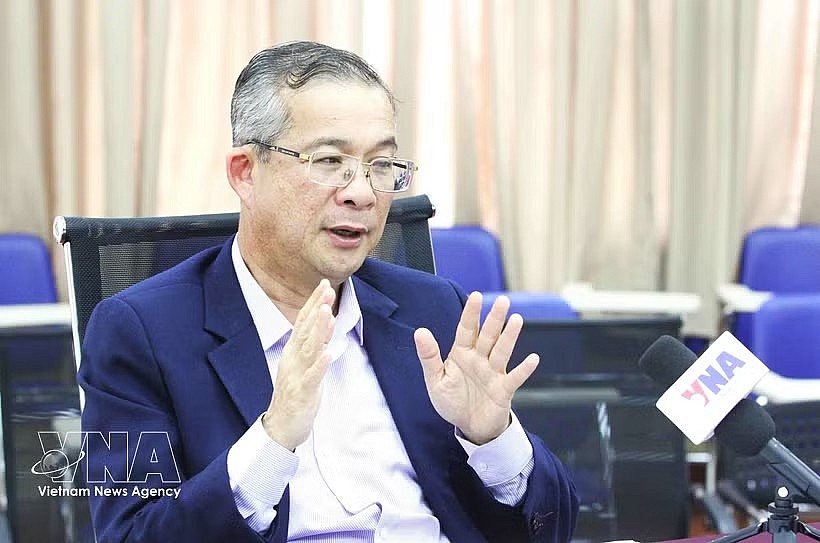
Associate Professor Dr. Neak Chandarith, Director of the Institute for International Studies and Public Policy (IISPP) at the Royal University of Phnom Penh (RUPP), stressed that it was the first time Vietnam’s Party and State leader had been invited to deliver a keynote address at the opening session of the Shangri-La Dialogue, one of the leading security forums in the Asia-Pacific and the world.

According to the Cambodian scholar, one of the most notable aspects of the speech was its representation of the perspectives and concerns of small and middle-sized countries. He said General Secretary and President Lam demonstrated a clear understanding of global challenges and presented a balanced voice that advocates sovereignty, equality and fairness for small and middle-sized nations amid an increasingly uncertain international environment.

Chandarith particularly agreed with the leader’s assessment that the world is currently facing three interconnected crises: a crisis of the international order, a crisis of development models and a crisis of strategic trust. These challenges, he noted, are placing growing pressure on smaller countries, making them more vulnerable to economic, technological and security-related pressures.

The scholar highlighted Vietnam’s emphasis on the importance of respecting international law, particularly the Charter of the United Nations and the 1982 United Nations Convention on the Law of the Sea (UNCLOS), according to VNA.

Associate Professor Dr. Neak Chandarith, Director of the Institute for International Studies and Public Policy (IISPP) at the Royal University of Phnom Penh (RUPP), in an interview granted to the Vietnam News Agency. (Photo: VNA)

He also praised Vietnam’s focus on responsibly managing competition and preventing risks from emerging early and from afar. He noted that the Vietnamese leader proposed practical confidence-building measures, including early-warning mechanisms, emergency hotlines and incident-management procedures.

Regarding the East Sea issue, the Cambodian expert said Vietnam has consistently advocated the peaceful settlement of disputes in accordance with international law, particularly the 1982 UNCLOS, as well as the respect for the rights and legitimate interests of all parties. He added that Vietnam’s pragmatic approach to trust-building offers a valuable model for smaller countries seeking to prevent small misunderstandings from escalating into broader conflicts.

Held in Singapore from May 29 to 31, the 23rd Shangri-La Dialogue gathered more than 550 delegates from research institutions and defence and security agencies across 44 countries.

Thousands attend Vesak 2026 celebrations across Vietnam

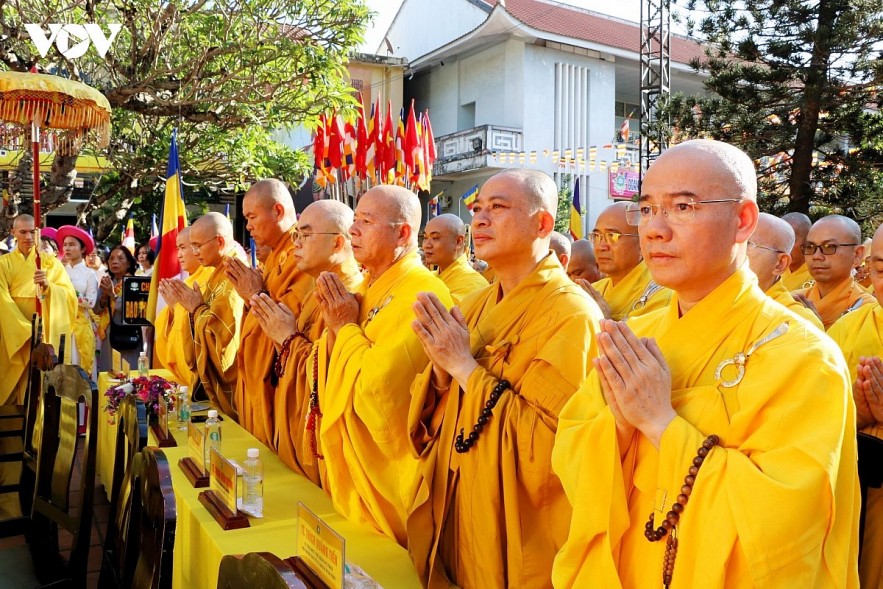
Thousands of Buddhist monks, nuns and followers gathered across Vietnam on May 31 to celebrate Vesak 2026, commemorating the birth of the Buddha through traditional rituals, prayers and community activities.

In Ho Chi Minh City, the Vietnam Buddhist Sangha’s municipal chapter held the Vesak ceremony at Vietnam Quoc Tu Pagoda in a solemn and respectful atmosphere.

The ceremony was attended by Most Venerable Thich Tri Quang, supreme patriarch of the Vietnam Buddhist Sangha, along with senior Buddhist dignitaries, monks, nuns, followers and representatives from local authorities, mass organisations and religious groups.

During the ceremony, Most Venerable Vien Minh, deputy head of the Patronage Council of the Vietnam Buddhist Sangha, delivered the Vesak message from the Supreme Patriarch, calling on monks, nuns and Buddhists to continue promoting compassion, serving society and applying the Buddha’s teachings in daily life to help build a more peaceful and harmonious society.

Traditional Vesak rituals, including chanting ceremonies and prayers, attracted large numbers of worshippers and visitors.

Meanwhile, in Da Nang, the city chapter of the Vietnam Buddhist Sangha held the Vesak celebration at Phap Lam Pagoda in Hai Chau ward in an atmosphere marked by solemnity, harmony and compassion.

The ceremony was attended by representatives of the Da Nang Party Committee, People’s Council, People’s Committee, Vietnam Fatherland Front and local departments, along with Buddhist dignitaries, monks, nuns and followers.

From early morning, the pagoda grounds were decorated with Buddhist flags, flowers and lanterns to mark the Buddha’s birthday. Hundreds of Buddhists participated in traditional rituals including incense offerings, chanting ceremonies, the Buddha bathing ritual and prayers for national peace and prosperity.

Many attendees expressed joy at taking part in the sacred atmosphere of Vesak while praying for peace, prosperity and continued development for Da Nang and the country, reported VOV.

Buddhists across Vietnam gather for Vesak celebrations.

This year’s Vesak celebrations in Da Nang also featured a wide range of community-oriented activities, including charity gift donations, free vegetarian meals, blood donation drives and volunteer programs aimed at spreading compassion and solidarity.

Following the main ceremony, Buddhist dignitaries and participants released balloons carrying prayers for peace, harmony and well-being.

Beyond its religious significance, Vesak is also viewed as an important cultural and spiritual event that contributes to strengthening social unity and promoting shared values of compassion, harmony and community responsibility in Vietnam.

Vietnam tourism shifts from budget destination to high-value travel experience

As international arrivals surge and global travel trends shift toward safer, culture-focused destinations, Vietnam is positioning itself to move beyond budget tourism and compete through high-value experiences and service quality.

Tourism growth accelerates as Vietnam strengthens global position

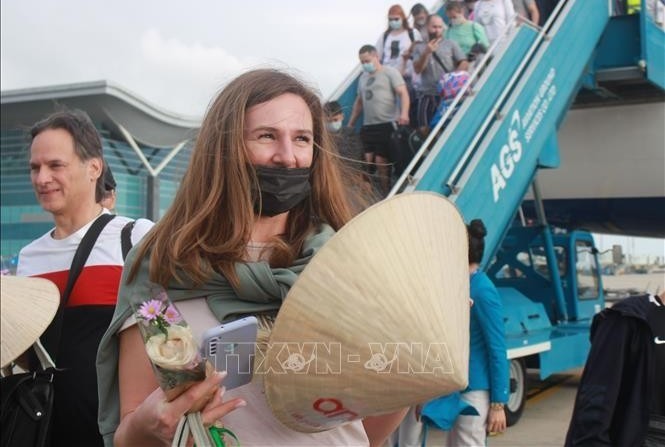
Vietnam’s tourism industry has continued its strong upward momentum in 2026, with the country welcoming 8.8 million international visitors in the first four months of the year, up 14.6% year on year and marking the highest four-month total ever recorded.

The robust recovery highlights Vietnam’s growing appeal as global tourism continues to restructure in the post-pandemic era.

Beyond the growth rate itself, industry observers point to notable changes in the structure of Vietnam’s international visitor markets. Alongside traditional markets such as China, the Republic of Korea, the United States, Japan and Russia, Vietnam is seeing rapid increases in arrivals from emerging markets including India, the Philippines and Australia.

European arrivals have also continued to rise, supported by visa exemption policies and coordinated tourism promotion campaigns.

At a time when many destinations worldwide face geopolitical uncertainty, rising fuel prices and increasing travel costs, Vietnam is emerging as an attractive alternative thanks to its political stability, public safety, competitive pricing and expanding air connectivity.

These factors are helping Vietnam capture a growing share of international travelers seeking safer and more reliable destinations.

According to Nguyen Trung Khanh, director of the Vietnam National Authority of Tourism, Vietnam’s tourism recovery since the COVID-19 pandemic has ranked among the fastest in the world.

While Vietnam was Southeast Asia’s fifth largest destination for international visitors in 2017, the country rose to third place in the region by 2024. In 2025, Vietnam welcomed nearly 21.2 million international arrivals, and total tourism revenue exceeded VND1 quadrillion. In 2026, the industry aims to attract 25 million international visitors and serve around 150 million domestic travelers.

Industry experts say the figures reflect not only strong growth but also improving competitiveness of the domestic tourism industry on both regional and global tourism maps.

From low-cost destination to high-value tourism

According to tourism experts, the most significant shift in Vietnam’s tourism industry today lies not in visitor numbers but in the opportunity to transform its development model.

Global travel preferences are changing rapidly. Travelers increasingly prioritise personalised experiences, local culture, wellness, nature, sustainability and service quality over low-cost travel alone. This trend creates favourable conditions for Vietnam to leverage its existing strengths.

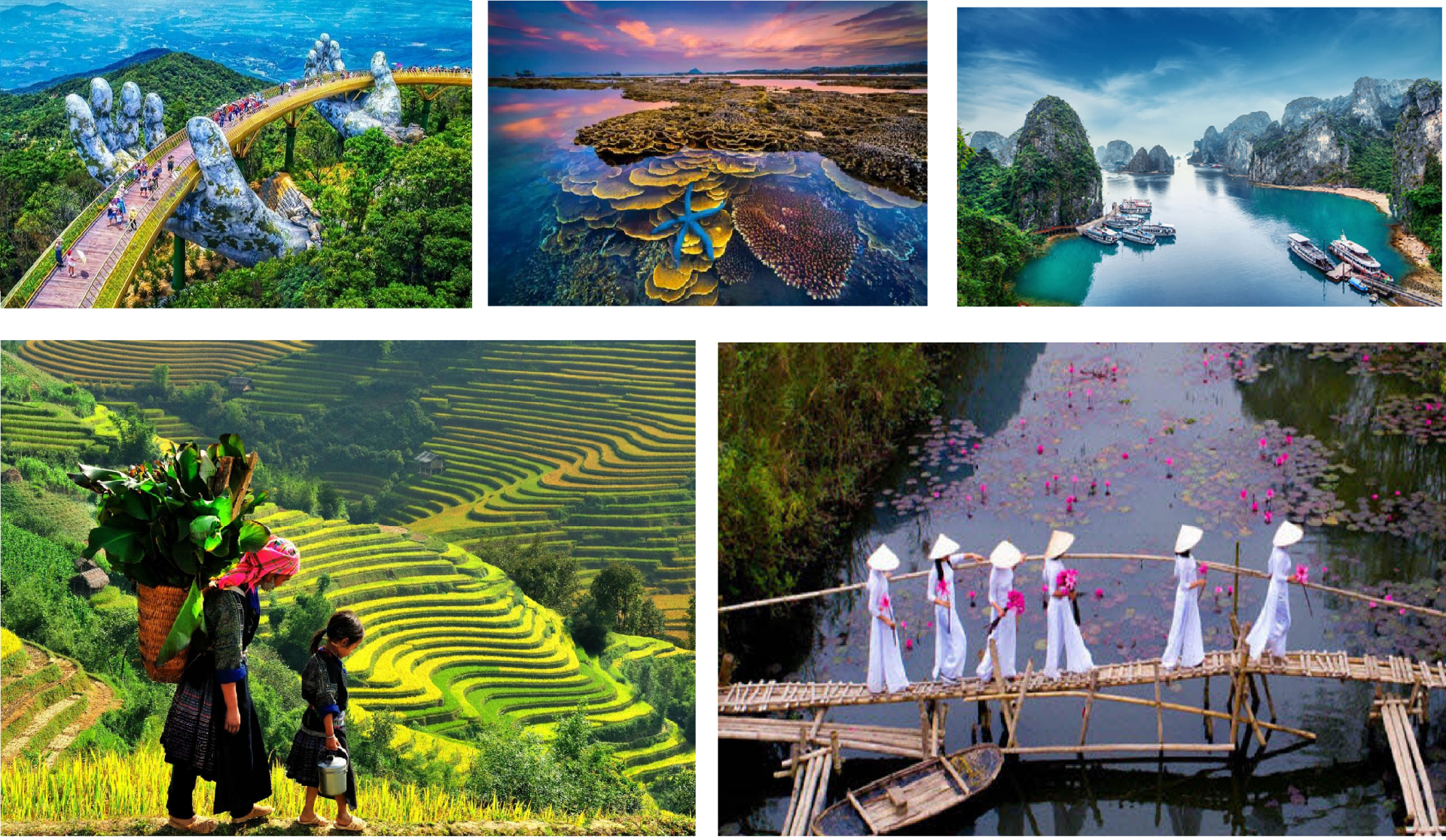
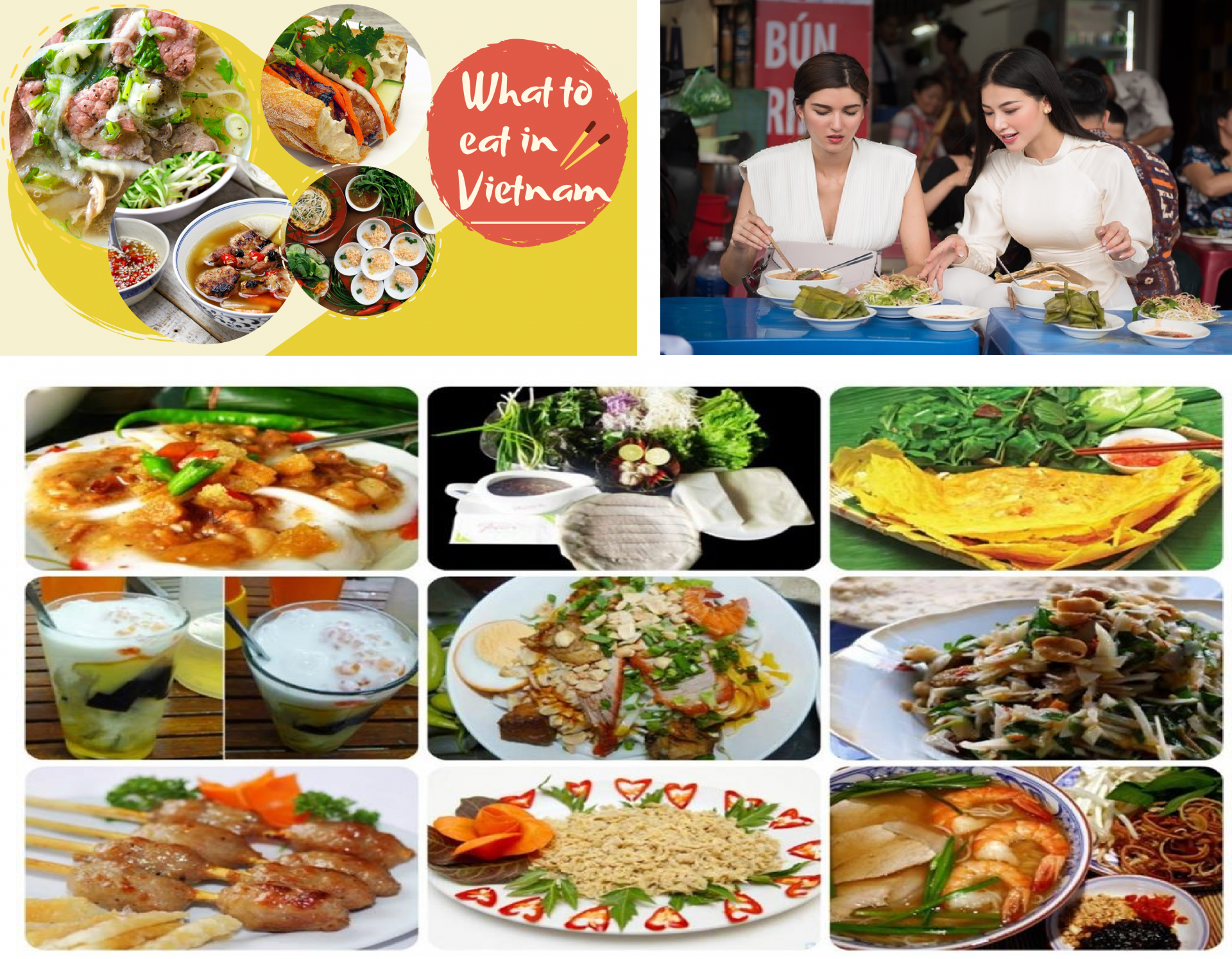
With diverse natural landscapes, a rich cultural heritage, internationally recognised cuisine and a vast ecosystem of tourism resources, Vietnam is well positioned to expand further into higher-value tourism segments.

Instead of competing primarily on low prices, the industry now has the opportunity to compete through experience quality and added value.

Nguyen Son Thuy, director of Visit Indochina Travel Company, says rising international arrivals not only benefit travel agencies but also generate broader economic spillover effects across local economies.

According to the executive, every international visitor represents a chain of spending across multiple service sectors. A tour group visiting Da Nang or Hoi An, for example, generates income not only for tour operators but also for tour guides, drivers, hotels, restaurants, handicraft producers, traditional craft villages, transportation services, attractions and small household businesses.
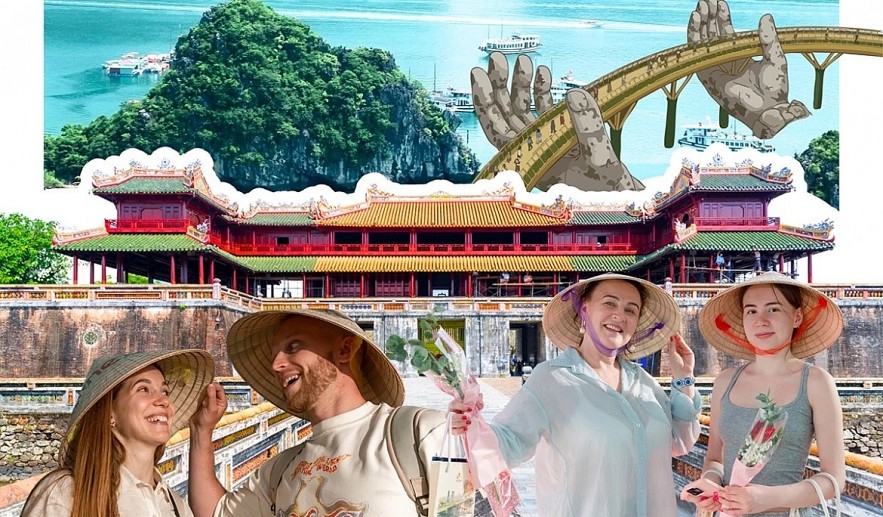
Strong growth in international arrivals, diversified visitor markets and rising global demand for safe, culturally rich destinations are creating opportunities for Vietnam’s tourism industry to shift from low-cost travel toward higher-value experiences and sustainable growth.

As visitor numbers increase, tourism companies are gaining greater capacity to invest in new products, adopt technology, improve workforce quality and develop specialised tourism offerings such as MICE tourism, golf tourism, luxury resorts, caravan tours and market-specific travel experiences.

Industry analysts say these developments form the foundation for a more sustainable tourism value chain capable of generating higher added value.

From the hospitality perspective, Nguyen Lan Phuong, general manager of Tru by Hilton Vietnam hotel chain, notes that hotels are welcoming an increasingly diverse range of international guests from China, the United States, Japan and Southeast Asian countries. Travelers are no longer concentrating solely on traditional tourism hubs but are expanding their itineraries to emerging destinations across Vietnam.

The trend is helping distribute tourism benefits more evenly among regions while encouraging local governments to invest more heavily in infrastructure, services and destination-specific tourism products, she analyzes.

The challenge is no longer visitor numbers

Despite the opportunities, Vietnam’s tourism industry also faces significant challenges.

As the industry expands, maintaining high growth rates purely through increasing visitor numbers will become more difficult. At the same time, regional competition continues to intensify as destinations such as Thailand, Singapore and Malaysia possess more mature tourism ecosystems, diversified products, favorable visa policies and stronger global marketing capabilities.

Industry representatives say some destinations in Vietnam still face limitations in product quality and visitor retention. Many localities continue to lack nighttime entertainment, large-scale shopping centers, distinctive cultural offerings and premium experiences capable of extending visitor stays.

Nguyen Son Thuy, director of Visit Indochina Travel Company, again says that if Vietnam wants tourists to spend more, destinations must provide higher-quality services such as professional night-time entertainment districts, well-designed cultural experiences, wellness services, cruises, golf tourism, international events and more immersive entertainment products.

Nguyen Lan Phuong, general manager of Tru by Hilton Vietnam hotel chain, shares a similar view, arguing that the tourism industry’s future objective should not simply focus on increasing visitor numbers but also on raising visitor spending and length of stay.

To achieve this, she says, Vietnam needs to further develop cultural tourism, wellness tourism, culinary tourism, music tourism, sports tourism and inter-regional travel itineraries that allow visitors to enjoy multiple experiences within a single trip.

Experts believe future tourism success will no longer be measured solely by arrival numbers, but by average length of stay, visitor spending, return rates, customer satisfaction and the sector’s ability to generate spillover benefits across the wider economy.

That is why Vietnam’s tourism industry is now under pressure to shift its development mindset, from attracting large numbers of visitors to creating greater value from each traveler; from extensive growth to higher-quality growth; and from competing on affordability to competing on quality.

As the global tourism industry enters an era defined by experience-driven and value-added competition, this transition is no longer optional but essential if Vietnam wants to sustain its growth momentum.

If successfully implemented, Vietnam could gradually establish itself as a high-quality, attractive and sustainable destination on the global tourism map.

Cooperation program launched to spread Vietnamese culture on digital platforms

The Film Department, the Vietnam Tourism Development Support Fund, the Vietnam National Museum of History, the VTC Multimedia Corporation, and YouTube have jointly announced a cooperation program to strengthen capacity for developing a digital content ecosystem.

Running from June to early September 2026, the program comprises two main activities: intensive training with experts through theory classes and nationwide field trips; and a video creation contest titled “Touching Vietnam 2026.”

According to Deputy Minister of Culture, Sports and Tourism Ta Quang Dong, the initiative is of practical significance, reflecting innovative thinking in connecting culture with modern technology and communications, thereby helping foster a healthy digital content ecosystem rich in Vietnamese identity online, contributing to national competitiveness, building soft power, and promoting Vietnam’s image to the world.

The program also aims to form a team of young people with technological skills, modern thinking, broad knowledge, responsibility, and a love of national culture, cited NDO.
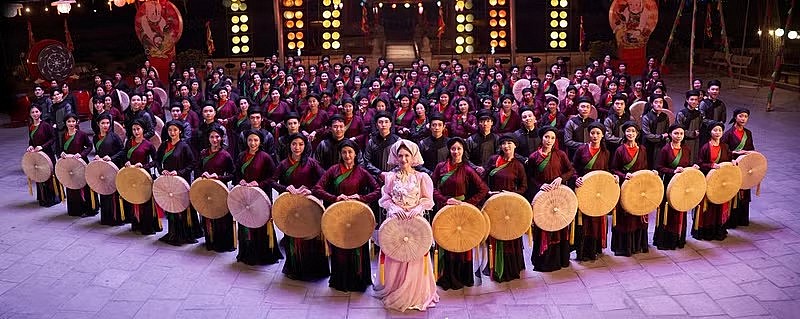
The music video “Bac Bling” by singer Hoa Minzy, which has garnered over 311 million views on YouTube, showcases the cultural heritage of Bac Ninh Province to a global audience.

The cooperation between the Ministry of Culture, Sports and Tourism and YouTube represents a strong innovation: the state is not standing outside the flow of the digital content economy but is actively participating in guiding, supporting, and accompanying it.

Mukpim Anantachai, Head of YouTube Partnerships for Vietnam and Thailand, said the program’s goal is to support a new generation of Vietnamese content creators — those able to combine historical depth with modern formats and new technology tools — thereby producing high‑quality, influential works in the digital environment.
Vietnam News Today (May 25): Vietnam, Thailand Push for More Substantive Comprehensive Strategic Partnership

Vietnam News Today (May 25): Vietnam, Thailand Push for More Substantive Comprehensive Strategic Partnership

Vietnam News Today (May 25): Vietnam praised for chairing NPT Review Conference despite no final outcome document; Vietnam, Thailand push for more substantive Comprehensive Strategic ...

Vietnam News Today (May 26): VSIP Projects Highlight Growing Vietnam–Singapore Partnership

Vietnam News Today (May 26): VSIP Projects Highlight Growing Vietnam–Singapore Partnership

Vietnam News Today (May 26): Top Vietnamese leader’s Thailand visit marks milestone in shaping bilateral ties in coming decade; Japanese firms bet on Vietnam as ...

Rosie Nguyen
Phiên bản di động