
Vietnamese Ambassador to the Philippines: People-to-People Diplomacy Geared Toward Practical Cooperation and Benefits for the People
 | Philippine President Hosts Official Welcome Ceremony for Vietnam’s Top Leader |
| Viet Nam, Philippines Upgrade Relations to Enhanced Strategic Partnership |
- Ambassador, in your view, what have been the most significant milestones in the development of Vietnam-Philippines relations over the past 50 years?
- July 12, 2026 marks the 50th anniversary of the establishment of diplomatic relations between Vietnam and the Philippines (since 1976). Over the past half century, bilateral relations have grown remarkably, evolving from an initial foundation of cooperation into a Comprehensive and Deepened Enhanced Strategic Partnership characterized by substantive and wide-ranging collaboration.
Several important milestones have marked the transformation of Vietnam-Philippines relations over the past five decades. In February 1995, the two countries held the first meeting of the Joint Commission for Bilateral Cooperation. This important mechanism for comprehensive policy dialogue and coordination has remained effective to this day, laying a strong institutional foundation for cooperation across multiple sectors.
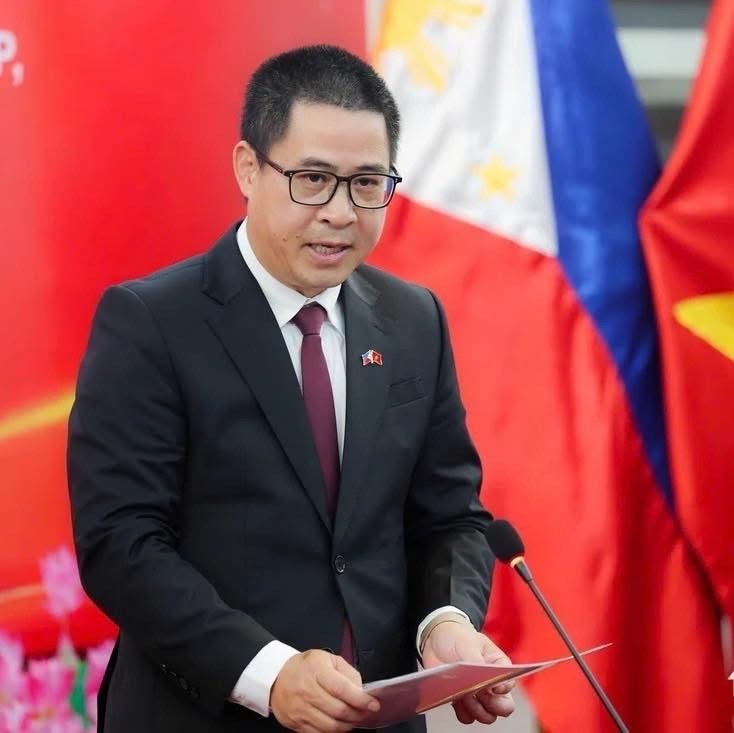 |
| Vietnamese Ambassador to the Philippines Lai Thai Binh. (Photo: Courtesy of the Embassy of Vietnam in the Philippines) |
In July 1995, Vietnam joined ASEAN, marking a major strategic turning point that expanded Vietnam-Philippines bilateral relations into the broader framework of regional cooperation. The two countries became important partners within ASEAN, working closely together on shared issues such as security, economic cooperation, and regional stability.
In November 2015, during a bilateral meeting on the sidelines of the APEC Summit between Vietnamese President Truong Tan Sang and President of the Philippines Benigno Aquino III, the two countries announced the establishment of a Strategic Partnership. Vietnam became the first ASEAN member state to establish a Strategic Partnership with the Philippines. This milestone reflected the high level of political trust between the two countries and expanded key areas of cooperation, including defense, security, the economy, maritime affairs, and the peaceful settlement of disputes in the East Sea in accordance with international law, particularly the 1982 United Nations Convention on the Law of the Sea (UNCLOS).
On June 1, 2026, during the State visit to the Philippines by General Secretary and President To Lam, the two countries agreed to upgrade their ties to an Enhanced Strategic Partnership. This latest historic milestone coincided with the 50th anniversary of diplomatic relations and the 10th anniversary of the Strategic Partnership, reflecting the shared determination of the two countries' senior leaders amid an increasingly complex regional and international landscape.
The Enhanced Strategic Partnership framework is not only the culmination of 50 years of cooperation but also provides a solid foundation for a new stage of development. It opens up broader avenues for cooperation, strengthens political and defense coordination, fosters closer people-to-people ties, and promotes collaboration in trade, tourism, education, technology, maritime security, and responses to non-traditional security challenges. The upgrade also reaffirms the two countries' shared commitment to peace, stability, security, and development in the region, particularly through close coordination on the East Sea based on respect for international law. It creates new momentum for economic cooperation, including efforts to increase bilateral trade, enhances substantive defense and security cooperation through new agreements on defense and coast guard collaboration, and promotes people-to-people exchanges. At the same time, it contributes positively to the development of ASEAN and the Indo-Pacific region while reinforcing the role of both countries as anchors of stability and prosperity.
In summary, over the past 50 years, Vietnam-Philippines relations have evolved from basic cooperation into an Enhanced Strategic Partnership - a vivid testament to the spirit of being "good neighbors, trusted partners, and traditional friends." This provides an important foundation for the two countries to continue supporting one another and working together for peace and shared prosperity in the region and the world.
- Which areas do you believe will provide new momentum for Vietnam-Philippines relations in the years ahead?
- Vietnam-Philippines relations are developing in a highly positive and dynamic manner. Since the beginning of 2026 alone, the Philippines has welcomed two of Vietnam's key leaders: General Secretary and President To Lam and his spouse, Ngo Phuong Ly, on a State visit to the Philippines (from May 31 to June 1, 2026); and Prime Minister Le Minh Hung, who attended the 48th ASEAN Summit in Cebu (from May 5 to 8, 2026). These visits have further strengthened the foundation of political trust at the highest level.
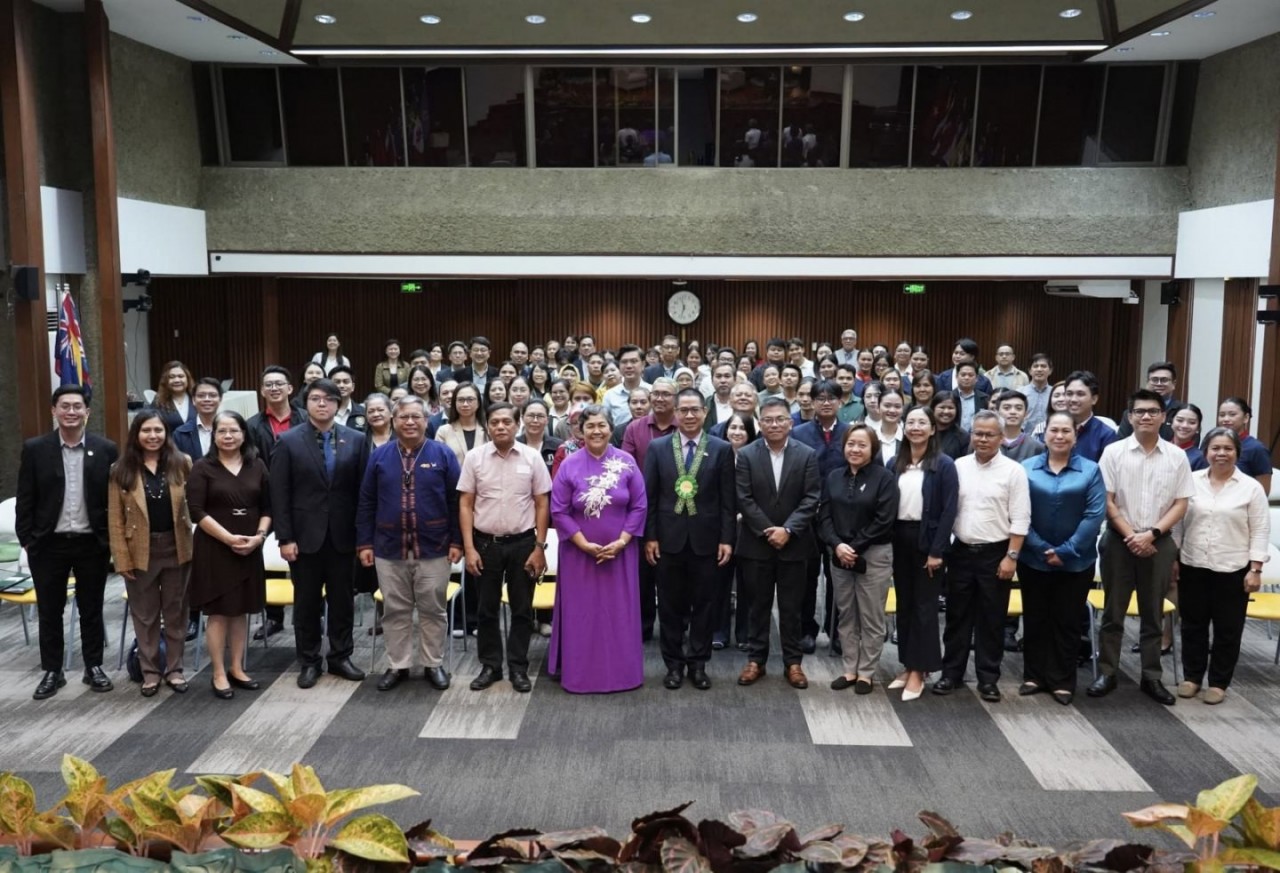 |
| Ambassador Lai Thai Binh speaks at the seminar entitled "Vietnam's strategy for sustainable rural and agricultural development," organized by the Southeast Asian Regional Center for Graduate Study and Research in Agriculture (SEARCA). (Photo: Courtesy of the Embassy of Vietnam in the Philippines) |
Defense and security cooperation has maintained positive momentum through dialogue mechanisms ranging from the ministerial level to the armed services, alongside close coordination in combating transnational crime, safeguarding human security, and addressing non-traditional security challenges. Bilateral trade has nearly tripled over the past decade, reaching approximately USD 8 billion in 2025 with a more diversified trade structure. Two-way investment has also made significant strides, particularly with the rapid expansion of Vietnamese businesses and investment in the Philippines. The number of Philippine visitors to Vietnam increased more than fourfold, from approximately 111,000 in 2016 to over 482,000 in 2025, accompanied by the launch of several new direct air routes.
Looking ahead, new drivers of growth are expected to emerge across multiple sectors.
In the areas of trade, investment, and economic cooperation, both countries should prioritize policies that facilitate trade, with the goal of reaching and surpassing USD 10 billion in bilateral trade. Efforts should focus on diversifying agricultural products, including rice, fresh fruits, and seafood, while expanding supply chains and distribution networks. At the same time, the two sides should promote two-way investment in manufacturing, green technologies, and the digital economy.
With regard to the digital economy, digital transformation, and green growth, the two countries should capitalize on the recently signed Memorandum of Understanding on cooperation in science, technology, and digital transformation to advance collaboration in artificial intelligence, e-government, smart cities, renewable energy, and the green economy - areas that both countries regard as key drivers of future growth.
In smart agriculture and food security, building on the stable rice partnership, with Vietnam remaining the Philippines' largest rice supplier, the two countries should further promote sustainable and regenerative agriculture, climate-resilient aquaculture, joint research, and technology transfer.
In tourism and people-to-people exchanges, both sides should effectively implement the 2026-2029 Tourism Cooperation Program by strengthening joint marketing campaigns, developing combined travel packages, and opening additional direct air routes. People-to-people diplomacy will remain a key pillar in promoting mutual understanding and expanding cooperation in education, including student exchanges and university partnership programs, as well as healthcare and culture. The Philippines has strengths in island and marine tourism and service industries, while Vietnam is renowned for its rich cultural heritage and ecotourism.
In defense, security, and maritime cooperation, the two countries should continue strengthening collaboration through new agreements, enhance joint capacity in maritime security, military education, disaster risk reduction, and crisis management, while further promoting cooperation in combating transnational crime and law enforcement. They should also continue close coordination through mechanisms such as the Joint Permanent Working Group on Maritime and Ocean Concerns (JPWG-MOC) and the Coast Guard Hotline.
Furthermore, to make greater contributions to regional peace, stability, and development, the two countries should maintain regular exchanges of delegations at all levels to strengthen strategic trust, share perspectives, and promptly address emerging challenges. They should also continue close coordination in multilateral forums, particularly ASEAN, to promote ASEAN unity, ASEAN Centrality, and a rules-based order in the East Sea grounded in international law, particularly the 1982 United Nations Convention on the Law of the Sea (UNCLOS). In addition, they should advance practical cooperation initiatives in non-traditional security, the green economy, and infrastructure connectivity, thereby contributing to a stronger ASEAN Community and enhancing the region's resilience to global challenges.
With a combined population of more than 220 million people, two of the region's fastest-growing economies, important geostrategic positions, and highly complementary strengths, Vietnam and the Philippines possess enormous potential for long-term cooperation. The effective implementation of these areas of cooperation will elevate bilateral relations to new heights, bringing greater security, prosperity, and well-being to the peoples of both countries while making meaningful contributions to peace, stability, and sustainable development in the Indo-Pacific region and the world.
- In your view, how should people-to-people diplomacy be further promoted to strengthen the social foundation of the Enhanced Strategic Partnership between Vietnam and the Philippines?
- People-to-people exchanges constitute an important social foundation that helps reinforce enduring friendship, deepen mutual bonds, and enhance the resilience of bilateral relations amid regional and international changes. As the two countries have recently upgraded their relationship to an Enhanced Strategic Partnership, people-to-people diplomacy should be further strengthened by moving beyond symbolic activities toward practical, multi-layered, and multi-stakeholder cooperation that delivers tangible benefits to the peoples of both countries.
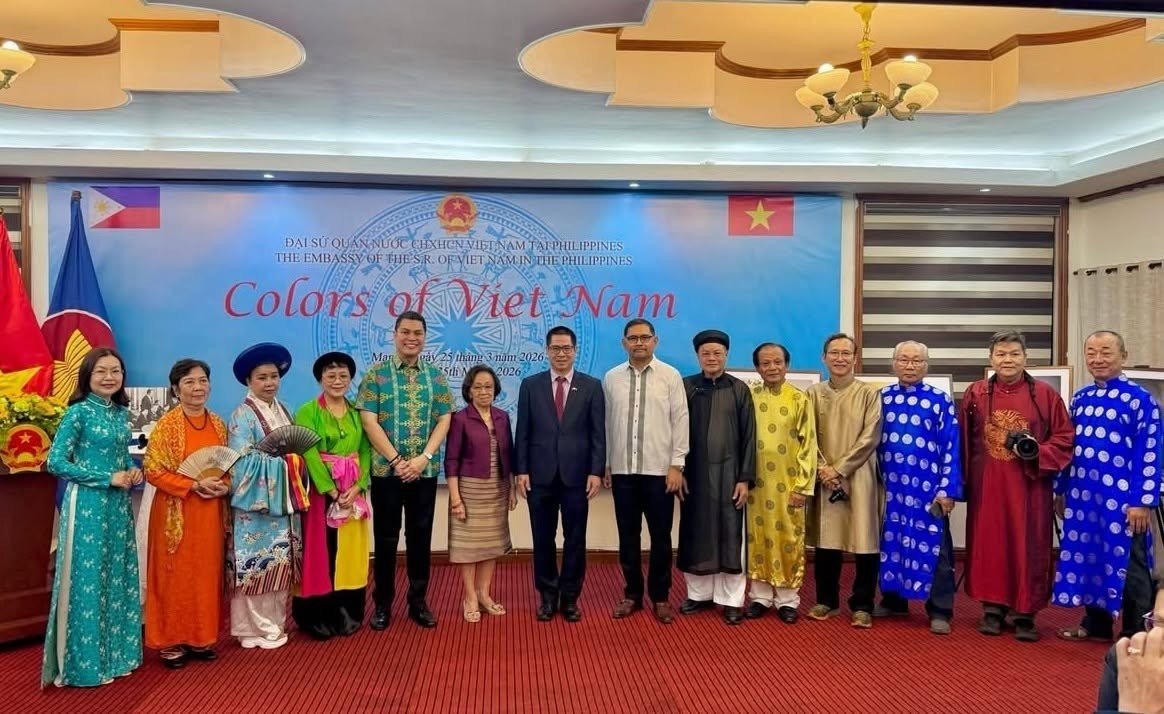 |
| The "Colors of Vietnam" cultural event, organized by the Embassy of Vietnam in the Philippines on March 25, 2026, in celebration of the 50th anniversary of Vietnam-Philippines diplomatic relations. (Photo: Courtesy of the Embassy of Vietnam in the Philippines) |
The first priority is to further strengthen delegation exchanges and institutional mechanisms for people-to-people cooperation, while expanding activities through friendship organizations, parliamentary friendship groups, partnerships between local governments, and non-governmental channels. Both sides should support friendship associations, research institutes, professional organizations, and non-governmental organizations in building stronger connections, making full use of the support provided by the two Embassies in Hanoi and Manila to establish long-term cooperation networks.
In the areas of education, culture, sports, and tourism, the two countries should effectively implement the 2026-2029 Tourism Cooperation Program, signed during the State visit of General Secretary and President To Lam, with a focus on enhancing air and maritime connectivity, increasing flight frequency, conducting joint tourism promotion, and developing integrated tourism products. At the same time, the 2024-2029 Cultural Cooperation Program should be effectively carried out to promote exchanges in the arts, cuisine, cultural heritage, and joint events. In education, successful cooperation models such as the Memorandum of Understanding between the Ho Chi Minh National Academy of Politics and the University of the Philippines (UP) should be expanded, alongside other agreements, including pilot training cooperation and student and faculty exchanges, with the aim of internationalizing higher education and developing a highly skilled workforce.
Particular attention should also be given to key target groups, especially young people, women, scholars, young entrepreneurs, and local communities. Joint community projects should be encouraged in education, environmental protection, climate change response, public health, culture, the arts, and gastronomy. Such initiatives will help spread success stories of Vietnam-Philippines cooperation while fostering positive public awareness and stronger bonds between the peoples of the two countries.
To harness technology and innovation, both sides should make greater use of digital platforms to expand exchanges through virtual seminars, online exchange programs, and shared digital cultural content, while encouraging creative collaboration in the creative economy and sustainable tourism.
By promoting people-to-people diplomacy in a practical, comprehensive, and sustainable manner, we can build a strong network of "bridges of friendship" connecting people from all walks of life. This will not only strengthen the social foundation of the Enhanced Strategic Partnership but also make an important contribution to maintaining peace and stability, fostering mutual understanding, and promoting shared regional development for the benefit of the peoples of both countries and the international community.
- Thank you very much!
 | Malaysian Expert: Vietnam Contributes to ASEAN’s Peace, Stability, and Development General Secretary of the Communist Party of Vietnam and State President To Lam’s visits to Thailand, Singapore, and the Philippines demonstrate Vietnam’s efforts to position ... |
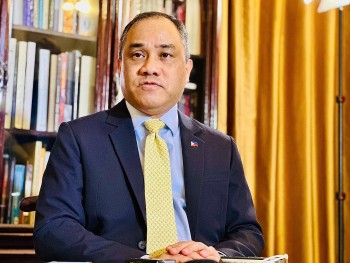 | Philippine Ambassador to Viet Nam: Enhanced Strategic Partnership Opens New Chapter in Viet Nam-Philippines Cooperation In an interview with Viet Nam Times Magazine on the occasion of the 50th anniversary of the establishment of diplomatic relations between Viet Nam and ... |
Related Stories
 Friendship
Vietnam-Thailand Friendship Association Coordinates with Nghe An Province to Prepare for 50th Anniversary of Vietnam-Thailand Diplomatic Relations
 Friendship
Vietnam-USA Society Expands Partner Network, Promotes Bilateral Cooperation
Recommended
Friendship
Vietnamese Ambassador to the Philippines: People-to-People Diplomacy Geared Toward Practical Cooperation and Benefits for the People
 Friendship
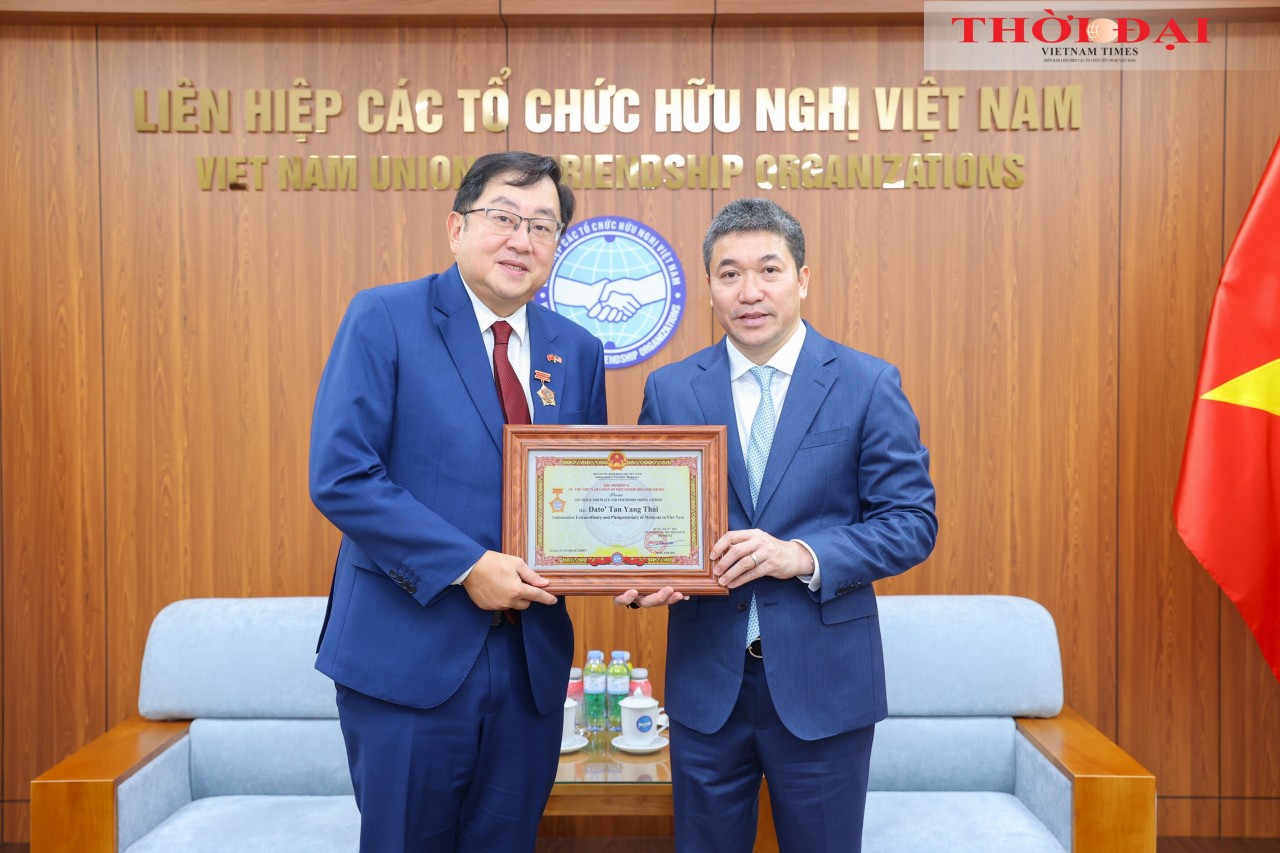
Malaysian Ambassador Dato' Tan Yang Thai - "Ambassador of Compassion"
 Focus
Focus
Viet Nam Union of Friendship Organizations Signs Condolence Book in Memory of Venezuela Earthquake Victims
 Friendship
Philippine Ambassador to Viet Nam: Enhanced Strategic Partnership Opens New Chapter in Viet Nam-Philippines Cooperation
 Friendship