
Vietnam’s Economy Shows Resilience with 7.83% Growth in Q1 2026
 | Vietnam Deepens Participation in the Global Organic Agricultural Value Chain |
| Promoting Vietnam-Chile Cooperation Across Three Key Pillars: Politics, Economy, and People-to-People Exchange |
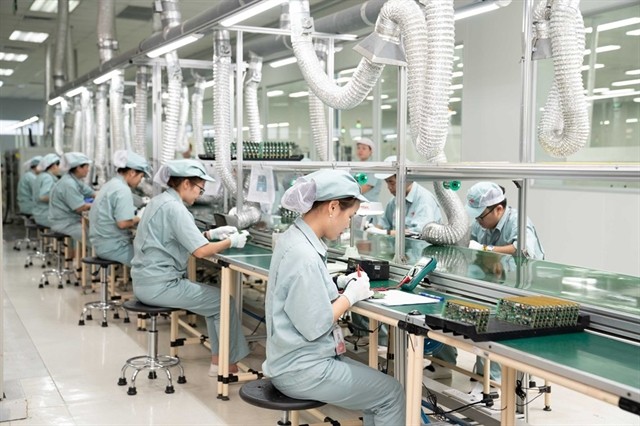 |
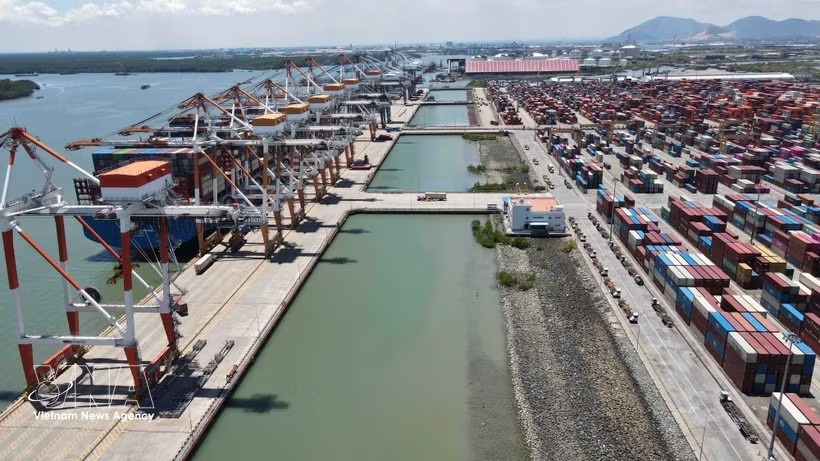
| Vietnam’s economy maintained a relatively stable growth trajectory in the first quarter of 2026, driven by manufacturing, exports, and recovering domestic demand. (Photo: VNA/VNS) |
Notably, all three sectors recorded solid growth: agriculture, forestry, and fisheries expanded by 3.58%; industry and construction grew by 8.92%; and services increased by 8.18%. These results indicate that the economy has achieved a certain level of recovery and maintained relatively stable growth momentum, reflecting significant efforts in economic management and the nation's resilience in overcoming challenges.
From the supply side, the Statistics Office noted that while there were bright spots in growth, it remained uneven. Growth drivers were still concentrated in a number of key industries, while many sectors have yet to recover proportionately.
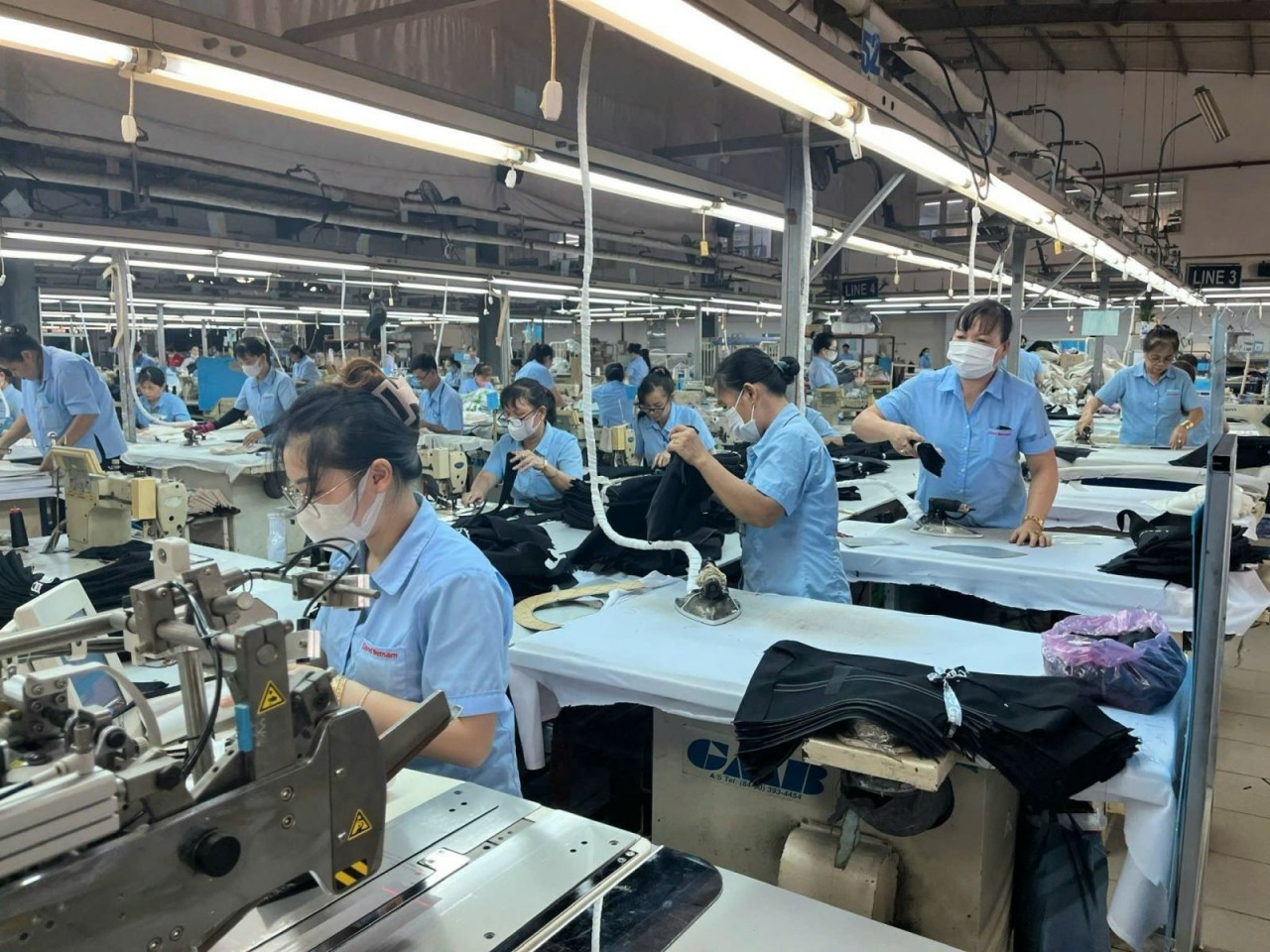
Agriculture, forestry, and fisheries continued to serve as a stable pillar of the economy. Manufacturing remained the “engine” of growth, expanding by 9.73% and contributing the most to overall growth. This development reflects the recovery of export orders and production capacity, particularly in electronics, textiles, and metal production.
The mining sector maintained positive growth since Q4/2025, reaching 5.42%. In the services sector, wholesale and retail trade, as well as repair of automobiles, motorcycles, and motorbikes, grew by 9.62%, indicating a strong recovery in domestic demand.
In addition, several knowledge-intensive service sectors, such as professional, scientific and technological activities, and education, also recorded stable growth, initially reflecting a shift toward a higher-quality economic structure.
However, some key sectors have yet to achieve the expected breakthroughs: construction grew by 8.36%; transportation and warehousing by 8.95%; accommodation and food services by 7.49%; electricity, gas, steam and air conditioning supply by 6.54%; information and communications by 7.65%; real estate activities by 4.71%; and administrative and support services by 7.06%.
From the demand side, the Statistics Office highlighted domestic consumption as a bright spot, growing by 8.45% and serving as a key pillar amid external volatility.
In particular, final consumption by the government rose by 11.66%, reflecting increased budget spending to serve major political and administrative tasks, especially the organization of congresses and elections at various levels, as well as expenditures to support and stabilize the administrative apparatus following the merger of administrative units.
Beyond seasonal factors, this increase also underscores the leading role of the public sector in stimulating aggregate demand and maintaining economic activity. Final consumption by households rose by 7.95%, mainly driven by heightened shopping demand during the extended holiday and Lunar New Year period.
Notably, consumption patterns are shifting toward a more modern and sustainable structure, with increased spending on environmentally friendly products such as electric vehicles and energy-saving devices, alongside a preference for experiential services such as tourism, leisure, and entertainment.
Gross capital formation rose by 7.18%, reflecting efforts to accelerate disbursement and expand production. However, investment efficiency and spillover effects remain limited, failing to generate a strong enough boost for related sectors.
External trade continued to be an important driver, with strong growth in import-export activities: exports increased by 19.1%, while imports grew faster at 27%. This reflects recovering demand for production inputs, but also highlights limited domestic value addition and a continued reliance on imports.
Economic performance in the first quarter continued to rely primarily on traditional drivers, including production–export, investment, and domestic consumption. Meanwhile, new drivers such as science and technology, innovation, the digital economy, and institutional reform have improved but are not yet strong enough to become short-term growth engines.
Production and exports remained key pillars, reaffirming Vietnam’s resilient supply capacity. In particular, the manufacturing sector maintained strong growth, reflecting the recovery of production activities and domestic supply capabilities. Export activities also remained vibrant, providing a solid foundation for domestic production.
Domestic consumption showed signs of improvement and played a stabilizing role in aggregate demand. Consumption in Q1 was significantly boosted by seasonal effects from the extended Lunar New Year holiday, creating momentum for domestic demand in the early months of the year. Household consumption remained the foundation and main contributor.
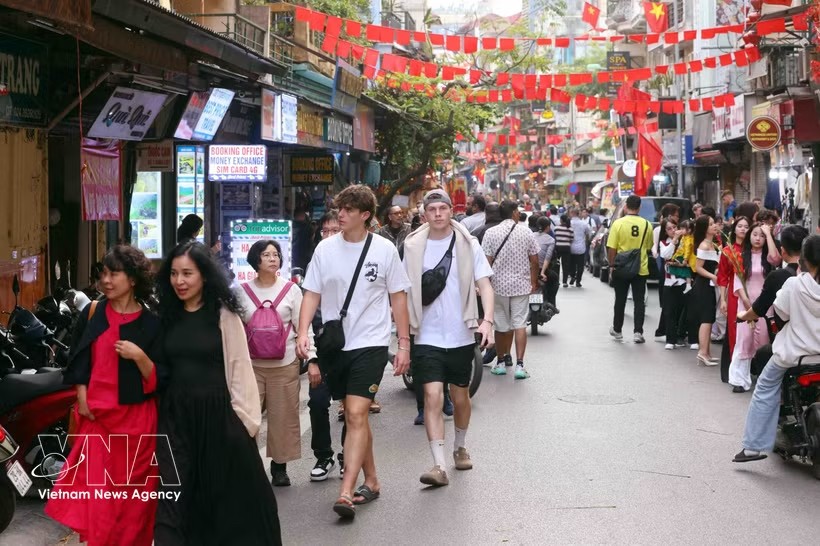
This trend is reflected in the strong increase in total retail sales of goods and consumer service revenue, estimated at around 10.9%, and the sharp rise in international tourist arrivals to Vietnam (nearly 6.8 million in Q1, up 12.4% year-on-year). The positive recovery in domestic consumption and tourism helped effectively offset adverse fluctuations from external markets.
Science, technology, innovation, and the digital economy have been further promoted and are increasingly integrated into high-tech industries and services. However, these factors currently play a supporting rather than leading role.
Despite positive results, growth in Q1/2026 fell short of the 9.1% target. The Statistics Office identified several core reasons:
First, geopolitical tensions in the Middle East have increased risks in global energy markets, driving up oil prices and input costs, thereby raising production costs for businesses. This impact is particularly evident in energy-intensive sectors such as transportation, logistics, and manufacturing, and has indirectly affected construction, trade, and services. Rising input costs, combined with incomplete demand recovery, have squeezed profit margins, making businesses more cautious about expanding production and investment.
Second, internal bottlenecks have not been fully resolved, weakening the economy’s ability to absorb and transform growth drivers. Domestic capacity still faces limitations, including low labor productivity, weak business competitiveness, modest participation in global value chains, and a business environment and institutional framework that have yet to make significant breakthroughs to support production, investment, and business activities.
Third, domestic purchasing power has recovered more slowly than expected. Although the first quarter included the Lunar New Year holiday, total retail sales of goods and services increased by only 10.9% at current prices and about 7% in real terms, below expectations for achieving 9.1% GDP growth in Q1. Consumers have tended to tighten spending due to concerns over inflation driven by rising energy and food prices.
Therefore, the Statistics Office emphasized that achieving the annual growth target will require more synchronized and decisive measures to both reduce input cost pressures and remove institutional bottlenecks. This would help strengthen confidence and create room for businesses to expand production and operations in the coming period.
 | Green Economy and Circular Economy: Need to Standardize Technology and Improve Regulatory Framework At the thematic workshop “Promoting the Development of a Green Economy, Circular Economy, and Sustainable Environmental Protection,” held on December 4 within the framework of ... |
 | Vietnam’s Growing Economic Influence Highlighted by Indonesian Media Statistical data comparing the 10 largest economies in Asia by Gross Domestic Product (GDP) over the 1980-2025 period show that the region’s economic center of ... |



Most read




Related Stories
 Economy
Promoting Role of Private Economic Sector
 Economy
Data Economy Emerges as Vietnam’s Next Growth Engine
 National
Vietnam News Today (Jun. 13): Vietnam’s Economy Demonstrates Resilience Amid Cost Pressures, External Uncertainties
 National