
You can’t ignore stomach ulcer symptoms
What Is A Stomach Ulcer?
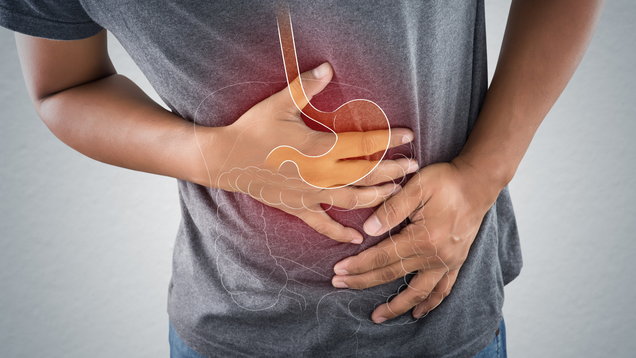
Stomach ulcers (often called peptic ulcers) are painful sores that develop in the lining of your digestive system. They usually form in the stomach but can also sometimes develop in the small intestine (especially a part called the duodenum) or the esophagus.
Here’s the basics of how ulcers work:
Ulcers form when any combination of excess gastric acids, bacteria, drugs or other “toxins” cause damage and small openings to the mucosa, the tissue that lines the stomach, parts of the small intestine, and other organs. Mucosa normally protect particles from leaking out.
When someone has an ulcer, hydrochloric acid and pepsin (a type of digestive enzyme that digests proteins) build up and destroy parts of the lining of the gastrointestinal tract. The stomach usually manages acid/pepsin by creating a thick mucus coating that is supposed to act as a buffer between the stomach lining and the acids inside the stomach. The mucus coating itself usually produces certain chemicals that help repair the stomach lining, keep blood circulating and carry out cellular renewal processes. But some part of this process can become disturbed, and the lining of the GI tract can become exposed, forming small sores (ulcers).
When you eat a meal, food washes the acid in your stomach away temporarily, as it’s used to break down the nutrients in the recently consumed food. But then once your food is digested, the acid once again accumulates in the stomach and can wash against the “raw base” of the ulcer, exposing and opening it up. This causes a burning, painful sensation, sometimes one that’s very strong.
Do stomach ulcers go away? Research shows that by making changes to your diet, plus reducing stress and inflammation, can help lower your chances of suffering from a stomach ulcer in the first place. And if you’ve already got an ulcer, the chances of it healing with lifestyle changes and medications is very good.
History of Ulcer Causes
Ulcers have a unique and interesting history when it comes to their suspected “causes.” For decades, stomach ulcers were considered to be “psychosomatic,” meaning a high-stress lifestyle was to blame. At the time doctors started identifying high rates of ulcers in hard-working businessmen who smoked a lot of cigarettes and were likely sleep-deprived, and then animal studies further confirmed stress-triggered ulcers. Rats producing high amounts of stomach acid experienced a decrease in stomach ulcer symptoms when researchers fed them antacids, so a connection was then drawn between ulcers, chronic stress and an increase in stomach acid, which changed ulcer treatment approaches forever.
A bacterium called Helicobacter pylori was then discovered that seemed to be present in nearly everyone suffering from ulcers. It was also found to run in families and was connected to other digestive disorders, including stomach cancer. In patients given medications/antibiotics to kill H. pylori, ulcers were often resolved at least for a period of time.
However, today it’s more common to treat ulcers using less risky acid-reducing drugs in combination with lifestyle and dietary changes, rather than prescribing antibiotics to kill H. pylori, which can come with complications and lead to antibiotic resistance. Antibiotics used to combat H. pylori can work short term to lower the bacteria, but don’t seem to keep it from returning without other interventions.
Types of Stomach Ulcers
Ulcers can develop in various parts of the GI tract, including the esophagus, stomach and duodenum. Contrary to popular belief, research shows that men develop duodenal ulcers (located in the small intestines) more often than any other kind, including stomach ulcers. On the other hand, the opposite is true for women: They tend to develop more stomach ulcers and fewer ulcers of the duodenal.
Many doctors refer to stomach ulcers simply as peptic ulcers. A few other types of ulcers and names that ulcers sometimes go by include:
Duodenal ulcers: The duodenum is the proximal portion of the small intestine that is about 10 inches long and plays an important role in the digestion of food, since it holds bile. The bile duct and pancreatic duct both empty into the duodenal, so it can be obstructed or dilated when bile production changes in response to other things going on in the body.
Esophageal ulcers: This is a peptic ulcer that develops just above your stomach in your esophagus, the tube that carries food from your mouth down to your digestive organs.
Bleeding ulcers: Unresolved ulcers can start bleeding, which causes other complications. Bleeding ulcers are considered the most dangerous of all. Bleeding internally can also contribute to ulcers when there’s a broken blood vessel in your stomach or small intestine.
Gastric ulcers: In some people with ulcers, there’s an increase in the amount of hyperacidity of the gastric juices, changing the effects that stomach acid has on the lining of the GI tract. In general, gastric ulcers are another name to describe small openings in the stomach lining that leads to stomach ulcer formation.
 |
Stomach Ulcer Symptoms
Surprisingly, about two-thirds of people found to have peptic ulcers are asymptomatic, according to a 2019 article published in the American Journal of Medicine.
How serious is a stomach ulcer? Ulcer symptoms are not only painful, but can also lead to complications, such as infections, changes in appetite and ongoing nausea/vomiting. Ulcers can cause a range of symptoms, some that are more mild and go away quickly, but others that linger and cause a good deal of pain. Symptoms of ulcers are usually noticeable and painful, especially when they become severe, such as is the case with a high percentage of duodenal ulcers.
What does stomach ulcer pain feel like? The most common signs of a stomach ulcer include:
abdominal pains and burning sensations, including bloating (especially after eating and between the belly and breastbone)
bleeding when vomiting or going to the bathroom
nausea and vomiting
darker stools
loss of appetite and changes in body weight
trouble sleeping due to pain
other digestive complaints like heartburn, acid reflux, feeling gassy
the risk for perforation of the organ lining (a life-threatening condition requiring emergency surgery to repair small openings in the lining of the GI tract)
dehydration, weakness and fatigue (if food intake is changed in response to pain when eating)
diarrhea can occur as a symptom even before other stomach ulcer symptoms start
How long does it take for a stomach ulcer to heal?
Uncomplicated gastric ulcers usually take two or three months to heal. Duodenal ulcers tend to heal quicker than gastric ulcers. While most ulcers are capable of healing, an ulcer can come back if precautions aren’t taken.
Stomach ulcer complications:
Research shows that around 35 percent of patients with ulcers experience other complications besides immediate pain, including the chance for severe perforation of the lining of the GI tract and internal bleeding. Can you die from an ulcer in your stomach? While ulcers are often pretty painful and can trigger other digestive symptoms, they commonly don’t raise a big risk for death or very serious illnesses. A high percentage of ulcers (up to 90 percent of all cases) can be resolved without the need for surgery or serious medication use.
Peptic ulcers can also play a part in other diseases, particularly diseases related to the liver and kidneys. A stomach ulcer can lead to bleeding in liver cirrhosis and can be a sign of chronic kidney disease.
Stomach Ulcer Causes and Risk Factors
Ulcers can develop for several reasons. The most common stomach ulcer causes include:
Infection in the digestive system caused by the bacteria H. pylori. H. pylori is believed to be the cause of most peptic ulcers. Some clinical studies show that H. pylori is found in more than 60 percent of older patients with gastric and duodenal ulcers. Recently it’s become widely accepted that someone’s hygiene and lifestyle can determine whether or not H. pylori causes a problem and any symptoms at all — specifically factors like how much stress and inflammation someone experiences, plus their exposure to contaminated food and water.
Emerging research, including a 2018 review published in theJournal of Parkinson’s Disease, suggests there’s also a link between H. pylori and Parkinson’s disease (PD). Certain studies have found that people with PD are 1.5-3-fold more likely to be infected with H. pylori than people without PD.
Long-term use of nonsteroidal, anti-inflammatory medications or over-the-counter drugs (such as NSAID pain relievers like ibuprofen and aspirin, which can lead to ibuprofen overdose).
Having a run-down immune system caused by high levels of inflammation, a poor diet, high amounts of stress and other poor lifestyle habits.
Being a woman. In general, women are more likely to have ulcers than men, especially if they’re over the age of 70 and take over-the-counter drugs or medications regularly.
Smoking cigarettes and excessive alcohol use; research shows smokers have double the chance of forming ulcers.
Very rarely from the growth of a tumor (which could be either cancerous or noncancerous) that forms in the stomach, intestines or pancreas (known as Zollinger-Ellison syndrome, which affects only about one in every 1 million people).
Family history, as ulcers also seem to run in families. Some research shows that people who have relatives with stomach ulcers or duodenal ulcers are two to three times more likely to experience ulcers themselves, and about 50 percent to 60 percent of people with duodenal ulcers report a family history.
Older age. The peak age for experiencing ulcers is between 55 and 65 years old. As people get older, they tend to have weaker immune systems and higher levels of inflammation, which raises the risk for H. pylori infections that damage the stomach lining and can lead to the formation of “bleeding ulcers.”
One longitudinal study published by Oxford Academic found that about 17 percent of older adults admitted to nursing homes had pressure ulcers at the time of admission, and the risk went up to 21 percent by the second year (likely due to the spread of H. pylori bacteria).
Stomach ulcer treatments include: limiting the use of NSAID pain relievers, manage stress, boost immunity and control inflammation, and eat a low-processed, nutrient-dense diet./.
( Jillian Levy )
Recommended
 Handbook
Proposal to Provide Free Textbooks Nationwide from 2029-2030 Academic Year
 Handbook
Lunar New Year 2026 (Year of the Horse) Weather Forecast
 Handbook
Promoting Vietnam’s Ao Dai at London Fashion Week 2026
 Handbook
Dinh Bac Wins Golden Boot at 2026 AFC U23 Championship
 Handbook
Vietnamese Banh My Shines on Global Culinary Map
 Handbook
Vietnam Ranks Among World’s Top 4 Most Attractive Culinary Destinations
 Handbook
Vietnam’s AI Law to Require User Notification before AI Interactions
 Handbook