
Vietnam And Palestine Mark 35th Anniversary of Diplomatic Relations
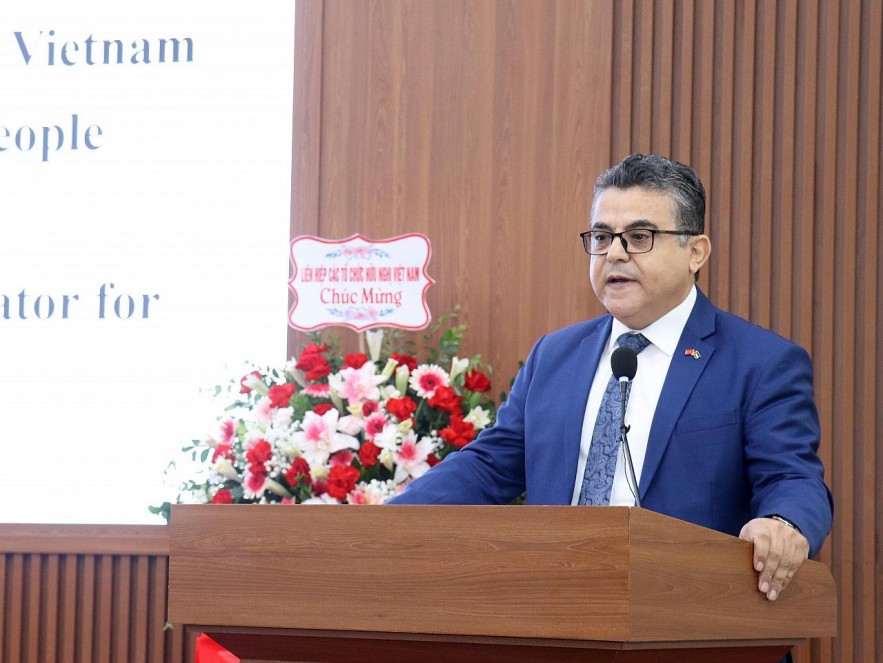 |
| Palestinian Ambassador to Vietnam Saadi Salama spoke at the event. Photo: Thu Ha |
Attending the event, held on Nov. 29, on the Vietnamese side, there was Nguyen Ngoc Hung, Vice President of the Viet Nam Union of Friendship Organizations, Ambassador Nguyen Quang Khai, vice chairman of the Vietnamese Committee for Solidarity with the Palestinian People (VCSPP), representatives of leaders of the Ministry of Foreign Affairs, Commission for External Relations, Vietnam Peace Committee, Vietnam Committee for Asian-African-Latin America Solidarity and Cooperation, Vietnam-Palestine Friendship Association of Hanoi, representatives of organizations, people's unions, universities and research institutes.
International guests include Saadi Salama, the Palestinian ambassador to Vietnam, representative of the United Nations in Vietnam, and representatives of diplomatic agencies and international organizations in Vietnam.
Speaking at the event, Vice Chairman of the VCSPP Ambassador Nguyen Quang Khai said that Vietnam was one of the first countries in the world that recognize the State of Palestine, and lifted relations between the two countries to the ambassador level.
During the past 35 years, the traditional friendship and cooperation between Vietnam and Palestine have been continuously strengthened and developed. Notably, President Yasser Arafat, the great leader of the Palestinian people visited Vietnam ten times.
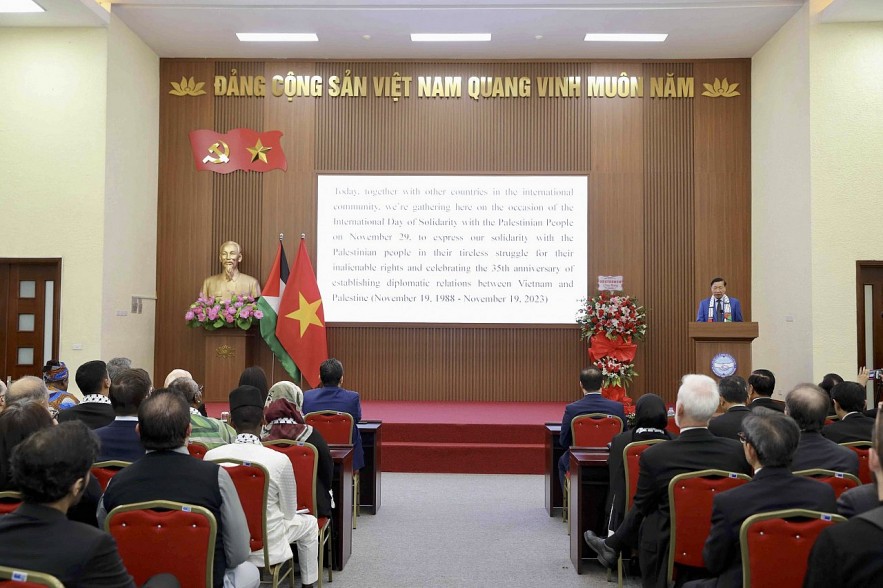 |
| Ambassador Nguyen Quang Khai, vice chairman of the Vietnamese Committee for Solidarity with the Palestinian People (VCSPP), spoke at the event. Photo: Dinh Hoa |
At the event, on the occasion of the International Day of Solidarity with the Palestinian People, Nguyen Quang Khai read a message from Vietnamese President Vo Van Thuong to the UN Secretary-General, the Chairman of the UN Committee on the Exercise of the Inalienable Rights of the Palestinian People and the President of Palestine.
President Vo Van Thuong extended deep condolences to the State and people of Palestine and the families of the victims of the conflict. He also expressed deep concern about the tension, and strongly condemned attacks targeting civilians and civilian infrastructure.
He called on parties to immediately cease fire, exercise maximum restraint, respect international humanitarian law and apply all necessary measures to ensure people's lives.
He appreciated the role of United Nations agencies and called on the international community to increase support for the Palestinian people.
The President affirmed the solidarity and strong support of the State and people of Vietnam for the just cause of fighting for the independence and freedom of the Palestinian people.
Meanwhile, a representative of the United Nations in Vietnam, read a solidarity message of UN Secretary-General Antonio Guterres.
Speaking at the celebration, Ambassador Saadi Salama, on behalf of the Palestinian leadership and people, expressed his deep gratitude to the Party, State, and people of Vietnam for their consistent support for the just struggle of the Palestinian people.
The Ambassador affirmed that Palestine will continue to make efforts to promote cooperative relations with Vietnam in all fields.
The anniversary is an opportunity for the two countries to review the achievements of cooperation over the past 35 years, affirming their determination to strengthen cooperation in the coming time, contributing to the friendship and cooperation between the two countries.
The International Day of Solidarity with the Palestinian People is celebrated by the United Nations on November 29 every year.
This is an opportunity to remind the international community to focus on the fact that the Palestinian issue has not yet been resolved and the Palestinian people have not yet won their inalienable rights as defined by the United Nations General Assembly. These are the right to self-determination, the right to independence, national sovereignty, and the right to return to one's homeland.
 | Palestine Looks to Boost Ties With Vietnam Palestinian President Mahmoud Abbas emphasized the strong friendship between the two countries and two peoples and wished to further develop the traditional relationship with Vietnam. |
 | Strengthen Solidarity and Friendship Between Vietnam and Palestine On the 35th anniversary of the diplomatic relations between Vietnam and Palestine (November 19, 1988 - November 19, 2023), at the invitation of the Palestinian ... |
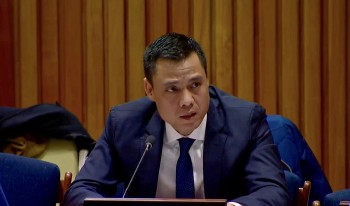 | Vietnam Sends USD 500,000 to Aid Palestinians Vietnam always supports the just struggle of the Palestinian people for independence and freedom. |

Most read


Recommended
 Friendship
"Two Vietnamese Friends Devoted to Fostering Vietnam-Cuba Friendship"
 Focus
Focus
“Red Journey” in Guangdong 2026: Connecting Vietnamese and Chinese Youth
 Friendship
Vietnam’s Transformation Through International Eyes
 Friendship
Connections Deepening Vietnam-RoK Friendship
Popular article
 Focus
Focus
World Peoples Assembly Days in Viet Nam 2026 Conclude, Opening New Avenues for Cooperation
 Friendship
Expanding Scientific and Educational Cooperation for Vietnam-Russia Development
 Friendship
Nguyen Thanh Hai Elected President of Viet Nam-RoK Friendship Association for 2026-2031 Term
 Friendship