
Ca Mau Steps Up Efforts to Remove IUU “Yellow Card”
 | Lam Dong Forms Interagency Task Force to Combat IUU Fishing |
| Ha Tinh Continues to Address Remaining Issues in Combating IUU Fishing |
From awareness campaigns conducted aboard fishing boats to overnight shifts at border control stations, a persistent effort is underway with the goal not only of helping Vietnam remove the IUU “yellow card” issued by the European Commission, but also of building a more transparent, responsible, and sustainable fisheries sector.
Guarding Fishing Ports, Monitoring Every Signal at Sea
At 5 a.m., Song Doc Fishing Port was still shrouded in light fog. Along the pier, border guards had already been on duty for hours. The sounds of boat engines mixed with fishermen calling to one another as they prepared for new offshore journeys. Inside the small office of the Song Doc Border Guard Control Station, vessel monitoring screens were filled with blinking dots, each representing a fishing boat operating at sea.
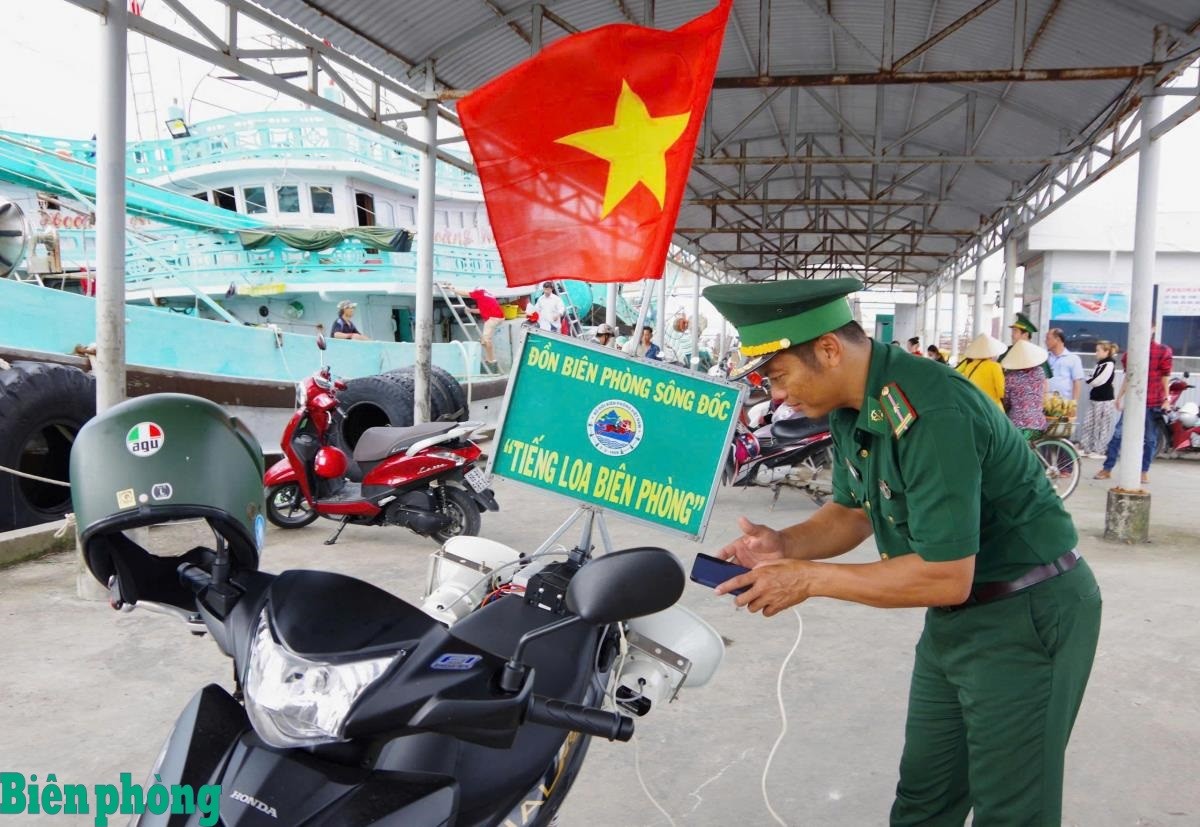 |
| Officers from Song Doc Border Guard Station effectively promote the “Border Guard Loudspeaker” model to raise awareness against IUU fishing violations. Photo courtesy of the unit. |
Major Vo Thanh Bang, Head of the Song Doc Border Guard Control Station, watched the screen closely, occasionally picking up his radio to exchange brief updates with officers on duty. “A vessel has just gone offline. We need to check immediately,” he said, before explaining: “Even a few hours of lost connection from a vessel monitoring system can create risks of violations. Our task is to ensure there are no management gaps.” Outside at the dock, a task force was boarding vessels one by one to conduct pre-departure inspections. Stacks of documents were carefully checked, while vessel monitoring systems were tested on site. One vessel had just restarted its engine, but its monitoring signal remained unstable and was immediately ordered to stay docked. “Rules are rules. There are no exceptions,” Major Vo Thanh Bang told the vessel owner in a firm yet calm tone.
According to a report by the Command of the Ca Mau Border Guard, in the first quarter of 2026, border guard units in the province carried out 18 patrol missions involving 66 officers and soldiers to manage and protect maritime sovereignty while combating IUU fishing. In addition, more than 15,000 patrol teams with 6,340 personnel were deployed to monitor local areas and safeguard border security. Authorities also inspected 23,623 fishing vessel movements involving 117,227 crew members operating at sea, ensuring strict compliance with regulations.
Colonel Le Dinh Son, Deputy Commander of the Ca Mau Border Guard, said: “We do not only conduct paperwork inspections but also closely monitor vessel movements. If a fishing boat shows signs of approaching maritime boundaries, an immediate warning is issued, and the vessel is contacted and instructed to adjust its route. Within a short period, our unit detected and warned more than 100 vessels operating near boundary areas. Many cases were prevented before any violations could occur.”
Beyond Song Doc, at other fishing ports such as Rach Goc Fishing Port and Gành Hào Fishing Port, mobile task forces from border guard stations across Ca Mau continue their daily patrols, monitoring every vessel and every fishing trip.
These quiet but persistent efforts are helping form a solid protective belt safeguarding peace and security in Vietnam’s southernmost waters.
Conversations on Fishing Boats
If mornings are dedicated to vessel inspections before departure, afternoons bring a different task as fishing boats return to shore. Aboard a vessel that had just completed a long offshore trip, Major Le Vu Khanh, Deputy Head of Operations at the Song Doc Border Guard Station, climbed onto the deck with fellow officers, chatting with fishermen while checking fishing logbooks. “Records must be complete and clear for traceability purposes,” he said, pointing to a weathered logbook worn by years of exposure to seawater. The atmosphere was far from tense. Conversations unfolded naturally, more like exchanges between old acquaintances than official inspections.
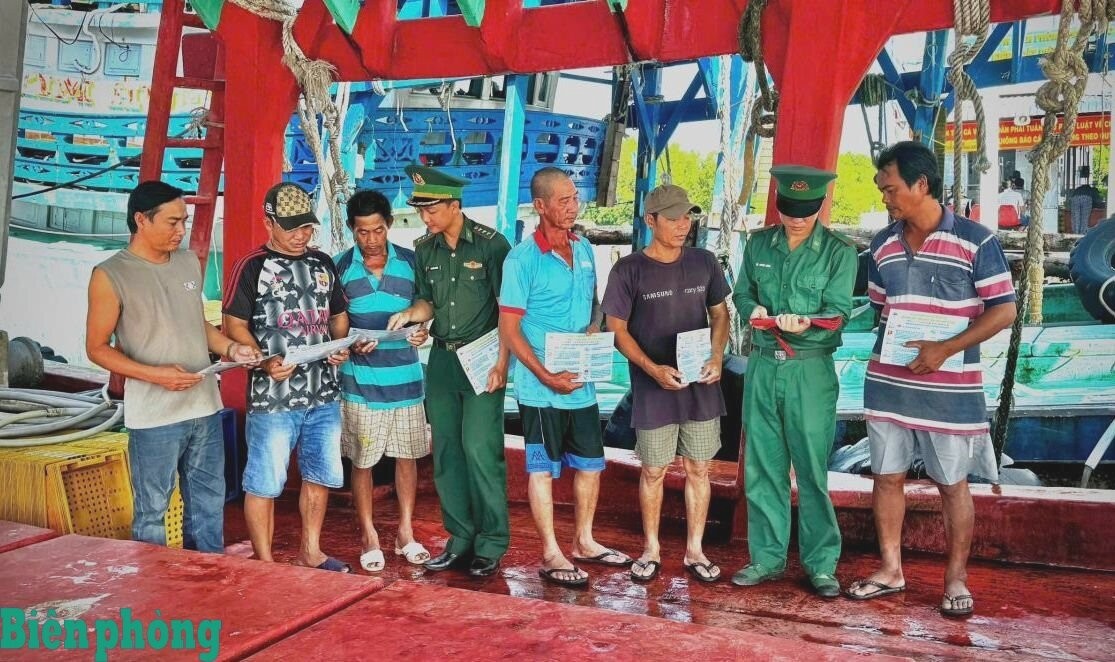 |
| Officers and soldiers of the Ca Mau Border Guard disseminate information to fishermen on strict compliance with regulations against IUU fishing. Photo courtesy of the unit. |
This sense of familiarity has made awareness campaigns more accessible and effective. Fisherman Nguyen Van Quan, 59, shared: “At first, IUU sounded like something distant and unfamiliar. But after repeated explanations from border guard officers, we now fully understand it. Fishing in the wrong waters is a violation that can result in heavy penalties and also affects the collective interests of the industry.” Nguyen Van An, 64, who has spent nearly 50 years working at sea, added: “Now, going offshore means strictly following regulations. Every vessel is equipped with a monitoring device that must remain switched on 24/7. Fishermen also remind one another that if someone is careless, they could be called back immediately.”
In addition to direct outreach, the Ca Mau Border Guard has recently adopted a range of flexible and effective measures. More than 28,000 text messages have been sent to vessel owners and captains, transforming what might otherwise be dry legal regulations into short, memorable reminders. Encouragingly, the shift has gone beyond awareness and translated into concrete action. Fishermen have gradually become more proactive in maintaining fishing logbooks, declaring seafood origins, and keeping vessel monitoring systems operating continuously.
In many localities, fishing teams have also begun reminding one another to strictly comply with regulations and avoid IUU violations. “Now everyone understands that following the rules brings long-term benefits,” Nguyen Van Quan said, gazing out toward the open sea.
A Long Journey Toward Sustainable Fisheries
The fight against IUU fishing in Cà Mau extends far beyond ports and fishing boats, encompassing long-term policy measures as well. The province currently has more than 5,200 fishing vessels. Of these, all 1,914 vessels measuring over 15 meters in length have been equipped with vessel monitoring systems, achieving a 100% installation rate. Fishing vessel management has also been digitized, covering procedures from port entry and departure controls to seafood traceability.
Colonel Le Dinh Son said: “We are determined to carry out these measures rigorously and thoroughly. Management must be strict, but at the same time, fishermen need support so they can adapt.” One notable step taken by Ca Mau is the establishment of a 27,000-hectare marine protected area aimed at preserving ecosystems and restoring fishery resources. At the same time, co-management models are being promoted, allowing fishermen themselves to play a central role in marine conservation.
Le Van Su, Vice Chairman of the Ca Mau Provincial People’s Committee, emphasized: “Combating IUU fishing is not something that can be achieved overnight. But when the entire system works together, and local people are on board, positive results will certainly come soon.” Challenges remain ahead. Some fishermen are still unfamiliar with technology, while isolated cases of non-compliance persist. However, through persistence, authorities, including the Ca Mau Border Guard, continue to stay close to both the sea and local communities, working daily to resolve obstacles one by one. As evening falls, Song Doc Fishing Port once again comes alive as vessels head back out to sea.
On the shore, border guards quietly continue their duties, tracking each boat with both responsibility and confidence. The journey toward removing the IUU “yellow card” may still be challenging, but today’s changes, from uninterrupted monitoring signals and fully completed fishing logbooks to growing awareness among fishermen, suggest that a clearer path is gradually taking shape. At the nation’s southernmost tip, those whose lives are tied to the sea are writing a new chapter together: one of a sustainable, transparent, and hopeful fisheries industry.
 | Quang Ngai Province Prevents Repeat Violations for Combating IUU Fishing Following the 5th inspection by the European Commission (EC) on Vietnam's efforts to combat illegal, unreported, and unregulated (IUU) fishing, the EC acknowledged Vietnam's progress, ... |
 | Nghe An Resolutely Addresses Bottlenecks in Combating IUU Fishing In efforts to remove the European Commission’s (EC) “yellow card,” Nghe An Province has identified the strict handling of non-compliant fishing vessels, particularly so-called “three-no” ... |



Most read




Related Stories
 Viet's Home
Ca Mau Enhances Capacity of Officials to Effectively Mobilize International Aid
 Seas and islands
Modern Technology Implemented in Crackdown on IUU Fishing
 Seas and islands
National Steering Committee Strengthened for IUU Fight and Sustainable Fisheries
 Seas and islands
Dong Thap Tightens Fishing Vessel Management to Prevent IUU Violations
Recommended
 Seas and islands
Vietnam Reaffirms Goodwill in Adhering to 1982 UNCLOS
 Seas and islands
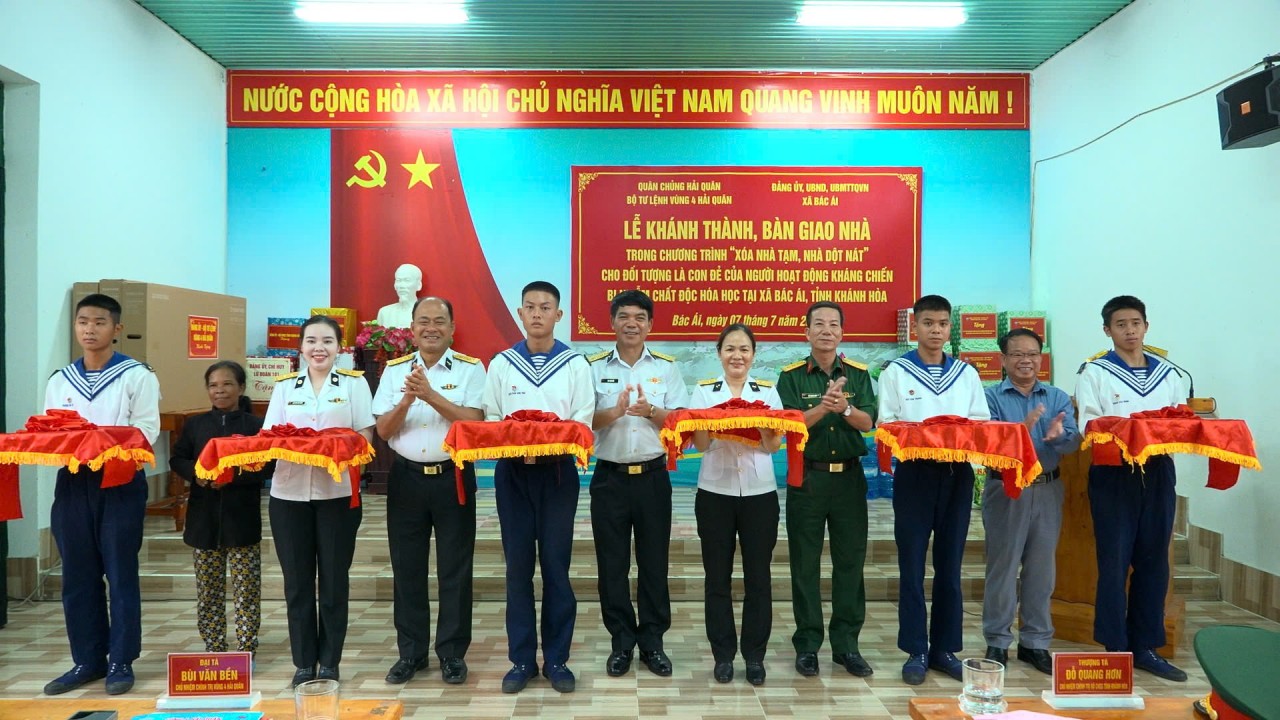
Naval Region 4 Handed Over Four Houses to Policy Beneficiary Families
 Seas and islands
Truong Sa: Every Family a “Living Landmark” on the Frontline of the Sea
 Seas and islands
Dream of Soldiers on a Remote Island
Popular article
 Seas and islands
Vietnam Chairs Opening Session of the 36th Meeting of States Parties to UNCLOS
 Seas and islands
Promoting Love for Vietnam’s Seas and Islands in Dak Lak
 Seas and islands
Khanh Hoa Fishermen Bring Cameras Underwater
Seas and islands