
Connecting International Resources to Promote Green Development and Climate Change Adaptation
| Connecting International Resources to Develop Youth Skills and Sustainable Employment Turning International Resources into Viet Nam’s Maritime Strength |
 |
| Delegates attend the international workshop “Foreign Non-Governmental Organizations in the New Context: Towards a Green Economy, Circular Economy, and Sustainable Development - An Inevitable Global Trend,” held on October 22 in Da Nang City. (Photo: Catalyste+) |
Applying international experience to green development models
Sharing Canada's experience at the international workshop “Foreign Non-Governmental Organizations in the New Context: Towards a Green Economy, Circular Economy, and Sustainable Development - An Inevitable Global Trend,” Wayne Fernand St. Amour, an economist at Catalyste+ (Canada), emphasized that green and sustainable development should be approached as a collaborative process involving multiple stakeholders, including government authorities, businesses, technical experts, social organizations, and local communities.
He particularly highlighted the importance of applying environmental, social, and governance (ESG) principles, with governance playing a central role in establishing accountability, monitoring mechanisms, and performance evaluation. Green development initiatives require not only appropriate technical solutions but also consensus among stakeholders on objectives, implementation methods, and indicators for measuring impact.
To illustrate this approach, he introduced a wastewater treatment model implemented in Cranbrook, British Columbia, Canada. Faced with the need to change its wastewater management practices, the city chose not merely to upgrade its pipeline infrastructure but instead worked with experts and local communities to develop a solution that uses treated wastewater for irrigation, produces livestock feed, and creates habitats for wildlife. According to figures presented by St. Amour, the model has reduced greenhouse gas emissions by 75% while generating more than CAD 1.2 million in agricultural value, helping offset operating costs.
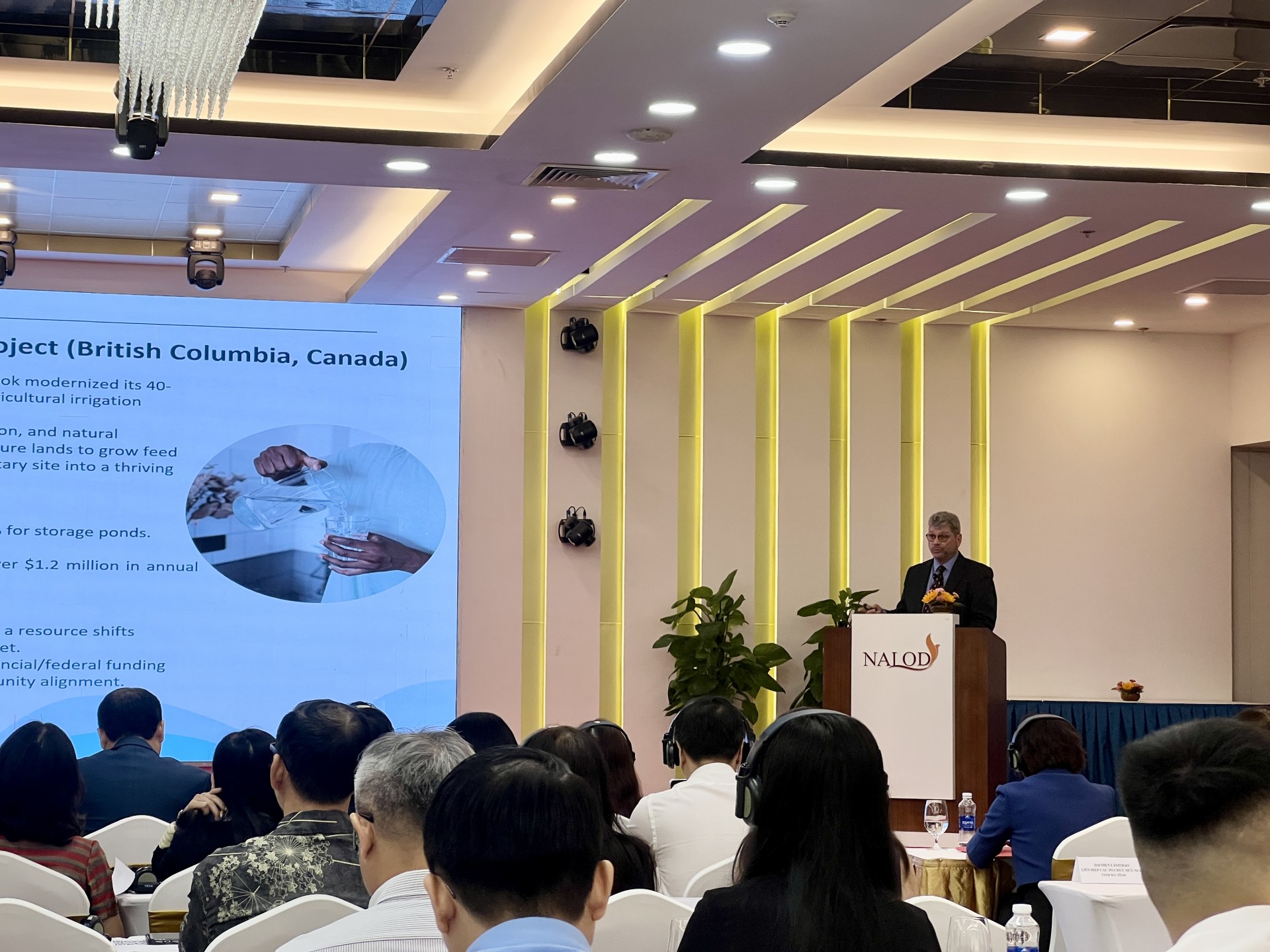 |
| Wayne Fernand St. Amour, an economist at Catalyste+ (Canada). (Photo: Mai Anh) |
Another example involved a closed-system salmon farming model that uses cameras to monitor uneaten feed and automatically adjusts feeding quantities according to the fish's needs. The solution has reduced feed waste by 20% and increased feed consumption by 15%, while improving production efficiency and minimizing risks to natural ecosystems.
Drawing on these two examples, the expert emphasized the importance of combining technical expertise, community participation, and accountable governance mechanisms. Solutions should be developed based on risk assessments, with clearly defined objectives, measurable outcomes, and regular reviews to improve effectiveness.
In Viet Nam, approaches that integrate environmental protection with economic development are also being implemented through international cooperation programs.
Nguyen Nhat An, Central Truong Son Program Coordinator at WWF-Viet Nam, said that after more than 20 years of operations in the former Quang Nam Province and present-day Da Nang, WWF has shifted from implementing isolated activities to pursuing long-term programs aligned with local development strategies. In particular, WWF places communities at the center of conservation efforts, regarding local residents not merely as beneficiaries but also as partners in resource management, value creation, and benefit-sharing.
In forest protection and climate change adaptation, WWF has worked with protected area management boards, local authorities, and communities to implement a range of initiatives aimed at protecting natural forests, restoring ecosystems, and developing livelihoods. According to Nguyen Nhat An, as of August 2026, a natural forest restoration project had successfully restored 272 hectares of forest, with the participation of 283 local households.
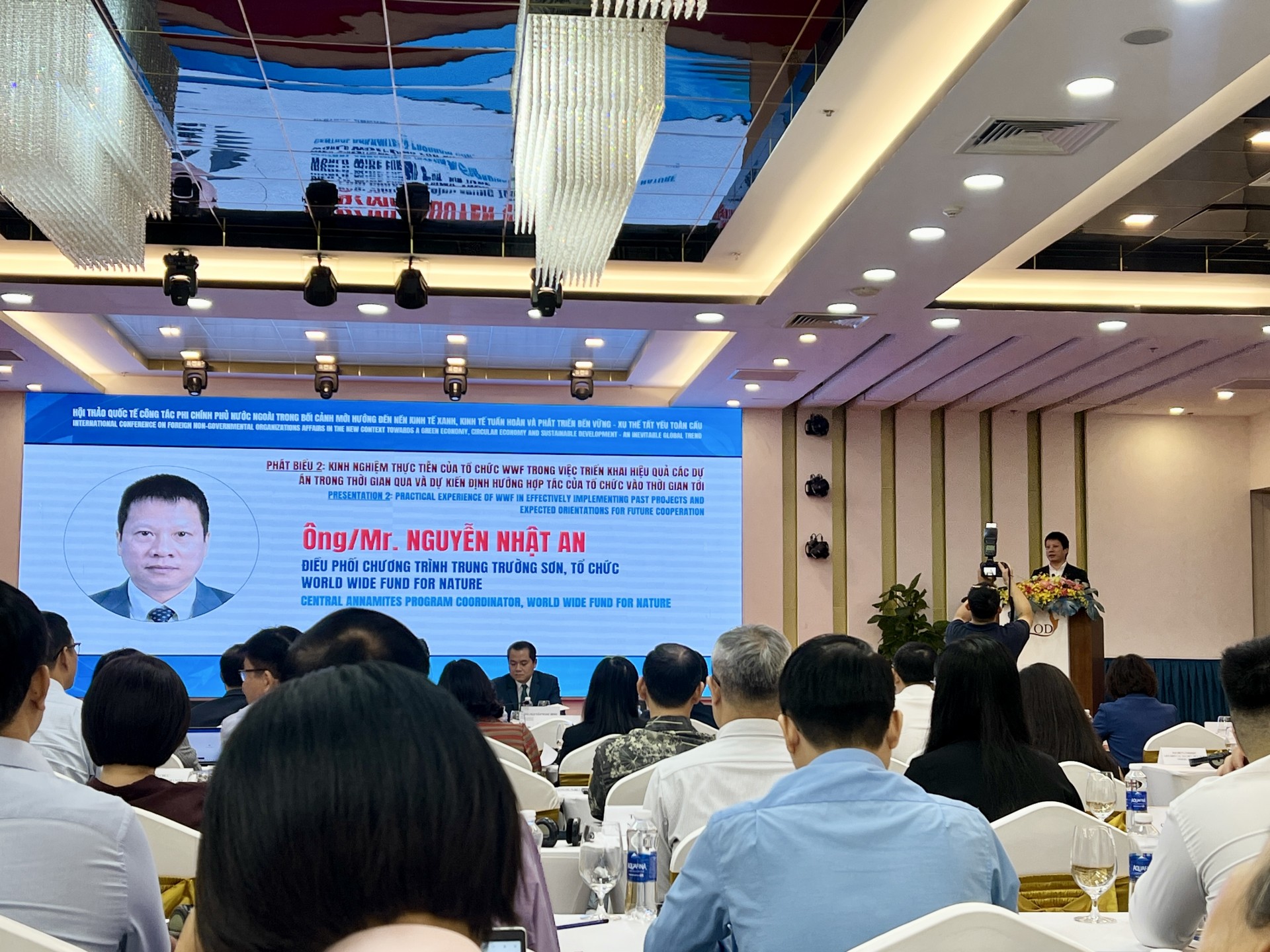 |
| Nguyen Nhat An, Central Truong Son Program Coordinator at WWF-Viet Nam, speaks at the workshop. (Photo: Mai Anh) |
In the Cu De River basin, WWF is working with businesses to implement a program for the 2026–2030 period aimed at supporting Co Tu ethnic communities in upstream areas in developing ecotourism and improving livelihoods, while also engaging them in watershed forest protection and ensuring water security.
In marine conservation, the organization is implementing a seagrass restoration initiative in Cu Lao Cham, with a target of restoring two hectares of seagrass beds. To date, approximately 1,200 seedlings have been planted using a broadcasting method. The project also plans to develop livelihood models to support around 70-100 local households.
In addition, WWF applies SMART technology to monitor forest patrols and uses camera traps and environmental DNA analysis to track biodiversity, helping relevant authorities detect, assess, and address conservation-related issues.
Drawing on practical experience, Nguyen Nhat An emphasized the importance of combining modern science and technology with indigenous knowledge, placing communities at the center of initiatives, and developing programs with a long-term vision. According to him, conservation and green development initiatives must deliver measurable, scientifically verifiable results to facilitate their replication in other localities.
Connecting finance, technology, and communities
International organizations have identified mobilizing financial resources, strengthening stakeholder connections, and ensuring the participation of vulnerable groups as essential conditions for promoting sustainable green development.
Hoang Phuong Thao, Country Director of ActionAid International in Viet Nam, proposed four groups of solutions to strengthen multilateral cooperation: improving coordination mechanisms, developing evidence-based partnerships, facilitating access to green finance, and ensuring a just and inclusive transition.
According to Thao, international resources can deliver their greatest value only when aligned with development planning and supported by close coordination among government authorities, friendship organizations, research institutions, businesses, and communities.
In particular, the green transition must be grounded in data and scientific research. ActionAid has collaborated with research and educational institutions on carbon markets while implementing initiatives to apply digital transformation at the local level. She noted that stronger connections among universities, researchers, and international organizations could accelerate the application of technology in climate change adaptation and environmental management.
Another priority highlighted by ActionAid is generating economic value to ensure that initiatives remain sustainable after aid-funded projects conclude. According to Hoang Phuong Thao, businesses play an important role in the circular economy. Community initiatives should be integrated into market value chains while leveraging instruments such as green credit, green bonds, and blended finance to mobilize additional resources.
She also noted that climate change often disproportionately affects women, persons with disabilities, ethnic minority communities, informal workers, and coastal residents. Therefore, the green transition can only be truly inclusive when these groups not only receive assistance but also participate in designing and monitoring development programs and sharing their benefits.
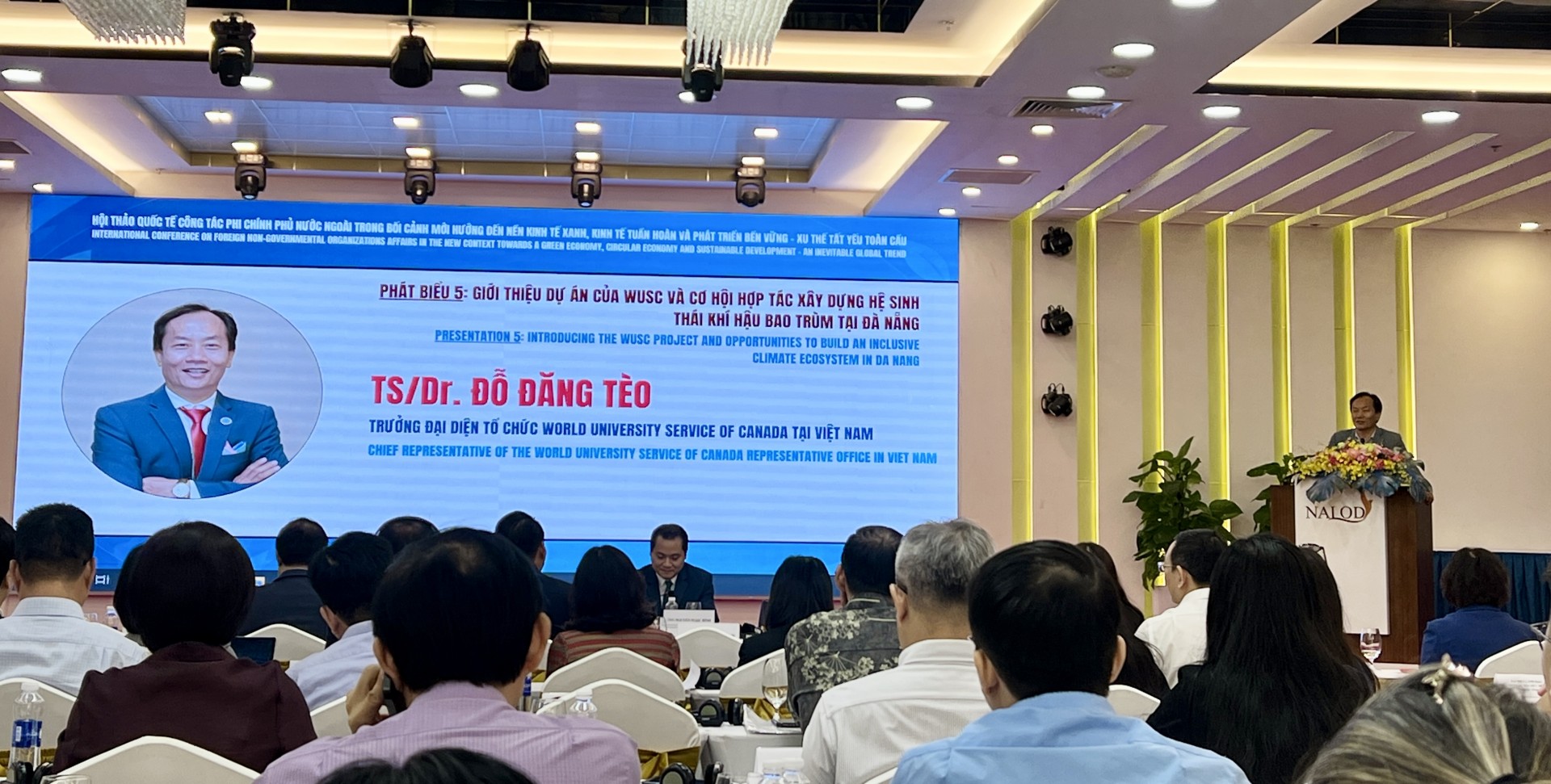 |
| Do Dang Teo, Country Representative of World University Service of Canada (WUSC) in Viet Nam. (Photo: Mai Anh) |
Regarding support for businesses in accessing financing, Do Dang Teo, Country Representative of World University Service of Canada (WUSC) in Viet Nam, introduced the AGILE Project, “Advancing Growth, Innovation, and Leadership for Enterprises in Viet Nam.” Implemented nationwide from 2025 to 2029, with a focus on Ha Noi, Da Nang, and Ho Chi Minh City, the project prioritizes businesses operating in climate-related sectors, sustainable agriculture, and the circular economy.
According to Do Dang Teo, access to finance remains one of the major challenges facing small and medium-sized enterprises (SMEs), particularly women-owned climate technology businesses. Preliminary research conducted by WUSC in collaboration with its partners indicates that women are involved in founding approximately 33% of climate technology enterprises, yet the financing available to these businesses remains very limited.
To address this financing gap, WUSC has introduced a Matching Grant Facility, combining business capacity-building support with connections to impact investment funds. In its first round, the program selected 100 enterprises to receive support in strengthening their capacities and accessing financing.
Under the mechanism presented, the program provides one part in funding support to mobilize five parts in matching contributions, with a maximum grant of USD 150,000. The initiative targets early-stage enterprises and SMEs facing difficulties in accessing finance.
Do Dang Teo said WUSC seeks to expand cooperation with government agencies, business support organizations, universities, the private sector, and investment funds. The objective is not only to help businesses access financing but also to strengthen their governance capacity, facilitate market connections, and gradually build an inclusive climate ecosystem.
 Vietnam Seeks France's Experience in Green Development |
 Da Nang Taps Foreign NGO Resources to Promote Green Development |



Related Stories
 National
Viet Nam News Today (Oct. 29): Prime Minister Le Minh Hung Seeks WEF Support for Innovation, Sustainable Growth
 National
Proactively Identifying Development Needs to Expand Cooperation with Foreign NGOs
 Multimedia
Students Sharpen Skills for Climate Action
 World
EU Updates Rules on Environmental Claims
Popular article
 Economy
Qashier Launches QashierGM, an AI General Manager That Works With the Whole Team
 Economy
India’s farm story: A decade of Transformation
 Economy
Women in Quang Tri's Mountainous Areas Proactively Seek Markets for Local Agricultural Products
 Economy