
“Few Countries Have Religious Solidarity Models Like Those in Vietnam”
 | Delegation of the Global Collaborative Community Meets with Government Committee for Religious Affairs |
| Pastor Bob Roberts Praises Vibrant Vietnamese Church Growth |
Nguyen Van Thanh, Member of the Presidium and Head of the Ethnic and Religious Affairs Board under the Central Committee of the Vietnam Fatherland Front (VFF), spoke with VietnamTimes Magazine about cooperation models among religious communities, the role of the Front in fostering religious unity, as well as the requirements arising in the context of increasingly diverse urban life.
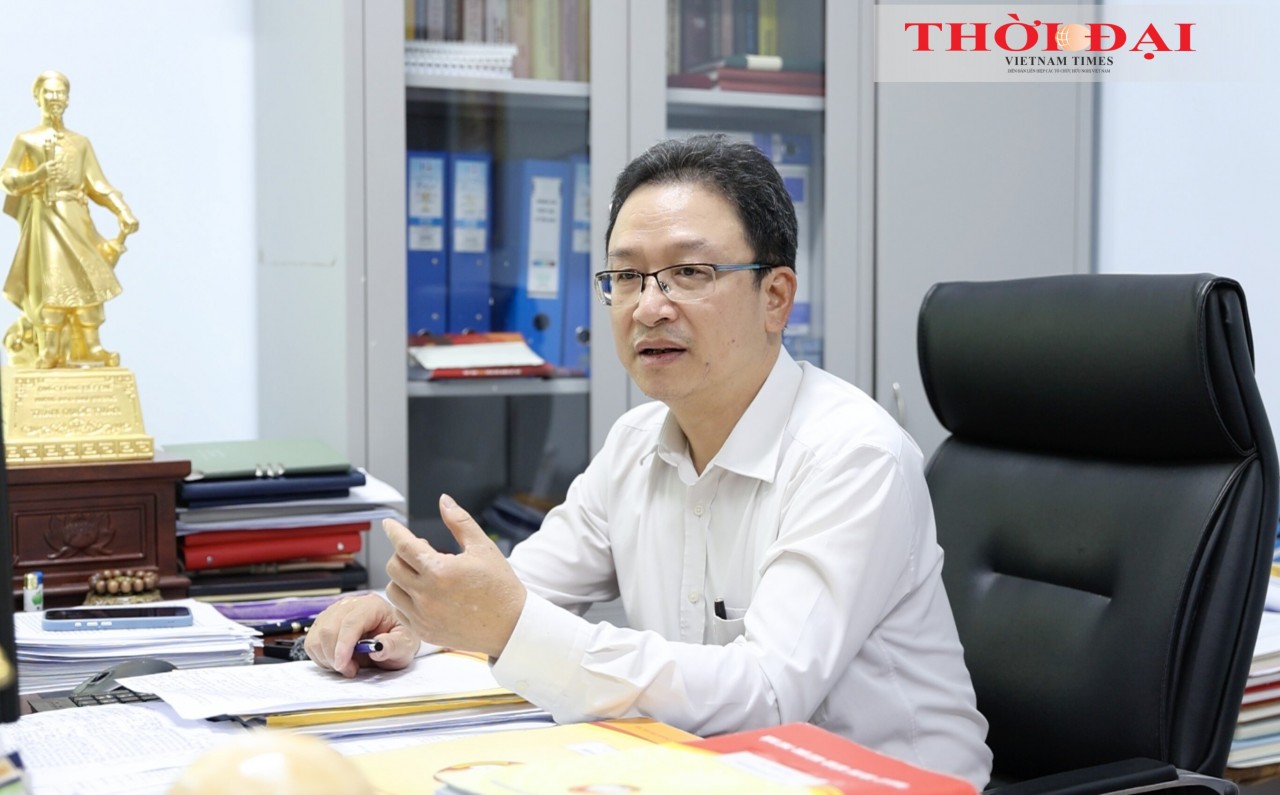 |
| Nguyen Van Thanh, Member of the Presidium and Head of the Ethnic and Religious Affairs Board under the Central Committee of the Vietnam Fatherland Front. (Photo: Dinh Hoa) |
- From your practical experience, what has impressed you most about the solidarity among religious communities in Vietnam today?
- Rooted in longstanding traditions and under the guidance, mobilization, and unifying role of the Front, Vietnam has developed many models of solidarity among religions that are rarely found elsewhere in the world. Some notable examples include:
In Hue, Catholic and Buddhist dignitaries jointly developed a common action program to care for and support terminal HIV/AIDS patients at Hue Central Hospital. Support activities were carried out both within the hospital and in local communities and households affected by HIV/AIDS, contributing to reducing stigma and discrimination.
During the COVID-19 pandemic, many Buddhist establishments provided between 10,000 and 15,000 free meals daily for people in communities, quarantine centers, and field hospitals. Through these humane and practical activities, the Catholic Bishops’ Conference of Vietnam and the Archdiocese of Ho Chi Minh City provided financial support to help pagodas maintain community kitchens throughout the pandemic response period.
During the same period, many Buddhist dignitaries mobilized resources to organize thousands, and even hundreds of thousands, of free meals and gift packages. Part of these resources was coordinated and delivered to Muslim and Protestant communities so that Muslim dignitaries and pastors could continue supporting people in their own localities and religious communities.
On one occasion during the Lunar New Year holiday, while visiting and extending Tet greetings to Buddhist and Muslim dignitaries, we were informed by the Muslim community that many followers’ families were still facing difficult circumstances, while the community’s support resources remained limited. After sharing this with leaders of the Vietnam Buddhist Sangha, a Most Venerable monk, Vice Chairman of the Executive Council of the Vietnam Buddhist Sangha, proactively proposed providing several hundred million VND so that the Muslim community could have additional resources to support disadvantaged families and policy beneficiary families during Tet.
There have also been training courses for the Muslim community organized directly inside mosques, featuring exchanges and experience-sharing sessions by Buddhist monks and nuns on social welfare activities and environmental protection. Some programs even received resource support from Buddhist organizations to help maintain social welfare activities conducted by other religious dignitaries.
These examples demonstrate that many forms of cooperation and experience-sharing have emerged among religious dignitaries and organizations in Vietnam in areas such as social welfare, humanitarian charity, environmental protection, and climate change response.
- How is the role of the Front reflected in fostering solidarity among religious communities?
- The Vietnam Fatherland Front serves as the common home of the great national unity bloc, bringing together and strengthening the solidarity of the entire people, including religious communities.
In practice, many concerns, aspirations, and proposals from religious organizations and individuals are often first conveyed to the Front. The Front then consolidates these recommendations and submits them to competent authorities for consideration and resolution.
In many localities, grassroots Front officials regularly meet and engage with religious dignitaries, functionaries, and followers to understand the real situation, listen to issues arising in religious life, and guide and support religions in carrying out activities in accordance with the law.
At the central level, the Vietnam Fatherland Front has organized numerous thematic meetings and dialogue conferences with religious organizations. These have included direct meetings and working sessions between the Presidium of the Central Committee of the Vietnam Fatherland Front and Catholic dioceses, seminary boards of directors, and Catholic vocational college administrations; with the Patronage Council and Executive Council of the Vietnam Buddhist Sangha; with the Central Executive Board of the Hoa Hao Buddhist Church; as well as with Cao Dai organizations. Through these meetings and dialogues, the Front listens to concerns, aspirations, and legitimate recommendations related to religious and belief activities, as well as broader social issues, in order to consolidate and submit them to competent authorities for consideration and resolution.
In addition, the Front participates in supervising and providing social feedback on policies related to beliefs and religions, while coordinating with relevant agencies to review practical experiences and propose amendments and improvements to legal policies in line with new circumstances.
- In recent years, what specific activities has the Front carried out to accompany religious organizations?
- The consistent policy of the Party and the State is to promote the positive cultural and moral values, as well as the resources of religions, in the cause of sustainable national development.
Based on this policy, the Vietnam Fatherland Front has coordinated with functional agencies and religious organizations to implement numerous programs in areas such as social welfare, disaster and flood relief, environmental protection, climate change response, community healthcare, and support for vulnerable groups.
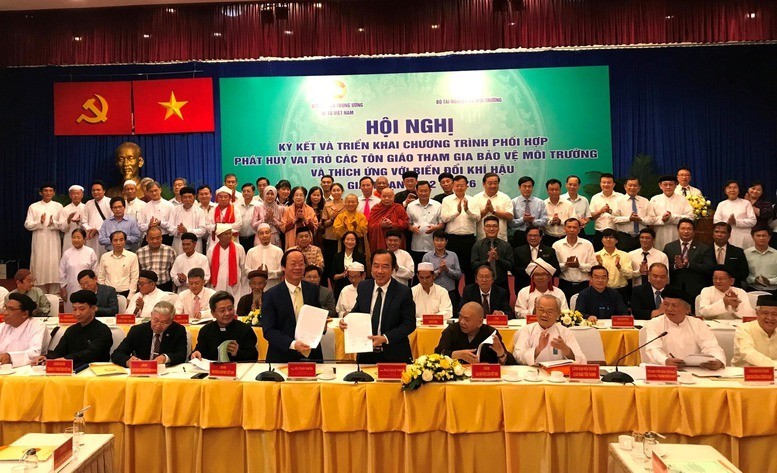 |
| The signing ceremony of the environmental protection cooperation program between the Standing Committee of the Central Committee of the Vietnam Fatherland Front, the Ministry of Natural Resources and Environment (now the Ministry of Agriculture and Environment), and 43 religious organizations in November 2022 in Ho Chi Minh City. (Photo: Government Newspaper) |
For example, the Vietnam Fatherland Front took the lead in coordinating with the Ministry of Natural Resources and Environment (now the Ministry of Agriculture and Environment) to sign a cooperation program with 43 religious organizations aimed at promoting the role of religions in environmental protection and climate change response.
Following the signing at the central level, the cooperation model continued to be implemented in many localities through agreements involving the Front, natural resources and environment agencies, and religious organizations at the provincial and district levels (formerly). Every year, the parties convene to review implementation results, exchange experiences and discuss emerging issues, while agreeing on future areas of cooperation and commending religious groups and individuals for their positive contributions.
Through these programs, many grassroots models related to new-style rural development, civilized urban areas, the elimination of temporary and dilapidated housing, environmental protection, climate change adaptation, support for the poor, care for lonely elderly people and disadvantaged children, as well as assistance for people affected by natural disasters and epidemics, have been implemented. The process of coordination, exchange, and joint participation in social activities has also helped religious organizations, dignitaries, and clergy members better understand one another and strengthen bonds within the great national unity bloc.
- In the context of increasingly culturally and religiously diverse urban areas, what should be done to further strengthen solidarity among communities?
- First and foremost, it is necessary to continue improving the system of policies and laws on beliefs and religions in order to create more favorable conditions for religious organizations to operate in accordance with the law and to better promote their role in social life.
In addition to the Law on Belief and Religion (recently amended during the First Session of the 16th National Assembly), many other areas still need to be further institutionalized and specified to promote the positive cultural and moral values and resources of religions in sustainable national development, in line with Politburo Directive No. 18-CT/TW on religious affairs in the new context, as well as the documents of the 13th and 14th National Party Congresses.
For instance, if Vietnam wishes to promote the role of religions in the socialization of education, healthcare, vocational training, or community healthcare services, it is necessary to continue reviewing and improving relevant provisions in the Law on Education, the Law on Medical Examination and Treatment, the Law on Vocational Training, and many other legal documents. With an appropriate legal framework in place, religious organizations will have more favorable conditions to contribute to society.
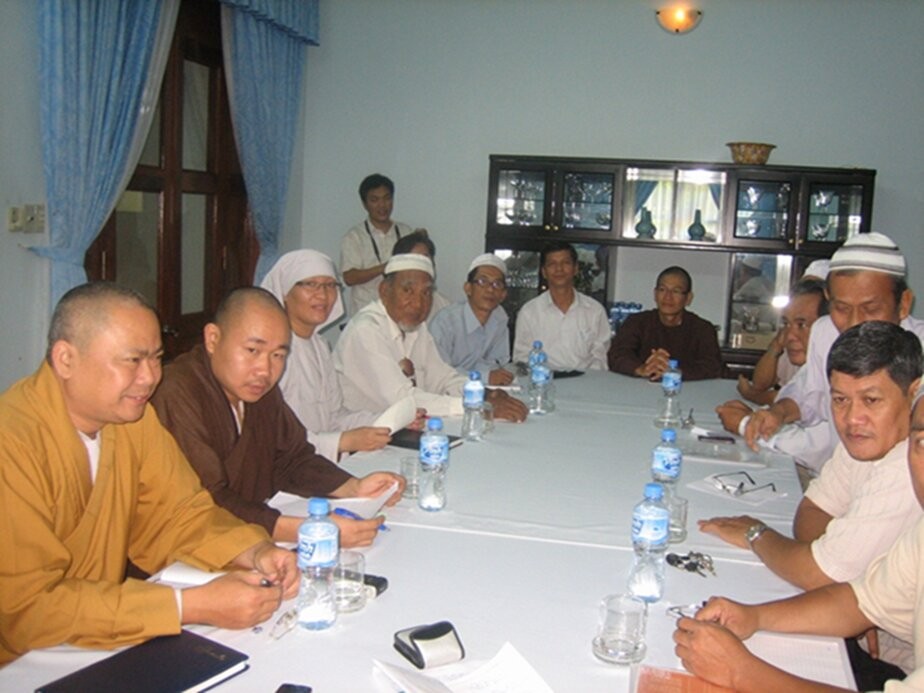 |
| Exchanges and sharing of social work experience between Buddhist dignitaries and Muslim dignitaries and functionaries. (Photo provided by the Ethnic and Religious Affairs Board) |
In addition, the Vietnam Fatherland Front will continue to strengthen regular engagement and dialogue activities with religious organizations. Through these forums, the Front listens to the concerns, aspirations, and legitimate proposals and recommendations of religious dignitaries, functionaries, and followers to coordinate with relevant authorities in considering and resolving them.
In the coming period, alongside general meetings, the Front will also intensify thematic dialogues focusing on specific fields or individual religions, creating conditions for parties to share initiatives, experiences, and solutions to social welfare and humanitarian issues in which religions are directly involved and possess strengths.
Another important direction is to continue signing programs and action plans aimed at building and expanding effective cooperation models between the Front and religious organizations. In reality, when there are specific cooperation programs with clearly assigned responsibilities among the Front, state management agencies, and participating parties, implementation effectiveness becomes highly evident.
Current cooperation programs have already been implemented across many areas, including environmental protection, climate change response, new-style rural development, civilized urban development, care for the poor, elimination of temporary housing, and support for orphaned children and lonely elderly people. Through these efforts, many exemplary models, religious organizations, and individuals have been recognized, commended, and widely promoted.
In my view, the key is to establish practical coordination mechanisms so that all parties can participate, share responsibilities, and mobilize resources toward common goals.
During the 2026-2031 term, the Vietnam Fatherland Front will continue implementing the Conclusion recently issued by the Presidium of the Central Committee of the Vietnam Fatherland Front on renewing the contents and methods of operation of the Vietnam Fatherland Front and socio-political organizations in religious affairs in the new period.
In the coming time, the Front will strengthen thematic dialogue forums for information exchange, creating opportunities for religions to share experiences, enhance mutual understanding, and coordinate in social and community welfare activities.
In the context of increasingly deep international integration, the role of religions in people-to-people diplomacy is also receiving growing attention. This will continue to be one of the areas the Vietnam Fatherland Front focuses on and promotes in the time ahead.
- Thank you very much!
 | Ensuring Religious Security in Cyberspace Religious and faith-based activities in cyberspace have long existed in Vietnam and have recently developed strongly, especially during and after the COVID-19 pandemic. These activities ... |
 | Vietnam’s Religious Freedom in Practice: Law, Participation, and Living Faith The increase of more than 10 million followers of various religions over the past 20 years is clear evidence that the Party and the State ... |
Related Stories
 National
Party Committee of the Viet Nam Fatherland Front and Central Mass Organizations: Accelerate Organizational Streamlining and Digital Transformation in Second Half of Year
 National
Vietnam Fatherland Front Launches “Month of Listening to the People”
Recommended
 Viet's Home
Indian Ambassador Thanks Vietnam for Swift Response to Phu Quoc Speedboat Capsizing
 Viet's Home
Portugal Crowned Champion of 2026 Da Nang International Fireworks Festival
 Viet's Home
Ca Mau Enhances Capacity of Officials to Effectively Mobilize International Aid
 Viet's Home
Over 50 Calls and Messages Help Search for Fallen Soldiers at Tan Son Nhat Airport
 Viet's Home
Palestinian Ambassador Saadi Salama Awarded "For the Cause of Culture, Sports and Tourism" Medal
 Viet's Home
Nghe An's 500-Day and Night Campaign Collects 17,831 DNA Samples
 Viet's Home
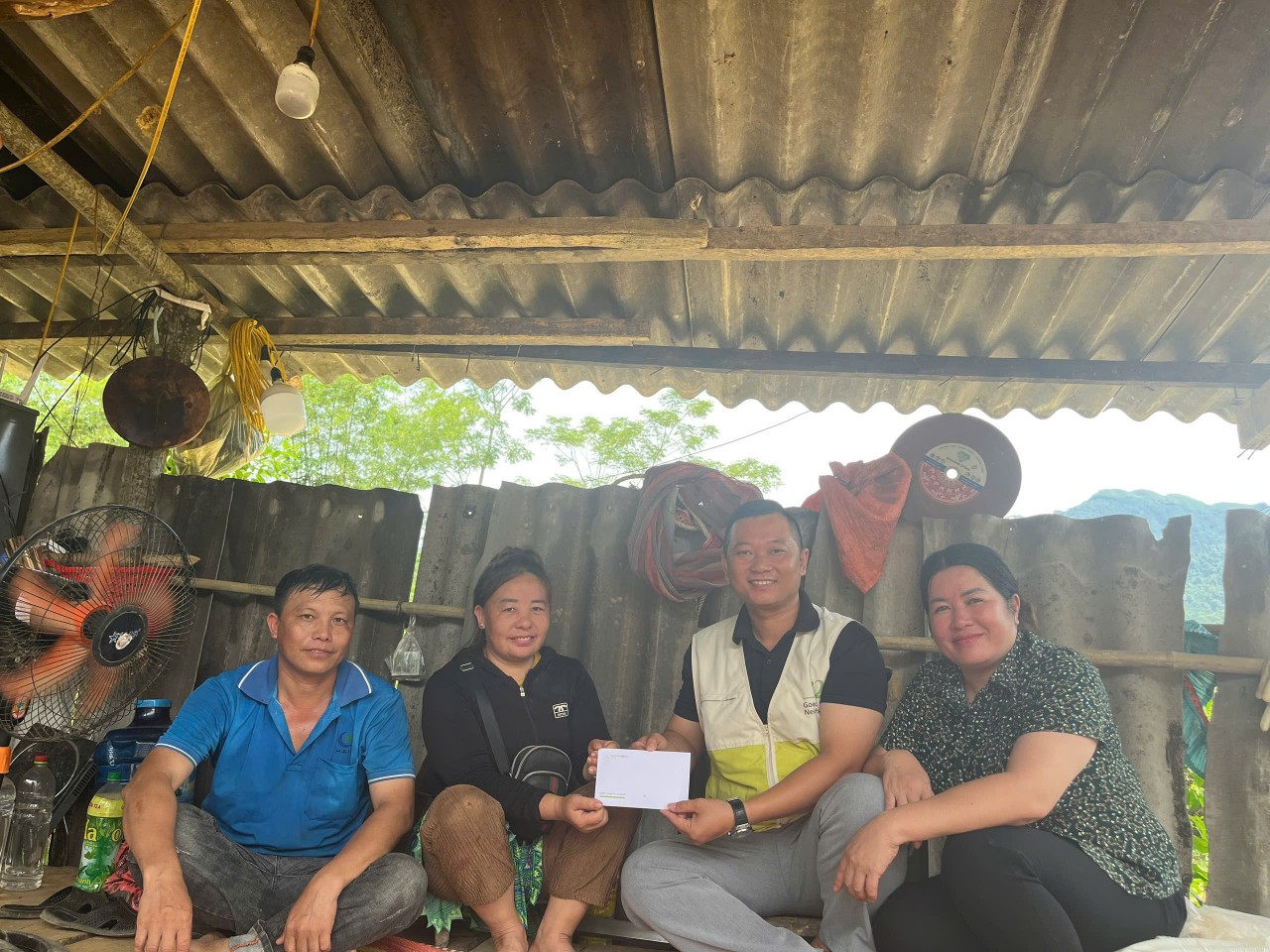
GNI Supports Housing Improvements for Five Sponsored Children in Tuyen Quang
 Viet's Home