
From smart cities to smarter living: How India is rebuilding its urban future
 |
That is increasingly the direction of India’s urban development story.
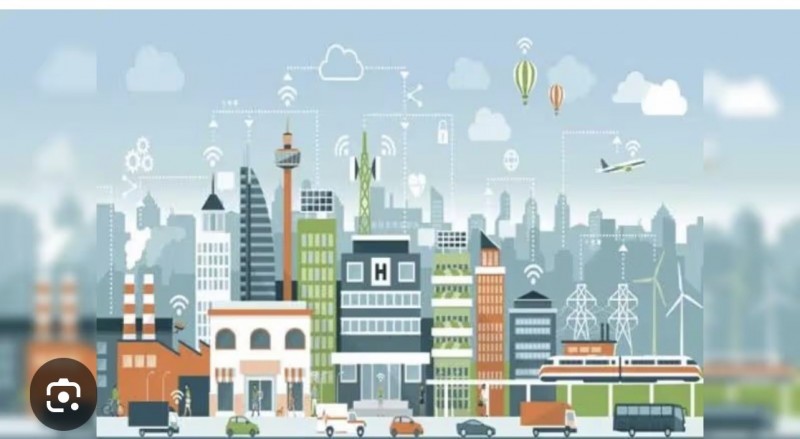
Over the past decade, the Smart Cities Mission and the Atal Mission for Rejuvenation and Urban Transformation (AMRUT) have sought to move urban policy beyond conventional construction towards integrated infrastructure, technology-enabled governance, water security and better quality of life.
The scale is significant. The Smart Cities Mission, launched in June 2015, selected 100 cities for focused development through infrastructure and technology-driven interventions.
AMRUT, launched in the same year, concentrated on the foundations of urban living, particularly water supply, sewerage, drainage, green spaces and public transport. Together, the programmes have helped reshape the physical and institutional architecture of urban India.
A decade of smart urban infrastructure
The Smart Cities Mission was conceived around a simple but far-reaching idea: technology should make cities more efficient, sustainable and responsive to citizens.
Its implementation combined two approaches. Area-Based Development focused resources on selected urban areas to create replicable models, while Pan-City projects used technology to improve services across wider urban areas. Special Purpose Vehicles were established to execute projects and bring together different sources of financing and institutional expertise.
By May 2025, 7,555 of the mission's 8,067 projects had been completed, representing 94 percent of the total, with an overall investment of about $183 billion (INR 1.64 lakh crore).
Another 512 projects worth about $1.45 billion (INR 13,043 crore) were in advanced stages. By March 31, 2025, 99.44 percent of the Union government's budgeted outlay had been released to the 100 cities.
The significance lies not only in the number of projects but in the range of urban functions they cover. Smart roads, public spaces, cycle tracks, health facilities, classrooms, water systems and technology-enabled public services have become part of the mission's urban transformation framework.
Rise of data-driven city management
One of the most visible institutional innovations has been the Integrated Command and Control Centre, or ICCC.
All 100 Smart Cities have operational ICCCs, which use technologies including Artificial Intelligence, Internet of Things systems and data analytics to support urban management.
These centres have been used for traffic regulation, water supply monitoring, solid waste management, public safety, crowd management and emergency response.
This represents an important shift in the way cities are managed. Instead of relying exclusively on conventional administrative systems, civic authorities can increasingly draw on real-time information to understand traffic patterns, monitor infrastructure and coordinate responses.
The Smart Cities Mission has also expanded the role of technology in water management.
In 28 cities, drinking-water treatment capacity exceeding 2,900 million litres per day has been developed, while more than 17,026 km of water-supply systems are monitored through Supervisory Control and Data Acquisition technology.
Such interventions place digital governance at the centre of urban service delivery.
AMRUT: Putting basic services at the heart of urbanisation
If Smart Cities represents the technological dimension of India's urban transformation, AMRUT addresses its essential physical foundation.
Launched in 2015 across 500 cities, the original AMRUT focused on water supply, sewerage and septage management, storm-water drainage, green spaces and parks, and non-motorised urban transport.
The programme was subsequently expanded through AMRUT 2.0 in October 2021, with a broader objective of making urban India water secure.
AMRUT 2.0 was designed to extend universal water-supply coverage to statutory towns and provide sewerage and septage management in the original 500 AMRUT cities.
Its architecture also introduced a stronger emphasis on water conservation, reuse, rejuvenation of water bodies and a circular economy of water.
The programme's scale is reflected in the latest available government data. As of February 2026, 3,528 water-supply projects worth about $13.3 billion (INR 1,19,636.49 crore) had been approved under AMRUT 2.0.
These projects cover 11,393 million litres per day of planned water-treatment capacity and about 1.26 lakh km of water-supply network. Across AMRUT and AMRUT 2.0, 238 lakh household tap connections had been provided in urban areas.
From water supply to water security
The transformation underway through AMRUT goes beyond simply expanding pipelines.
The programme increasingly treats water as a resource that must be managed through the entire urban cycle. Under AMRUT 2.0, projects cover water-body rejuvenation, groundwater sustainability, wastewater treatment and reuse.
Government data released in March 2025 showed that 592 sewerage and septagemanagement projects worth $7.5 billion (INR 67,607.67 crore) had been approved under AMRUT 2.0, covering 6,739 MLD of sewage-treatment capacity, including 2,093 MLD intended for recycling and reuse.
The concept of reuse is particularly important for growing cities. Treated wastewater can support industrial, agricultural and horticultural requirements, reducing pressure on freshwater resources.
The government's “Jal Hi AMRIT” initiative under AMRUT 2.0 seeks to improve the quality and sustained management of treated wastewater so that it can be safely reused.
By February 2026, the government said around 6,535 MLD of treated water was already being reused by states for industries, horticulture, agriculture and other purposes, with another 1,931 MLD of recycle/reuse capacity approved under AMRUT 2.0.
Making cities more liveable
Urban transformation is ultimately measured by how effectively infrastructure improves everyday life. This is why the convergence between Smart Cities and AMRUT is significant.
Technology-enabled traffic management becomes more meaningful when supported by better roads and public transport.
Digital water monitoring becomes more effective when cities have expanded treatment and distribution networks. Public spaces become more valuable when urban planning also considers mobility, safety, environmental quality and accessibility.
The Smart Cities Mission has supported more than 1,320 public-space projects across 84 cities, while 62 cities have undertaken waterfront development covering 318 km.
Heritage conservation has also formed part of the urban renewal agenda, with 55 cities completing conservation of 484 heritage monuments.
These interventions broaden the definition of a smart city. The emphasis is increasingly on the quality and functionality of urban life rather than technology for its own sake.
Next phase: Empowering city governments
India's urban transformation is now entering a new policy phase in which governance itself has become a central part of the development agenda.
In April 2026, NITI Aayog released its report Moving Towards Effective City Government – A Framework for Million-Plus Cities.
The report described urbanisation as central to India's ambition of becoming a developed economy and argued for stronger city-level institutions, clearer responsibilities and better integration of urban services.
The report's focus on bringing functions such as water supply, sanitation and public transport within stronger city-government frameworks reflects an important evolution in urban policy.
It places institutional capacity alongside physical infrastructure and technology as a foundation for liveable cities.
From smart projects to smarter urban systems
The deeper story of India's urban transformation is therefore not about isolated smart-city projects or individual water schemes. It is about the gradual construction of interconnected urban systems.
The Smart Cities Mission has introduced technology, data and new institutional mechanisms into city management. AMRUT has expanded the physical foundations of water and sanitation.
AMRUT 2.0 has pushed the agenda towards water security, recycling and resource efficiency. New thinking on city governance is now placing greater emphasis on empowered urban institutions.
Together, these developments are reshaping the idea of what an Indian city can be: digitally enabled, better serviced, resource-conscious and increasingly focused on liveability.
As India's urban population expands and cities become ever more important to national economic growth, the transformation of urban infrastructure is becoming inseparable from the country's broader development trajectory.


Most read


Recommended
 Economy
KBTG Techtopia Returns for its Fourth Year, Exploring Human Value in the Agentic AI Era Under the Theme, "Human of Tomorrow"
 Economy
Aolani Collaborates With NVIDIA to Expand AI Factory Infrastructure Across Southeast Asia
 Economy
Dutch chipmaker Nexperia partners with India's Tata
 Economy
Viet Nam Leads Growth Projections for Major ASEAN Economies
Popular article
 Economy
Strengthening Domestic Capabilities, Expanding Growth Opportunities for Vietnamese Businesses
 Economy
Viet Nam, India to Increase Trade Turnover of US $25 Billion
 Economy
Why Climate Disaster Risk Belong in Defense Agreement
 Economy