
India’s airlift power takes off with IAF’s transport modernisation
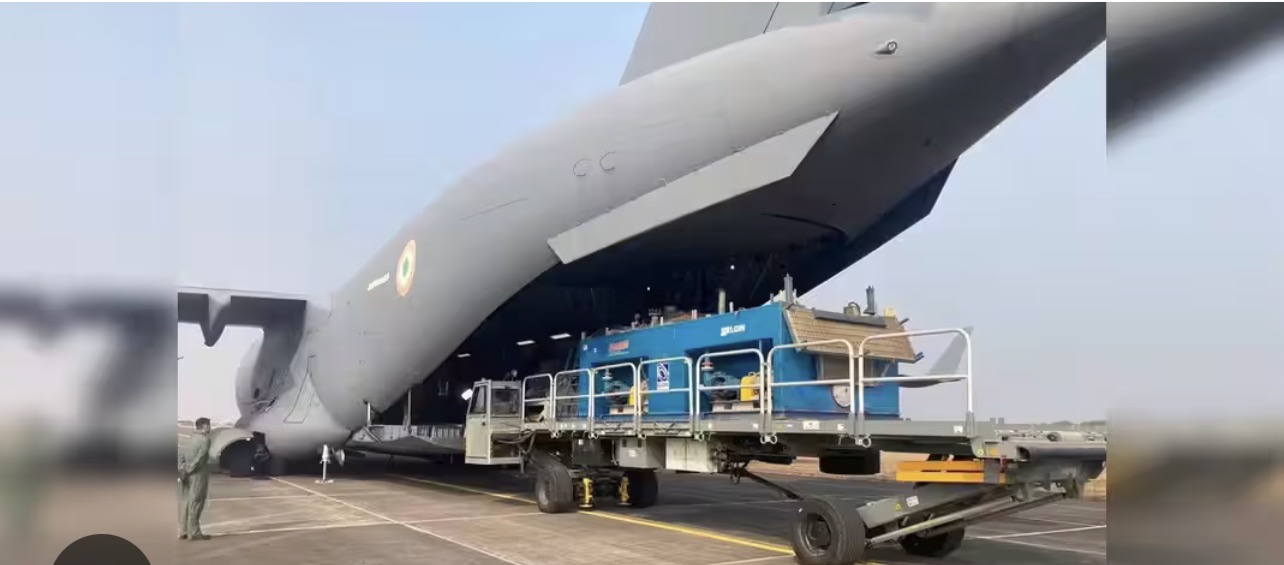 |
For decades, the Indian Air Force’s (IAF) transport fleet has quietly carried the weight of the country’s military commitments. From soldiers and ammunition to food, medical supplies and disaster-relief material, transport aircraft rarely command the attention given to fighters. Yet, they often determine how quickly the armed forces can move, respond and sustain operations.
That role is now entering a new phase. In August 2026, the Defence Ministry issued a Request for Proposal for 60 Medium Transport Aircraft under a programme estimated at nearly Rs 1 lakh crore ($10.6 billion).
The procurement is designed primarily to replace the ageing Soviet-era Antonov An-32 fleet and, at the same time, strengthen the IAF’s ability to move larger loads across India’s demanding geography.
The programme's significance extends beyond replacing an old aircraft with a new one. It represents a shift towards a more flexible, modern and industrially integrated airlift capability.
A workhorse nearing retirement
The aircraft has carried personnel and supplies into locations where geography makes conventional surface transportation slow or difficult.
But age eventually becomes a decisive factor in military aviation. The MTA programme comes at a significant point in the evolution of the IAF's transport fleet.
The new aircraft requirement calls for a payload capability broadly between 18 and 30 tonnes. That places the proposed fleet above the An-32 in carrying capacity while giving the IAF an aircraft category that can handle a wider range of tactical and operational tasks.
The tender envisages 60 aircraft, with 12 to be supplied in flyaway condition and 48 manufactured in India. The locally produced aircraft are also expected to meet a substantial indigenous-content requirement.
That combination makes the programme both an operational modernisation project and an important aerospace manufacturing initiative.
Moving more with greater flexibility
Modern military transport aircraft are no longer simply flying cargo trucks. They have developed into multi-role platforms capable of shifting between missions with relatively limited reconfiguration.
The contenders illustrate how the new generation differs from the aircraft it is expected to replace.
The Lockheed Martin C-130J Super Hercules, already operated by the IAF, can conduct both intra-theatre and inter-theatre airlift and can deliver troops and cargo through air-landed or airdrop operations. Its extended C-130J-30 version has a maximum allowable payload of nearly 20 tonnes.
The aircraft has already demonstrated its relevance to India's geography.
C-390 brings new capabilities
Brazilian aerospace manufacturer Embraer's C-390 Millennium represents a different approach. It is a newer-generation, jet-powered military transport aircraft with a maximum payload of 26 tonnes.
Its design allows the same aircraft to undertake cargo and troop transportation, airborne operations, medical evacuation, search and rescue, firefighting and humanitarian missions.
The aircraft can also operate from temporary or unpaved runways. A tanker configuration adds an aerial-refuelling role to the platform's capabilities.
The C-390 has also attracted a growing international customer base, particularly in Europe. Its selection by several NATO members has helped establish it as one of the leading newer-generation aircraft in the medium military transport category.
For India, the platform also brings an industrial dimension. Embraer has partnered with Mahindra Defence for the Indian MTA programme, with the proposal linked to the creation of manufacturing and maintenance capabilities in the country.
A400M offers bigger reach
Airbus's A400M Atlas occupies a larger category. With a maximum payload of 37 tonnes, it is considerably more capable than the 18-to-30-tonne requirement specified for the MTA programme.
The A400M's capabilities extend beyond conventional cargo movement. Airbus describes it as an aircraft capable of transporting heavy and oversized loads, humanitarian equipment and military vehicles, while also performing tanker and medical-evacuation roles.
Recent reporting indicates that Airbus may not participate in the current competition because the A400M's payload is above the specified requirement. The contest is increasingly centred on aircraft that fit more closely within India's defined medium-transport category.
Transport power shapes operations
The importance of the programme becomes clearer when India's geography is considered. The country's northern and northeastern frontiers include some of the most difficult military operating environments in the world.
A modern medium transport fleet would not operate in isolation. It would complement India's existing heavy airlift capability while taking on missions that do not necessarily require the much larger C-17 or IL-76 platforms.
Airlift also serves diplomacy
Military transport aircraft have another function that extends beyond national defence: they give India the ability to respond quickly to humanitarian crises abroad.
The IAF's C-17 fleet demonstrated that capability in June 2026 during Operation Amistad following devastating earthquakes in Venezuela.
Two C-17 Globemaster III aircraft transported a 41-member Indian Army medical contingent from the 60 Para Field Hospital, along with medical equipment, relief supplies and two BHISHM Cube portable hospitals.
The operation ultimately involved the movement of 66 tonnes of assistance, including more than 35 tonnes of relief material, medicines and medical equipment. The deployed field hospital subsequently carried out thousands of medical procedures and laboratory investigations.
Such missions demonstrate the wider utility of airlift. The same infrastructure that sustains military operations can rapidly become an instrument of humanitarian assistance and international cooperation.
Building an Indian aerospace base
The MTA programme is also notable for the industrial model embedded within it. The tender requires Indian companies to work with global aerospace manufacturers and establish production and support capabilities in India.
Reports indicate that Tata Advanced Systems has partnered with Lockheed Martin for the C-130J, while Mahindra Defence has partnered with Embraer for the C-390. HAL is also among the Indian companies involved in the competition.
The plan to manufacture 48 of the 60 aircraft in India gives the programme significance beyond the eventual fleet size. It can deepen domestic expertise in aircraft assembly, maintenance, repair and overhaul, supply-chain integration and aerospace manufacturing.
The broader direction is consistent with India's expanding emphasis on domestic defence production.
On September 7, 2026, the Defence Acquisition Council approved procurement proposals worth approximately Rs 1.10 lakh crore ($11.7 billion) across the armed forces, with around 98 percent of the planned acquisitions expected to be sourced from Indian industry.
A new chapter in air mobility
The IAF's transport modernisation is ultimately about more than aircraft numbers. It is about creating an airlift structure suited to India's military requirements, geography and expanding international responsibilities.
The An-32 played its part across four decades. The next generation of transport aircraft will have to do considerably more: carry heavier loads, operate across diverse terrain, support multiple missions and integrate into an increasingly sophisticated domestic aerospace ecosystem.
The Rs 1 lakh crore ($10.6 billion) MTA programme marks an important transition in India's air mobility story.
As the IAF moves towards a new generation of transport aircraft, the focus is shifting from simply replacing an ageing workhorse to building a more versatile airlift capability for military operations, national emergencies and India's expanding role in humanitarian response.


Most read


Recommended
 Economy
Sprite Expands Global Basketball Footprint with NBA’s Nikola Jokić and New "Never Stop Refreshing The Game" Platform
 Economy
Media OutReach Newswire Founder & CEO Jennifer Kok Named Top Nominee in the Woman Entrepreneur Category for EY Entrepreneur Of The Year™ 2026 Malaysia
 Economy
India announced steel policy with a target of 604 million tons capacity by 2047
 Economy
KPLASS Singapore Officially Launches Its Far-Infrared Patches in Vietnam
Popular article
 Economy
India expands its defence exports
 Economy
India’s manufacturing export engine is finally revving up with four driving forces
 Economy
High-Tech Exports Drive Vietnam’s Economic Acceleration
 Economy