
“Chile – Vietnam relations are greater than the distance between the two countries’’
Chilean Ambassador to Vietnam Claudio de Negri said in an interview ahead of APEC 2017 Summit.
Chilean President Michelle Bachelet will pay an official visit to Vietnam before attending the 25th APEC Economic Leaders' Meeting in the framework of the APEC 2017 Summit in Da Nang.
This is an opportunity for the two countries to strengthen the friendship and deepen bilateral cooperation in areas where both sides have the potential.
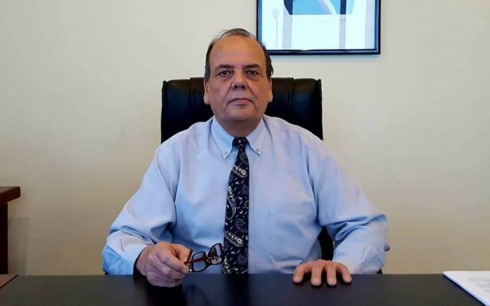
Chilean Ambassador to Vietnam Claudio de Negri
Chilean President Michelle Bachelet will pay an official visit to Vietnam next week and attend the APEC 2017 Summit. First, how do you assess the meaning of this visit?
Ambassador Claudio de Negri: This is the second state visit to Vietnam by President Bachelet. The last one took place in his previous presidential term. President Bachelet has always dedicated his love to Vietnam. This visit is an opportunity to affirm the close relationship between Vietnam and Chile which is greater than geographical distance between the two countries.
The relationship of solidarity, friendship, cooperation is built on a solid foundation. Vietnam is a role model for the people of Chile, and the two countries have much potential to develop this relationship in the future.
Chile joined APEC in 1994. APEC is a forum that brings nations together where they can exchange experiences and perspectives economically, and issues related to human challenge such as security, global warming and rampant development.
The Chilean President's official visit to Vietnam will bring about new opportunities for cooperation between the two countries. How do you assess these opportunities, particularly economic cooperation? What will be the priority areas during the visit?
Ambassador Claudio de Negri: We look forward to deepening our bilateral cooperation in the areas of potential and persifying fields of cooperation, not just economically.
Chile signed a free trade agreement with Vietnam in 2011. We hope that the two countries continue to promote bilateral cooperation in this field. The two countries are promoting trade, expanding export markets, joining the global value chain as well as seeking opportunities to develop emerging markets, boosting the application of new technologies, at the same time supporting each other in the context of the complexity of the global economy that negatively impacts developing countries. Our countries need to cooperate and support each other.
What is the prospect of cooperation between Vietnam and Chile in the coming time?
Ambassador Claudio de Negri: The relationship between Vietnam and Chile is based on the history of the two countries. Chile was the second Latin American country to establish diplomatic relations with Vietnam as Vietnam was being wracked by war. This relationship has a lot of potential in the future.
Chile is the first country in the Western hemisphere to sign a free trade agreement with Vietnam. Trade exchanges of the two countries have steadily increased by around 1 billion USD each year.
The current context allows the two countries to promote cooperation in many areas. Vietnam will continue to be a bridge connecting Chile and Latin America with Southeast Asia. We affirm that Chile's future is inseparable from the Asia-Pacific region.
Chile is one of the important countries in Latin America as well as in APEC. Analysts said that APEC is "a nursery for innovation" that promotes global economic growth. What message will Chile give at this APEC Summit?
Ambassador Claudio de Negri: We share APEC’s goal for sustainable and inclusive growth, regional economic integration, promotion of small and medium business and improving food security.
Chile is willing to contribute its initiative to the forum’s priorities. Chile is currently playing an important role in the process of integration in Latin America. Relations with the countries of the Pacific have been increasingly strengthened.
We look forward to working as a bridge between Latin America and the Asia-Pacific region, while facilitating the process of "Integration and persity," because besides the development goals of each country, there always remains matters that affect all nations. It requires us to join hands and tighten our relationship to overcome obstacles and challenges.
Thank you Ambassador!
VNF
Most read

Promoting Vietnamese Language Teaching, Learning, Cultural Exchanges and Connections with Homeland

Top Vietnamese Leader Meets Acting President of New Zealand–Vietnam Friendship Association

Recommended
National
Top Vietnamese Leader Meets Acting President of New Zealand–Vietnam Friendship Association
 National
Vietnam, New Zealand Leaders Witness Exchange of Cooperation Documents
 National
Official Welcome Ceremony Held for Top Vietnamese Leader in New Zealand
 National
Vietnam News Today (Aug. 13): Top Leader Begins NZ visit, Receives Acting President of NZ-VN Friendship Society
Popular article
 National
Top Vietnamese Leader Highlights Strategic Mineral, High-tech Cooperation with Australian Firms
 National
Vietnam News Today (Aug. 12): Vietnam and Australia Chart New Areas of Cooperation
 National
Australian Governor-General Hosts Welcome Ceremony For Top Vietnamese Leader
 National