
Moody’s Upgrades Vietnam’s Credit Outlook to "Positive"
 | Moody's maintains stable outlook for FE CREDIT on recovering economy |
| Moody’s Upgrades Vietnam’s Ratings |
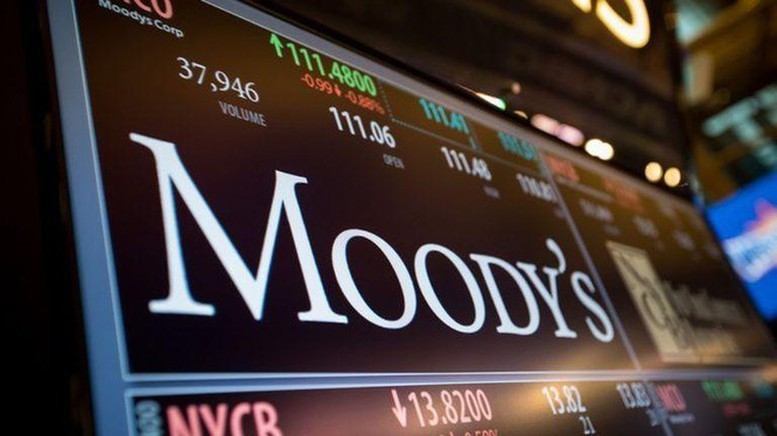 |
| Vietnam’s credit outlook was upgraded to Positive. (Photo: Government Newspaper) |
According to Moody’s, the outlook upgrade reflects confidence in Vietnam’s ability to improve its credit profile over the medium term. The agency noted that institutional quality and governance are showing progress through reforms in administrative procedures, legal frameworks, and the public sector implemented since late 2024.
These reforms have begun to yield initial results. Institutional restructuring has reduced administrative layers, streamlined ministries, and enhanced coordination among agencies. As a result, efficiency in project approval processes and management has improved.
These changes contribute to higher institutional scores in Vietnam’s credit rating profile, while also supporting macroeconomic stability and reducing potential risks.
At the same time, the competitiveness of the economy continues to improve through digital transformation, infrastructure investment, enhancement of human resource quality, and capital market development.
Moody’s also noted that risks stemming from US trade protectionist measures have declined compared to previous projections. Meanwhile, Vietnam maintains resilience through economic growth and inflows of foreign direct investment.
These factors help strengthen Vietnam’s position in global supply chains.
The affirmation of the Ba2 rating reflects Moody’s assessment that the core elements of Vietnam’s credit profile remain intact, providing a foundation for maintaining its current rating.
Vietnam’s growth potential continues to be a key factor. A diversified export base, recovering domestic demand, and foreign direct investment inflows all support macroeconomic stability.
In addition, fiscal strength remains intact, with government debt at a low and stable level. Debt servicing capacity is ensured, while reliance on external borrowing is reduced.
This helps mitigate foreign exchange risks and enhances resilience against external shocks.
Moody’s also assessed that Vietnam is capable of coping with shocks from energy prices, transportation costs, and inflationary pressures driven by geopolitical factors.
Supporting factors include strong growth fundamentals, external economic buffers, low foreign exchange risks, and a diversified energy and export structure.
However, the agency also pointed out several risks. The banking system, real estate market, and certain institutional shortcomings remain factors that could affect the possibility of a rating upgrade in the future.
Amid global economic uncertainties, Moody’s decision to upgrade Vietnam’s outlook while maintaining its rating reflects its assessment of the country’s economic management and institutional reform efforts.
Vietnam is the only country in the Asia-Pacific region currently assigned a “Positive” outlook by Moody’s.
This assessment reflects international recognition of Vietnam’s efforts to stabilize its macroeconomy and reform its institutional framework.
It also provides a foundation for Vietnam to continue pursuing its development goals, aiming for higher growth alongside a transformation of its growth model.
Key orientations include the development of science and technology, innovation, and digital transformation. At the same time, removing bottlenecks and mobilizing social resources remain priorities.
Looking ahead, the Ministry of Finance stated that it, together with relevant agencies, will continue to coordinate with Moody’s and other credit rating organizations. The goal is to provide comprehensive and updated information throughout the assessment process of Vietnam’s sovereign credit profile.
 | Vietnam’s Economy Shows Resilience with 7.83% Growth in Q1 2026 Amid global uncertainty and external risks, Vietnam’s economy maintained a relatively stable growth trajectory in the first quarter of 2026, driven by manufacturing, exports, and ... |
 | Vietnam’s Economy Maintains Strong Momentum in First Four Months of 2026 According to information recently released by the General Statistics Office (Ministry of Finance), in the first four months of 2026, despite complex and volatile global ... |
Related Stories
 Economy
Promoting Role of Private Economic Sector
 Economy