Vietnam remains among New Zealand's priority partners: Christopher Luxon
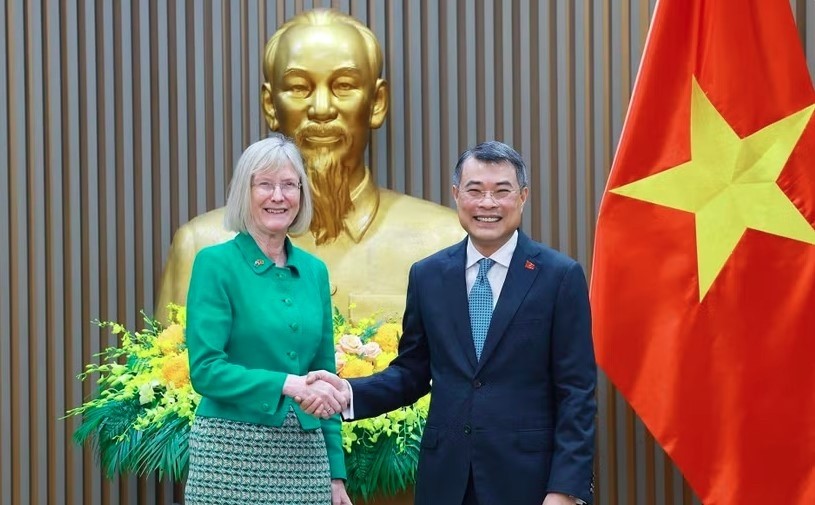
New Zealand's Prime Minister Christopher Luxon reiterated Vietnam remains one of his country's priority partners, during his phone conversation with Vietnamese counterpart Le Minh Hung on Wednesday.
Luxon congratulated on Vietnam's impressive development achievements, expressing his wish to further bolster the comprehensive strategic partnership with the Southeast Asian nation.
Le, for his part, congratulated on New Zealand's macro-economic stability, expressing his appreciation for Luxon's significant contributions to the relations between Vietnam and Australia, particularly to the upgrade of the bilateral ties to a comprehensive strategic partnership in February 2025.
Le also thanked for New Zealand's support and assistance for Vietnam's efforts in human resource development, cadre training, climate change adaptation, natural disaster management, among others.
The two Prime Ministers agreed to continue fostering economic, trade and investment cooperation, striving to realize the trade goal of US$3 billion.
Both sides pledged to work closely together to ensure effective implementation of the ASEAN-Australia-New Zealand Free Trade Agreement (AANZFTA), the Comprehensive and Progressive Agreement for Trans-Pacific Partnership (CPTPP), and the Regional Comprehensive Economic Partnership (RCEP), thus contributing to consolidating the internal strengths and self-reliance of the two economies amid the current volatile global landscape
The two leaders agreed to strengthen cooperation in climate change adaptation, energy transition, sustainable agriculture development, low-carbon agriculture model, and renewable energy, especially solar and wind power, according to VGP.
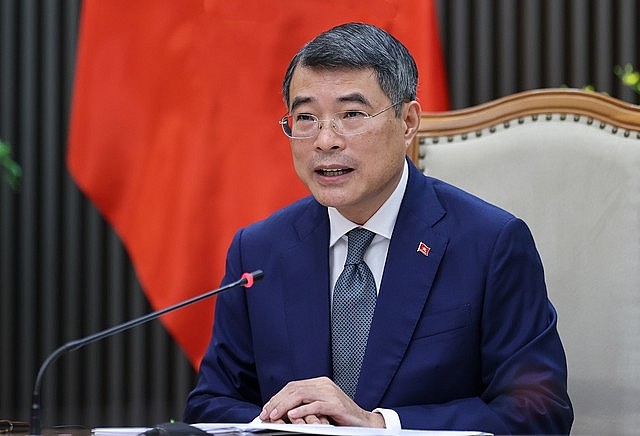 |
| Prime Minister Le Minh Hung speaks during his phone conversation with New Zealand's Prime Minister Christopher Luxon, May 20, 2026. Photo: VGP |
Prime Minister Le suggested New Zealand increase scholars for Vietnamese students, promote partnerships between the two countries' universities and research institutes, and work closely with Vietnam to push for early launch of direct air service in order to step up people-to-people exchanges.
The two leaders expressed their concern over the recent complex developments in the world, which have resulted in negative impacts on regional countries, including Vietnam and New Zealand.
The pair underscored the importance of dialogue, international cooperation, and adherence to international law in addressing regional security challenges.
Both sides agreed to continue exchanges and coordination in regional and international issues of shared concern, thereby enhancing political trust, and contributing to peace, stability, cooperation, and development around the world.
Fiji President praises Vietnam’s rising international role and standing
Fiji President Ratu Naiqama Tawakecolati Lalabalavu hailed Vietnam’s growing role and standing in the region and globally during a meeting with Vietnamese Ambassador Phan Minh Giang in Suva on May 19 after the ambassador presented his credentials.
The credential presentation ceremony was held at the Presidential Palace of Fiji with full state protocol and attended by representatives from the Office of the President, the Government and Fiji’s Ministry of Foreign Affairs and Trade.
During a separate meeting following the ceremony, President Ratu Naiqama Tawakecolati Lalabalavu expressed admiration for Vietnam’s heroic struggle for national liberation and praised the country’s achievements in national development in recent years.
Affirming Fiji’s recognition of importance to relations with Vietnam, the president encouraged closer coordination between the two countries to make better use of the considerable potential for bilateral cooperation. Fiji also hopes to learn from Vietnam’s experience in areas where Vietnam has strong expertise, while the two countries continue supporting each other at multilateral forums and work together to resolve global challenges effectively.
On the occasion, President Ratu Naiqama Tawakecolati Lalabalavu wished Ambassador Phan Minh Giang a successful tenure and expressed confidence that he will fulfill his tasks as Vietnam’s non-resident ambassador to Fiji.
For his part, Ambassador Phan Minh Giang said he was honored to take on the role and affirmed that he will make every effort to further strengthen friendship and cooperation between the two countries in the period ahead, reported VOV.
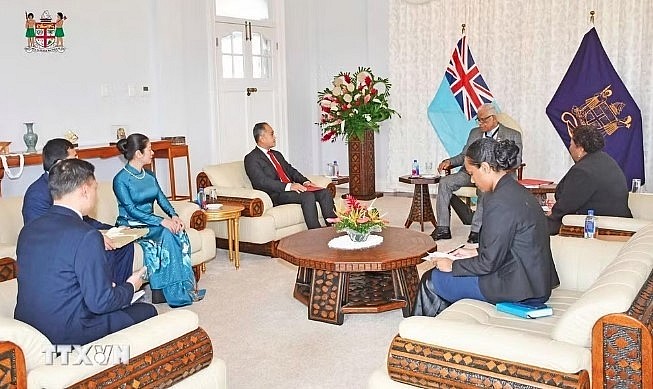 |
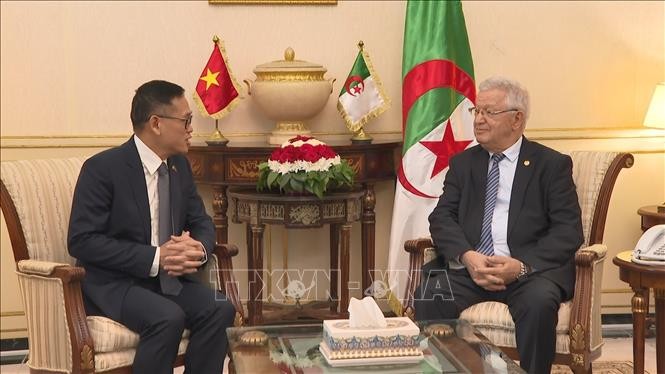
| At the meeting between Vietnamese Ambassador to New Zealand and Fiji Phan Minh Giang and Fiji President Ratu Naiqama Tawakecolati Lalabalavu. (Photo: VNA) |
The Vietnamese diplomat also expressed confidence that with determination and efforts from both sides, Vietnam and Fiji will further boost more practical and effective bilateral cooperation in areas of mutual interest and strength, while continuing close coordination and mutual support at regional and international multilateral forums.
During the working visit, Ambassador Phan Minh Giang paid courtesy calls on the Fijian prime minister and hold meetings with Fiji’s Minister for Foreign Affairs and Trade, officials overseeing agriculture, fisheries, environment and climate change, as well as trade, investment and tourism promotion agencies. He is also expected to meet representatives of the Vietnamese community living and working in Fiji.
Forum promotes Vietnam–RoK supply chain connectivity
Cao Thi Phi Van, Deputy Director of ITPC, said that after more than three decades of cooperation, Vietnam–RoK ties are shifting from traditional manufacturing cooperation towards mastering future-oriented technologies such as semiconductors, artificial intelligence (AI), digital finance, renewable energy and global supply chains.
Vietnam and the Republic of Korea (RoK) still have ample room to strengthen supply chain connectivity in key industries such as electronics, semiconductors and food processing, experts said at the 2026 Ho Chi Minh City–RoK investment cooperation and business networking forum held in Ho Chi Minh City on May 20.
The event was jointly organized by the Ho Chi Minh City Investment and Trade Promotion Center (ITPC), the ASEAN-Korea Center (AKC), and the Vietnam Trade Office under the Vietnamese Embassy in the RoK.
Cao Thi Phi Van, Deputy Director of ITPC, said that after more than three decades of cooperation, Vietnam–RoK ties are shifting from traditional manufacturing cooperation towards mastering future-oriented technologies such as semiconductors, artificial intelligence (AI), digital finance, renewable energy and global supply chains.
Ho Chi Minh City’s economy expanded by 8.03% in 2025, while gross regional domestic product (GRDP) growth in the first quarter of 2026 reached 8.27%, the highest level recorded in recent years, she noted.
The southern city is currently home to 20,813 foreign-invested projects worth more than 142 billion USD from 152 countries and territories. The RoK ranks second in terms of project numbers with 3,349 projects, mainly in manufacturing and processing, technology, trade, services and logistics.
In the new development phase, Ho Chi Minh City is prioritising investment attraction from Korean businesses in four strategic areas, namely the development of an international financial center focusing on digital banking and financial technology; AI and semiconductor ecosystems; startup ecosystems and venture capital funds; and smart urban development and green growth.
To meet new growth targets, local enterprises are seeking to expand partnerships with Korean counterparts in order to participate more deeply in supply chains, promote technology transfer, accelerate digital transformation and develop green production, Van added.
Jung Jung-tae, Consul General of the RoK in Ho Chi Minh City, said leaders of the two countries are aiming to raise bilateral trade turnover to 150 billion USD by 2030. He noted that Vietnam–RoK cooperation is shifting from an export-centerd model towards a more balanced and sustainable approach through value chain integration, cited VNA.
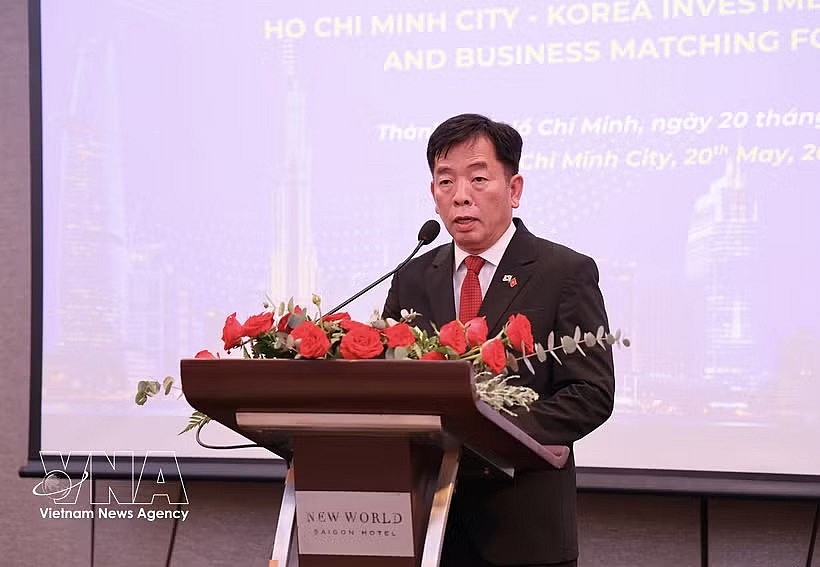 |
| Vietnamese Ambassador to the Republic of Korea Vu Ho speaks at the forum. (Photo: VNA) |
Vietnam is emerging not only as a manufacturing base but also as an increasingly important partner in global supply chains, he said, expressing his hope that the forum would generate more substantive business connections and long-term cooperation opportunities for enterprises from both countries.
Kim Jae-shin, Secretary General of the ASEAN-Korea Center, highlighted the strong development of cooperation between the two countries. Trade promotion and business networking activities would help realise cooperation potential while creating more opportunities for Vietnamese goods to penetrate deeper into the Korean market, he said.
Kim Dae-young, Vice Chairman of the Korea Importers Association (KOIMA), said Vietnam has strong competitiveness in electronics, information technology, textiles and garments, agriculture, fisheries and food industries. He suggested Vietnamese businesses participate more actively in trade promotion programmes in the RoK, such as the Korea Import Expo, to better understand market demand, import standards and international consumer trends, thereby expanding export markets more effectively.
Analyzing Vietnam’s supply chain strategy, Bok Dug-Gyou, representative of the Korea Trade-Investment Promotion Agency (KOTRA), said foreign-invested enterprises currently account for 73% of Vietnam’s total export turnover, while the domestic value-added ratio in the manufacturing sector remains at only 12%, significantly lower than ASEAN’s average of 33%.
However, he noted that this also represents substantial room for domestic and foreign supporting industry enterprises to participate more deeply in the value chain.
According to Bok, investment and business efficiency could be enhanced if investors take advantage of the specialised strengths of each region, with northern Vietnam focusing on high technology and automobiles; central Vietnam on agro-fishery processing and chemicals; and southern Vietnam on textiles, footwear and food processing.
In addition, Vietnam’s expanding network of free trade agreements (FTAs) continues to provide competitive advantages for the country in the restructuring of global supply chains.
Within the framework of the forum, Vietnamese and Korean enterprises also engaged in direct business matching activities to seek partners, expand cooperation networks and promote future investment and trade projects.
Fitch Ratings gives positive assessment of Vietnam’s economic fundamentals
Fitch Ratings has given a positive assessment of Vietnam’s economic fundamentals, highlighting the country’s macroeconomic stability and resilience amid continuing global uncertainty.
According to the Ministry of Finance, Deputy Minister Tran Quoc Phuong recently held a working session with a delegation of Fitch Ratings experts as part of the agency’s 2026 sovereign credit rating assessment programme for Vietnam.
At the meeting, Phuong acknowledged Fitch Ratings’ long-standing support through its independent and objective analyzes of Vietnam’s economy over the years.
He stressed that Fitch’s credit assessments have enhanced Vietnam’s image and credibility in international financial markets, and provided additional motivation for the country to continue improving institutions, strengthening policy management efficiency and increasing economic transparency.
The Vietnamese Government remains steadfast in its goal of maintaining macroeconomic stability, reinforcing major economic balances and enhancing resilience against external shock, the deputy minister said.
According to him, despite ongoing volatility in the global economy, Vietnam continues to pursue proactive and flexible policy management, with close coordination between fiscal and monetary policies to support growth and ensure macroeconomic stability and inflation control.
George Xu, Director of Asia-Pacific Sovereign Ratings at Fitch Ratings, appreciated Vietnam’s macroeconomic management efforts amid mounting international economic risks and uncertainties. He noted that Vietnam has maintained positive growth momentum, macroeconomic stability and relatively effective inflation control despite increasing external pressures.
The Fitch Ratings delegation also expressed interest in Vietnam’s measures to control inflation, ensure energy security, sustain economic growth and accelerate institutional reforms and improvements to the investment climate. In addition, they sought updates on Vietnam’s medium-term growth outlook, fiscal policy, public debt management, foreign investment attraction and the restructuring of state-owned enterprises.
Phuong said that in response to energy price fluctuations and geopolitical tensions in the Middle East, Vietnam has implemented a range of concerted measures, including market stabilisation tools, tax policy adjustments, enhanced market supervision and diversification of fuel supply sources.
He affirmed that his ministry will monitor global economic and financial developments to formulate appropriate policy scenarios should international conditions become more complicated, according to VNA.
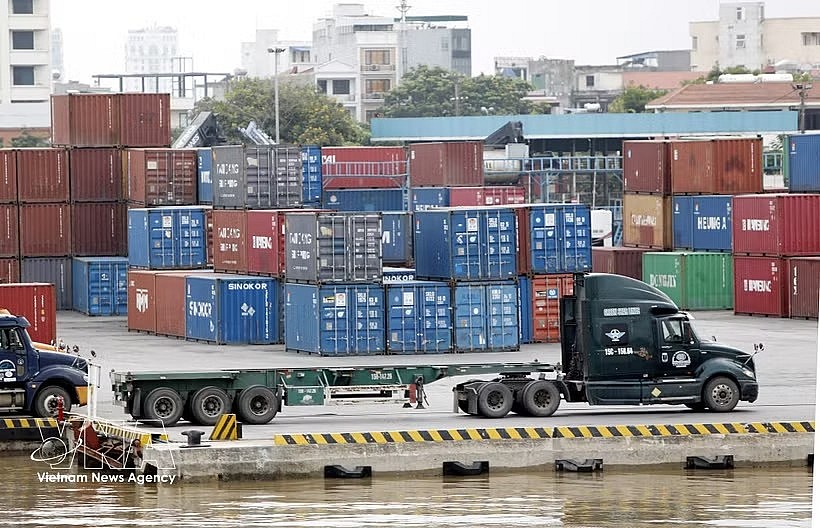 |
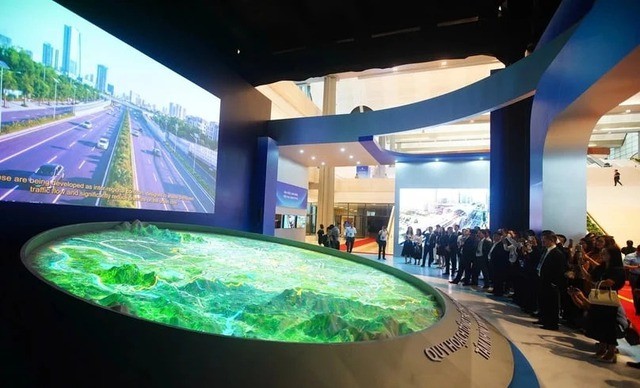
| Fitch Ratings gives positive assessment of Vietnam’s economic fundamentals (Illustrative image. (Source: VNA) |
Vietnam is currently reviewing and updating its growth scenarios to ensure the achievement of its 2026 economic development targets, with the Government focusing on removing investment bottlenecks, improving the business environment, accelerating public investment disbursement and attracting more foreign and private investment capital, he added.
Despite global economic headwinds, Foreign Direct Investment (FDI) inflows into Vietnam have remained positive in recent months. Vietnam is also continuing efforts to reform State-owned enterprises through restructuring and divestment to improve efficiency, transparency and governance capacity.
Fitch Ratings representatives also commended Vietnam’s policy orientation, particularly its efforts to maintain macroeconomic stability amid global economic turbulence. According to Fitch, Vietnam’s continued commitment to institutional reform, investment climate improvement and enhanced fiscal governance will remain key factors supporting the country’s sovereign credit outlook in the coming period.
The Ministry of Finance said both sides agreed to maintain regular exchanges and strengthen information sharing to support the sovereign credit rating assessment process, improving Vietnam’s reputation and access to international capital markets.
 | Vietnam News Today (May 16): Vietnam Remains ASEAN Growth Leader in 2026 Despite Global Headwinds Vietnam News Today (May 16): Vietnam proposes key cooperation orientations at BRICS Foreign Ministers' Meeting; Vietnam, Cambodia boost supply chain connectivity; Vietnam remains ASEAN growth ... |
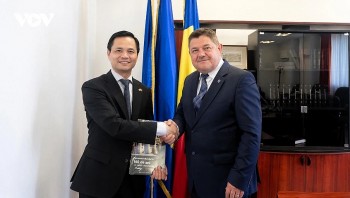 | Vietnam News Today (May 17): Vietnam, Romania Seek Deeper Cooperation Beyond Traditional Friendship Vietnam News Today (May 17): Vietnam, Romania seek deeper cooperation beyond traditional friendship; Vietnam, Malaysia promote smart business connectivity; Vietnam looks to expand fiscal space ... |