
New Advances in DNA Technology for Identifying Fallen Soldiers
 | Vietnam Accelerates DNA Collection from Families of Unidentified Fallen Soldiers |
| Quang Tri Provincial Authority Widen Scope For Search of Fallen Soldiers’ Remain Amidst Limited Information |
According to the organizing committee, more than 1.2 million military personnel and civilians sacrificed their lives during Vietnam's wars of national defense and international missions. However, around 175,000 fallen soldiers' remains have yet to be located, while nearly 300,000 sets of recovered remains have not yet been identified.
In response, the "500-Day Campaign for the Search, Recovery, and Identification of Fallen Soldiers' Remains," running from March 15, 2026, to July 27, 2027, was launched to mobilize the entire political system and society to participate in locating, recovering, and identifying the remains of fallen soldiers, further advancing the Party and State's policy of honoring those who sacrificed for the nation.
The program, directed by the Ministry of Public Security and organized by its Department of Political Affairs, aims to encourage personnel directly involved in the campaign while raising public awareness and responsibility in providing information and data to support the search, recovery, and identification process.
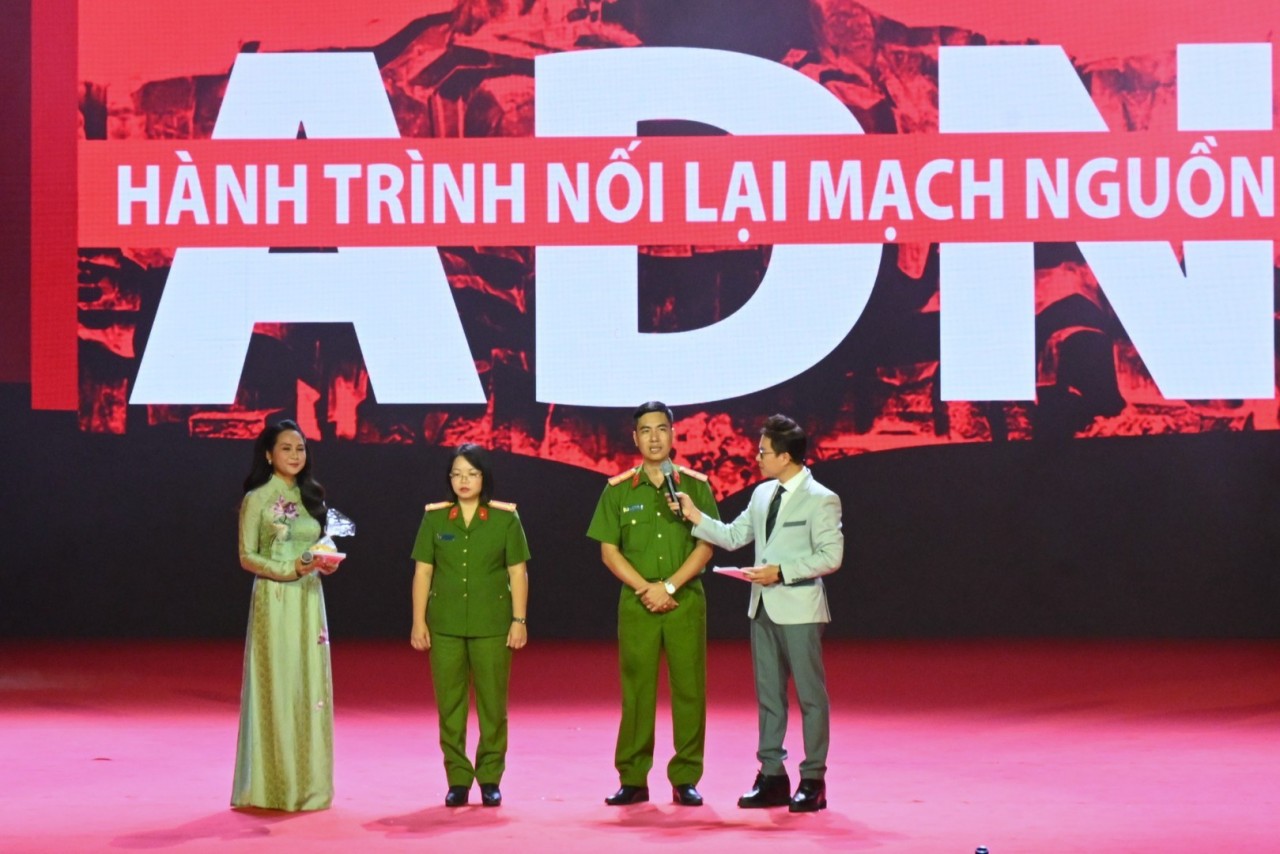 |
| Local-level police officers share stories from their work collecting DNA samples from relatives of fallen soldiers. (Photo: Ministry of Public Security Portal) |
Through documentaries, interviews, and panel discussions, the program highlighted the latest achievements of the National Steering Committee for the Search, Recovery, and Identification of Fallen Soldiers' Remains. It also introduced new procedures, support mechanisms, and advances in DNA identification technology, which are expected to significantly improve efforts to restore the identities of fallen soldiers more than half a century after the wars.
In recent months, the Ministry of Public Security has launched a nationwide campaign to collect DNA samples from relatives of unidentified fallen soldiers while establishing and operating a genetic database for their families. The collection, analysis, storage, and comparison of DNA data not only directly support the campaign but also contribute to building a long-term national database for identifying unidentified remains.
During the program, audiences interacted with representatives of search-and-recovery teams, personnel responsible for collecting biological samples, and experts compiling DNA data from across the country. The discussions also helped the public better understand DNA identification procedures, government support policies, and ways to contribute information to accelerate the identification process.
Beyond its public awareness role, the program also served as a tribute to those who sacrificed for Vietnam's independence and freedom, honoring the dedication of the Vietnam People's Army, the People's Public Security force, veterans, scientists, and families of fallen soldiers in their enduring efforts to bring the nation's heroes home.
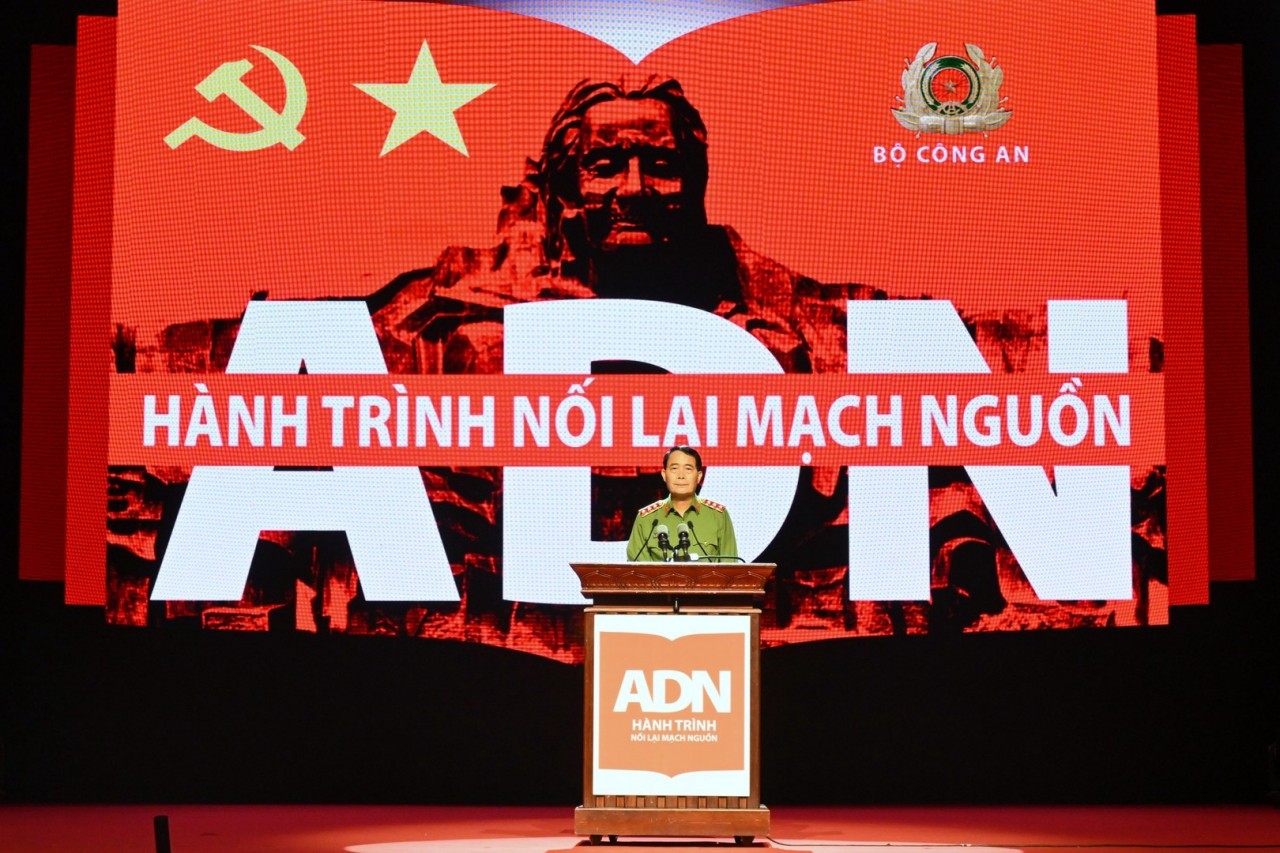 |
| Senior Lieutenant General Le Quoc Hung, Deputy Minister of Public Security. (Photo: Ministry of Public Security Portal) |
Speaking at the event, Senior Lieutenant General Le Quoc Hung, Deputy Minister of Public Security, expressed deep gratitude to wounded veterans, sick veterans, families of fallen soldiers, and others who made contributions to the revolution. He emphasized that the People's Public Security force considers the search, recovery, and identification of fallen soldiers' remains a particularly important political mission with profound humanitarian significance, reflecting Vietnam's tradition of gratitude and remembrance.
According to the Deputy Minister, following directives from General Secretary and President To Lam, the People's Public Security force has reviewed and standardized relevant data, collected biological samples from relatives of fallen soldiers, integrated DNA information into the National Population Database, and completed standards for the genetic database to support DNA matching and identification. The force also stands ready to participate in missions to collect samples from recovered remains at the request of steering committees at all levels.
Reviewing initial results, Le Quoc Hung announced that 25 fallen soldiers have already been successfully identified through DNA matching, recognizing the significant efforts made by the People's Public Security force in carrying out this meaningful mission.
Looking ahead, he instructed the force to accelerate the nationwide DNA sample collection campaign, aiming to collect samples from 70 percent of eligible relatives recorded in the system by July 25, 2026, and achieve full coverage by the end of 2026. At the same time, authorities will speed up DNA analysis, data synchronization, and the integration of testing results from specialized agencies to facilitate identification efforts.
The Deputy Minister also called for continued implementation of activities marking the 80th anniversary of War Invalids and Martyrs Day while carrying out the search, recovery, and identification mission with the spirit of "fastest action, greatest urgency, and highest effectiveness." He urged ministries, local authorities, the entire political system, and Vietnamese people at home and abroad to contribute according to their abilities - through resources, information, or scientific expertise - to help bring the nation's fallen heroes back to their families, hometowns, and comrades.
 |
| Delegates take part in a commitment ceremony to fulfill the goals of the "500-Day Campaign for the Search, Recovery, and Identification of Fallen Soldiers' Remains." (Photo: Ministry of Public Security Portal) |
The program also featured carefully choreographed artistic performances, including Sacred Vietnam, A Letter Home to Mother, I'm Still Waiting for You to Return, Love Song, and The Red Flower.Through these emotional performances, the event honored the nation's heroic past while spreading messages of gratitude, responsibility, and determination to complete the long journey of restoring the identities of Vietnam's fallen heroes.
 | Overseas Vietnamese Commemorate Fallen Soldiers in Gac Ma Battle Nguyen Thai Hong, head of the Liaison Committee for Overseas Vietnamese in Laos-Thailand said the sacrifices of the martyrs are those of the people who ... |
 | Cooperation with US University to Apply Ground-Penetrating Radar in Locating Remains of Fallen Soldiers The Vietnam Martyrs’ Families Support Association and the University of Georgia (US) are collaborating on research and the application of ground-penetrating radar (GPR) technology to ... |
Related Stories
 Friendship
Vietnam Rescue Team Reaches Site Where 15 Remain Trapped in Venezuela
 National
Hue Uses Ground-Penetrating Radar to Locate Suspected Mass Graves
Recommended
National
New Advances in DNA Technology for Identifying Fallen Soldiers
 National
Foreign Affairs Should Better Serve National Development: Top Leader
 National
Vietnam News Today (July 1): Vietnam and UAE Sign Defense Industry Cooperation Memorandum
 National
Leveraging Foreign Investment to Strengthen Domestic Capacity, Enhance Self-reliance: Top Leader
 National