Vietnam, RoK seek to strengthen scientific research cooperation
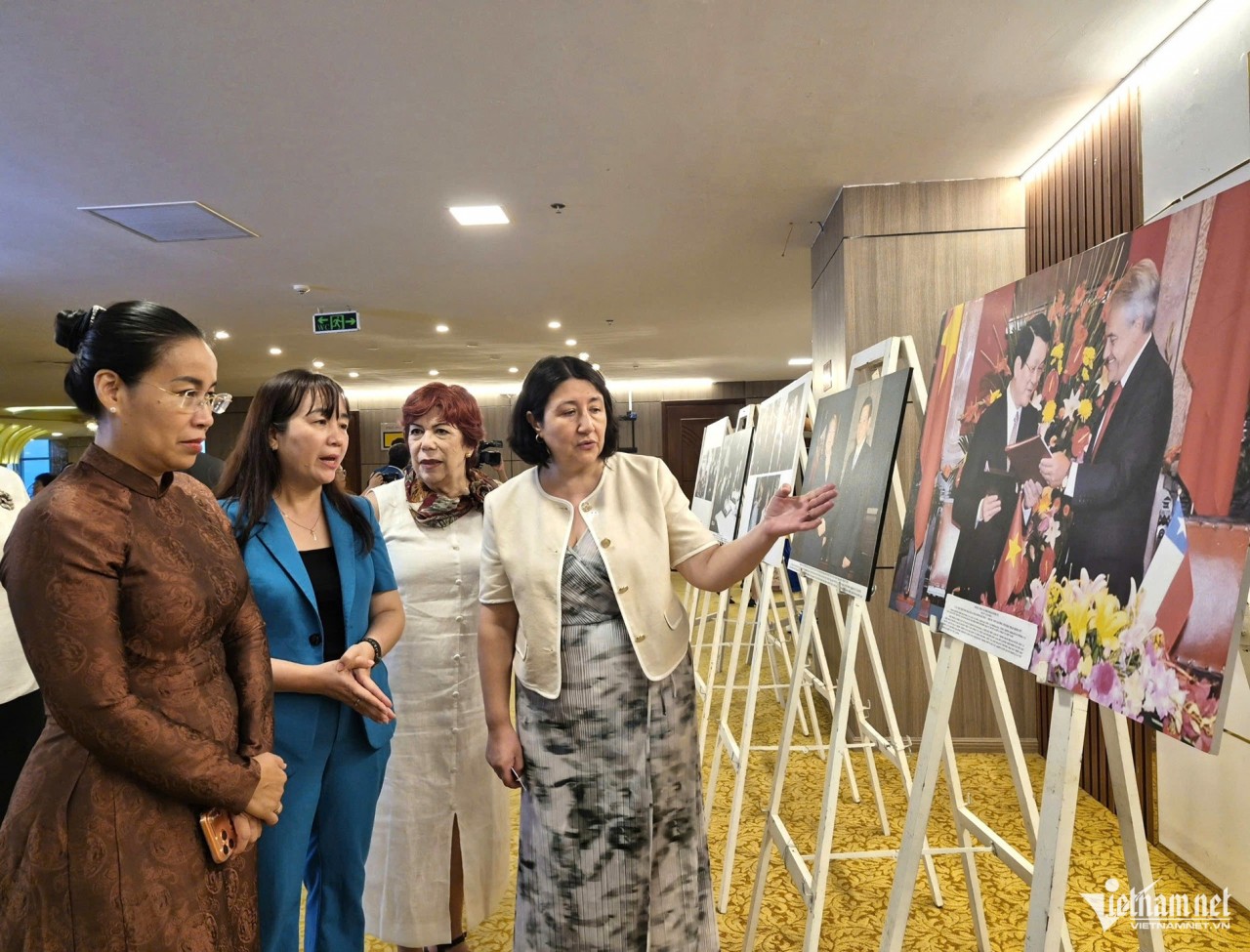
The Vietnam Academy of Social Sciences (VASS), in coordination with the Korea Foundation, held the 7th Vietnam–Republic of Korea (RoK) Forum for the Future in Hanoi on June 30, focusing on Vietnam–RoK Comprehensive Strategic Partnership in a new era.
The forum provided a platform for academic exchange, policy dialogue and networking among research institutions, policymakers, experts, scholars and relevant organizations from both countries. It also aimed to put forward policy recommendations to further advance the Vietnam–RoK Comprehensive Strategic Partnership in the new development phase.
Speaking at the opening ceremony, Dr. Dang Xuan Thanh, VASS Vice President, highlighted the remarkable progress in bilateral ties since the establishment of diplomatic relations in 1992, particularly after the two countries upgraded their relationship to a Comprehensive Strategic Partnership in 2022, according to VNA.
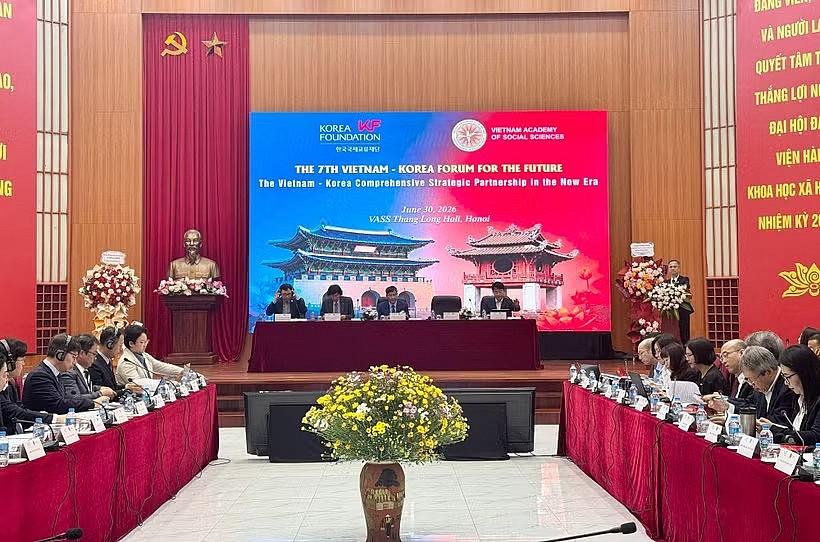 |
| A view of the 7th Vietnam–Korea Forum for the Future (Photo: baochinhphu.vn) |
He noted that Vietnam–RoK relations have developed rapidly, comprehensively and effectively, becoming one of Vietnam’s most successful bilateral cooperation models. Amid increasingly complex regional and global developments, the partnership is entering a new stage marked by both opportunities and challenges, requiring fresh strategic thinking, a long-term vision and more substantive actions to fully realize the potential of both nations.
According to Thanh, political trust has continued to strengthen through regular high-level exchanges. Cooperation in trade, investment, science and technology, innovation, digital transformation and people-to-people exchanges has also expanded, creating a solid foundation for deepening the Comprehensive Strategic Partnership.
Reviewing the forum’s development, Thanh said that after six successful editions, it has become a reputable academic dialogue mechanism, bringing together policymakers, scholars and experts from both countries to discuss strategic issues, enhance mutual understanding and support policy formulation.
Professor Song Guido, President of the Korea Foundation, said that bilateral cooperation has entered a more substantive and in-depth phase following the elevation of ties to a Comprehensive Strategic Partnership. Beyond trade and investment, cooperation is expanding into high technology, energy, supply chains, human resource development and future industries.
He expressed his belief that the outcomes of the forum’s discussions will help identify new avenues for collaboration and lay a solid foundation for the continued comprehensive development of Vietnam–Republic of Korea relations in the years ahead.
Vietnam’s Deputy Foreign Minister Nguyen Minh Vu reaffirmed that Vietnam consistently attaches importance to its relationship with the RoK and highly values the continued cooperation between VASS and the Korea Foundation in organizing the forum as an important academic dialogue mechanism.
He noted that both countries have achieved development not through abundant land or natural resources, but through aspirations for growth, innovation, creativity and resilience. These shared values, he said, will continue to serve as a key foundation for expanding cooperation in areas such as trade, infrastructure, supply chains, energy, economic security, science and technology, innovation, digital transformation and the development of artificial intelligence (AI) ecosystems.
Participants from both countries agreed that amid shifts in the global strategic and economic landscape, Vietnam and the RoK should continue strengthening traditional areas of cooperation and expanding collaboration in strategic technologies, including AI, semiconductors, digital transformation, logistics, energy, infrastructure, science, technology and innovation.
They also stressed that, as global supply chains undergo rapid restructuring, cooperation in science, technology, innovation and AI should become priority areas in bilateral relations, serving as new growth drivers for innovation ecosystems, future industries and stronger people-to-people ties between the two countries.
Vietnam shifts FDI strategy toward high-tech, innovation-driven investment
Vietnam is shifting its foreign direct investment (FDI) strategy from prioritizing the volume of inflows to attracting projects that deliver advanced technology, innovation, modern governance and stronger spillover effects for the domestic economy, Deputy Prime Minister Pham Gia Tuc said on June 30.
Presenting the key contents of the Politburo’s Resolution No. 10 on the development of the foreign-invested sector at a nationwide conference in Hanoi, the Deputy PM said Vietnam’s next stage of development requires a more selective approach to foreign investment.
He noted that strategic competition among major economies, rapid advances in science and technology, artificial intelligence, digital transformation, green transition, and the restructuring of global supply chains and capital flows are reshaping the international investment landscape.
In this context, the development of the foreign-invested sector should no longer focus solely on attracting additional capital but on improving the quality, efficiency and broader economic impact of international investment, thereby supporting sustainable growth and strengthening Vietnam’s competitiveness.
Six strategic shifts in FDI policy
According to the Deputy PM, Resolution No. 10 outlines six major shifts in Vietnam’s approach to foreign-invested economic development. The first is moving from a strategy centred on attracting foreign investment to one focused on the comprehensive development of the foreign-invested sector. The second emphasises investment quality, efficiency and value creation rather than the scale of capital.
The resolution also stresses the need to replace input-based investment incentives with performance-based incentives linked to investors’ commitments.
Other strategic changes include shifting from isolated FDI projects to an integrated ecosystem encompassing foreign direct investment, portfolio investment, capital markets, the international financial centre and new development zones; transitioning from investment administration to creating a more enabling investment environment through improved institutions, infrastructure and human resources; and replacing competition among localities for investment with nationally coordinated development, stronger regional connectivity and closer linkages between foreign-invested enterprises and domestic businesses.
“Where the previous focus was on attracting international investment, the goal in the new development stage is to maximise the value of those resources, together with Vietnam’s domestic strengths, to build new growth drivers, strengthen strategic self-reliance, enhance competitiveness and improve the economy’s resilience,” the Deputy Prime Minister said.
Prioritizing high-quality capital
The resolution aims not only to expand investment inflows but also to improve growth quality, economic competitiveness and national self-reliance.
By 2030, Vietnam targets attracting US$200-300 billion in newly registered FDI, with US$150-200 billion expected to be disbursed. Around 75% of newly registered investment is expected to originate from developed economies with strengths in technology, capital and modern management.
The country also seeks to raise localization rates in key manufacturing industries to 40-50%, integrate approximately 10,000 Vietnamese enterprises into the supply chains of foreign-invested companies, and upgrade its stock market to emerging-market status before 2030 to attract higher-quality portfolio investment, VOV reported.
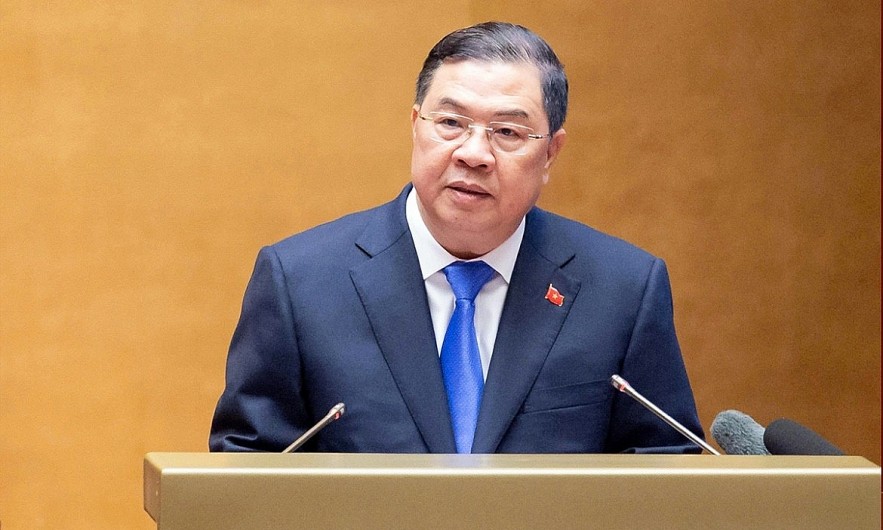 |
| Deputy Prime Minister Pham Gia Tuc speaks at a national conference in Hanoi on June 30 to study and implement the Politburo’s Resolution No. 10 on the development of the foreign-invested sector. |
Looking ahead to 2045, Vietnam envisions a foreign-invested sector that is efficient, sustainable and closely integrated with the state and private sectors, helping position the country as a regional hub for manufacturing, services, innovation and multinational corporate operations.
Under the resolution, the foreign-invested sector is expected to account for about 25% of total social investment and contribute roughly 30% of Vietnam’s GDP by 2045.
“Success in the new development stage should no longer be measured primarily by the number of investment projects or the size of capital inflows, but by the quality of investment, technological capability, innovation, linkages with domestic enterprises and their substantive contribution to Vietnam's rapid and sustainable development,” the Deputy Prime Minister stressed.
Building a next-generation investment environment
To achieve its 2030 targets and 2045 vision, the resolution sets out a comprehensive package of measures to further improve Vietnam’s investment climate by making it more transparent, stable and internationally competitive.
Investment incentives will be redesigned to reward project performance and fulfillment of investor commitments, while new mechanisms will be established to identify, support and oversee strategic investors.
The resolution also proposes piloting advanced institutional models in selected areas, promoting digital governance powered by data and artificial intelligence, and ensuring that legal changes are not applied retroactively to investors’ disadvantage except in matters involving national defence, national security, public order, public health or environmental protection.
In addition, authorities will introduce policies to strengthen workforce development by expanding training programmes and gradually increasing the number of Vietnamese professionals in technical, managerial, research, design and supply chain positions.
Vietnam also plans to attract more international experts, scientists and highly skilled entrepreneurs while modernising investment promotion efforts to focus on high-value sectors, including semiconductors, artificial intelligence, research and development, innovation, digital transformation, green transition and other strategic industries expected to drive the country’s next phase of economic growth.
Vietnamese team surveys hardest-hit area in Venezuela earthquakes
The Vietnamese rescue and relief mission comprising personnel from the military and public security forces arrived at its base in La Guaira state, the area most severely affected by the recent earthquakes in Venezuela, on the afternoon of June 29 (local time).
Upon arrival, the team arranged accommodation, transported equipment, essential supplies and medical materials, and completed preparations to carry out its assigned tasks.
The head of the delegation, accompanied by several team members and representatives of the Venezuelan side, subsequently conducted a field survey in La Guaira to assess the situation and prepare for the deployment of personnel and equipment for search-and-rescue operations, reported VNA.
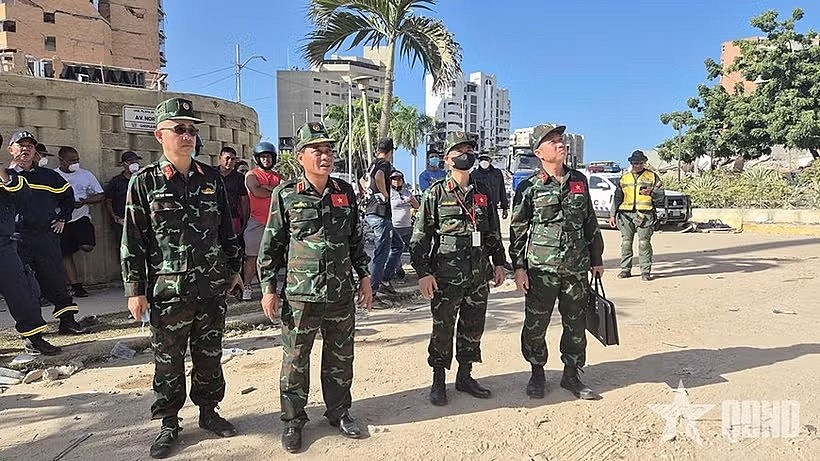 |
| Vietnamese team conducts a field survey in La Guaira to assess the situation and prepare for the deployment of personnel and equipment for search-and-rescue operations. (Photo: qdnd.vn) |
Earlier the same day, a special aircraft carrying the Vietnamese mission landed at Maiquetia International Airport in La Guaira. The delegation consists of 124 officers and personnel from the Ministry of National Defence and the Ministry of Public Security tasked with supporting earthquake relief and recovery efforts in Venezuela.
To date, Vietnam is among 30 countries that have dispatched rescue teams to Venezuela to assist in ongoing search-and-rescue operations following the devastating earthquakes.
Hanoi faces storm warning as northern Vietnam braces for heavy rain
Weather officials have warned of dangerous thunderstorms in Hanoi and widespread heavy rainfall across northern Vietnam, with localized downpours exceeding 250mm.
Hanoi is expected to see showers and thunderstorms over the next few hours, with risks of lightning, whirlwinds and strong wind gusts. Meanwhile, heavy rain will continue across northern Vietnam through the night of July 1, with some areas forecast to receive more than 250mm.
According to the National Center for Hydro-Meteorological Forecasting, satellite imagery, weather radar and lightning detection data show convective cloud systems developing over the wards and communes of Tay Ho, Xuan Dinh, Ngoc Ha, Giang Vo, Hoang Liet and Dai Thanh.
Within the next three hours from the issuance of the forecast at 8:25 a.m. on June 30, these areas are expected to experience showers and thunderstorms before the storm clouds spread to other parts of Hanoi. The storms may be accompanied by whirlwinds, lightning and strong wind gusts.
The weather agency also reported that overnight and into the morning of June 30, northern Vietnam recorded moderate to heavy rain and thunderstorms, with some locations experiencing very heavy rainfall. Between 7 p.m. on June 29 and 8 a.m. on June 30, rainfall totals exceeded 150mm at several monitoring stations, including Xuan Minh 2 Station in Tuyen Quang Province with 265.2mm, Hong Ha Station in Quang Ninh Province with 208mm and Ngoc Chan Station in Lao Cai Province with 166mm.
From June 30 through the night of July 1, the northern mountainous and midland regions, along with Quang Ninh Province and Hai Phong City, are forecast to receive moderate to heavy rain and thunderstorms, with widespread rainfall of 50-100mm. Some locations could record more than 250mm, with the heaviest rain expected during the evening, overnight and early morning.
Elsewhere in northern Vietnam, from June 30 to the morning of July 1, rainfall is forecast to range from 20-50mm, with isolated areas receiving more than 100mm. Rain is expected to be concentrated during the evening, overnight and early morning.
Forecasters also warned of the risk of extremely intense rainfall exceeding 100mm within a three-hour period, cited VNN.
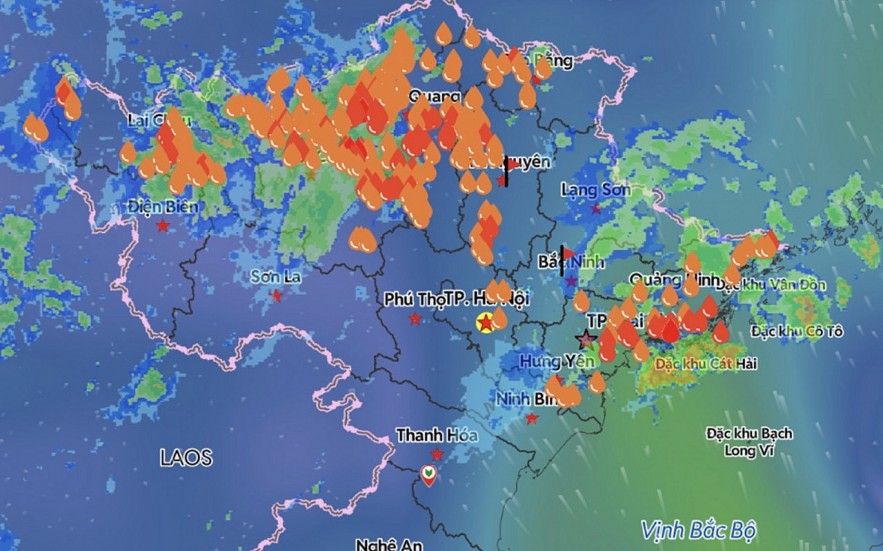 |
| Heavy rain continues across many parts of northern Vietnam. Source: VNDMS. |
In addition, scattered showers and thunderstorms are expected on the afternoon and evening of June 30 across Thanh Hoa Province, Nghe An Province, the area stretching from Hue City to Lam Dong Province, and southern Vietnam. Rainfall is forecast at 10-30mm, with isolated locations receiving more than 70mm.
Heavy rainfall is expected to gradually ease from July 2.
The weather agency warned that thunderstorms could bring whirlwinds, lightning, hail and strong wind gusts. Heavy rain may trigger flooding in low-lying areas, urban and industrial zones, as well as flash floods on small rivers and streams and landslides on steep slopes.
Water levels on several rivers in Lao Cai, Thai Nguyen, Tuyen Quang and Cao Bang provinces are continuing to rise. Some rivers have exceeded the first flood warning level, while others have risen above the second warning level. From June 30 to July 1, small rivers and the upper reaches of major river systems in northern Vietnam are expected to experience a flood wave with water levels rising by 2-4m. The weather agency warned of a high risk of flash floods and landslides across the northern mountainous and midland provinces.
 | Vietnam News Today (Jun. 27): Vietnam Proposes Hosting 14th ICAPP General Assembly in 2028 Vietnam News Today (Jun. 27): Party chief, State President receives Palestinian Ambassador on farewell visit; Vietnam proposes hosting 14th ICAPP General Assembly in 2028; Vietnam ... |
 | Vietnam News Today (Jun. 28): Vietnam, Cambodia Advance Together Towards the Future Vietnam News Today (Jun. 28): Vietnam, Cambodia advance together towards the future; Cultural events in France celebrate President Ho Chi Minh's legacy; Vietnam defines coffee ... |