
Sharing Common Goal, Taking Initiative
| Effective Cooperation, Stronger People-to-People Ties between Viet Nam and Russia Ensuring French Resources Continue to Contribute to Viet Nam |
Friendship, understanding and trust in border areas
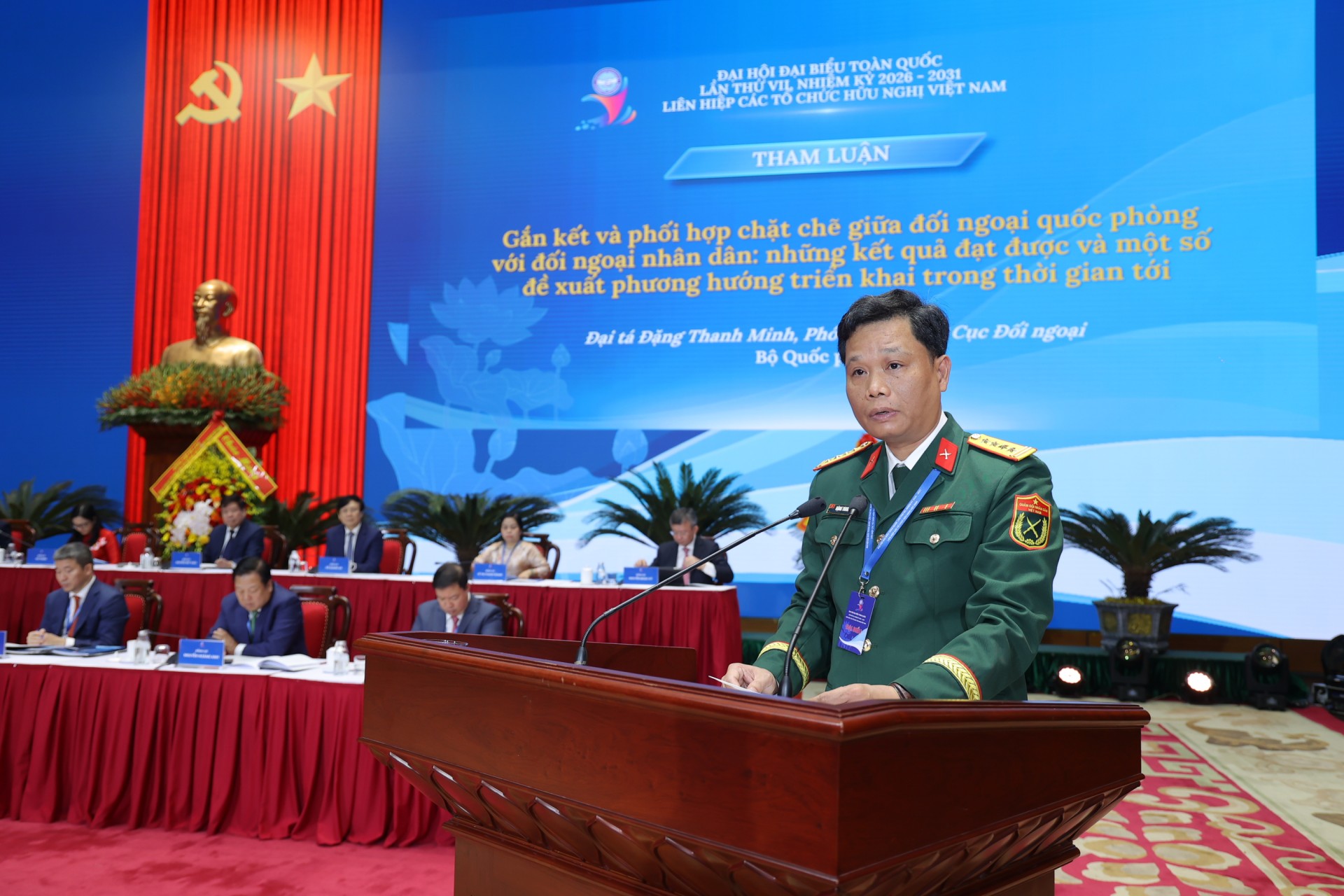 |
| Senior Colonel Dang Thanh Minh, Deputy Director of the Department of External Relations, Ministry of National Defence. (Photo: Dinh Hoa) |
Defence diplomacy, together with people-to-people diplomacy, contributes to strengthening friendship, understanding and trust, particularly with neighbouring countries sharing land borders.
Agencies and units under the Ministry of National Defence have closely coordinated with Party committees and local authorities in border areas, relevant forces, as well as law enforcement and other competent forces of neighbouring countries in managing and protecting borders and border gates; combating and preventing crime; responding to epidemics and natural disasters; conducting search and rescue operations; promoting the effectiveness of the Border Defence Friendship Exchange; and maintaining and expanding twinning programmes between localities, units and people on both sides of the border with Laos, Cambodia and China.
In particular, many Border Guard units in provinces and cities have proactively implemented practical support measures for people in countries sharing land borders with Viet Nam, tailored to the conditions and specific characteristics of each locality.
In recent years, through the programme “Supporting children on their journey to school - Foster children of Border Guard Stations,” the Border Guard Force has provided support to many disadvantaged Lao and Cambodian students until they complete Grade 12. It has also coordinated with local authorities at various levels to provide breeding cattle to families in neighbouring countries sharing borders with Viet Nam in border areas.
Military medical personnel of the Border Guard forces in Viet Nam-Laos border provinces have conducted medical examinations and provided free medicines and health consultations, combined with public outreach, for people in remote and isolated areas and Lao communities. These activities have contributed to improving the livelihoods of people on both sides of the border while strengthening solidarity, friendship and mutual understanding.
Distinct strengths, shared power
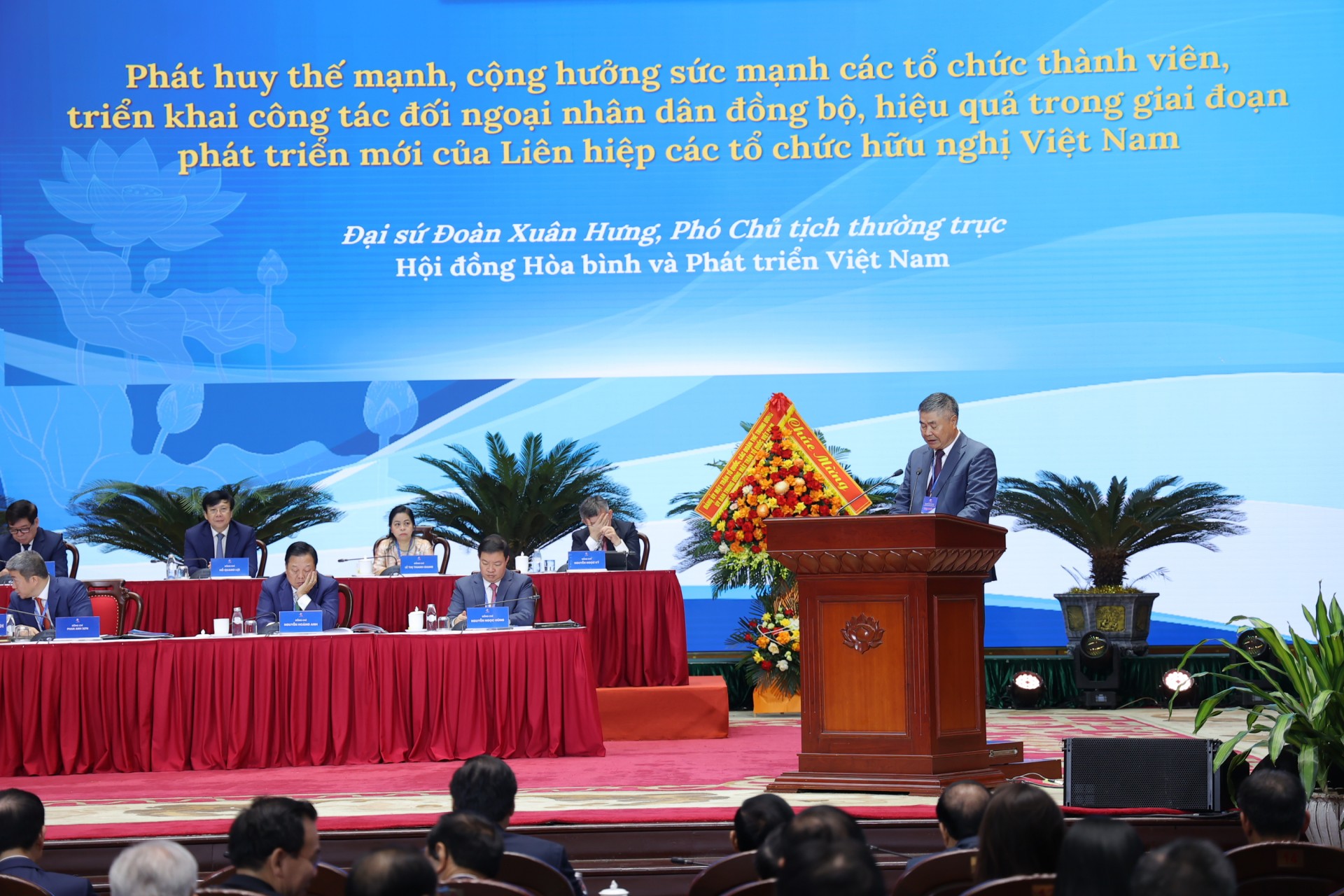 |
| Ambassador Doan Xuan Hung, Standing Vice President of the Viet Nam Peace and Development Council. (Photo: Dinh Hoa) |
The diversity of member organizations should be harnessed to develop complementary strengths.
The information resources, knowledge and expert networks of member organizations have not yet been fully leveraged for research, forecasting and policy advice. If these resources are brought together, analysed and connected with appropriate experts, they could serve as a valuable supplementary source of information for research and policy advice on people-to-people diplomacy.
Information and issues arising from engagements with partners and participation in forums can provide inputs and direction for research activities; conversely, research findings need to provide more direct support in identifying the content, partners and approaches for implementing external relations activities. Establishing this cycle of linkage would help ensure that research remains more closely aligned with practical requirements, while also improving the quality and proactiveness of people-to-people diplomacy.
In addition, the individual resources of member organizations need to be better connected to create greater collective resources for the system of the Viet Nam Union of Friendship Organizations. The value of these resources can be multiplied through appropriate mechanisms for sharing and coordination.
“Foreign relations brand” rooted in local history and culture
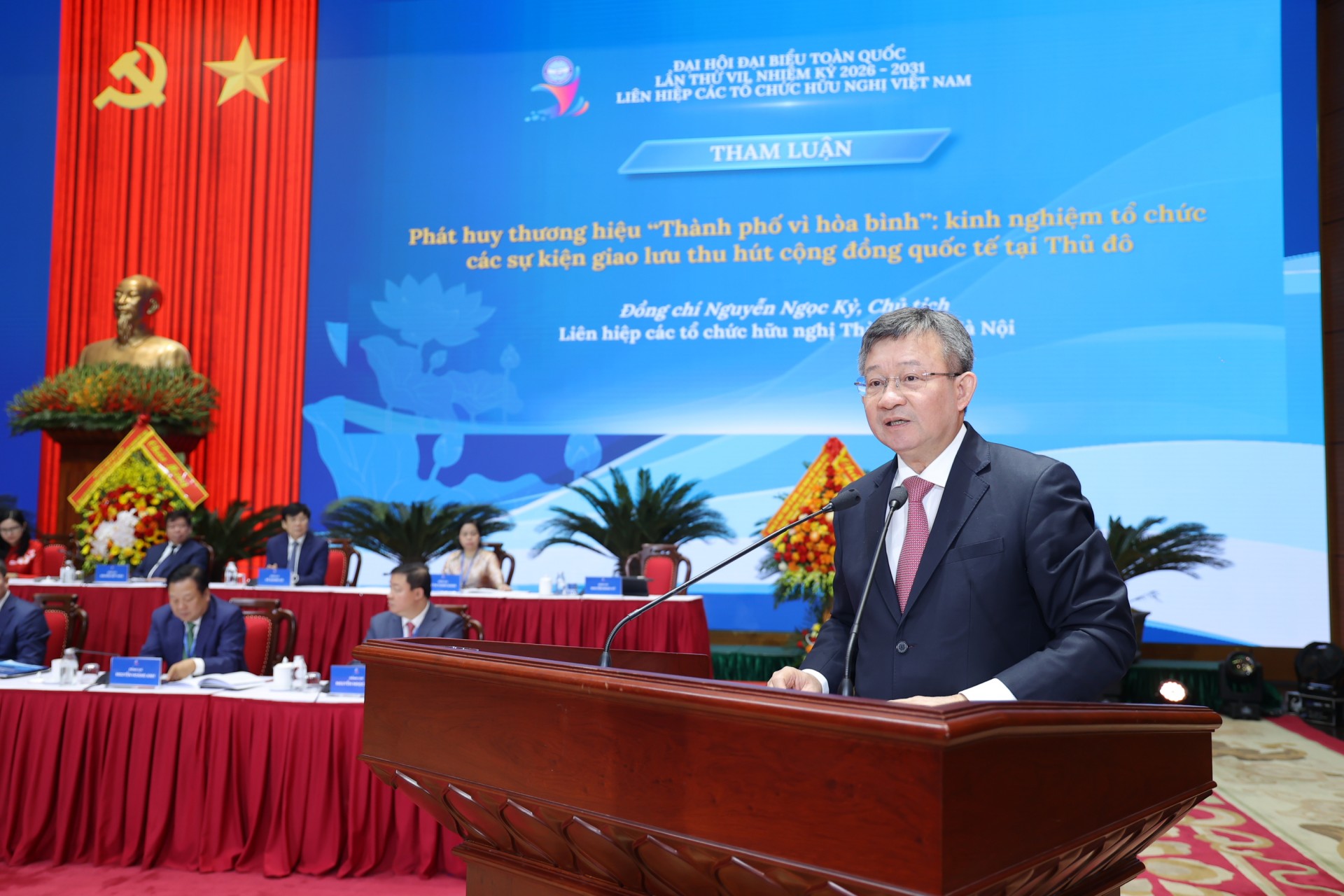 |
| Nguyen Ngoc Ky, President of the Hanoi Union of Friendship Organizations. (Photo: Dinh Hoa) |
The Hanoi Union of Friendship Organizations has chosen “Peace” and “Friendship” as the overarching themes for developing annual flagship programmes, including the International art exchange “Welcome the New Year,” the Friendship Spring Tour, Lunar New Year Greetings Exchanges with several Asian countries, the ASEAN Cultural Colours Friendship Exchange, and the Friendship Cycling Journey for a Green Hanoi.
The events attract numerous ambassadors, diplomatic officials, representatives of international organizations and foreign non-governmental organizations in Viet Nam, as well as large numbers of local residents, pupils and university students in the capital.
For people-to-people diplomacy to have greater depth and create a broader effect, it is necessary to fully tap into the locality’s internal “resources.” Every locality has its own advantages in terms of history, scenic landscapes, cultural heritage and traditional crafts. Friendship exchanges help connect international friends with local communities while also opening up new opportunities for cooperation and investment in the locality.
Making effectiveness and tangible value the measure
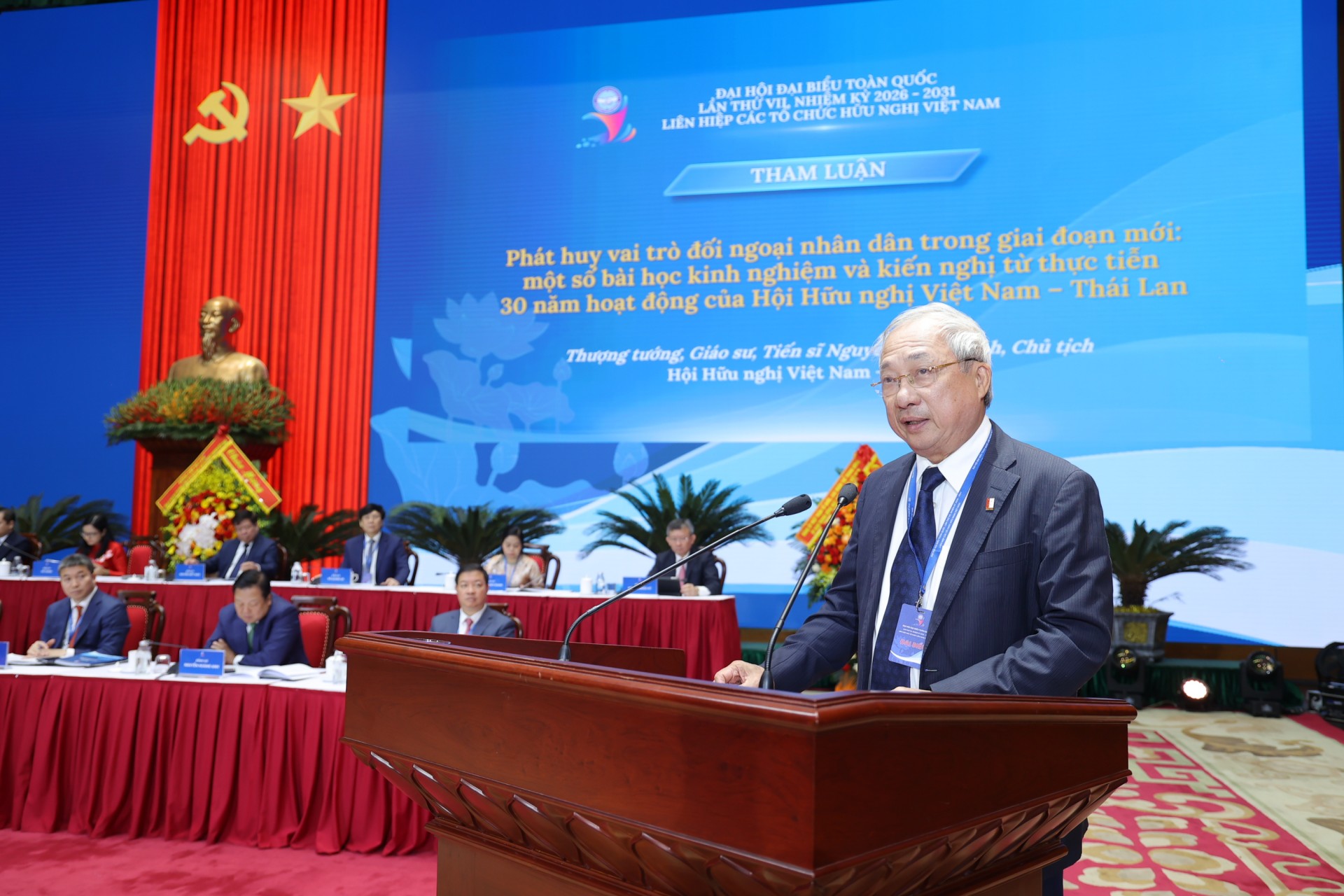 |
| Senior Lieutenant General, Professor, Doctor of Science Nguyen Van Thanh, President of the Viet Nam-Thailand Friendship Association. (Photo: Dinh Hoa) |
A fundamental shift in the Viet Nam-Thailand Friendship Association’s work over the past 30 years has been its transition from purely exchange-oriented activities to closely combining such activities with the promotion of economic, trade and investment ties. The Association has worked with its Thai counterpart to organize a number of activities connecting Vietnamese and Thai businesses. For example, the two associations jointly organized the 2023 Viet Nam-Thailand Business Forum in Bangkok, Thailand, under the theme “1+1 = No borders.”
The Viet Nam-Thailand Friendship Association has proactively mobilized social resources, combining State funding with support from businesses, members and partners. Notably, these mobilized social resources have not only contributed to sustaining the Association’s activities but have also been translated into concrete values serving the community. Notable examples include the Viet Nam-Thailand Friendship Association and the Thailand-Viet Nam Friendship Association jointly organizing medical examinations and providing prescription glasses for 300 elderly people in Dong Nai; and donating an ultrasound machine worth USD 22,800 to Nam Dan Medical Center in Nghe An Province.
The two associations have also cooperated in a programme to conserve red-crowned cranes. The second transfer involved six red-crowned cranes from Nakhon Ratchasima Zoo (Thailand) to Tram Chim National Park (Dong Thap).
Innovation in people-to-people diplomacy does not mean changing its objectives, but rather renewing its approaches and methods of organization, with effectiveness and tangible value serving as the measure.
Extending the bonds of friendship
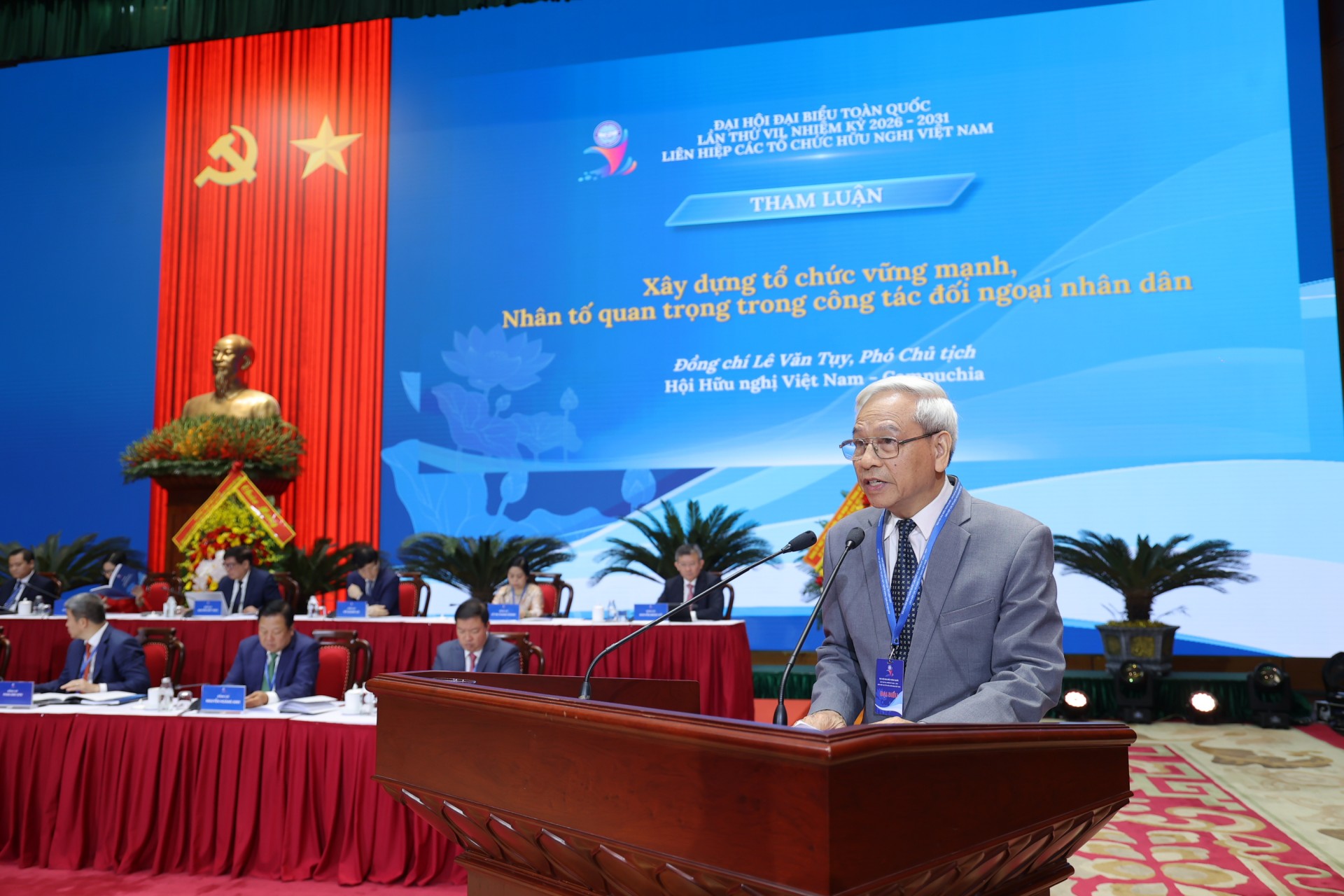 |
| Le Van Tuy, Standing Vice President of the Viet Nam-Cambodia Friendship Association. (Photo: Dinh Hoa) |
Our Association has always regarded building and developing the Association’s organizational structure and membership as a regular and important task, with the key priority being to identify the core forces that can serve as its foundation.
Recognizing that personnel who had fought and worked in Cambodia from 1979 to 1989 and were now living and working across the country had not yet been fully brought together within the Association, in 2012, the Central Association put forward the policy of “making former volunteer troops and former experts the core force, while also expanding membership through mass organizations, social organizations, professional associations, businesses, entrepreneurs and individuals who are enthusiastic and committed to the Association, particularly young people.”
Accordingly, the Viet Nam-Cambodia Friendship Association has continuously broadened its membership, particularly by developing its young membership base, to build the Association’s collective strength. This remains an important lesson in building and developing the Association’s organization and membership, which the Association continues to uphold in its activities.
Notably, the Association has organized and implemented the “Nurturing friendship” programme to provide support to Cambodian students studying in Viet Nam. The programme has been carried out continuously since 2012 and has supported nearly 1,000 Cambodian students. Inspired by the programme’s outreach and impact, Cambodia established an association of former students who had studied in Viet Nam, thereby creating an additional partner for the Viet Nam-Cambodia Friendship Association’s friendship activities and contributing to spreading the friendship between the two countries in Cambodia.
Every member a “Friendship Ambassador”
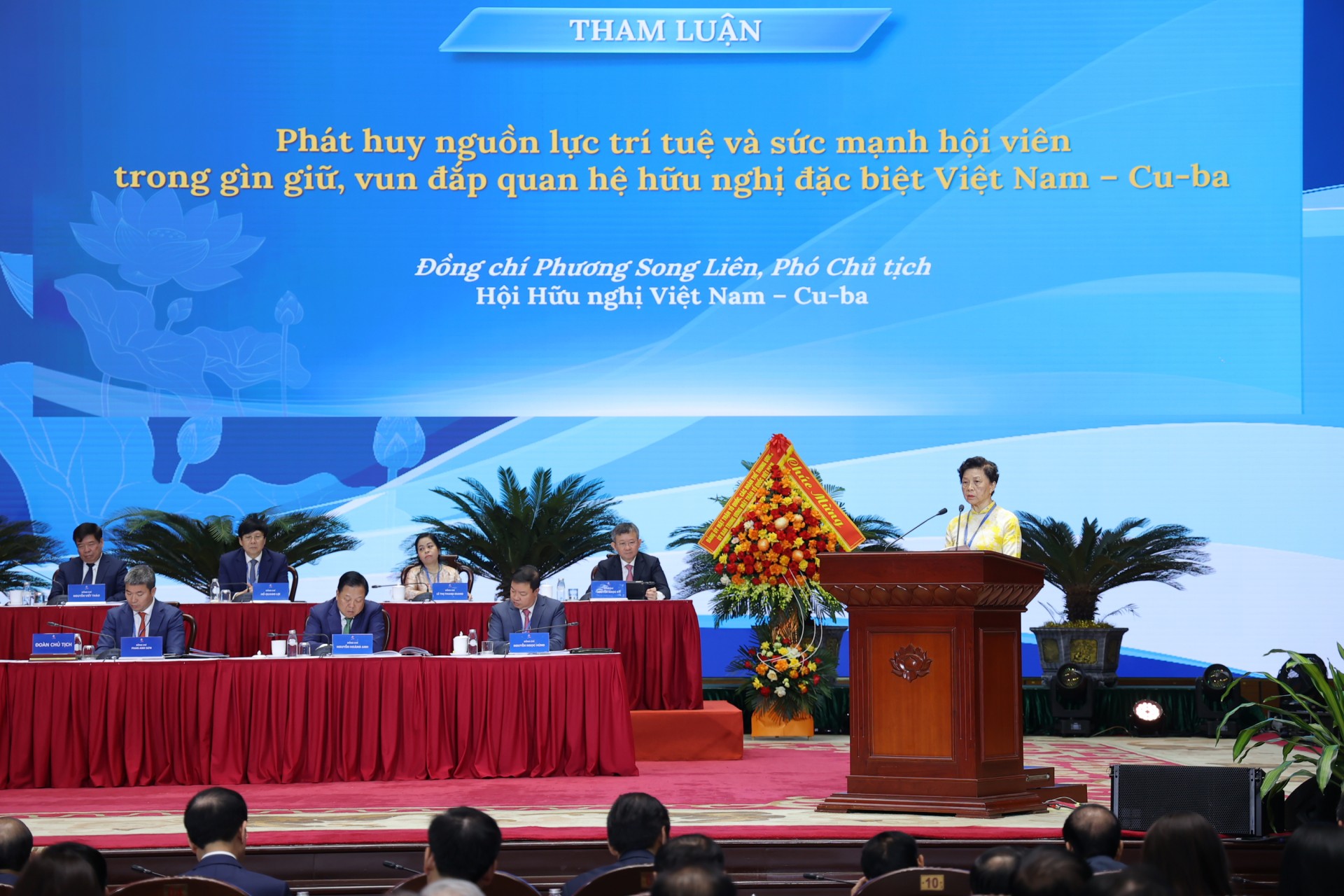 |
| Phuong Song Lien, Vice President of the Viet Nam-Cuba Friendship Association. (Photo: Dinh Hoa) |
If intellectual resources provide the foundation for improving the quality of the Association’s activities, former experts, former students and people who have studied or worked in Cuba are the “special assets” that give the Viet Nam-Cuba Friendship Association its enduring vitality.
Over the past more than six decades, tens of thousands of Vietnamese officials, students and experts have had opportunities to study, conduct research, work and live in Cuba. What they brought home was not only professional knowledge, expertise and valuable experiences, but also a sincere affection for the country and people of Cuba, who offered Viet Nam wholehearted solidarity and assistance during its most difficult years.
In its activities, the Viet Nam-Cuba Friendship Association has consistently regarded former students and former experts as the core of the friendship movement. They not only participate in the Association’s activities as members, but also tell the story of Cuba through their own memories and experiences; they serve as natural bridges, helping bring the country and people of Cuba closer to different segments of the Vietnamese population.
What is particularly valuable is that this outreach extends beyond the Association itself. Affection for Cuba is passed on by each member to their families, children and grandchildren, friends, colleagues and partners; from everyday stories and fond memories of Cuba to concrete actions in exchanges, communication and efforts to mobilize support for the Cuban people. It is through this natural process of outreach that each member of the Viet Nam-Cuba Friendship Association becomes not only a participant in people-to-people diplomacy, but also a “friendship ambassador” within the community.
This is also an experience that we believe holds long-term significance for people-to-people diplomacy: the strength of friendship organizations comes not only from the number of activities they organize, but first and foremost from the outreach and influence of each member within the community.
Experiencing and understanding heritage values through community-based tourism
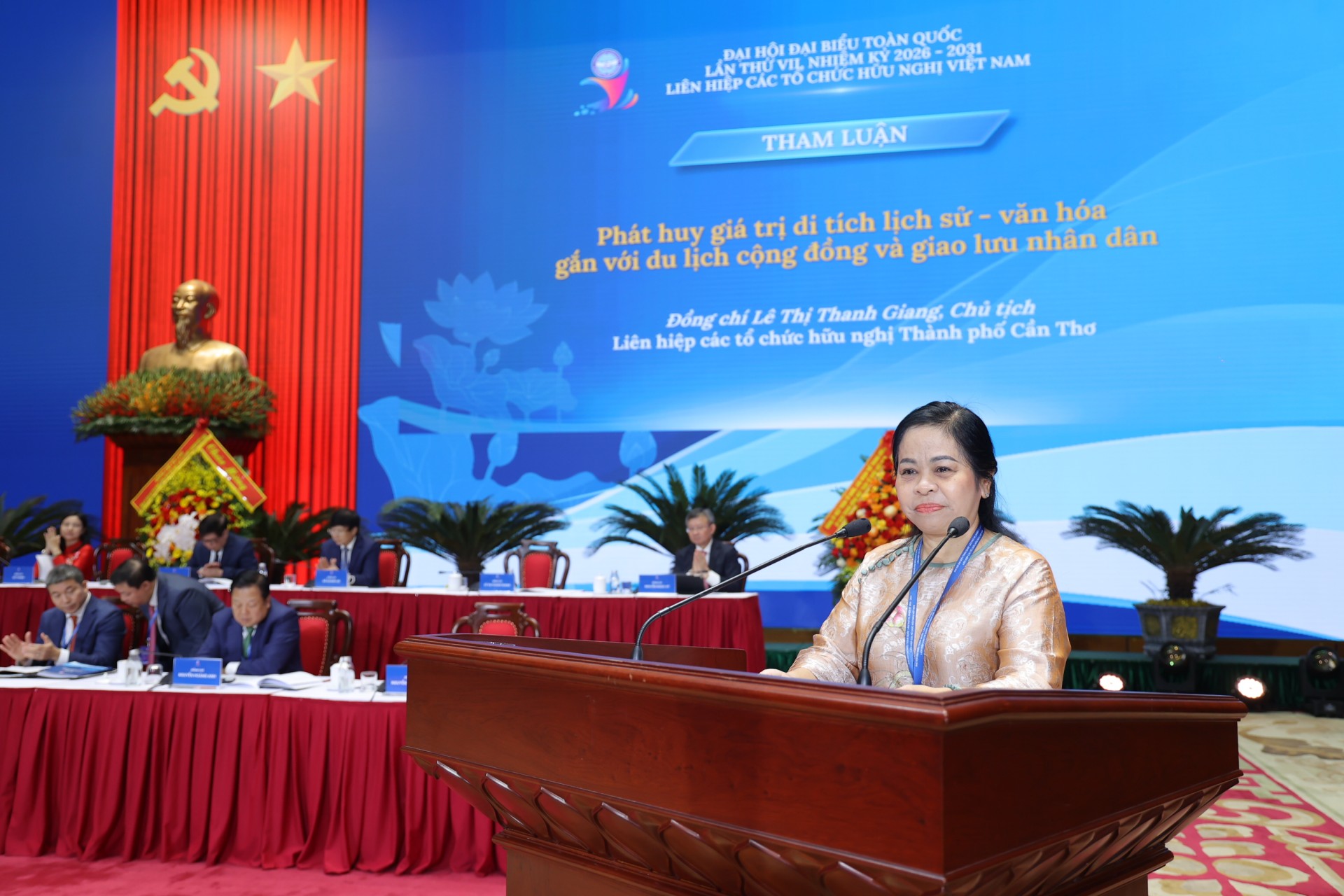 |
| Le Thi Thanh Giang, President of the Can Tho Union of Friendship Organizations. (Photo: Dinh Hoa) |
Community-based tourism places local people at the centre, encouraging their direct participation in organizing, operating and benefiting from tourism activities. When combined with historical and cultural sites, community-based tourism creates direct experiences that help visitors develop a deeper appreciation and understanding of the value of heritage.
If community-based tourism helps “activate internal resources,” people-to-people exchanges serve as a tool for expanding “external resources.” In the context of integration, people-to-people exchanges are not merely an external relations activity but also an effective means of promoting and disseminating culture.
When community-based tourism is linked with people-to-people exchanges, international visitors do more than simply sightsee; they also participate directly in cultural and social activities in local communities. Through homestays, cultural villages and international volunteer programmes, visitors have opportunities to live alongside local people, take part in everyday activities, and gain a deeper understanding of the lifestyles, customs and traditions of local communities.
 Continuing Tradition, Writing Next Chapter of Success in Nation’s New Era of Development Continuing Tradition, Writing Next Chapter of Success in Nation’s New Era of Development Today, the 7th National Congress for the 2026-2031 term of the Viet Nam Union of Friendship Organizations officially opens. The Congress takes place against the backdrop of our nation's successful hosting of the 14th National Congress of the Communist Party of Viet Nam - an event of vital significance that established the strategic vision and goals to propel the country into a new era of development. The spirit of the 14th Party Congress, driven by the aspiration for progress, the nation's elevated stature, and the imperative to innovate thinking and operational approaches across all fields, serves as the guiding star for our Congress to evaluate results, draw lessons, and set major directions for the next five-year period. |
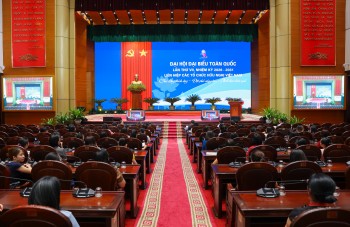 7th National Congress of Viet Nam Union of Friendship Organizations Opens Today 7th National Congress of Viet Nam Union of Friendship Organizations Opens Today The 7th National Congress of the Viet Nam Union of Friendship Organizations for the 2026-2031 term takes place today, September 14, in Hanoi. The Congress will review the results of work during the 2019-2026 period and set out orientations and tasks for the new term as the country enters a new phase of development. |
Most read


Related Stories
 Friendship
First Congress of the Dong Thap Union of Friendship Organizations for the 2026-2031 Term
 Friendship
Promoting People-to-People Diplomacy to Build a Solid Foundation Rooted in “the People’s Hearts”
 National
Da Nang Taps Foreign NGO Resources to Promote Green Development
 Friendship
65 Years of the Agent Orange Disaster: Dialogue to Spur Action
Recommended
 Friendship
American Friends Help Ease the Pain of Agent Orange
 Friendship
Aris Alip: The Filipino Friend Who Helped Build the TYM Fund
 Friendship
Spreading Responsibility for Safeguarding Party’s Ideological Foundation from Viet Nam to International Community
 Friendship
DAFO Launches Activities to Promote Responsible Business Practices
Popular article
 Friendship
Seoul (Republic of Korea) Expands Employment Support for Vietnamese International Students
 Friendship
NA President Meets with Chinese Friendship Figures in Beijing
 Friendship
A Misfortune Turned into Happiness
 Friendship