
Turning Older Persons Into a Resource for Development
| Network for Development of Business Services for Older Persons Debuted Health care of older people a growing concern: Vietnam |
The workshop brought together representatives from ministries and sectors, socio-political organizations, social organizations, development cooperation agencies, international organizations, and foreign non-governmental organizations (INGOs).
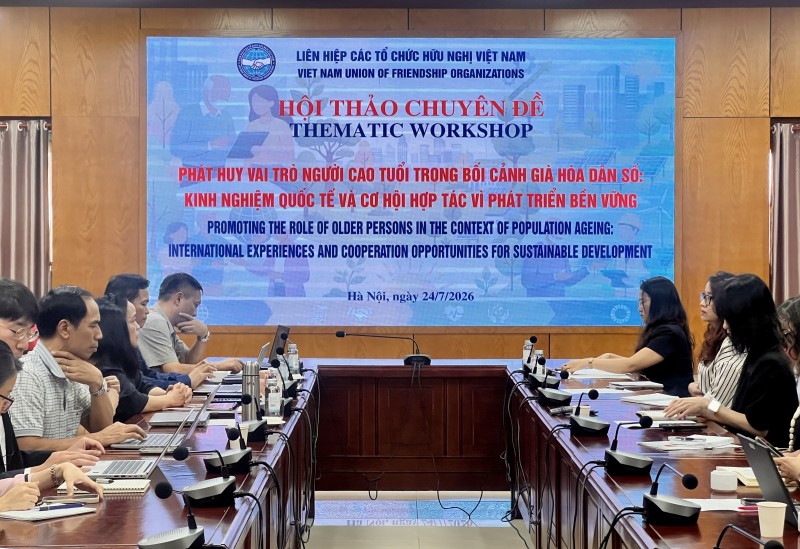 |
| The thematic workshop “Promoting the Role of Older Persons in the Context of Population Ageing: International Experiences and Opportunities for Cooperation for Sustainable Development.” (Photo: Mai Anh) |
In her opening remarks, Do Thi Kim Dung, Acting Head of the People’s Aid Coordination Committee (PACCOM), said Viet Nam is entering a new stage of development, with the goal of becoming a developing country with modern industry and upper-middle income status by 2030, and a developed, high-income country by 2045. To achieve these goals, alongside maintaining economic growth, Viet Nam needs to proactively adapt to major demographic changes and ensure inclusive development. Population ageing is becoming a demographic trend with far-reaching and long-term impacts on the country's development process.
According to Do Thi Kim Dung, population ageing is first and foremost an achievement of development, reflected in people living longer, healthier lives and enjoying an increasingly improved quality of life. However, the rapid pace of ageing also presents new requirements and challenges for socio-economic development. “Older persons are not only people who need care and social protection. With their knowledge, experience, skills, reputation, and rich life experience, they are also a resource for families, communities, and society,” she emphasized.
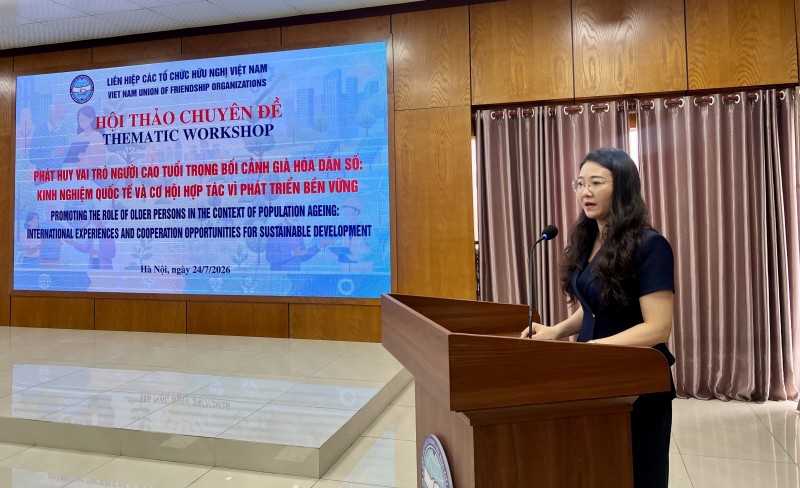 |
| Do Thi Kim Dung, Acting Head of the People’s Aid Coordination Committee (PACCOM), delivers the opening remarks. (Photo: Mai Anh) |
From the perspective of international cooperation, Do Thi Kim Dung said that according to an initial review by the Viet Nam Union of Friendship Organizations and PACCOM, older persons are not yet a key target group in many cooperation programs and projects between Vietnamese partners and INGOs. However, she noted that there is considerable room to expand cooperation in areas such as healthy ageing, long-term care, developing age-friendly communities, developing human resources for the silver economy, applying technology, conducting policy research, and scaling up effective models.
Viet Nam has approximately 16.5 million older persons
At the workshop, Nguyen Trung Thanh of the Older Persons Division under the Department of Social Assistance of the Ministry of Health cited figures from the National Population Database. Viet Nam has approximately 16.5 million older persons, accounting for around 16% of the population. Of these, about 2.6 million are aged 80 or above. Average life expectancy is 74.7 years, while the average number of healthy life years is 65.4.
A representative of the Department of Social Assistance said Viet Nam officially entered the stage of population ageing in 2011 and is expected to enter the aged population stage in the coming years. The rapid increase in both the number and proportion of older persons poses numerous challenges to the labor force, social security system, healthcare sector, and families. Therefore, adapting to population ageing requires comprehensive and coordinated solutions involving multiple levels and sectors.
Nguyen Trung Thanh emphasized the need to develop a long-term care system for older persons. This includes creating service packages that combine healthcare, social care, and mental well-being support; developing community-based care networks for older persons; and encouraging private-sector participation, including day-care and semi-residential care models. Policies should also enable older persons to continue working in ways suited to their health, professional expertise, and skills, while promoting lifelong learning and supporting access to new knowledge and skills.
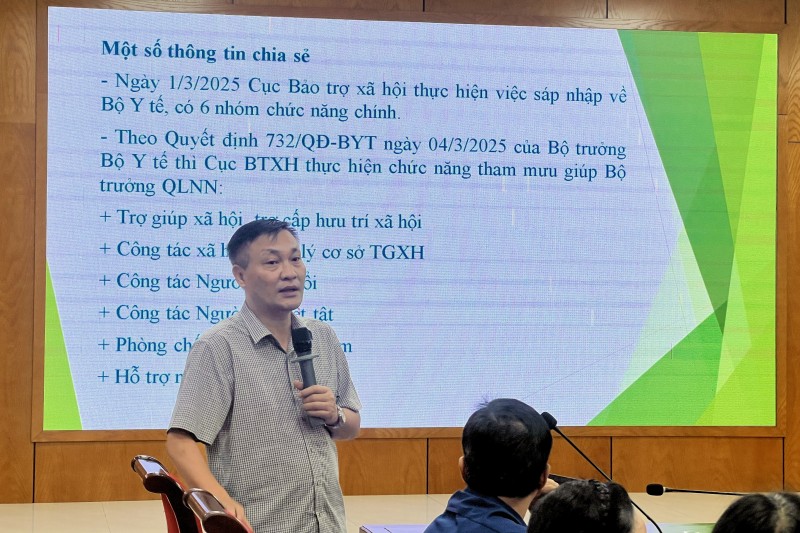 |
| Nguyen Trung Thanh of the Older Persons Division under the Department of Social Assistance of the Ministry of Health speaks at the workshop. (Photo: Mai Anh) |
From the perspective of older persons' participation in society, Ha Thi Minh Tam, Standing Committee Member and Head of the Department for Promoting the Role of Older Persons of the Viet Nam Association of the Elderly, said that efforts to promote the role of older persons still face many difficulties. Population ageing is progressing rapidly, while the ability of policy and social service systems to adapt remains limited. Awareness of the role of older persons in some areas has not kept pace with new development requirements, policies and mechanisms remain fragmented, and there is still a significant gap in access to science, technology, and digital transformation among different groups of older persons.
Ha Thi Minh Tam proposed that non-governmental organizations change their approach, shifting from social welfare support to investing in and promoting the resources of older persons, viewing them as social capital rather than merely a vulnerable group. This should include developing suitable livelihood models; connecting businesses to create flexible employment opportunities; supporting older persons in accessing digital transformation, artificial intelligence (AI), electronic payments, e-commerce, and online public services; and improving their skills in preventing online scams.
Silver economy - Turning the challenge of ageing into a driver of development
Dr. Doan Huu Minh, representing the United Nations Population Fund (UNFPA), said Viet Nam is among the countries with the fastest rates of population ageing in the world. Viet Nam is expected to take only about 23 years to transition from an “ageing” society to an “aged” society, while France underwent a similar process over approximately 115 years. This rapid transition puts Viet Nam at risk of “becoming old before becoming rich.” While demand for care is increasing, gaps remain in the long-term care system, community service networks remain fragmented, and most care for older persons is still provided by families.
However, population ageing also presents opportunities for the development of the silver economy - an economic ecosystem associated with the needs and participation of older persons. Potential areas include long-term care, long-term care insurance, age-friendly housing and infrastructure, assistive technology, wellness tourism, and the labor market for older persons.
UNFPA assesses that this market has significant potential, but the supply of services in Viet Nam remains fragmented and limited, while access remains difficult for the majority of older persons with low and middle incomes.
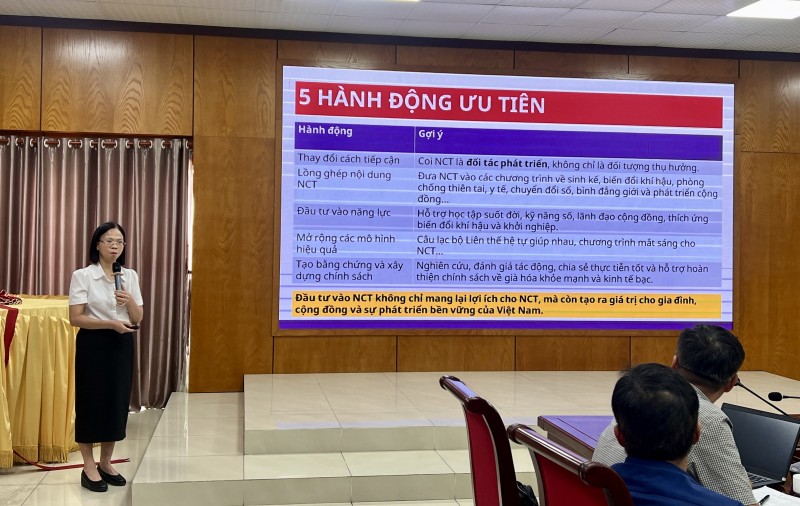 |
| Tran Bich Thuy, Country Representative of HelpAge International (HAI) in Viet Nam. (Photo: Mai Anh) |
Drawing on international experience, Tran Bich Thuy, Country Representative of HelpAge International (HAI) in Viet Nam, said that the majority of older persons in Viet Nam still have the capacity to continue contributing to society. Among the current older population, 59.4% are aged 60-69, 24.9% are aged 70-79, and 15.7% are aged 80 or above. This shows that policies need to be designed to suit different age groups, combining care with opportunities for social participation.
Older persons also play a significant role in their communities thanks to their reputation, experience, knowledge, and sense of responsibility. Many serve as neighborhood leaders, heads of local associations, or managers of community clubs, and could participate more actively in community development activities if given opportunities and provided with greater capacity-building support.
Drawing on the experiences of countries that have entered ageing societies, HAI believes that promoting the role of older persons must go hand in hand with creating an environment, mechanisms, and opportunities for their meaningful participation. This is also essential to ensuring that development goals are pursued inclusively, without leaving older persons on the sidelines of the development process.
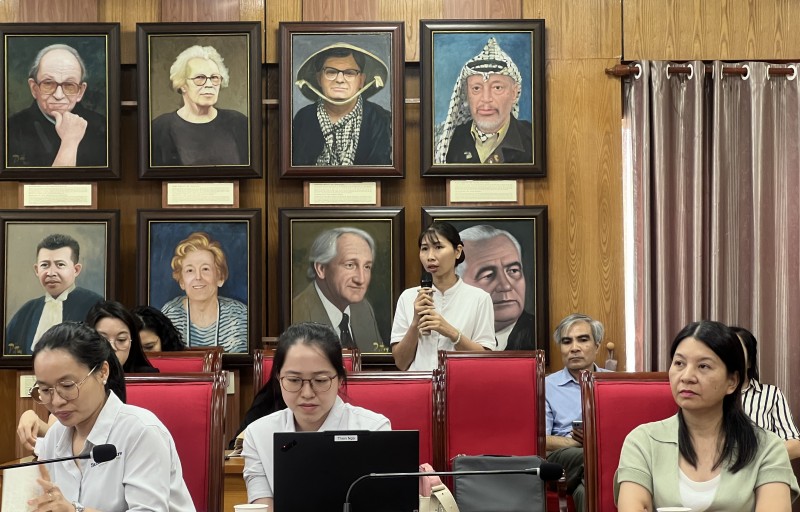 |
| Delegates discuss at the workshop. (Photo: Mai Anh) |
Concluding the workshop, Do Thi Kim Dung emphasized that promoting the role of older persons should be linked to Viet Nam's development priorities and coordinated efforts among state agencies, social organizations, international organizations, INGOs, and businesses. The Viet Nam Union of Friendship Organizations and PACCOM will continue to play a connecting role and promote practical cooperation initiatives, contributing to improving quality of life and creating conditions for older persons to continue contributing to sustainable development.

Most read


Related Stories
 Friendship
Commemorating “A Truly Special Friend of Vietnam”
 Friendship
Strengthening People-to-People Ties, Unlocking Viet Nam-Iran Cooperation Potential
 Friendship
Commemorating 47th Anniversary of Triumph of Sandinista People's Revolution: Expanding Vietnam-Nicaragua People-to-People Exchanges
 Friendship
Friends of Project RENEW Continues Supporting War Consequence Remediation Efforts in Viet Nam
Popular article
 Friendship
Lao Media Affirms Special Relationship between Vietnam and Laos
 Friendship
Promoting Vietnam-Palestine Traditional Friendship through People-to-People Diplomacy
 Friendship
Promoting Vietnam-RoK People-to-People Relations
 Friendship