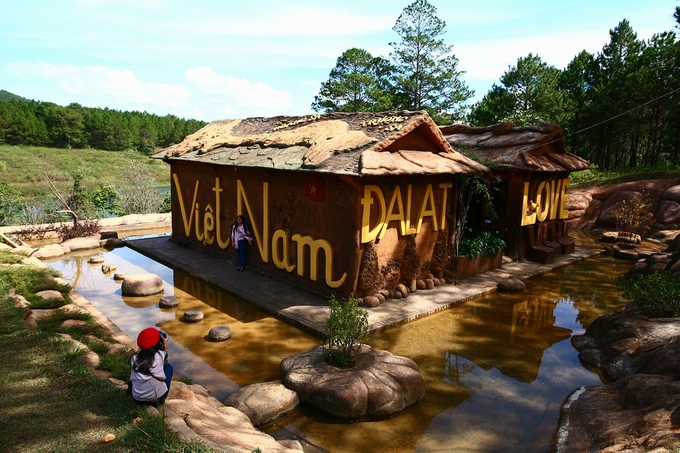
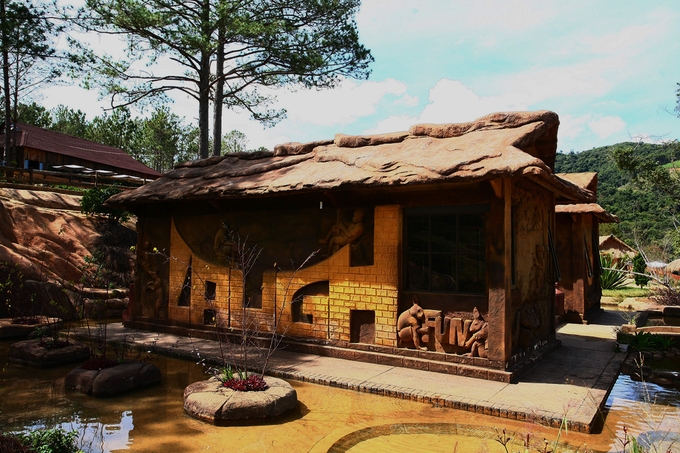
Touted the one-and-only red basaltic house in Vietnam, the construction in Da Lat has a Vietnamese map on its roof while all the interior is made of red basaltic soil.
The house with special architecture is located inside the Da Lat star tourist area, near the scenic Tuyen Lam lake, about 10 km south of the center of Dalat city.
(Photo: VNE)
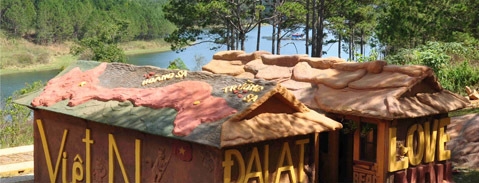
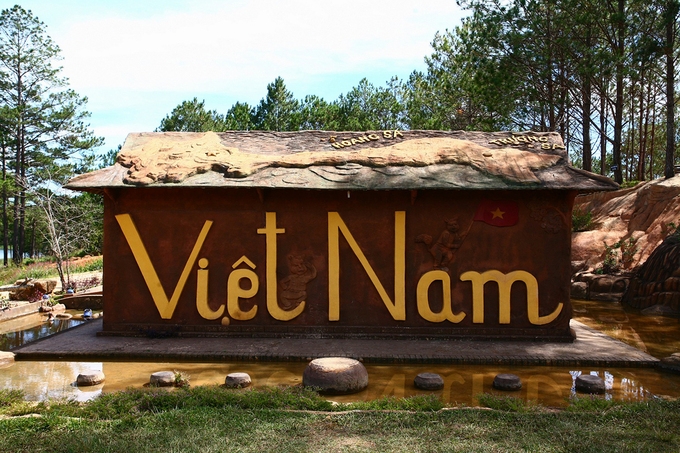
The house's roof features a map of the S-shaped Vietnam, with Hoang Sa and Truong Sa islands clearly sculptured on.
(Photo: VNE)
The house is the "artwork" of artist Trinh Ba Dung, owner of the Da Lat Star complex. What makes it stand out is the fact it was 100 percent made from red basaltic soil, the typical soil of the Central Highlands. The soil after combined with other materials, has great bearing capacity, durability and can withstand natural effects like nature, rain. Above all, the new soil still retains the specific color of red basaltic soil.
(Photo: VNE)
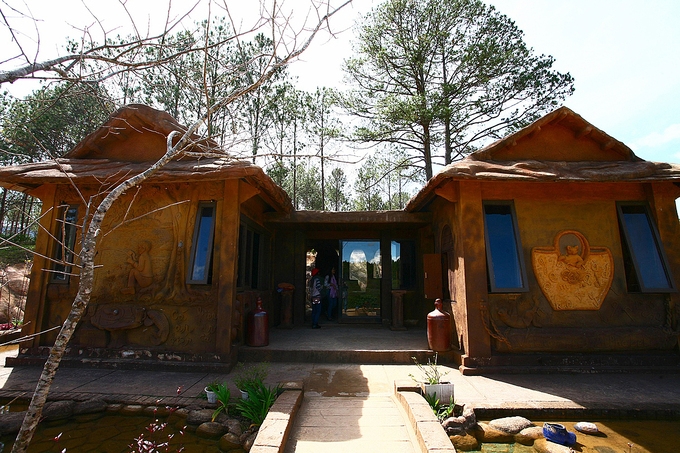
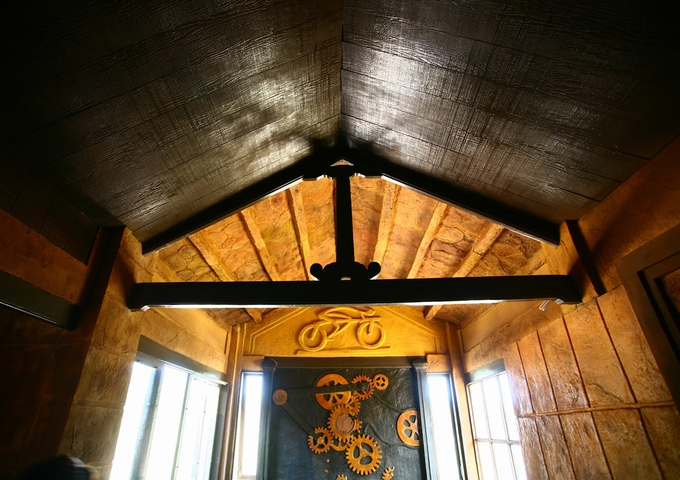
The house has U-shaped architecture.
(Photo: VNE)
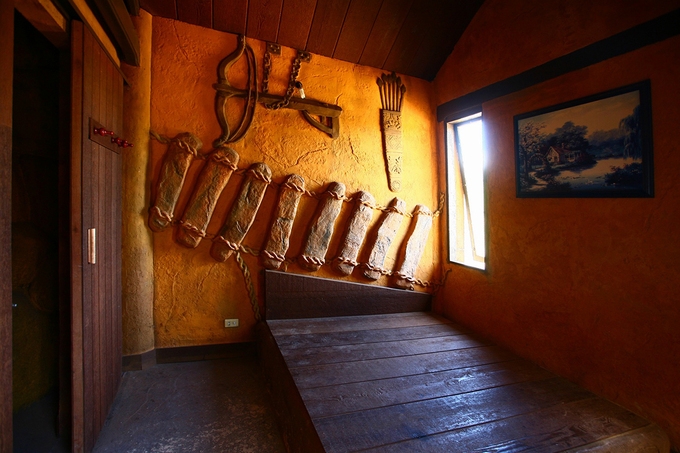
Bedroom is located on the left side of the house. A small window brings lights and air into the room. Cultural patterns of the Central Highlands area are glued on the wall.
(Photo: VNE)
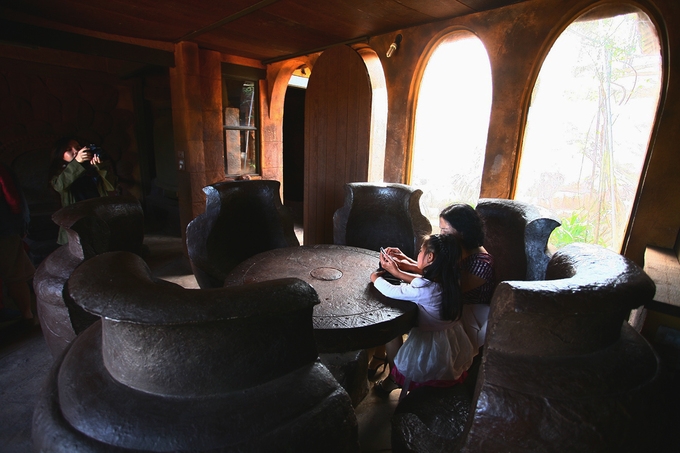
Dining room is in the middle of the house. This is also the mutual living space for the family, with a set of earthware tables and chairs.
(Photo: VNE)
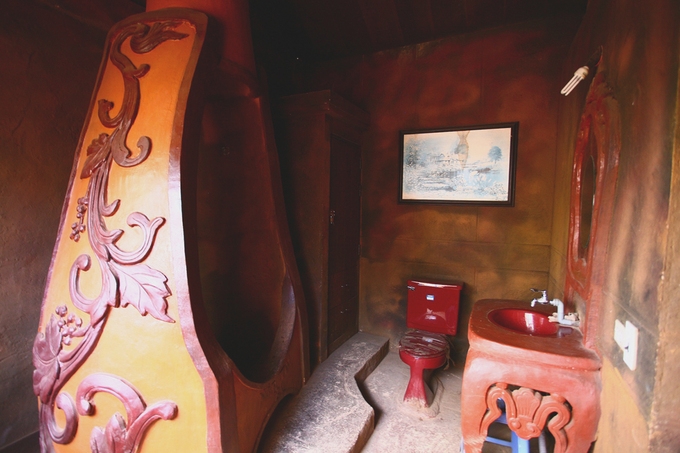
The toilet is equipped with modern sanitary facilities.
(Photo: VNE)
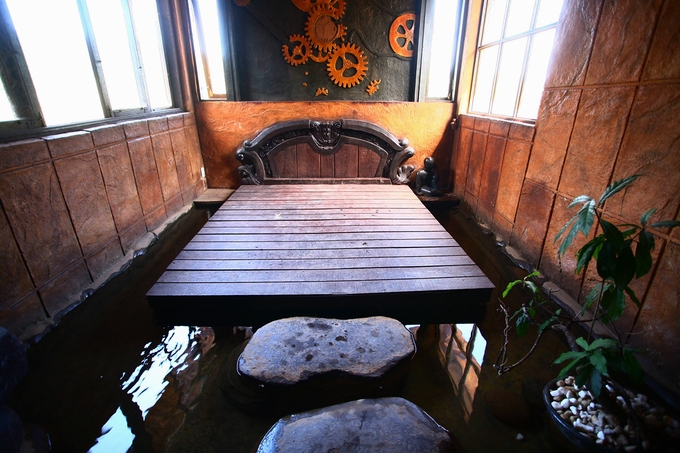
Another bed room. The special thing is, the bed is placed above a pool of water.
(Photo: VNE)
(Photo: VNE)
The name of Vietnam is highlighted on one side of the house.
The house was recorded by the Center of the Vietnam Book of Records as "the red basaltic house with the most unique style", and "the first and largest red basaltic house with Vietnam map on roof".
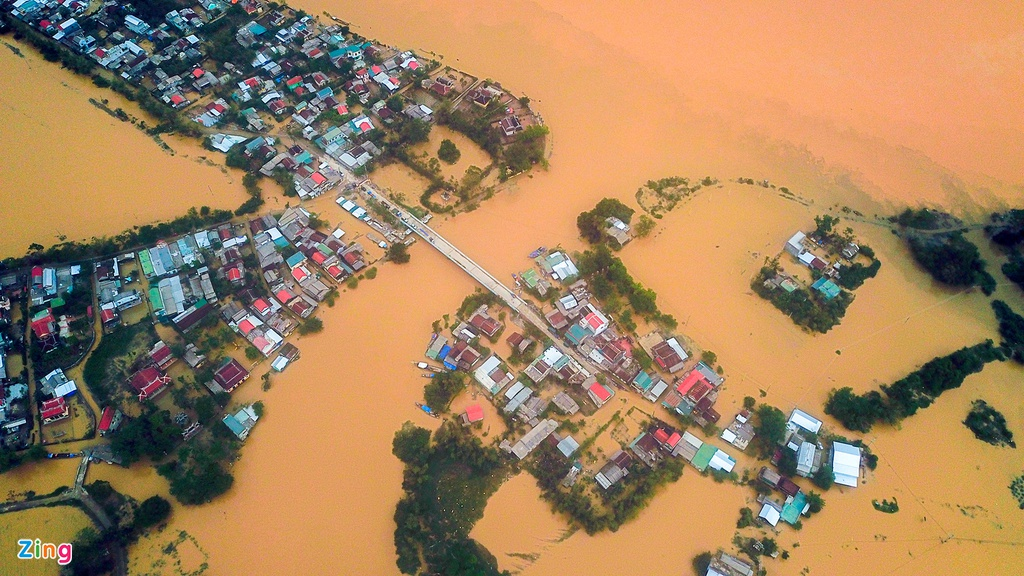
Central provinces are heavily battered by the violent flood. With at least 166,700 houses flooded in water, properties badly damaged, local people’s lives are badly ...
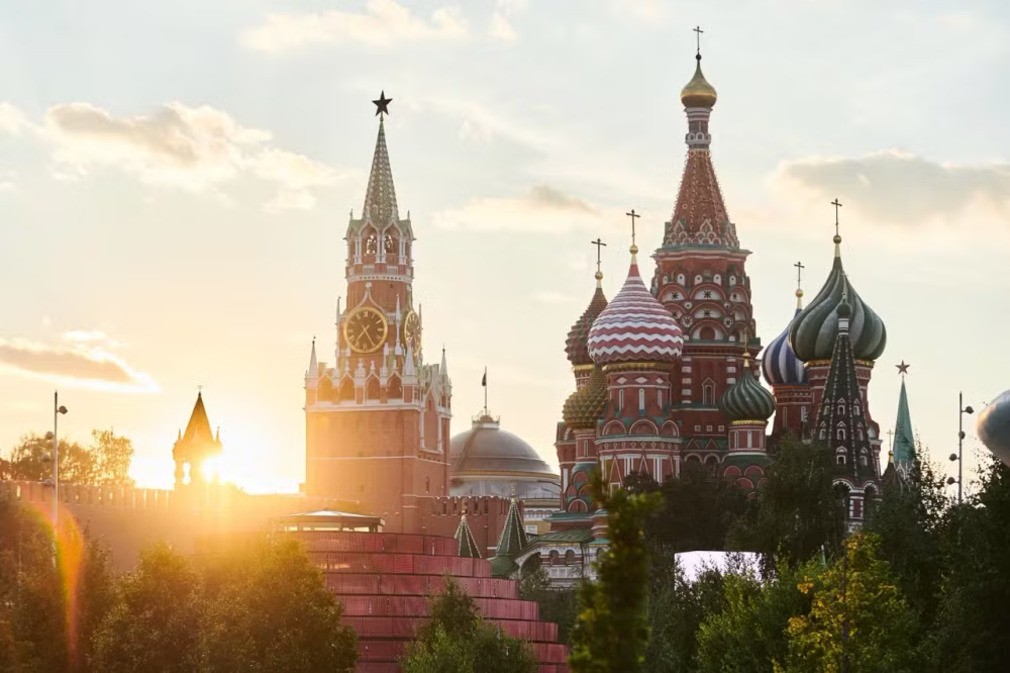
With a Vietnamese tourism promotion page, Moscow is demonstrating its growing interest in the Vietnamese market to create a more comfortable, accessible, and personalised destination experience.
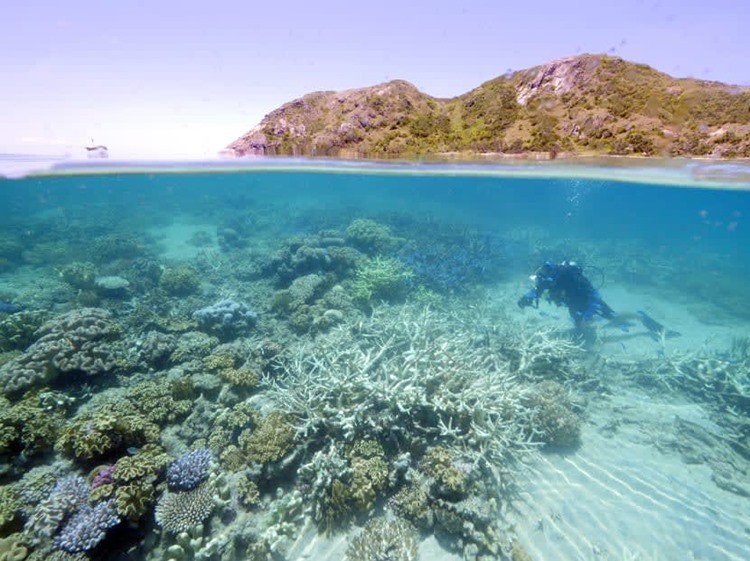
Viet Nam's long coastline and thousands of offshore islands have created ideal conditions for thriving coral reef ecosystems. As summer travel peaks in 2026, destinations including Hon Mun, Cu Lao Cham, Phu Quoc, Vinh Hy, and Con Dao are expected to attract travelers eager to explore vibrant underwater landscapes through snorkeling and scuba diving.
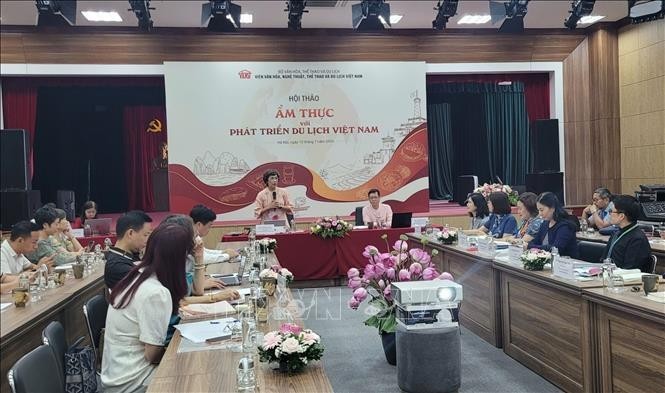
On July 13, the Vietnam Institute of Culture, Arts, Sports and Tourism under the Ministry of Culture, Sports and Tourism held a seminar titled “Cuisine and the development of Vietnam’s tourism”. The seminar gathered managers, experts, researchers, and businesses to recommend solutions to bringing cuisine values into play as a cultural resource, contributing to enhancing competitiveness and creating Vietnam’s tourism brand in the context of international integration.
Ho Chi Minh City orientates tourism development linked to urban economy, night-time economy, culture industry and experience economy, changing from event organizing model to developing event economy model.
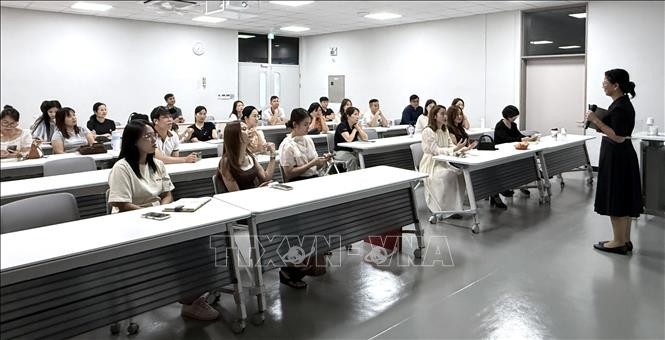
According to a report released by Statistics Korea on July 9, Vietnam ranked first in the number of foreign nationals entering the RoK for long-term stays in 2025, with approximately 98,000 people. Vietnamese citizens accounted for the largest share among foreigners staying in the country for more than 90 days.
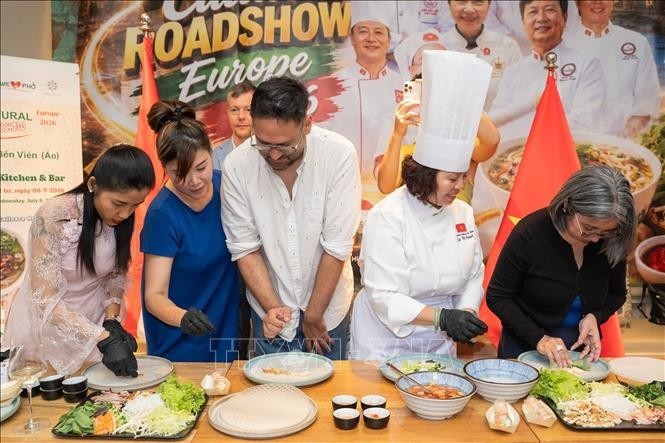
On the evening of July 8, at Pho Saigon Restaurant in Vienna, Austria, the Vietnamese Embassy in Austria, in coordination with the We Love Pho Association, the Ninh Binh Culinary Culture Association, and Vietnamese culinary artisans and experts, organized a program titled “Pho and Culinary Culture: Bringing Vietnamese Identity Closer to Europe and the World.”The event was one of the stops on the Journey of Pho and Vietnamese Culinary Culture Across Europe, contributing to the promotion of Vietnam’s image, people, and cultural values to international friends.
In the first six months of 2026, Vietnam welcomed more than 742,000 Russian visitors, 2.8 times higher than in the same period last year. This strong recovery has made Russia the third-largest source market for Vietnam's tourism industry, behind only China and the Republic of Korea.
In early July, French magazine Biba Magazine published an article stating that Vietnam attracts French travelers not only with its landscapes but also with its diverse and refined cuisine. The magazine introduced a range of dishes and culinary experiences that it considers unmissable when visiting the S-shaped country.


 Travel
 Travel
 Travel
 Travel
 Travel
 Travel
 Travel
 Travel