
Vietnam Fatherland Front Launches “Month for Listening to the People” and “Digital Villages”
 | Five Key Priorities of the Vietnam Fatherland Front in the New Term |
| “Digital Front” - New Space for Reaching Out to, Receiving, and Responding to Public Feedback |
On May 13, following the closing session of the 11th National Congress of the Vietnam Fatherland Front for the 2026-2031 term, the Standing Committee of the Central Committee of the Vietnam Fatherland Front held a press conference to announce the results of the Congress and answer questions from news agencies and the press.
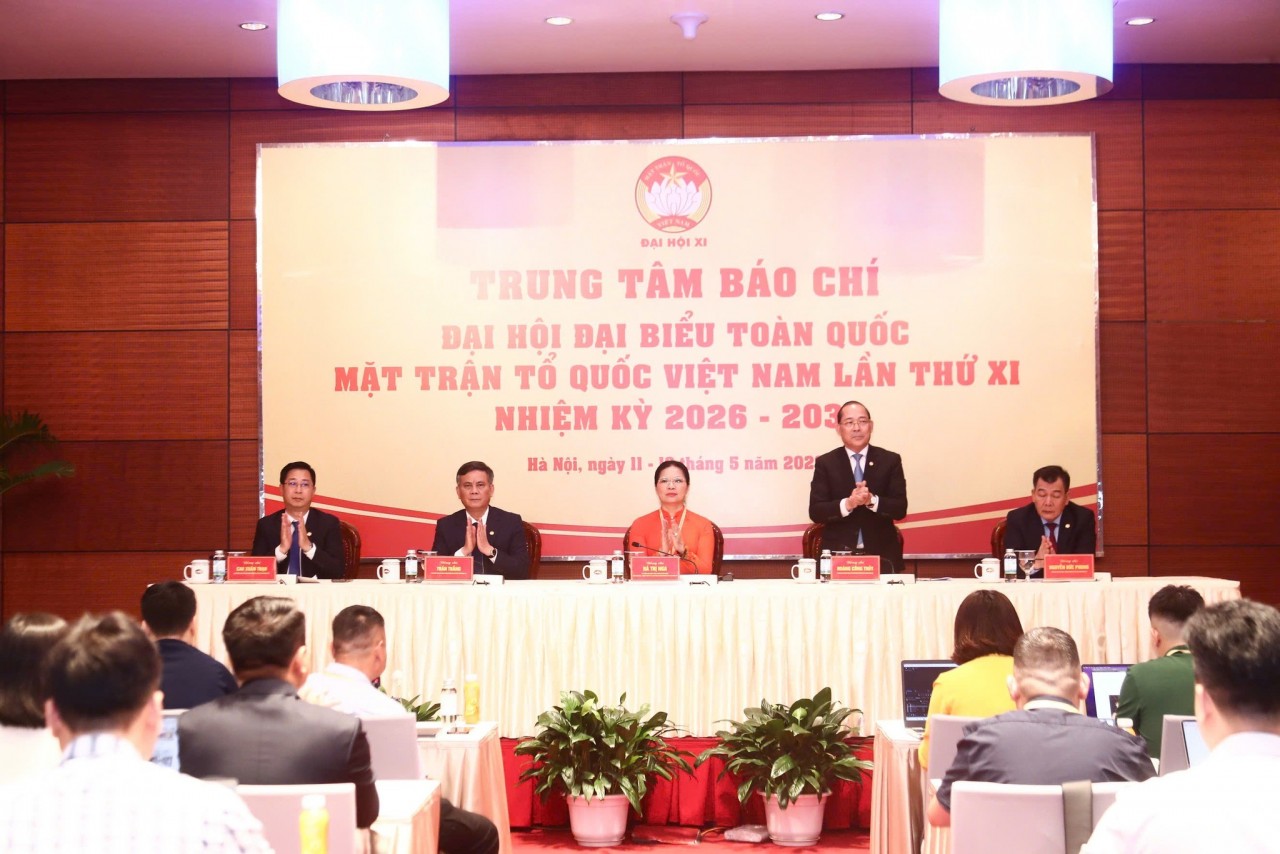 |
| Press conference announcing the results of the 11th National Congress of the Vietnam Fatherland Front for the 2026-2031 term. (Photo: Vietnam Fatherland Front) |
Launching the “Month for Listening to the People,” ensuring citizens’ recommendations do not “fall into silence”
According to information from the Vietnam Fatherland Front, responding to journalists’ questions regarding solutions to enhance the VFF’s role in supervision and social criticism during the new term, Ha Thi Nga, Vice President and Secretary-General of the Central Committee of the Vietnam Fatherland Front, said the VFF would step up the collection of public feedback through digital platforms such as the “Digital Front 24/7.”
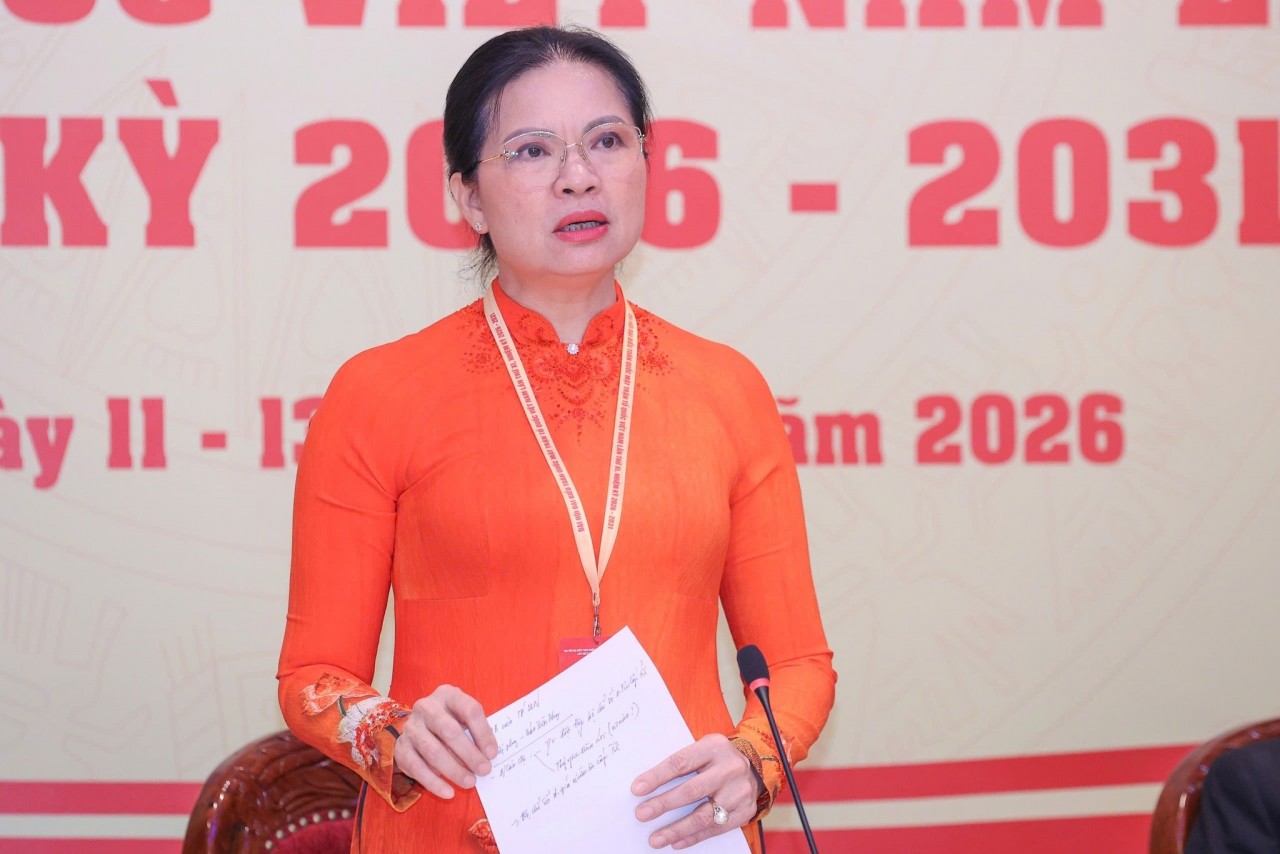 |
| Ha Thi Nga, Vice President and Secretary-General of the Central Committee of the Vietnam Fatherland Front, speaks at the press conference. (Photo: Vietnam Fatherland Front) |
“The Front’s supervision is supervision by the entire people. Opinions and recommendations from citizens will be forwarded to the relevant authorities, ensuring substantive implementation and preventing legitimate public opinions and recommendations from falling into silence,” Ha Thi Nga said.
She added that current Party regulations clearly stipulate that following recommendations made by the VFF through supervision and social criticism activities, the relevant Party agencies and organizations are responsible for reporting on the implementation results of the Front’s recommendations. Only when the people’s proposals and recommendations are addressed and answered in the most appropriate manner can public satisfaction be achieved.
VFF leaders also said that the “Month for Listening to the People” model would be implemented specifically to gather public opinions and ensure objectivity, comprehensiveness, and adequacy across all sectors, especially on issues currently drawing the attention of voters and citizens.
“This is not an ordinary dialogue activity. Instead, it will involve periodic direct dialogues between representatives of different social classes and strata and leaders of the Party and the State,” Ha Thi Nga said.
Formalistic movements to be discontinued
Responding to questions regarding the formalistic nature of some emulation movements, Cao Xuan Thao, Vice President of the Central Committee of the VFF, acknowledged that this limitation has been clearly recognized.
According to him, the Front and its member organizations will reform emulation movements and campaigns in a direction that clearly identifies actors and specific target groups. The outcomes of these movements must focus on addressing the most pressing issues in people’s daily lives.
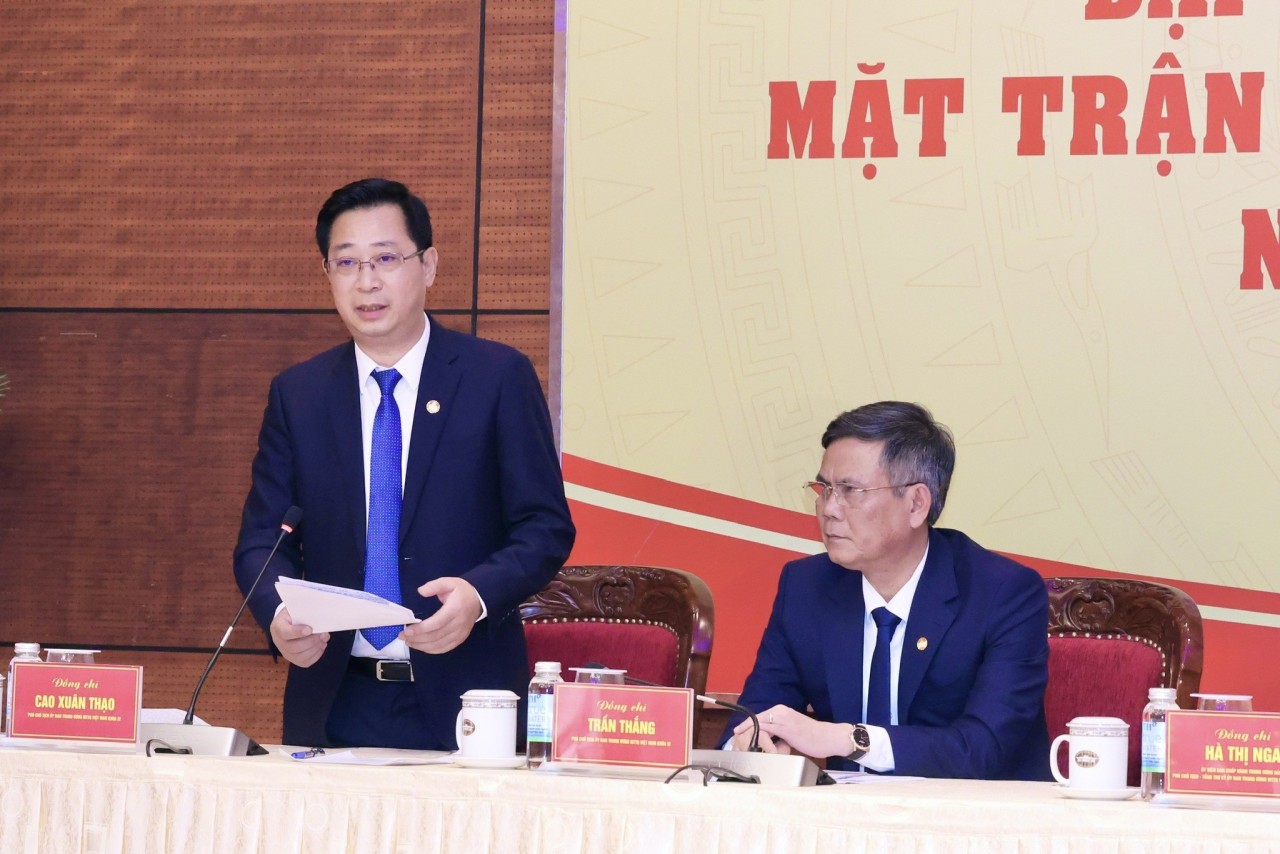 |
| Cao Xuan Thao, Vice President of the Central Committee of the Vietnam Fatherland Front, speaks at the press conference. (Photo: Vietnam Fatherland Front) |
“We must ensure that people can genuinely feel that emulation movements bring substantive results, avoiding the situation where ‘whether there is a movement or not, nothing changes.’ We must aim for real results and real action, focusing on issues directly affecting the people. For example, environmental issues, traffic safety and order, grassroots security and public order, and especially the application of digital transformation in people’s daily lives. These are all issues closely connected to the people,” Cao Xuan Thao said.
According to him, guidance and directives will be issued throughout the VFF system to comprehensively review and reassess all current emulation movements and campaigns. Movements that remain practical and vibrant will continue and be renewed with new solutions. Movements that are merely formalistic and no longer effective will be proactively concluded and discontinued so that other movements can “take root and flourish.”
At the same time, the Front and its member organizations will be encouraged to launch new emulation movements and campaigns focused on today’s urgent issues. Examples include the “Digital Literacy for All” movement, campaigns encouraging people to participate in private-sector economic development, and initiatives such as “say no to dirty food” or “all people say no to counterfeit and low-quality goods.”
“These movements do not need to last too long, only focusing on one to two years. Once their missions are completed, they should conclude, rather than becoming movements that ‘have a starting point but no known ending point,’” he said.
Regarding implementation methods, Vice President Cao Xuan Thao emphasized that in the past there had been a tendency to “launch a movement and then rest,” only later studying implementation measures and organizing training and guidance sessions. In many cases, it took several months, or even half a year after the launch ceremony, before movements actually gained momentum. The VFF will reform this approach so that immediately after launching a movement, implementation solutions, concrete criteria, and measurable indicators are introduced simultaneously, following the new mindset that once a movement is “launched,” it must also be “set in motion.”
In addition, each movement will be tied to emulation criteria and inspection mechanisms. For example, the environmental protection movement will introduce specific models and criteria such as: green - clean - beautiful families; green - clean - beautiful residential areas; green - clean - beautiful communes/wards/special zones; green - clean - beautiful offices/units/schools; and green - clean - beautiful factories/businesses.
He also said that activities considered overly formalistic, such as unnecessary meetings, briefings, and inspections, would be reduced to the maximum extent possible in order to focus efforts at the grassroots level and develop practical grassroots models.
“Promoting digital transformation is a major direction outlined in the fourth Action Program of the Congress Documents, focusing on innovation, digital transformation, and the ‘Digital Literacy for All’ movement. All of these contents will serve movement-related work, including the development of databases for emulation movements and campaigns, as well as the application of artificial intelligence (AI) to support the implementation of these movements,” Vice President Cao Xuan Thao said.
Developing the “Digital Front” and building the “Digital Village” model
Responding to questions regarding difficulties in gathering public opinions following the merger of communes and wards, Cao Xuan Thao said this is a practical issue, particularly in mountainous areas where greater geographical distances make it more difficult to reach residents.
According to him, the VFF will maintain direct engagement through the system of VFF Committees and Front Working Committees in residential areas, while also promoting digital platforms to support interaction with citizens.
He noted that the “Digital Front” platform has now connected all member organizations, expanded to 34 provinces and centrally governed cities and 3,321 communes, and currently has around 50,000 regular user accounts.
“We will implement the ‘Digital Village’ model to connect community activities. This will serve as a channel for the Vietnam Fatherland Front and Front Working Committees to interact directly with and listen to the people through applications,” Cao Xuan Thao said.
 | A Bridge Connecting Compatriots No matter where they live, Vietnamese people always turn their hearts toward their homeland. Therefore, whenever natural disasters or epidemics strike the country, overseas Vietnamese ... |
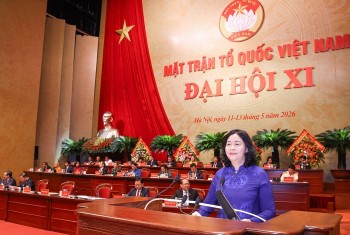 | Bui Thi Minh Hoai Re-elected President of Vietnam Fatherland Front Central Committee for 2026-2031 On the morning of May 13, continuing the working agenda, the 11th National Congress of the Vietnam Fatherland Front (VFF) heard a report on the ... |
Related Stories
 Travel
Vietnam Accelerates Tourism Digitalization with AI and Data Technologies
 National
Top Leader Highlights Role of Vietnam’s Revolutionary Press in Digital Age
Recommended
 National
Top Leader Calls on Youth to Think Bigger, Learn Faster, Make More Contributions
 National
13th National Congress of the Ho Chi Minh Communist Youth Union Opens
 National
Vietnam Is “Key” to Maintaining Balance of the ASEAN Region
 National
Vietnam News Today (Jun. 24): Vietnam, Cuba Push for Stronger Ties in New Development Period
 National
Top Leader Welcomes Acting US Secretary of the Navy
 National
Vietnam News Today (Jun. 23): Vietnam, US Seek Stronger Defense Cooperation
 National
PM Attends Ground-breaking Ceremony of Hanoi’s Rental Housing, Metro Line Projects
 National