
“Digital Front” - New Space for Reaching Out to, Receiving, and Responding to Public Feedback
 | The 11th National Congress of the Vietnam Fatherland Front Holds Preparatory Session |
| Proposal to Enhance Overseas Vietnamese Resources and Improve Effectiveness of People-to-People Diplomacy |
Engaging with the public in the digital environment
The space for receiving public feedback by Front committees at all levels is expanding beyond periodic meetings or traditional voter contact sessions.
According to Nguyen Phi Hung, Permanent Vice Chairman of the Vietnam Fatherland Front Committee of Da Nang City, Front committees at all levels in the city have established a digital ecosystem through the deployment of the “Digital Front Portal” and the operation of platforms such as Front fanpages, the Da Nang Front Official Account (OA), and the 1022 Feedback Portal. Many public complaints and recommendations are now submitted through these platforms. Issues such as beach sanitation, urban order, or delayed projects often first emerge online rather than waiting to be raised at in-person meetings.
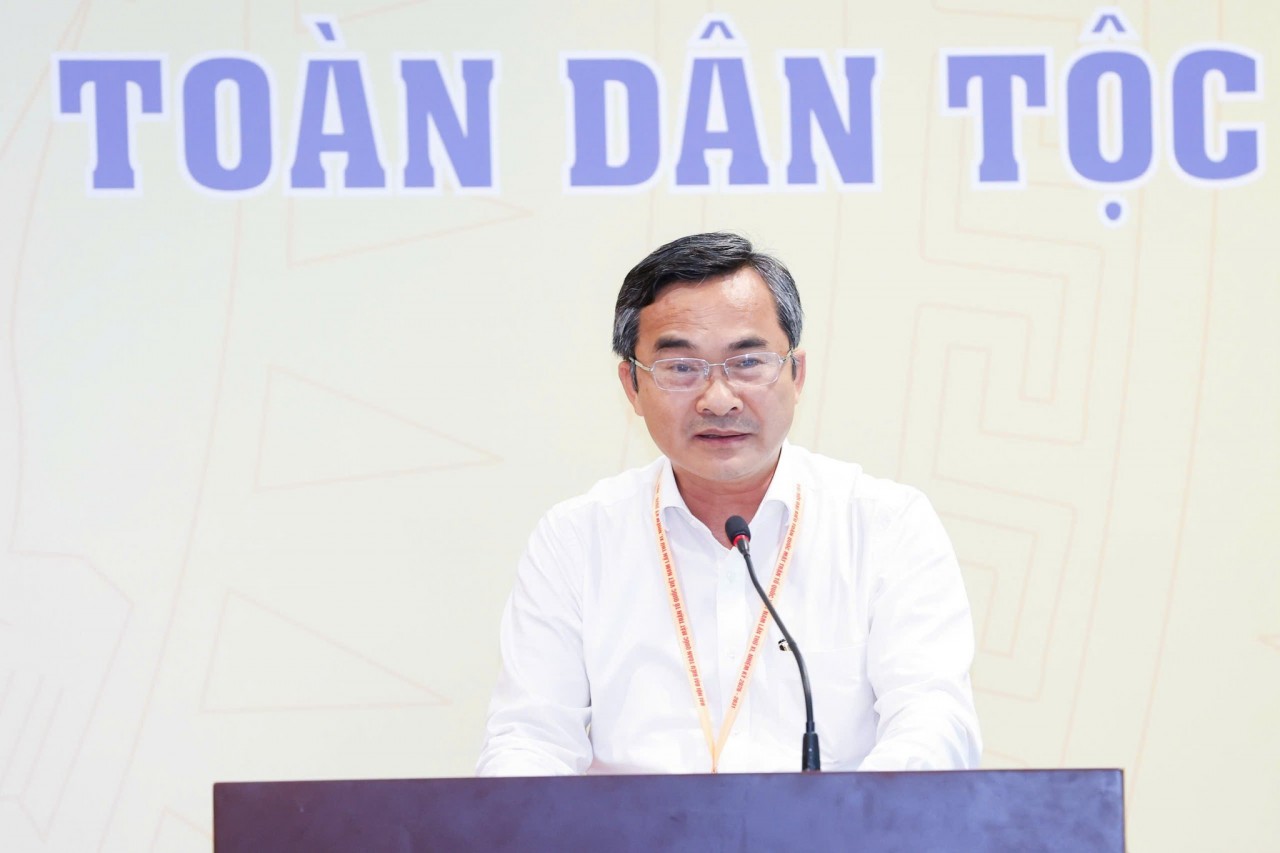 |
| Nguyen Phi Hung, Permanent Vice Chairman of the Vietnam Fatherland Front Committee of Da Nang City. (Photo: Vietnam Fatherland Front) |
In Da Nang, the Front’s fanpage system at various levels has attracted tens of thousands of followers. In addition to sharing information, many pages have become spaces receiving a large number of comments and messages related to livelihood and social welfare issues.
“Previously, understanding people’s thoughts and aspirations mainly relied on periodic meetings. Now, the Front has shifted from ‘listening to the people periodically’ to ‘listening to the people in real time’,” Hung said.
During the past term, Vietnam Fatherland Front Committees at all levels chaired and coordinated the organization of 3,330 voter contact conferences with deputies of the 15th National Assembly and People’s Councils at all levels for the 2021-2026 term, gathering 38,580 opinions and comments. Alongside direct meetings, the volume of information submitted through digital platforms has grown steadily. The Da Nang Vietnam Fatherland Front’s electronic information portal recorded nearly 3 million visits, while Front fanpages received thousands of complaints and recommendations from citizens.
Many Zalo groups connecting Front Working Committees with residential groups and local residents are also being used to update local developments on a daily basis. Feedback from grassroots communities is now transferred more quickly through electronic document systems instead of relying entirely on manual compilation as before. Front committees at all levels have also utilized data from the 1022 Feedback Portal and the Da Nang Feedback Portal to support the aggregation and monitoring of recommendations. Complaints with specific addresses and publicly disclosed processing progress have created an additional basis for supervisory activities.
In Hanoi, the digital transformation process in Front work is being implemented under the model of “one backbone, multiple channels,” connecting the city to grassroots levels through shared platforms such as iHanoi, HanoiWork, and the internal digital management system.
 |
| Youth Union members in Ngoc Ha Ward directly guide grassroots officials in using computers. (Photo: Hanoi Newspaper and Radio-Television Agency) |
According to Bui Huyen Mai, Chairwoman of the Vietnam Fatherland Front Committee of Hanoi, the application of digital platforms not only serves administrative management but also expands the Front’s ability to engage with citizens in the online environment. Information from the city to grassroots levels is updated in real time, while public feedback and recommendations are also received more quickly through online channels.
The shared digital workspace platform has now been deployed in 126 communes and wards. Mai noted that this has helped reduce administrative procedures, gradually shifting from document-based management to data- and goal-based governance, while ensuring continuity in the operation of the Front system from the city level down to the grassroots.
Alongside digital infrastructure, Hanoi is building a database guided by the principles of being “accurate, sufficient, clean, live, unified, and shared.” The standardization of data on union and association members is regarded as a foundation for renewing methods of communication and mobilization, gradually moving from campaign-based mobilization to approaches tailored to specific needs and target groups.
The city’s Front Committee is also piloting the “Digital village and residential Group” model. Under Hanoi’s orientation, public complaints and recommendations submitted through digital platforms will be received, processed, and responded to in real time, thereby creating a more direct interaction environment between citizens and grassroots Front organizations. In addition, the Hanoi Front has applied artificial intelligence to produce short videos, infographics, and communication content on digital platforms in order to improve access to official information in the online environment.
In the political report submitted to the 11th National Congress of the Vietnam Fatherland Front for the 2026-2031 term, the Presidium of the Central Committee of the Vietnam Fatherland Front stated that it had issued the Vietnam Fatherland Front Digital Transformation Project for the 2025-2030 period, with a vision to 2035; and launched the development of software systems for monitoring public opinion in cyberspace, the “Digital Front” platform, software for managing information on union and association members, software for managing supervision and social criticism activities, and systems for synthesizing opinions from voters and the public.
One of the goals set for the 2026-2031 period is for 100 percent of Vietnam Fatherland Front Committees, socio-political organizations, and member organizations to implement Digital Front Portals capable of receiving recommendations 24/7; and to strive for 100 percent of communes and wards to establish social media pages for direct interaction with citizens.
“Digital literacy for all” classes at the grassroots level
As digital infrastructure opens up new spaces for connectivity, many localities are now facing the next question: how to help people actually use these platforms in their daily lives.
According to the Vietnam Fatherland Front Committee of Nghe An Province, the “Digital literacy for all” movement is being implemented with the participation of mass organizations, teachers, students, Youth Union members, and grassroots volunteer forces.
 |
| The Women’s Union of Lam Thanh Commune (Nghe An) organizes a training session on participating in the “Digital literacy for all” program for officials, women members, and local residents, May 2026. (Photo: Vietnam Women Newspaper) |
In many remote communes, training sessions on installing VNeID, submitting online applications, making cashless payments, or using public services are being held directly at village cultural houses. In many places, the “hands-on guidance” approach is still maintained to help elderly residents become familiar with smartphones and digital platforms. Many Youth Union and association officials at the grassroots level now spend hours assisting residents in creating public service accounts, installing e-payment applications, or learning how to identify false information on social media.
Nghe An Province currently has more than 1,200 community digital transformation teams along with hundreds of volunteer youth groups supporting residents in accessing online public services. Models such as “Smart residential area,” “Digital residential group,” “Cashless market,” and “Market 4.0” have also been introduced in many localities. Through coordination with relevant agencies, Vietnam Fatherland Front Committees at all levels in Nghe An have additionally supported the introduction of OCOP products onto e-commerce platforms, creating additional market opportunities for cooperatives and small household producers.
In Thai Nguyen, the electronic office system and specialized digital signatures have been deployed across 100 percent of provincial- and commune-level Front agencies. Most administrative documents are now processed electronically. The locality has also organized training courses for Front officials on digital platform skills, data utilization, and online communication. Models such as “Digital residential group,” “Smart digital women,” and “Trade Union AI learning” are also being implemented at the grassroots level in connection with activities supporting residents in accessing online public services and essential digital platforms.
Many localities have also candidly pointed out existing “bottlenecks” in the digital transformation process. According to the Vietnam Fatherland Front Committee of Hanoi, membership data among member organizations remains inconsistent, making data connectivity and sharing difficult. Many platforms are still operating separately and have yet to form an integrated, interconnected system.
Several localities noted that the information technology capabilities of some grassroots Front officials remain limited, especially at the residential community level. The Vietnam Fatherland Front Committee of Da Nang stated that voter opinion data sources are still fragmented and have not yet been standardized for integration. Many duplicated complaints cannot yet be automatically categorized by the system, meaning that compilation still depends heavily on manual operations. Another challenge is filtering information in the online environment. Unlike direct voter meetings, feedback on digital platforms is multidimensional and may include unverified or inaccurate information, requiring appropriate tools and verification capacity.
According to the Vietnam Fatherland Front Committee of Da Nang, one major issue at present is that although residents have submitted feedback, they are often unable to track processing progress or final outcomes.
“If the response stage is not improved, digital transformation may stop at merely digitizing the information reception process,” a representative of the Vietnam Fatherland Front Committee of Da Nang commented.
As the volume of incoming feedback continues to grow, many localities have raised the issue of improving data processing efficiency.
The Vietnam Fatherland Front Committee of Da Nang has proposed studying the development of a digital map of voter sentiment, integrating data from multiple sources such as neighborhood meeting minutes, online feedback portals, and social media to support the monitoring of social welfare issues by area.
Meanwhile, Hanoi plans to continue improving the “Capital digital front” platform toward synchronization and interconnectivity; build a database that is “accurate, sufficient, clean, live, and shared”; and study the application of Big Data, AI, and data analytics to support forecasting and public opinion monitoring.
At Discussion Center No. 1 of the 11th National Congress of the Vietnam Fatherland Front for the 2026-2031 term on May 11, Truong Thi Hoa, Vice Chairwoman of the Ho Chi Minh City Commercial Arbitration Center, proposed that the Vietnam Fatherland Front launch a campaign on the “Digital Front.” According to her, in order to build a “Digital Front,” it is necessary to have digital citizens, digital Front officials, and digitalized Front organizations at all levels, along with strengthened training and development of digital skills.
 | Homes Rebuilt After the Natural Disaster Following the devastating floods at the end of 2025, many households in Hoa Thinh Commune in Dak Lak Province were left homeless. Yet just over ... |
 | The 11th National Congress of the Vietnam Fatherland Front Holds Preparatory Session On May 11, more than 1,300 delegates attending the 11th National Congress of the Vietnam Fatherland Front (VFF) for the 2026-2031 tenure convened for a ... |



Most read


Related Stories
 National
Vietnam News Today (July 12): Vietnam Ready to Share Digital Transformation Experience with Timor-Leste
 National
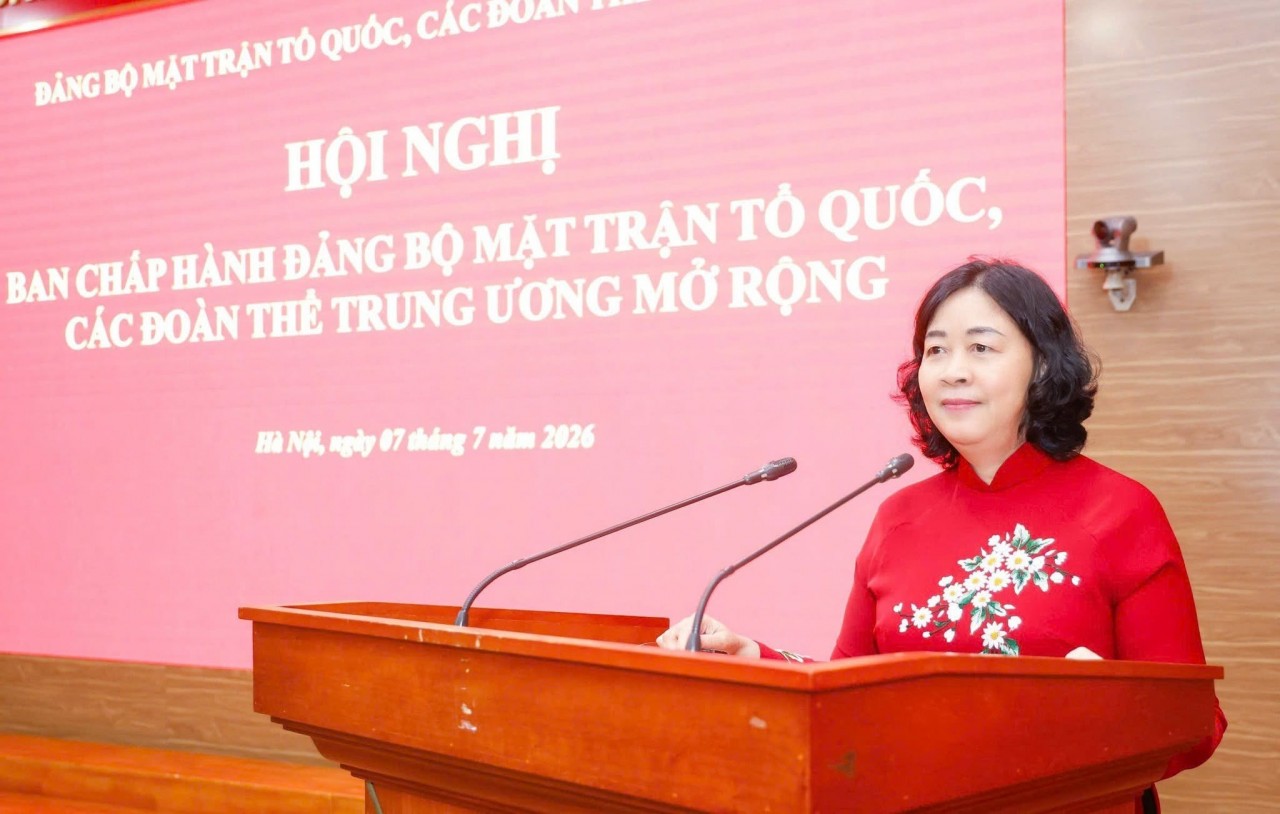
Party Committee of the Viet Nam Fatherland Front and Central Mass Organizations: Accelerate Organizational Streamlining and Digital Transformation in Second Half of Year
 Travel
Vietnam Accelerates Tourism Digitalization with AI and Data Technologies
 National
Vietnam Fatherland Front Launches “Month of Listening to the People”
Recommended
 Viet's Home
9 Vietnamese Students Receive Full Scholarships from Fast Retailing Foundation in Japan
 Viet's Home
Many Fallen Soldiers' Remains Recovered in Da Nang and Cao Bang
 Viet's Home
Indian Ambassador Thanks Vietnam for Swift Response to Phu Quoc Speedboat Capsizing
 Viet's Home
Portugal Crowned Champion of 2026 Da Nang International Fireworks Festival
Popular article
 Viet's Home
Ca Mau Enhances Capacity of Officials to Effectively Mobilize International Aid
 Viet's Home
Over 50 Calls and Messages Help Search for Fallen Soldiers at Tan Son Nhat Airport
 Viet's Home
Palestinian Ambassador Saadi Salama Awarded "For the Cause of Culture, Sports and Tourism" Medal
 Viet's Home