Vietnam News Today (Apr. 20): Vietnamese, German Universities Cooperate to Advance High-Quality Workforce Training

Vietnam News Today (Apr. 20): NA Chairman wraps up successful working visit to Türkiye; Vietnam accelerates rail integration with China to unlock trade, logistics gains; Vietnamese, German universities cooperate to advance high-quality workforce training; Vietnam Embassy in Japan boosts legal outreach for nationals.
April 20, 2026 | 07:00
Vietnam News Today (April 18): Vietnam, China Sign 32 Cooperation Documents
Vietnam News Today (Apr. 19): South Korea’s Top Chaebol Leaders Set to Visit Vietnam

Vietnam News Today (Apr. 20) notable headlines

NA Chairman wraps up successful working visit to Türkiye

Vietnam accelerates rail integration with China to unlock trade, logistics gains

Vietnamese, German universities cooperate to advance high-quality workforce training

Vietnam Embassy in Japan boosts legal outreach for nationals

Super El Nino looms over Vietnam with extreme weather risks

Nearly 100 tonnes of Vietnamese fruits, vegetables airlifted to UAE

Bac Hoa village: A rising community tourism destination in Bac Ninh

Mang Den emerges as holiday hotspot during April 30–May 1 break

World Coffee Heritage Forum opens in Dak Lak

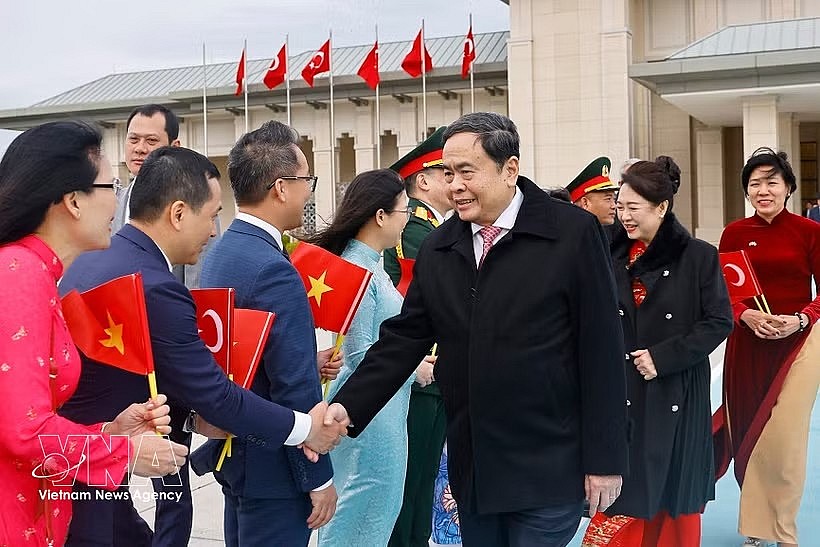
National Assembly Chairman Tran Thanh Man and his spouse Nguyen Thi Thanh Nga at the farewell ceremony at Istanbul Airport, Türkiye. (Photo: VNA)

NA Chairman wraps up successful working visit to Türkiye

National Assembly Chairman Tran Thanh Man and his spouse Nguyen Thi Thanh Nga, together with a high-ranking Vietnamese delegation, arrived in Hanoi on April 18 evening, concluding their successful working trip for the 152nd Assembly of the Inter-Parliamentary Union (IPU-152) and bilateral activities in Türkiye.

During the trip, Chairman Man attended the opening ceremony and delivered an important speech at the general debate of the IPU-152 Assembly.

In his remarks, he provided a comprehensive assessment of the global situation, highlighting its unprecedented complexity and rapid changes. In this context, he stressed that the international community still has grounds for hope and confidence in the future by strengthening cooperation and solidarity at global and regional levels, and through concrete actions by each country, based on respect for international law, for peace and development.

He also put forward proposals to enhance parliamentary cooperation, including promoting dialogue and trust-building, developing legal frameworks, and strengthening oversight of the implementation of international commitments, while ensuring fair and equal law enforcement.

With Vietnam’s foreign policy of independence, self-reliance, peace, friendship, cooperation, and development, Chairman Man reaffirmed that Vietnam will continue to contribute actively, proactively, and responsibly to addressing common regional and global issues together with international friends and partners, cited VNA.

On this occasion, he held numerous bilateral meetings with leaders of parliaments from various countries, helping to strengthen political trust and promote cooperation in multiple areas such as economy, trade, investment, science and technology, innovation, digital transformation, and defense and security.

In Istanbul, he also met with Turkish President Recep Tayyip Erdoğan and Speaker of the Grand National Assembly Numan Kurtulmuş. The leaders of both countries agreed that after nearly 50 years of diplomatic relations, Vietnam–Türkiye relations have reached a new level - more strategic - and should be further elevated in line with the potential and aspirations of both sides.

Recognizing the significant potential for cooperation, both sides emphasized making economy, trade, and investment key pillars of bilateral relations, and facilitating the goal of raising bilateral trade turnover to 4 billion USD. They also encouraged further Turkish investment in Vietnam to support the country’s socio-economic development.

Both sides agreed to continue promoting parliamentary cooperation through increased delegation exchanges, regular interactions between friendship parliamentary groups, the sharing of experience in legislation and oversight, and the development of a favourable legal framework for bilateral cooperation, thereby deepning the friendship and multifaceted cooperation between Vietnam and Türkiye.

Chairman Man also attended a policy dialogue on promoting Vietnam–Türkiye cooperation, received the Honorary Consul of Vietnam in Istanbul, and met with staff of the Vietnamese Embassy and members of the Vietnamese community in Türkiye.

With substantive activities, the top legislator’s working visit to Türkiye was a great success, contributing to affirming Vietnam’s image as a proactive and responsible partner in promoting parliamentary cooperation and strengthening multilateralism. It also created new momentum for strengthening Vietnam–Türkiye relations in the time ahead.

Vietnam accelerates rail integration with China to unlock trade, logistics gains

Vietnam is stepping up efforts to strengthen railway connectivity with China, as surging demand for passenger travel and cross-border trade puts increasing pressure on existing infrastructure.

The push comes amid growing regional integration and follows high-level agreements reached during the recent visit of Party General Secretary and President To Lam to China, where railway cooperation emerged as a key priority. His use of rail transport during the trip also underscored the strategic importance of the sector.

Demand rising rapidly

Since resuming operations in May 2025, the Hanoi–Dong Dang–Nanning international railway route has served more than 25,000 passengers, including over 4,800 in the first quarter of 2026 alone.

Beyond passenger transport, the route acts as a gateway linking Vietnam to China’s extensive high-speed rail network, enabling onward connections to major economic hubs such as Beijing, Guangzhou and Shenzhen, and even further to other countries.

Inbound travel demand is also surging, with around 1.4 million Chinese visitors arriving in Vietnam in the first quarter of 2026, making China the largest source market. This trend is increasing the need for reliable, cost-effective transport solutions such as rail.

Meanwhile, cross-border rail freight between Vietnam and China exceeded 1 million tonnes in 2025, rising nearly 30% year on year, according to Vietnam Railways Corporation. The sharp increase underscores surging demand, and at the same time exposes the growing strain on existing infrastructure, much of which is approaching capacity limits.

Infrastructure bottlenecks remain

Freight transport faces even greater pressure. Key rail corridors, including Kep–Dong Dang and Cao Xa–Dong Dang–Pingxiang, are operating close to capacity as trade flows expand between the two countries and beyond to Central Asia, Russia and Europe.

However, infrastructure limitations remain a major constraint. Differences in rail gauge - 1,000 mm in Vietnam versus 1,435 mm in China - require most routes to rely on transshipment, increasing costs and transit times. Currently, only the Dong Dang–Pingxiang line allows direct connection, according to VOV.

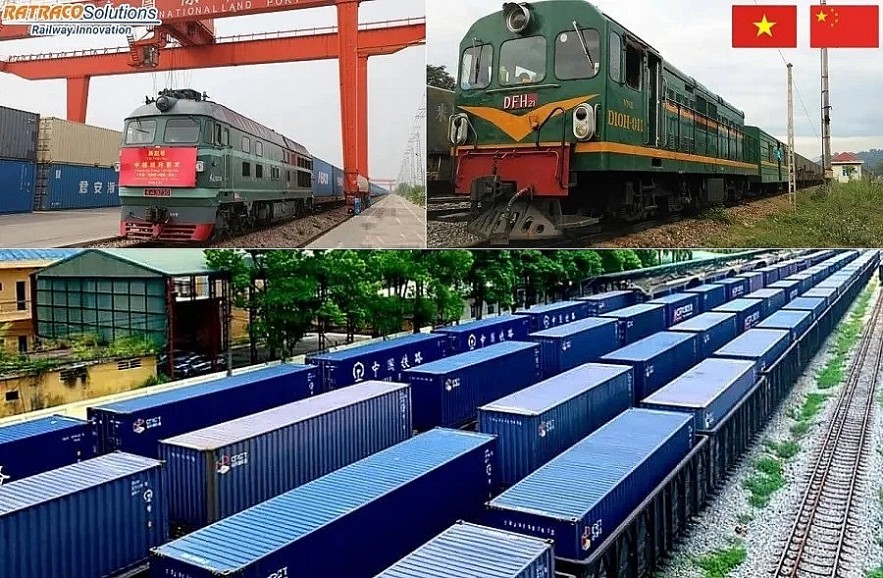
Vietnam–China rail links boost logistics capacity and reinforce Vietnam’s strategic role in regional trade flows. (Photo: Ratraco SolutionS)

According to Hoang Gia Khanh, CEO of Vietnam Railways Corporation, cross-border routes mainly operate via Lao Cai and Dong Dang, but their capacity is limited due to the lack of synchronisation in infrastructure.

Strategic projects gain momentum

Progress is underway with the recent launch of the Lao Cai–Hanoi–Hai Phong railway project, a nearly 391-km line built to standard gauge (1,435 mm) with a design speed of up to 160 km/h. The project is expected to become a backbone corridor linking northern Vietnam with China.

Additional routes, including Hanoi–Dong Dang and Mong Cai–Ha Long–Hai Phong, are also being advanced. Once completed, these lines will form an integrated network connecting Vietnam not only with China but also with broader Eurasian rail systems.

During the recent high-level visit by Party General Secretary and President To Lam, both sides witnessed the signing of key railway cooperation documents, including feasibility studies and agreements on human resource training.

Minister of Construction Tran Hong Minh said the feasibility study for the Lao Cai–Hanoi–Hai Phong line provides a critical foundation for negotiations, financing arrangements and project implementation, paving the way for construction in the near future.

Beyond transport: a growth driver

Enhanced rail connectivity is expected to do more than improve transport efficiency. A modern railway system could reduce logistics costs, boost the competitiveness of Vietnamese exports, and support trade, investment and tourism.

The cooperation with China also offers opportunities for Vietnam to access advanced technologies and strengthen its domestic railway industry, from maintenance to manufacturing.

In the longer term, improved connectivity could help Vietnam integrate more deeply into transcontinental rail networks linking Asia and Europe.

With demand rising and opportunities expanding, the pace of implementation will be critical. Without timely upgrades and policy reforms, Vietnam risks missing out on shifting trade and supply chain dynamics.

Conversely, accelerated rail development could become a key driver of sustainable economic growth in the decades ahead.

Vietnamese, German universities cooperate to advance high-quality workforce training

A memorandum of agreement (MoA) has been signed between Vietnam’s CMC University and the Schools of Next Practices (S-Next) under Germany’s Steinbeis University, focusing on strengthening cooperation in education and training for a highly skilled workforce.

Under the MoA, the two sides will introduce Germany’s practice-oriented education model into Vietnam while building a long-term cooperation roadmap. Key initiatives include establishing a transfer center in Vietnam, developing joint master’s degree programmes, enhancing research capacity in fields such as artificial intelligence and cybersecurity, and building a digital training ecosystem.

Speaking at the signing ceremony in Berlin on April 17, Vietnamese Ambassador to Germany Nguyen Dac Thanh described the agreement as a meaningful step in CMC University’s internationalization strategy.

He noted that amid the rapid transformation of the knowledge-based economy and technological landscape, linking a pioneering “digital university” in Vietnam with a business-integrated education model such as S-Next reflects a forward-looking and appropriate approach. The ambassador also affirmed that the embassy will continue to support the partnership to ensure tangible benefits for both countries’ education systems, according to VNA.
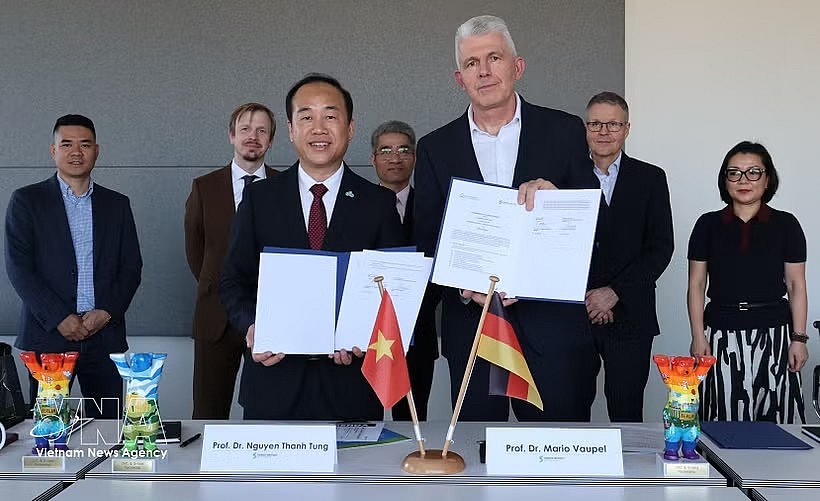
The signing ceremony for a memorandum of agreement on strengthening cooperation in education and training for a highly skilled workforce between CMC University and S-Next on April 17 (Photo: VNA)

Talking to the Vietnam News Agency, Prof. Dr Mario Vaupel, Chief Executive Officer at Steinbeis University, characterised the MoA as a foundational move that will pave the way for long-term cooperation. He expressed his confidence that the partnership will help develop modern learning models and innovative educational approaches for younger generations.

Echoing this view, Assoc. Prof. Dr. Nguyen Thanh Tung, President of CMC University, emphasized that the collaboration will open up opportunities for students to participate in global study programmes and undertake internships with Steinbeis partner enterprises in Germany and across Europe.

He noted that the partnership will not only enhance training quality but also directly address the growing demand for highly skilled workers in the context of the Fourth Industrial Revolution. Within the broader framework of the Vietnam – Germany strategic partnership, he described the initiative as a highlight of educational diplomacy.

Founded in 1971 in Stuttgart, Steinbeis has developed into Europe’s largest technology transfer network, comprising more than 1,000 centers and 6,000 experts and implementing over 10,000 projects annually worldwide.

Vietnam Embassy in Japan boosts legal outreach for nationals

The Embassy of Vietnam in Japan, in coordination with the Tokyo Metropolitan Police Department, organised a legal awareness seminar for the Vietnamese community in Tokyo on April 19.

The event attracted around 150 participants, including representatives of Japanese companies employing Vietnamese workers, Vietnamese community associations, workers, as well as officials from Japanese agencies and local media. The seminar aimed to enhance legal awareness and support the community’s integration into Japanese society.

Discussions focused on key issues, including Japanese laws, traffic safety regulations, and disaster preparedness skills that help ensure the safety of Vietnamese citizens in Japan.

Notably, representatives from the Immigration Services Agency of Japan provided an overview of entry, exit and residency regulations, while also sharing practical advice on how to identify and avoid common scams such as fraudulent “high-paying light work” offers and illegal labour brokerage schemes.

Speaking at the seminar, Nguyen Sau, Minister-Counselor at the Vietnamese Embassy in Japan, highlighted that the Vietnamese community in Japan has continued to grow and make positive contributions to Japan’s socio-economic development as well as bilateral ties. However, he noted that some legal violations still occur due to limited information or incomplete understanding of regulations, VOV reported.
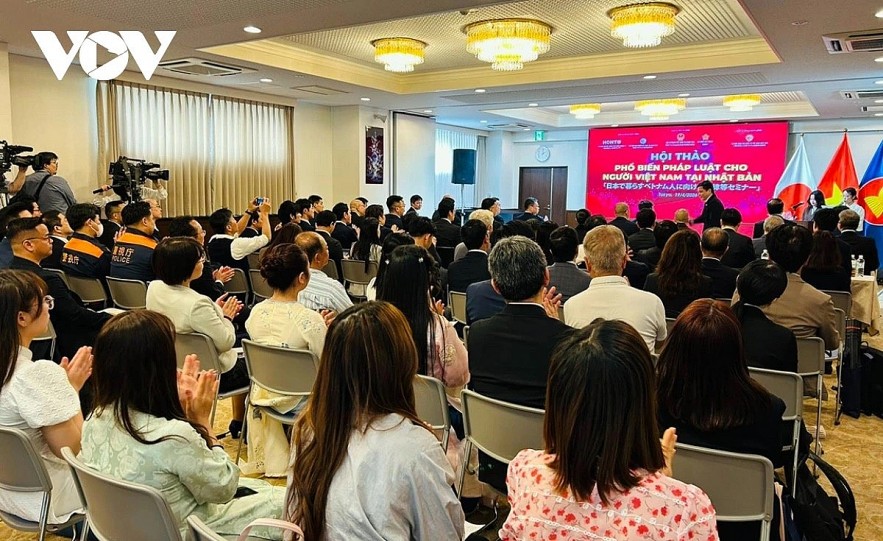
The Embassy of Vietnam in Japan holds a legal awareness seminar in Tokyo to support Vietnamese nationals living, studying and working in Japan.

The seminar aims to provide updated information and reaffirms the Embassy’s commitment to supporting the community in accessing legal knowledge in a timely and accessible manner, he emphasized.

From the Japanese side, Nochi Tetsuo, Chief of Yoyogi Police Station under the Tokyo Metropolitan Police Department, praised the role of the Vietnamese community, noting that Vietnamese nationals account for about one-quarter of the total foreign workforce in Japan and rank among the largest groups by nationality. He expressed hope that through such initiatives, Vietnamese residents would live safely and confidently seek assistance from the police when needed.

In closing remarks, Ambassador Pham Quang Hieu called on the Vietnamese community to commit to living and complying with Japanese law, thereby contributing to a positive image of Vietnam abroad.

The seminar forms part of ongoing efforts by the Embassy of Vietnam in Japan to build a united, law-abiding and well-integrated Vietnamese community, contributing to stronger cooperation and friendship between the two countries.

Super El Nino looms over Vietnam with extreme weather risks

Meteorological models are warning of the possible emergence of a super El Nino event in 2026, raising concerns over record-breaking heatwaves and increasingly unpredictable storm patterns.

On April 17, 2026, the Ministry of Agriculture and Environment issued an official dispatch to the head of the National Civil Defense Steering Committee, providing updates on El Nino developments and early assessments of potential water shortages.

Risk of a super El Nino by year-end

Forecasts indicate that El Nino is likely to form between June and August 2026, with a probability of 80-90%. Notably, there is a 20-25% chance that the phenomenon could intensify into a very strong event, or super El Nino, by the end of the year and extend into 2027.

In reality, heatwaves have already arrived earlier than the long-term average. Since the beginning of the year, nationwide rainfall has been 10-40% below normal, while water levels in many river basins have dropped to record lows. The ministry emphasized that this is an early warning sign of severe water shortages from the very start of the season.

Forecast of extreme weather patterns

If El Nino develops as projected, average temperatures across the country are expected to rise above normal levels, with more frequent and intense heatwaves compared to 2025.

Rainfall is likely to be significantly reduced during the dry season of 2026, particularly from late 2026 to early 2027, with widespread deficits of 25-50%. At the same time, the rainy season may end earlier than usual.

The Da River system, for example, faces a potential shortfall of 10-25% in water flow between May and July 2026, posing considerable risks to downstream water supply and energy security, cited VNN.
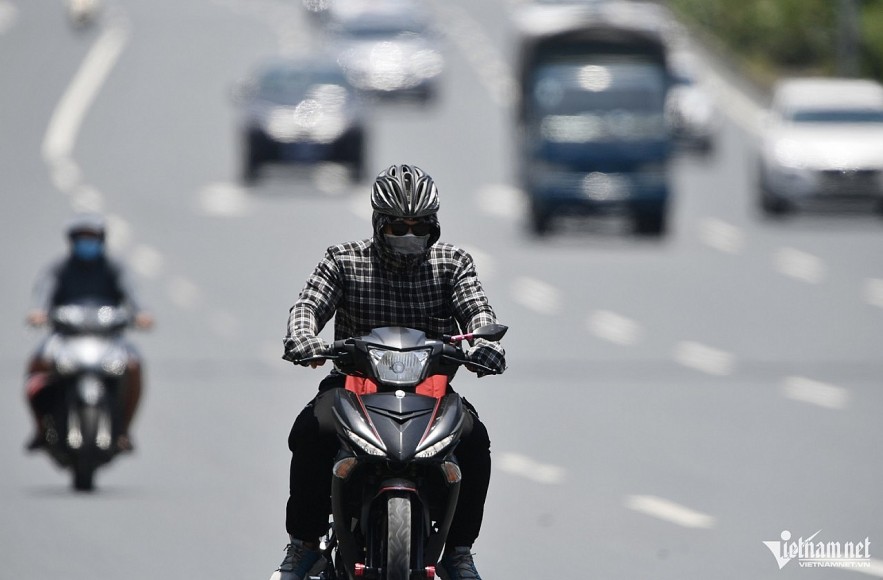
Intense heat has arrived early in the first months of 2026. Illustration photo: Hoang Minh

This situation also heightens the risk of severe drought and saltwater intrusion in the South Central region, the Central Highlands, and the Mekong Delta during the 2026-2027 dry season.

Notably, during El Nino periods, while the number of storms in the East Sea tends to decrease, there is a heightened need to prepare for stronger storms with complex and unpredictable paths. Sudden localized heavy rains, flash floods, and landslides may still occur without warning.

The Ministry of Agriculture and Environment will continue to direct meteorological agencies to closely monitor ENSO developments and issue timely forecasts, enabling the government and local authorities to proactively implement response measures.

According to meteorological experts, El Nino refers to the abnormal warming of surface sea waters in the central and eastern equatorial Pacific Ocean. The phenomenon typically lasts between 8 and 12 months and occurs in cycles of approximately three to four years.

Since early 2026, meteorological agencies have consistently maintained projections about the formation of El Nino toward the end of the year. The latest updates show that the probability of occurrence has increased to around 70-80%, with the possibility of persisting into 2027.

During El Nino periods, regions such as Southeast Asia, India, and Australia tend to experience reduced rainfall and higher temperatures. In Vietnam, strong El Nino years are often associated with more frequent and intense heatwaves, sometimes breaking historical temperature records.

Vietnam News Today (Apr. 16): Vietnam, Italy Agree On New Cooperation Directions

Vietnam News Today (Apr. 16): Vietnam, Italy Agree On New Cooperation Directions

Vietnam News Today (Apr. 16): National Assembly leader arrives in Türkiye for IPU-152 Assembly; Vietnam values US business community as trusted partner: NA Vice Chairwoman; ...

Vietnam News Today (Apr. 17): Vietnamese Prime Minister Holds Phone Talks with Singaporean Counterpart

Vietnam News Today (Apr. 17): Vietnamese Prime Minister Holds Phone Talks with Singaporean Counterpart

Vietnam News Today (Apr. 17): Vietnamese Prime Minister holds phone talks with Singaporean counterpart; Vietnam-Turkey cooperation creates impetus for each country’s development; China's Nanning steps ...

Rosie Nguyen
Phiên bản di động