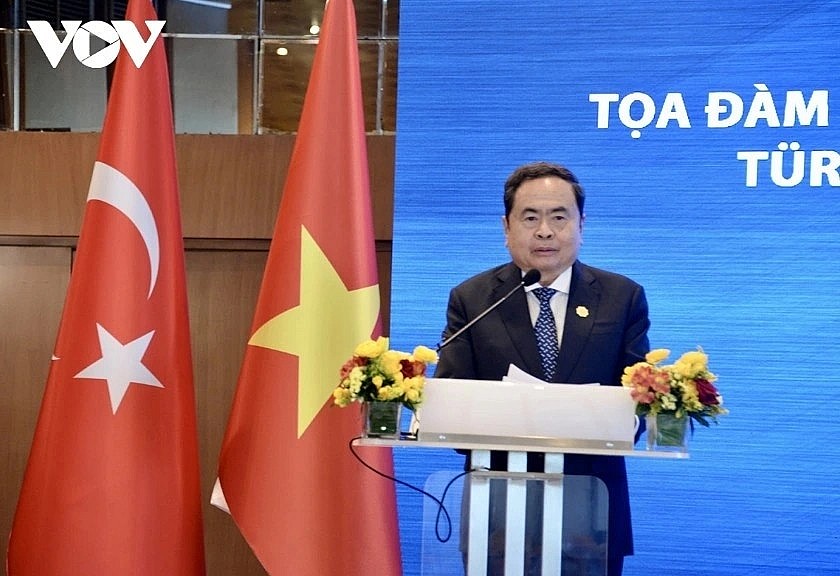
China's Nanning steps up all-around cooperation with Vietnamese localities
Nanning, the capital of China’s Guangxi Zhuang Autonomous Region, continues to serve as a dynamic development hub in southern China and an important hub for cooperation with ASEAN, including Vietnam as a key partner.
In recent years, Nanning has achieved notable socio-economic results, maintaining stable growth and shifting its economic structure towards modernisation, with high-quality services and advanced technology industries playing a leading role.
The city is also pushing up an innovation-based development strategy, with a highlight being the establishment of the China-ASEAN Artificial Intelligence Innovation Cooperation Center.
The center is designed to become a regional platform for cooperation in research and development (R&D), AI applications, technology transfer and high-quality human resources training. Through this center, Nanning enhances connections among enterprises, research institutes and universities in China and ASEAN member states, including Vietnam, contributing to the formation of a regionally connected innovation ecosystem.
Alongside technological development, Nanning continues to play its role as a gateway connecting China and ASEAN through multilateral cooperation mechanisms, international forums and large-scale trade fairs. Cooperation with Vietnam is becoming more substantive.
Nanning maintains friendly and close cooperative relations with several Vietnamese localities, including Hai Phong, Bac Ninh and Bac Giang. Vietnam is also one of the city’s leading trading partners, with trade turnover accounting for a large share of Nanning’s total trade with ASEAN. Bilateral cooperation continues to expand into areas such as investment, logistics, agriculture, high technology and tourism.
One example is Nanning Yucai School, which trained many generations of Vietnamese students during the resistance period, making important contributions to Vietnam’s revolutionary cause.
In addition, sites associated with the activities of President Ho Chi Minh in Nanning have been preserved and have become places for traditional education, attracting many Vietnamese delegations, pupils and students for visits and study. These sites are not only of historical value but also are vivid symbols of Vietnam-China friendship over time.
People-to-people exchanges, delegation visits, and cooperation in education and training between Nanning and Vietnamese localities are maintained regularly, contributing to strengthening the social foundation of bilateral relations.
Speaking to the media in China, Li Qiaoping said she is “full of confidence and expectations” about the future of Vietnam-China relations as well as cooperation between Guangxi and Vietnam.
According to Li Qiaoping, both sides should continue to strengthen the guiding role of high-level leaders, enhance political trust and maintain the principles of mutual respect, equality and mutual benefit, and accelerate the building of a Vietnam-China community with a shared future in a more substantive manner.
At the same time, she laid stress on the need to make use of geographical advantages and promote practical cooperation in economic and trade activities, logistics, cross-border industries, modern agriculture and tourism, while shifting from a “border-gate economy” to an “industry- and value chain-based economy” to improve the quality of cooperation.
In emerging fields, she said there is still strong potential for cooperation between Guangxi and Vietnam, particularly in cross-border healthcare, hydrology, meteorology, education and training, and science and technology. Among these, cooperation in education and human resources training is considered strategic, including strengthening language training, expanding joint training programs, promoting joint research and developing vocational education.
Artificial intelligence and the digital economy are seen as breakthrough areas for cooperation. The two sides can bolster cooperation in language AI, machine translation, digital education, high-tech workforce training, as well as smart city models, digital logistics and cross-border e-commerce, reported VOV.
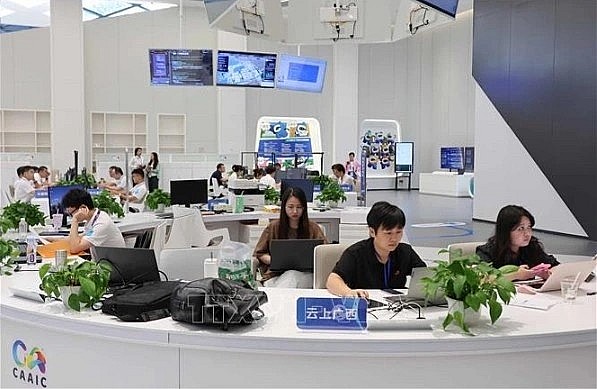 |
| A workspace at the China-ASEAN Artificial Intelligence Innovation Cooperation Center (Photo: VNA) |
In digital trade, she said the model combining short videos or livestreaming with e-commerce is opening up significant prospects. Using digital platforms together with increasingly improved logistics systems in border areas will help promote two-way goods flows between China and Vietnam, while reducing language barriers through AI applications.
Li Qiaoping also expressed hope that youth exchanges will continue to be strengthened, contributing to preserving and promoting the tradition of Vietnam-China friendship across generations.
With its favorable geographical location, improving infrastructure and an innovation-based development direction, Nanning is expected to continue playing a central role in promoting China–ASEAN cooperation, while serving as an important bridge contributing to deeper comprehensive cooperation between Vietnam and China in the new period.
Hai Phong - Strategic connectivity anchor in Vietnam–China cooperation
In the first quarter of 2026, two-way trade between Hai Phong and China maintained strong momentum, with imports topping 2 billion USD, up 48.26% year-on-year, and exports surpassing 467 million USD, up nearly 57%.
The growing cooperation between the northern port city of Hai Phong and various Chinese localities, covering trade, infrastructure, culture, education, and people-to-people exchanges, is building a well-rounded partnership and strengthening the city’s position as a key gateway in Vietnam–China relations.
Recent outcomes underscore Hai Phong’s growing position as a key node in bilateral connectivity, opening up fresh development opportunities. In 2025, its imports from China exceeded 7.6 billion USD, dominated by electrical equipment and components, machinery, plastics, steel, and optical and medical instruments. Meanwhile, its exports to China reached over 1.7 billion USD, led by electronics, mechanical products, footwear, garments and toys. In the first quarter of 2026, two-way trade maintained strong momentum, with imports topping 2 billion USD, up 48.26% year-on-year, and exports surpassing 467 million USD, up nearly 57%.
In the period, foreign direct investment (FDI) inflows into the city reached 716 million USD, an increase of 38.7% year-on-year. Of the total, investment from China, including Taiwan, Hong Kong and the mainland, was 322.48 million USD.
A notable milestone was the mid-February 2025 launch of a new shipping service linking Beibu Gulf Port (Guangxi, China), Hai Phong Port and Kolkata Port (India). The route marks a strategic step in regional maritime connectivity, enhancing trade links among Vietnam, China and India, cited VNA.
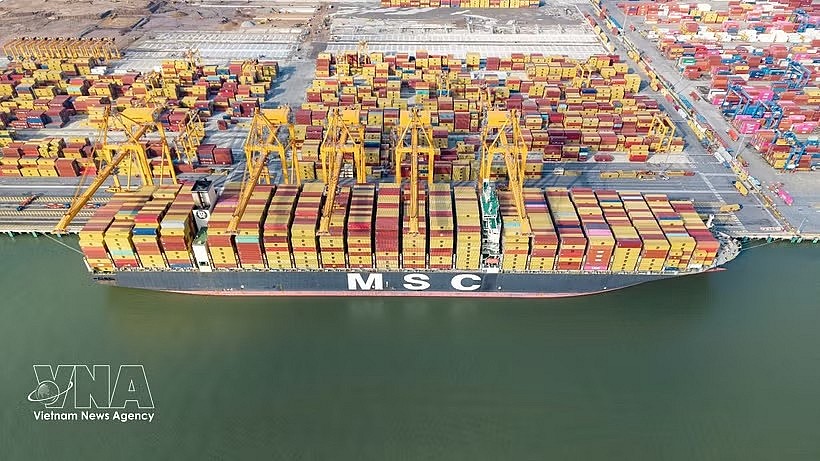 |
| Hai Phong Port (Illustrative photo: VNA) |
Bringing into full play its advantage as the only northern locality with all five modes of transport, along with a modern deep-sea port system and an international airport, Hai Phong is promoting both “hard connectivity” through transport and logistics infrastructure, and “soft connectivity” via smart customs and digital logistics to facilitate cross-border trade.
Beyond commerce, the city has intensified investment promotion and regularly participated in the China–ASEAN Expo in Guangxi, showcasing its signature products, investment policies and tourism assets, including Lan Ha Bay.
In February 2026, at the 17th Joint Working Committee Meeting between five Vietnamese localities - Quang Ninh, Lang Son, Cao Bang, Tuyen Quang and Hai Phong - and the Guangxi Zhuang Autonomous Region in Nanning, Hai Phong joined the mechanism as an official member, marking a turning point for deeper cooperation.
According to Director of the Hai Phong Department of Foreign Affairs Tran Thi Quynh Trang, the city has established partnerships with major Chinese localities such as Tianjin, Nanning, Ningbo, Shenzhen and Foshan. Cooperation has expanded across education, personnel training, transport, healthcare and notably artificial intelligence (AI).
Since 2025, the two sides have organized 21 exchange delegations, including high-level visits. Educational cooperation has been strengthened through student exchanges and scholarship programs, while training initiatives in AI are equipping officials with skills aligned to digital transformation.
Cultural and tourism exchanges, including festivals and charter flights between Nanning and Hai Phong, have boosted connectivity. Vibrant people-to-people activities continue to deepen mutual understanding and ties.
With comprehensive cooperation across a variety of sectors, Hai Phong is emerging not only as an investment destination but also as a dynamic hub for multi-sector collaboration, contributing to the strengthening of Vietnam–China relations in a new phase.
Stormy pattern to dominate northern weather through late April
Northern Vietnam is expected to experience three consecutive waves of thunderstorms from the night of April 16 through April 25, as a shift in weather patterns follows a prolonged period of heat.
According to the National Center for Hydro-Meteorological Forecasting, as of April 15, a weak cold air mass continues to move southward, compressing a low-pressure trough located around 24-26 degrees north latitude.
From the night of April 16 to 17, under the combined influence of this cold air and wind convergence at around 1,500 meters, most northern provinces - excluding Lai Chau and Dien Bien - along with Thanh Hoa, are forecast to see light to moderate rain, with scattered thunderstorms. Rainfall is expected to range between 20-40mm, with localized areas exceeding 100mm. From April 17, temperatures across the north are set to ease, bringing cooler conditions.
In the Central Highlands, scattered showers and thunderstorms are also expected during the late afternoon and evening of April 15, with rainfall between 10-20mm and some areas exceeding 50mm. These storms may be accompanied by dangerous phenomena such as tornado-like gusts, lightning, hail, and strong winds.
Two more waves of rain expected
From April 17 to 25, meteorologists predict two additional widespread rainfall events across northern Vietnam. While daytime conditions may still include sunshine, showers and thunderstorms are likely to develop mainly in the late afternoon and at night.
The first wave is expected between the evenings of April 18 and 20, followed by a second from April 22 to 24. Both periods carry the risk of moderate to heavy rain, along with the potential for strong storms and damaging winds.
In the north-central region, scattered showers and thunderstorms are forecast during evenings and nights, while daytime conditions remain sunny, with some areas continuing to experience heat. Similar rain patterns may occur during April 18-20 and again from April 22-24, with localized heavy rainfall possible.
Meanwhile, from Nghe An to Dak Lak, heatwaves are expected to persist, with some areas experiencing extreme temperatures. Showers and thunderstorms may still occur in the evenings and at night, VNN reported.
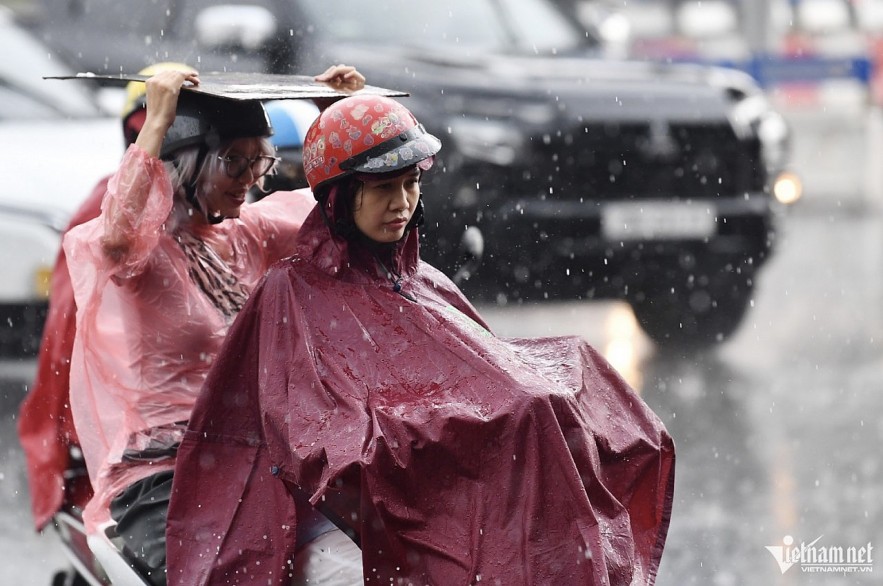 |
| Northern Vietnam is set to face three consecutive waves of thunderstorms, bringing a prolonged spell of cooler weather. Photo illustration: Hoang Minh |
From April 17 onward, areas from Hue to Da Nang, as well as eastern parts of provinces from Quang Ngai to Dak Lak, are forecast to see continued heat, with some locations facing severe conditions.
Other regions are expected to have isolated showers and thunderstorms in the evenings and at night. The Central Highlands may experience more frequent scattered storms during this time, while daytime conditions remain sunny, with localized heat.
Meteorological experts note that this period marks a seasonal transition across northern Vietnam, the Central Highlands, and southern regions. As a result, people are urged to remain vigilant against hazardous weather phenomena associated with post-heat thunderstorms, including lightning, hail, and strong gusts.
During thunderstorms, residents are advised to limit outdoor activities unless absolutely necessary to reduce risks from lightning strikes, falling trees, collapsing billboards, and strong winds. Those already outdoors should seek safe shelter promptly and avoid standing under large trees, near power poles, or in open areas.
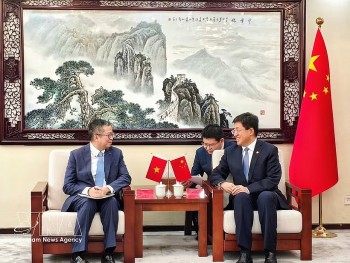 | Vietnam News Today (Apr. 13): Vietnam, China Strengthen Youth Exchanges to Deepen Bilateral Ties Vietnam News Today (Apr. 13): Vietnam, China strengthen youth exchanges to deepen bilateral ties; Slovak Prime Minister begins official visit to Vietnam; UNDP backs Vietnam ... |
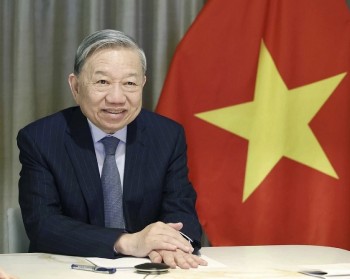 | Vietnam News Today (Apr. 13): Vietnam, Japan leaders hold phone call to advance strategic partnership; Vietnam, Slovakia elevate ties to strategic partnership; Vietnam–Italy ties set ... |