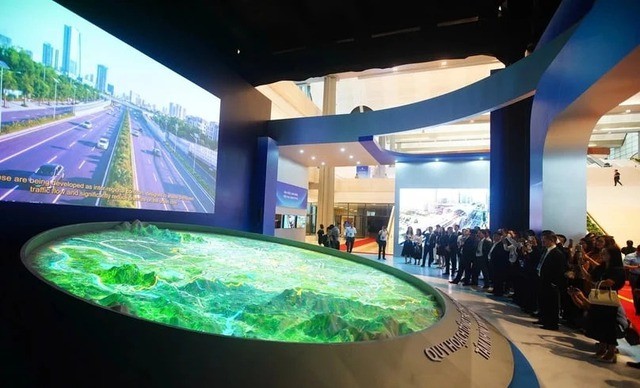
| Vietnam News Today (Apr. 13) notable headlines Slovak Prime Minister begins official visit to Vietnam Vietnam, China strengthen youth exchanges to deepen bilateral ties UNDP backs Vietnam in its new development period Conference in Phnom Penh promotes Vietnam-Cambodia trade, tourism, investment ties AI becomes the new engine of Vietnam’s tourism growth NA Chairman meets Vietnamese students in Italy Party, State leader asks Military Region 1 to position itself as comprehensively strong force NA leader receives Vietnam’s Honorary Consul in Torino Quang Ngai tightens fishing vessel data checks to lift IUU “yellow card” |
Slovak Prime Minister begins official visit to Vietnam
Prime Minister of the Slovakia Robert Fico arrived in Hanoi on April 12 afternoon, beginning his three-day official visit to Vietnam at the invitation of Prime Minister Le Minh Hung.
He was welcomed at Noi Bai International Airport by Minister and Chairman of the Government Office Dang Xuan Phong, Deputy Foreign Minister Ngo Le Van, and Vietnamese Ambassador to Slovakia Pham Truong Giang, according to VNA.
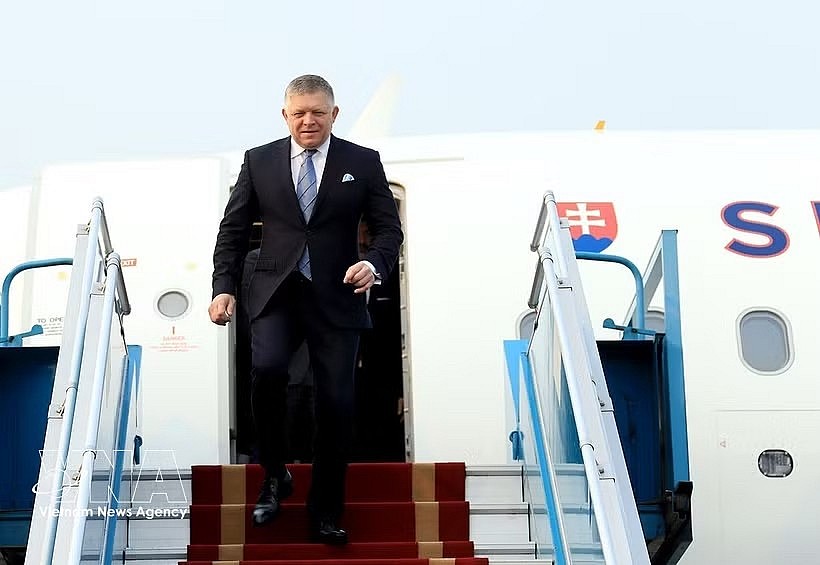 |
| Slovak Prime Minister Robert Fico (Photo: VNA) |
Accompanying Fico are several senior Slovak officials, including Deputy Prime Minister and Minister of Defense Robert Kaliňák, Deputy Prime Minister and Economic Minister Denisa Saková, Minister of Foreign and European Affairs Juraj Blanár, Minister of Agriculture and Rural Development Richard Takáč, Finance Minister Ladislav Kamenický, and Culture Minister Martina Šimkovičová, among others.
Prime Minister Robert Fico, who has consistently supported the strengthening of bilateral ties, has made significant contributions to promoting cooperation between the two countries. He previously paid official visits to Vietnam in 2008 and 2016.
According to Ambassador Giang, the visit marks the first by a foreign government leader after Vietnam completed the restructuring of its state apparatus following the 14th National Party Congress. It also comes as the two countries mark more than 75 years of diplomatic relations since 1950. It also opens up opportunities for more substantive cooperation following previous high-level visits, based on the need to strengthen collaboration and high political trust between the two sides.
Key agenda items include discussions on upgrading bilateral ties, strengthening political trust, and promoting cooperation in areas such as trade and investment, defense and security, science and technology, renewable and nuclear energy, culture, tourism, education, labor, green and digital transition, and digital transformation.
The two sides will also discuss coordination in multilateral mechanisms and settlement of regional and international issues of mutual concern, with a focus on ASEAN–EU cooperation.
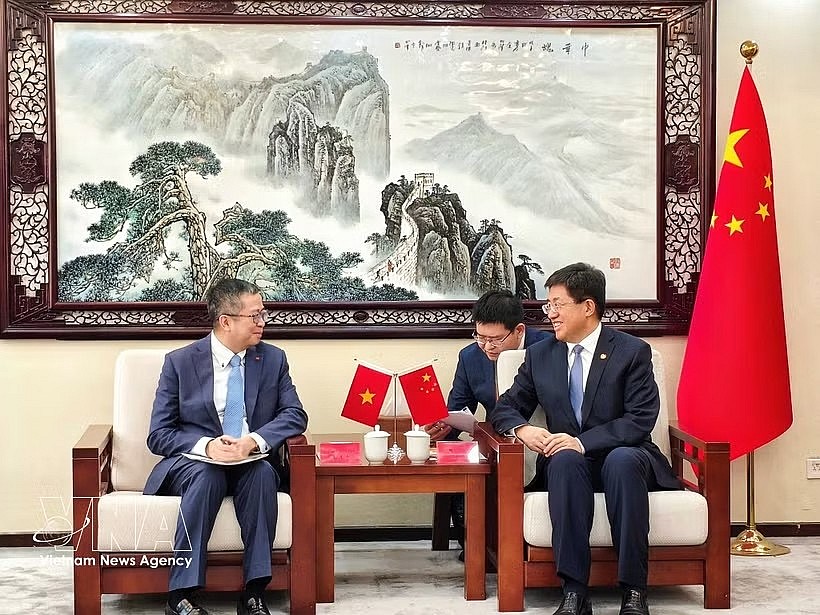 |
| Vietnamese Ambassador to China Pham Thanh Binh (left) and First Secretary of the Communist Youth League of China (CYLC) Central Committee A Dong at their meeting in Beijing on April 12 (Photo: VNA) |
Vietnam, China strengthen youth exchanges to deepen bilateral ties
Vietnamese Ambassador to China Pham Thanh Binh met with First Secretary of the Communist Youth League of China (CYLC) Central Committee A Dong in Beijing on April 12.
Both sides highly valued the achievements recorded across various areas of bilateral relations under the strategic orientation and guidance of the top leaders of the two Parties and countries. In particular, people-to-people exchanges and programmes under the “Red study tour” initiative, launched by Party General Secretary To Lam and General Secretary of the Communist Party of China and President Xi Jinping during the latter’s state visit to Vietnam in April 2025, were highlighted as a bright spot. These activities have contributed to strengthening solidarity, friendship, and close ties between the two countries' people, consolidating a firm social foundation, and enhancing young people’s awareness of the traditional relationship of being both comrades and brothers between Vietnam and China.
The Vietnamese diplomat stressed that during the upcoming state visit by General Secretary and State President To Lam, the meeting between senior leaders of the two countries and youth participating in the ninth edition of “Red study tour” programme in China reflects the special attention paid by the top leaders of both Parties and countries to nurturing and educating younger generations, enabling them to carry forward the revolutionary traditions of previous generations.
He added that the initiative also serves as an important driving force for young people of both countries to further promote substantive cooperation in fields such as science and technology and innovation, contributing to each country’s development goals and jointly addressing common challenges. The ambassador expressed confidence that the younger generations of both nations will continue to accompany and support each other in realising the development visions and aspirations set out by the two Parties and countries, cited VNA.
For his part, A Dong affirmed that the CYLC stands ready to closely coordinate with the Vietnamese Embassy in China and relevant Vietnamese agencies to build on existing achievements, organise friendship exchanges among youth, researchers, and young entrepreneurs from both countries, while stepping up practical cooperation in training, research, socio-cultural activities, and start-ups through bilateral and multilateral frameworks. These efforts, he noted, will contribute to maintaining the positive and stable development of bilateral relations.
Both sides agreed to continue maintaining and further enhancing the effectiveness of coordination mechanisms between the Vietnamese Embassy in China and the CYLC Central Committee. They also agreed to expand exchanges of delegations and implement a wide range of activities, particularly the “Red study tour” initiative in Chinese localities in the coming period.
They pledged to effectively realise the important common perceptions reached by the two countries’ senior leaders, create new breakthroughs in people-to-people exchanges, further deepen the Comprehensive Strategic Cooperative Partnership, and promote the building of a Vietnam–China community with a shared future of strategic significance.
UNDP backs Vietnam in its new development period
In this context, support from international partners is expected to continue to play an important role in helping Vietnam realise its development goals.
Speaking to VOV on the matter, Ramla Khalidi, Resident Representative of the United Nations Development Programme (UNDP) in Vietnam, said Vietnam has gradually shaped a clear development path, from promoting science, technology and innovation to reforming the state apparatus, improving the quality of education and healthcare, and strengthening international integration.
She stressed that in recent inaugural speeches by Vietnamese leaders, one consistent message has been highlighted: the ultimate goal of all development efforts is people. Citizens must be at the center and be the beneficiaries of development outcomes.
On development prospects, the UNDP Resident Representative said Vietnam is setting very ambitious targets, not only for economic growth but also for a long-term vision of becoming an upper-middle-income country by 2030 and a high-income country by 2045, reported VOV.
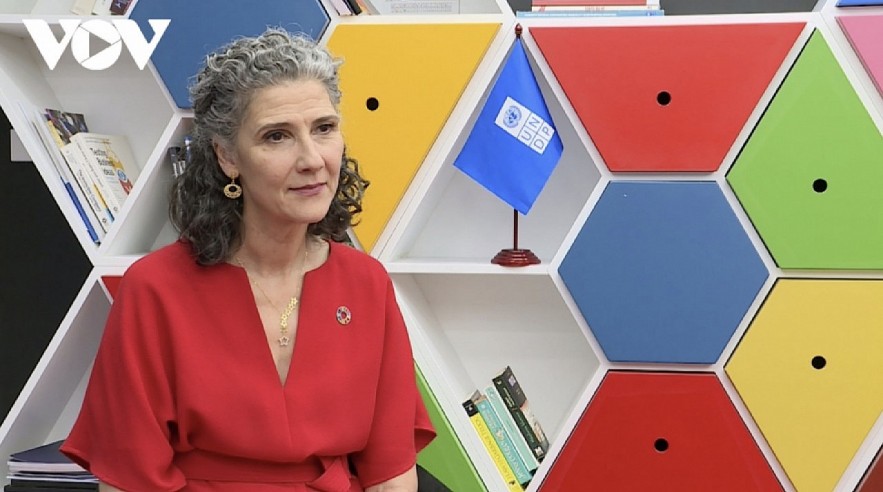 |
| UNDP Resident Representative Ramla Khalidi in Vietnam. |
At the same time, the country aims to build a green economy, achieve net-zero emissions, and develop on the basis of innovation and higher productivity. She said UNDP fully supports Vietnam’s directions.
In practice, through a series of resolutions and policies issued in recent years, Vietnam has gradually defined its development direction across multiple areas.
In the coming period, UNDP will develop and discuss a new Country Programme, with cooperation priorities defined based on Vietnam’s development orientations, while remaining consistent with UNDP’s global strategy and the United Nations Sustainable Development Cooperation Framework. Four priority areas are set out.
The first priority is stronger institutional capacity, building capable agencies and organisations to implement policies effectively and deliver services for sustainable development. The second is climate change response and environmental protection, enabling people and ecosystems to develop sustainably. The third is economic transformation through support for innovation, the development of small and medium-sized enterprises, and the creation of green jobs. The fourth is inclusive and human development, with a focus on ensuring essential services, particularly healthcare, are delivered comprehensively and equitably.
Ramla Khalidi said that in all its activities, UNDP takes the priorities set out in Vietnam’s socio-economic development plans as a guide for its work.
Amid complex regional and global developments, including conflicts that are pushing up prices from food to energy, disruptions in global trade and increasingly evident risks from climate change, she said Vietnam is facing multiple direct challenges.
However, she noted that Vietnam continues to uphold a strong commitment to multilateralism and cooperation at both regional and global levels, based on partnerships. This is noteworthy and can be seen as a model.
She also said Vietnam has demonstrated a clear role in promoting multilateral cooperation and South–South cooperation, while creating opportunities to share its development experience with other countries. Many countries are interested in how Vietnam has reduced poverty rapidly over a short period.
In practice, Vietnam has implemented a number of effective models, such as integrating climate adaptation into local development plans, building climate-resilient housing, and restoring ecosystems, including mangrove forests.
The nation is also a clear example of combining mine action with sustainable rural development, not only clearing unexploded ordnance left after the war but also linking this work with programmes that support livelihoods for local people.
In addition, Vietnam has seen positive results in promoting women’s roles in leadership positions, with around 30% of National Assembly deputies in the current term being women.
According to the UNDP Resident Representative, Vietnam has valuable experience to share with the world and continues to learn from other countries in its development process.
The completion of the country’s senior leadership structure for the new term is seen as an important milestone, opening a new development period for Vietnam with ambitious goals in economic growth, transformation of the development model and improvement of people’s living standards.
Conference in Phnom Penh promotes Vietnam-Cambodia trade, tourism, investment ties
A conference on trade, tourism and investment promotion for Lam Dong province, Vietnam’s central highlands in 2026 was held on April 11 in Phnom Penh by the Lam Dong provincial People’s Committee in coordination with the Vietnamese Embassy in Cambodia.
The event is designed to strengthen business connections, expand trade and support sustainable, mutually beneficial tourism development.
It was attended by representatives of the Vietnamese Embassy in Cambodia, officials from Cambodia’s Ministry of Commerce, Ministry of Tourism and Chamber of Commerce, the Vietnam-Cambodia Business Association (VCBA), and more than 100 businesses from both countries.
Nguyen Huu Phu, chargé d’affaires of the Vietnamese Embassy in Cambodia, said the conference contributes to economic cooperation between Vietnam and Cambodia. Lam Dong’s organisation of the event in Cambodia shows efforts to expand international cooperation and diversify markets and partners.
Traditional friendship and comprehensive cooperation between Vietnam and Cambodia continue to develop across multiple areas, particularly in economic, trade and investment cooperation, which is growing and complementary. The two sides are working towards a trade target of US$20 billion in line with directions set out by senior leaders.
Introducing the province’s potential, Bui Thang, Deputy Secretary of the Lam Dong Party Committee, said the province lies at the intersection of dynamic economic regions and is part of the East-West economic corridor, facilitating links with Cambodian localities. Following administrative restructuring, Lam Dong is forming value chains from production and processing to logistics and distribution, based on three pillars: modern industry, high-tech agriculture and high-quality tourism linked to environmental protection and cultural identity.
Heng LiHong, First Vice President and Secretary General of VCBA, said the conference is a practical activity that helps connect partners and expand cooperation. Lam Dong has strengths in agriculture and tourism, while Cambodia is a developing market in consumption, services and distribution, thereby creating opportunities for cooperation between businesses on both sides.
VCBA said it will continue to support trade, tourism and investment links, share market information and facilitate cooperation between Lam Dong businesses and Cambodian partners.
At the conference, participants discussed needs, issues and solutions to promote investment, trade and business cooperation. Businesses from both countries also introduced their operations and explored partnership opportunities, according to VOV.
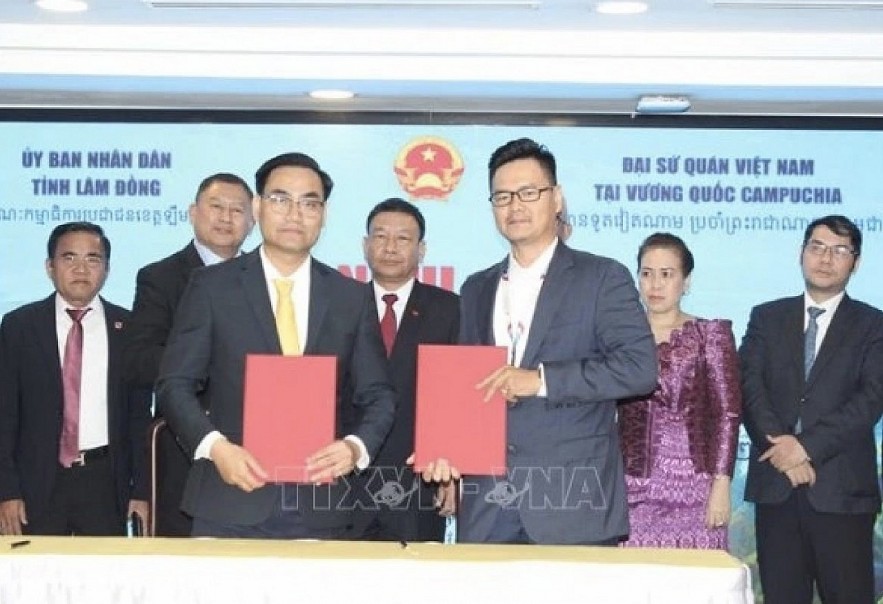 |
| Representatives of Lam Dong and Cambodian businesses sign cooperation documents (Photo: VNA) |
On the occasion, the Lam Dong Investment, Trade and Tourism Promotion Center signed a memorandum of understanding with Air Cambodia on cooperation in studying and accelerating the opening of a direct air route between Phnom Penh and Lam Dong. Tourism and service companies from both sides also signed memoranda of understanding on cooperation.
At the conference, Lam Dong businesses introduced products such as coffee, artichoke and processed agricultural products, along with tourism products, at exhibition booths held alongside the conference.
A Cambodian business representative said Lam Dong has potential in high-tech agriculture and tourism, and that this offers opportunities for cooperation in agricultural production and tourism development between the two sides.
The event contributes to enhancing direct links between Lam Dong businesses and Cambodian partners, thus contributing to economic cooperation between Vietnam and Cambodia.
Lam Dong businesses showcased products such as coffee, artichoke and processed agricultural goods, along with tourism offerings, at exhibition booths held alongside the event.
A Cambodian business representative said Lam Dong has potential in high-tech agriculture and tourism, creating opportunities for cooperation in agricultural production and tourism development between the two sides.
The event helps strengthen direct links between Lam Dong businesses and Cambodian partners, contributing to economic cooperation between Vietnam and Cambodia.
AI becomes the new engine of Vietnam’s tourism growth
As global tourism shifts toward data-driven competition, Vietnam accelerates AI adoption to enhance growth, efficiency, and sustainability.
Experts say that if Vietnam’s tourism sector wants to accelerate growth and strengthen its competitiveness, it must shift decisively from an extensive growth model to one driven by technology, data, and smart governance.
The race to adopt AI
Globally, tourism is no longer competing solely on natural and cultural assets, but increasingly on a new form of resource: data.
According to Dr Nguyen Tuan Anh, Director of the Institute for Tourism Economics, many advanced economies in Europe, as well as Singapore and South Korea, have already developed national tourism data platforms, smart destination management systems, and interconnected ecosystems linking governments, businesses, and travelers to fully leverage this resource.
Artificial intelligence plays a central role by analyzing customer demand, suggesting personalized itineraries, increasing spending and length of stay, while also helping authorities regulate visitor flows, prevent overcrowding, and protect resources.
In Vietnam, businesses are entering their own “race” to apply AI in tapping into this emerging resource.
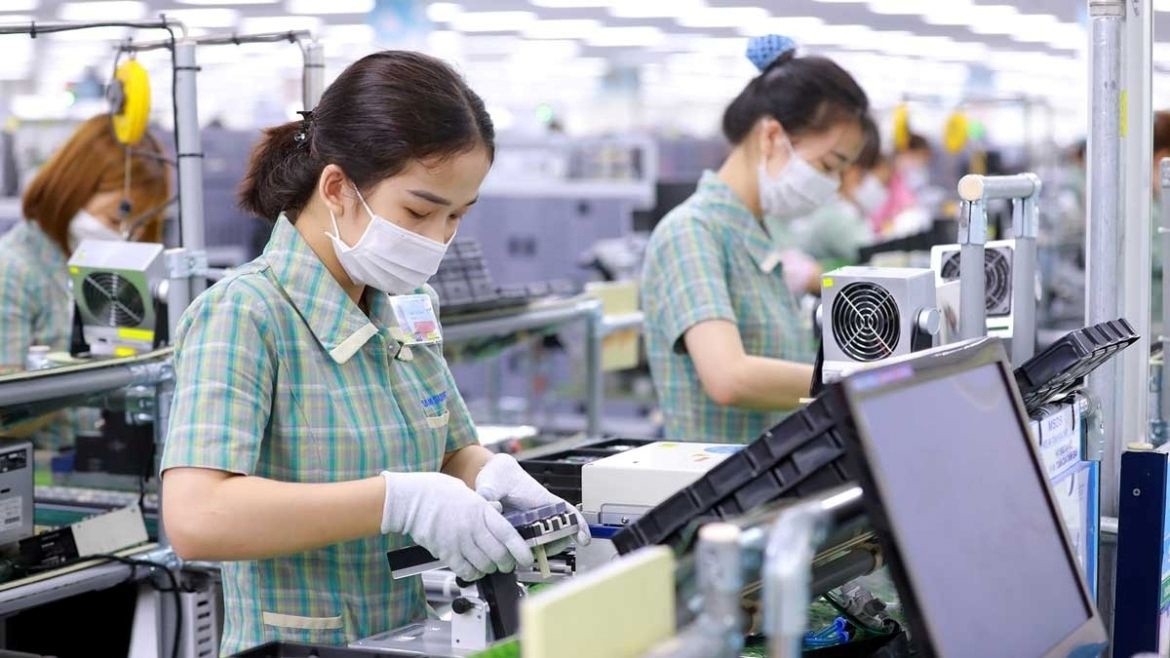
Industry representatives note that AI-powered analysis of customer data, including search behavior and travel history, improves the accuracy of product recommendations, raising conversion rates by 15-20%.
AI also enables businesses to determine the “right price” based on customer demand, rather than competing purely on low prices with thin margins.
Pham Ha, Vice Chairman of the Vietnam Green Tourism Association, said AI allows a single employee to handle workloads equivalent to three to five people. It also supports multilingual promotional content creation, including images and videos, and enables 24/7 customer service through chatbots.
He added that AI makes it possible to measure and optimize operations, from itineraries and transport to energy consumption, helping reduce emissions and waste.
However, digital transformation in tourism still faces significant barriers. Data remains fragmented, while connectivity, sharing, and exploitation are limited. Digital capacity varies across businesses, and most small and medium enterprises lack the resources and skilled personnel in technology, data, and AI.
Applying AI for rapid and sustainable growth
Speaking at the forum “Vietnam Tourism - Applying AI for rapid and sustainable development” held on April 9 in Hanoi, Vu The Binh, Chairman of the Vietnam Tourism Association, described 2025 as a breakthrough year, with 21.2 million international arrivals and 137 million domestic travelers, generating total revenue of VND1 trillion (US$41 billion).
However, these record figures have also placed significant pressure on infrastructure and the environment. To sustain rapid growth and enhance competitiveness, Vietnam’s tourism sector must transition from extensive expansion to a model grounded in technology, data, and smart governance.
If properly guided, digital transformation and AI can help protect resources, save energy, reduce costs and emissions, and improve destination management efficiency in a more sustainable direction, reported VNN.
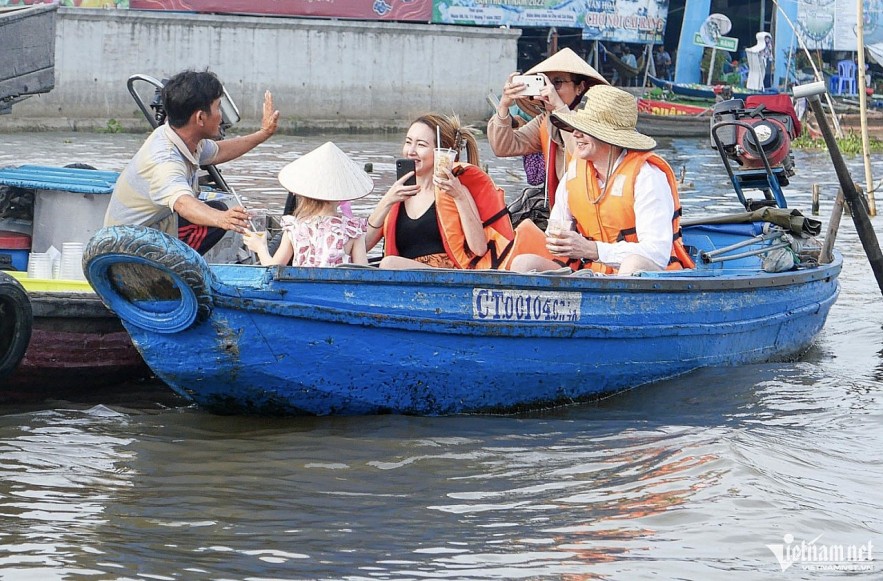 |
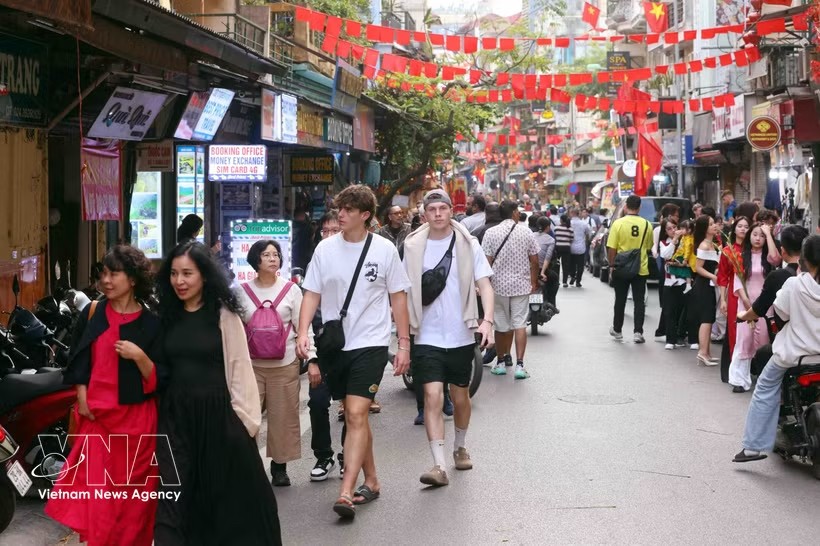
| AI understands the specific needs of each customer, enabling businesses to recommend tailored journeys. Illustrative photo |
Sharing this view, Pham Van Thuy, Deputy Director General of the Vietnam National Authority of Tourism, emphasized that in the digital era, AI adoption is no longer optional but an inevitable requirement.
To accelerate effective AI implementation, he called for stronger collaboration among government, businesses, communities, and international organizations, alongside a shift in mindset and greater willingness to adopt new technologies and abandon traditional practices.
He also stressed the central role of human resources, highlighting the need for continued investment in high-quality personnel capable of mastering and applying AI in a rapidly evolving digital environment.
The Vietnam National Authority of Tourism will continue to study, propose, and refine mechanisms and policies to support businesses and localities in digital and green transformation, as well as in adopting AI.
 | Vietnam News Today (Apr. 7): OVs Encouraged to Expand Distribution Channels for Vietnamese Goods Abroad Vietnam News Today (Apr. 7): PM Pham Minh Chinh hosts UK Ambassador; OVs encouraged to expand distribution channels for Vietnamese goods abroad; Vietnam set for ... |
 | Vietnam News Today (Apr. 8): Vietnam, Cambodia Set Sights on Comprehensive Breakthrough in Bilateral Ties Vietnam News Today (Apr. 8): Vietnam, Laos move to operationalize “strategic cohesion” in bilateral ties; Vietnam, Cambodia set sights on comprehensive breakthrough in bilateral ties; ... |