
Digital Transformation Supports Efficient and Transparent Elections
 | Overseas Vietnamese in Japan Voice Expectations for New Policy Directions Ahead of National Elections |
| Online Contest on National Assembly and People’s Councils Elections |
Population Data and VNeID Support Accurate Voter Lists
In the past, election work mainly relied on traditional management methods with paper records and many manual procedures. In this election, however, information technology and digital transformation have been widely applied in many stages of preparation and organization.
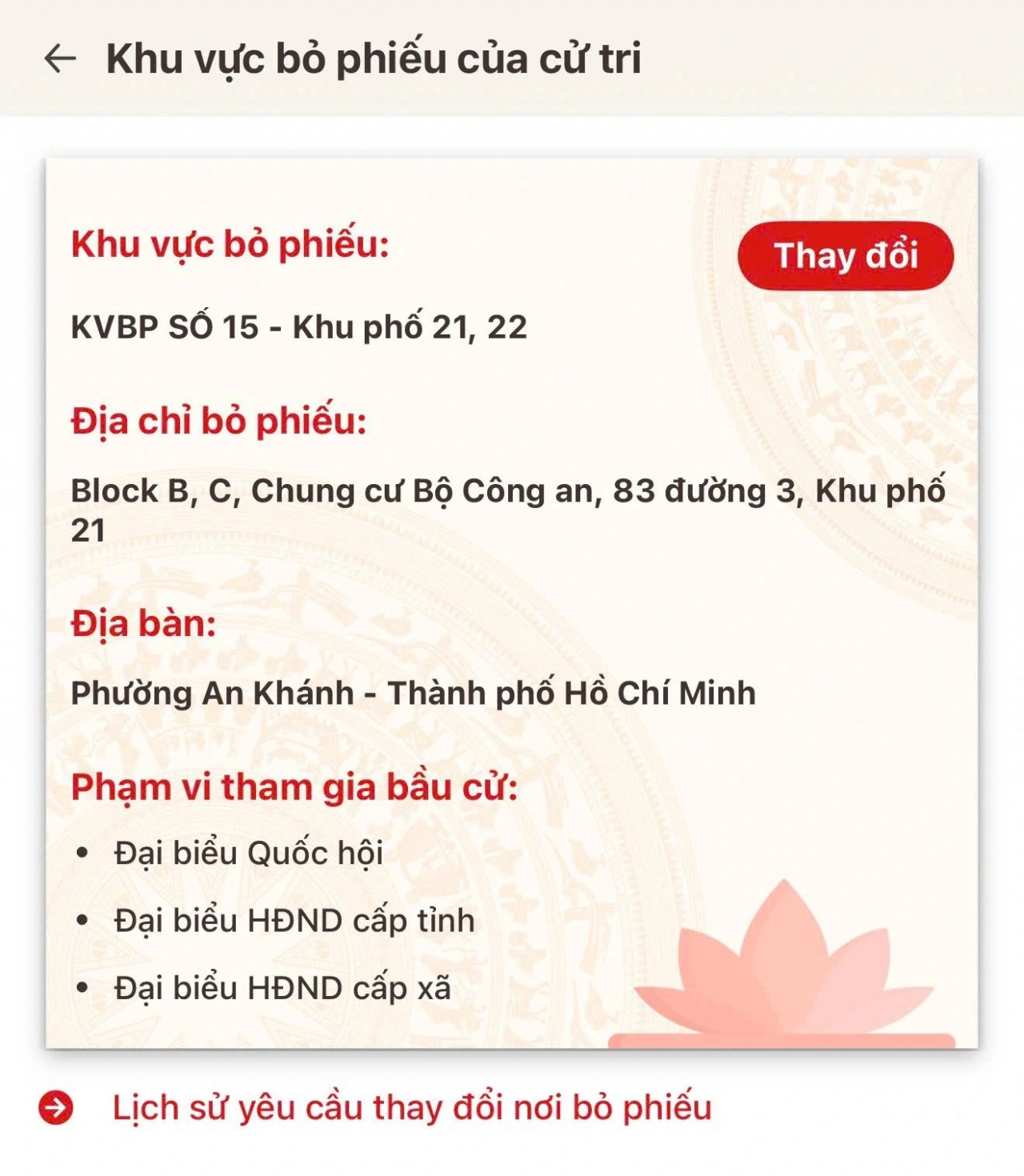 |
| VNeID supports accurate voter list compilation. (Photo: KT) |
These innovations are reflected not only in the organization of local government under a two-tier model and the shortening of certain steps in the election process, but also in the determination to apply digital technology throughout the entire process of management, administration and voter services.
According to a report from the Ministry of Public Security, the use of the National Population Database and the VNeID electronic identification application has created a breakthrough in compiling and managing voter lists. So far, 3,320 out of 3,321 commune-level units nationwide (except Hoang Sa special zone) have applied voter management software, accurately assigning more than 78.5 million voters to polling stations, reaching a rate of 99.48 percent.
The use of a centralized data platform allows the process of statistics, comparison and adjustment of voter information to be carried out quickly, reducing errors and minimizing duplication compared with manual review methods.
QR Codes, Social Media and AI Spread Election Information
Previously, election information was mainly disseminated through grassroots broadcasting systems, banners, posters or meetings at villages and residential groups. This year, many localities have combined these methods with social media and online platforms to spread information more widely.
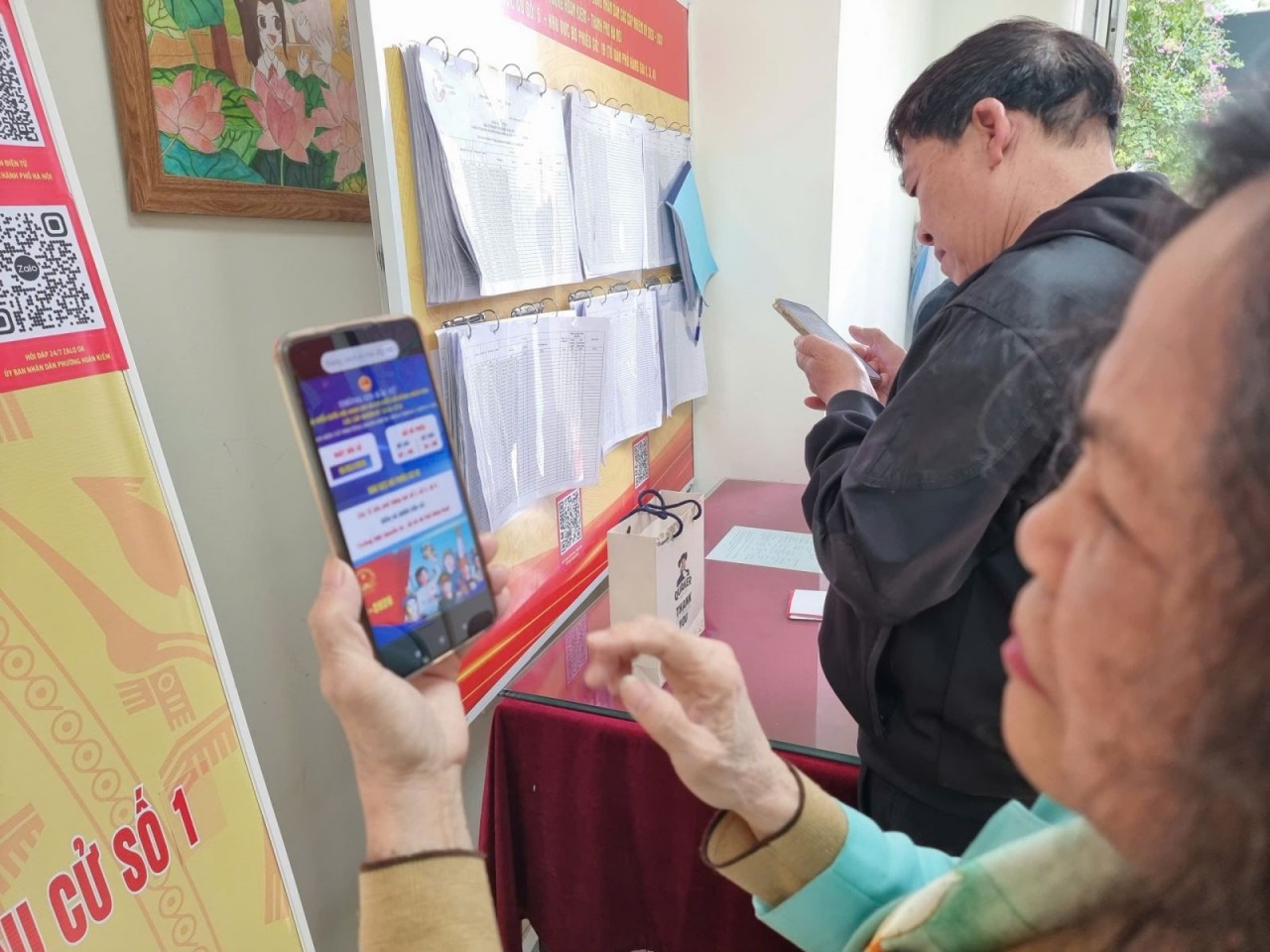 |
| Residents scan QR codes to access updated information about election work. (Photo: baotintuc.vn) |
Artificial intelligence has also been used by many localities to support election communication. Instructional videos explaining the voting process, the steps for exercising voting rights or operations on the VNeID application - such as registering to change polling locations or looking up related information - are designed in a visual and engaging way, making information more accessible to voters. Communication materials can also be automatically translated by AI into multiple languages such as Khmer, Cham and Chinese, helping different communities fully access election information.
The combination of traditional methods and modern technology expands outreach while ensuring the accuracy and official nature of communication content.
One notable new feature is the application of QR codes in election communication. In Hoan Kiem ward in Hanoi, QR codes are placed at public notice boards so voters can easily look up polling locations, election information or submit feedback and recommendations when necessary.
According to Nguyen Thi Thanh, head of Polling Station No. 19 in Hoan Kiem ward, since voter lists and election information were posted, ward officials have guided residents to scan QR codes to update information and share it in neighborhood communication groups. This approach allows information to be accessed more quickly and conveniently.
From the perspective of voters, Nguyen Phong Chuong, 95, from Tay Ho ward in Hanoi, said information about voter lists and candidate biographies is shared in community Zalo groups in residential areas. “When I have free time, I open it to review details so I can make the right choice when voting,” Chuong said.
Applying Technology for Efficient and Lawful Elections
According to Nguyen Xuan Luong, Deputy Director of the Hanoi Department of Home Affairs and Secretary Member of the Hanoi Election Committee, Hanoi currently has more than six million voters, with a wide area and many special zones such as high-rise apartment complexes, industrial parks, craft villages, religious establishments, hospitals and units of the armed forces. Therefore, election preparation must be carried out in a coordinated manner from the city level down to grassroots levels.
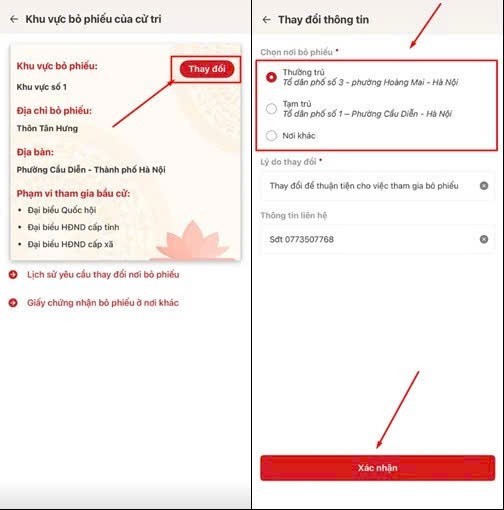 |
| Guidance on registering to change polling locations through the VNeID application. (Photo: KT) |
Currently, all 126 communes and wards in Hanoi are using the nationwide unified voter management software connected directly to the National Population Database. Voter lists are compiled, adjusted and supplemented on a digital data platform, while voter cards are printed directly from standardized data, saving time and ensuring consistency of information.
Notably, voters with level-2 electronic identification accounts can register to change their polling location through the VNeID application. For a city with many students and temporary workers like Hanoi, this solution helps ensure citizens can exercise their voting rights more conveniently.
For candidates, registration of information is also conducted through the information system of the National Election Council, allowing data to be updated quickly from localities to the central level. In addition, localities have effectively used online conferences for voter meetings, enabling candidates to present their action programs to a large number of voters.
Alongside digital transformation, localities also place special emphasis on information security. The system operates on secure transmission lines, access rights are strictly managed, and terminal devices are regularly inspected.
According to National Assembly Secretary General and Chairman of the National Assembly Office Le Quang Manh, digital transformation is becoming a consistent method of governance across many state activities, including election work. Connecting and cross-checking voter lists with the National Population Database, along with platforms such as VNeID, helps improve the accuracy of information and reduce errors. However, he emphasized that technology is only a supporting tool; the most important factor remains human responsibility in reviewing, verifying and properly implementing election procedures.
 | 80 years of Vietnam’s first General Election Exactly 80 years ago, on January 6, 1946, a landmark event in Vietnam’s history took place as Vietnamese people, for the first time, exercised their ... |
 | Four Fundamental Principles Ensuring Democracy in Vietnam’s Elections An election is the process by which citizens choose representatives to decide on the country’s most important issues on their behalf. Pursuant to Article 7 ... |



Most read




Related Stories
 National
Vietnam News Today (July 12): Vietnam Ready to Share Digital Transformation Experience with Timor-Leste
 Travel
Vietnam Accelerates Tourism Digitalization with AI and Data Technologies
 National
Top Leader Highlights Role of Vietnam’s Revolutionary Press in Digital Age
 Handbook
Copyright and Cultural Industries: “Soft Key” for Vietnam to Reach the World
Recommended
 National
Vietnam News Today (July 11): Vietnam and Laos Agree to Enhance Defense Cooperation
 National
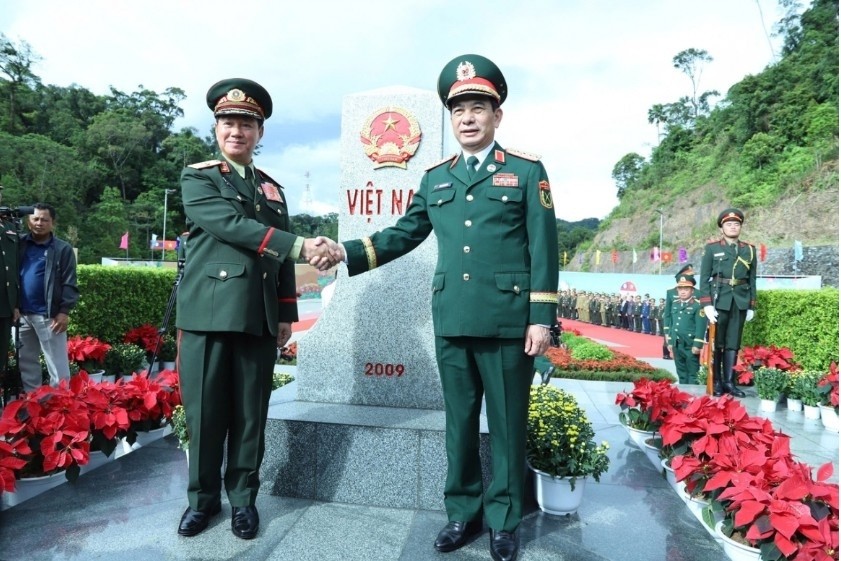
Vietnam News Today (July 10): Third Vietnam-Laos Border Defense Friendship Exchange Gets Underway
 National
Vietnam Looks Forward to New Breakthroughs in Cooperation with the US
 National
Vietnam News Today (July 9): Vietnam, Japan Seek New Strides in Defense Cooperation
Popular article
 National
Celebrating French National Day in Ho Chi Minh City
 National
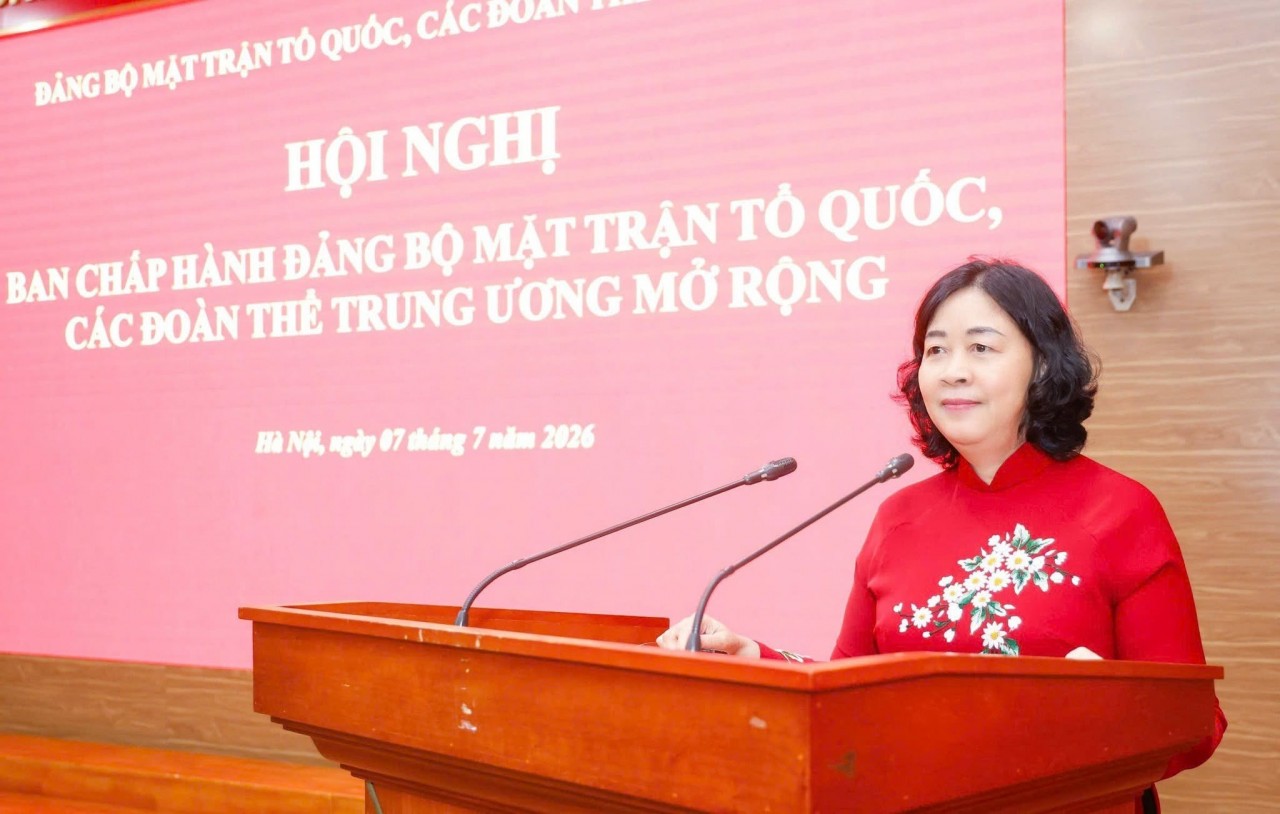
Party Committee of the Viet Nam Fatherland Front and Central Mass Organizations: Accelerate Organizational Streamlining and Digital Transformation in Second Half of Year
 National
Top Leader Receives Newly Accredited Ambassadors from Portugal, Iran, Mongolia, the US, Myanmar
 National