Vietnam, Laos step up investment cooperation to advance East–West Economic Corridor connectivity
Efforts to strengthen economic, trade and tourism cooperation between Vietnam and Laos were highlighted at a forum on investment, trade and tourism cooperation to promote East–West Economic Corridor (EWEC) connectivity, held on April 3 in Champasak province, southern Laos.
The event was jointly organized by Da Nang city, the Consulate General of Vietnam in Pakse and the Champasak provincial authorities, drawing nearly 400 delegates from ministries and agencies of both countries, representatives from 12 Vietnamese localities, five south-central Lao provinces of Champasak, Sekong, Salavan, Attapeu and Savannakhet, as well as Thailand’s Ubon Ratchathani province.
The forum served as an important platform to enhance connectivity and promote investment, trade and tourism ties along the EWEC, while supporting businesses in market exploration, product promotion and export expansion to Laos and Northeast Thailand.
In his opening remarks, Vice Chairman of the Da Nang People’s Committee Phan Thai Binh underscored that the EWEC is not only a trans-Asian transport route but also a dynamic development space with geo-economic, geopolitical and cultural advantages. Stretching from Myanmar through Thailand and Laos to Vietnam, the corridor plays a vital role in strengthening regional connectivity, expanding trade, attracting investment and promoting sustainable tourism.
He stressed that amid rapid global shifts in economic structures, technology and supply chains, enhancing intra-regional connectivity and unlocking the corridor’s full potential has become more urgent than ever. This presents both an opportunity and a shared responsibility for localities in Vietnam and Laos to build an open, flexible and efficient cooperation space.
As the eastern gateway of the EWEC, Da Nang has identified its role in driving regional connectivity and bringing into full play existing advantages. The city has also prioritized fostering its special ties with the five south-central Lao provinces, with collaboration spanning investment and trade, particularly in agriculture, services and logistics, as well as education, healthcare, culture, social welfare and infrastructure development, VNA reported.
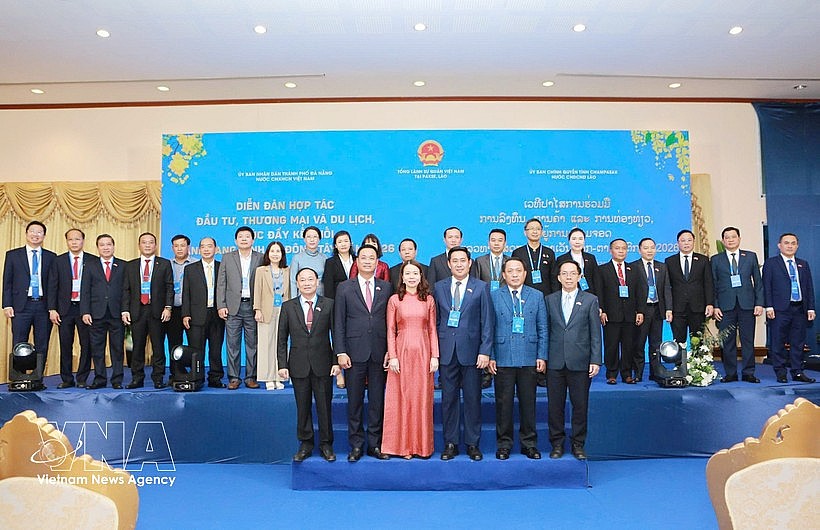 |
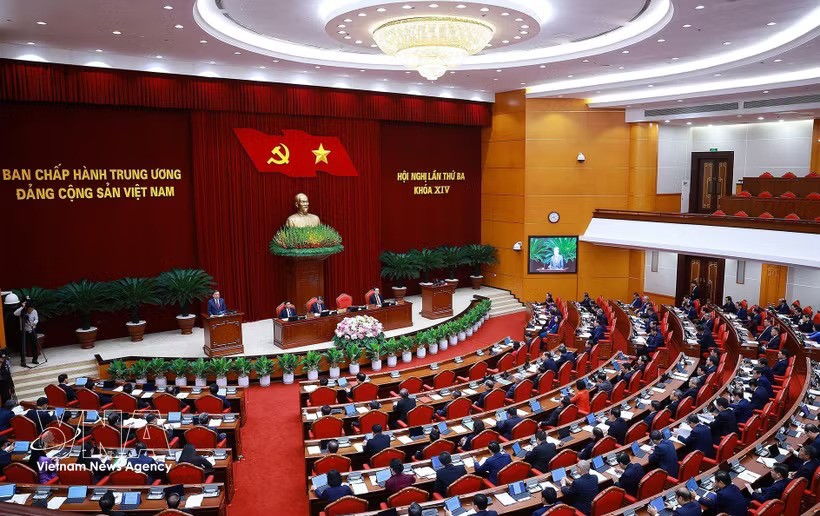
| Delegates attend the forum on investment, trade and tourism cooperation to promote East–West Economic Corridor (EWEC) connectivity. (Photo: VNA) |
The forum provided an open and practical dialogue platform for policymakers, local authorities and the business community to exchange visions, propose innovative solutions and strengthen partnerships, he added.
At the event, participants proposed measures to improve policies in investment, trade, tourism and logistics to better tap the corridor’s potential.
Tourism was identified as a sector with significant growth potential, capable of generating added value for localities along the 1,450-km corridor linking Vietnam, Laos, Thailand and Myanmar.
A highlight of the event was the signing of more than 20 memoranda of understanding between Da Nang, Vietnamese localities and Lao partners for the 2026–2030 period.
On the sidelines, the Vietnam–Laos Trade and Tourism Fair 2026 took place from April 3-5, featuring around 60–70 booths showcasing OCOP (One Commune One Product) and ODOP (One District One Product) products, national-brand goods, garments, electronics, machinery, handicrafts and consumer services.
Vietnam’s industry enters a phase of expansion in scale, technology, and logistics
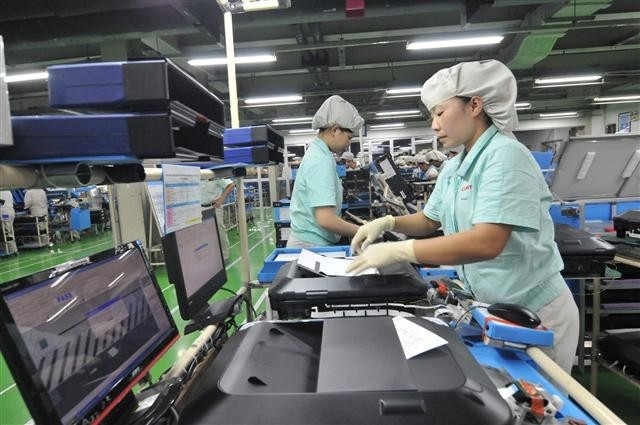
In Vietnam, improving economic fundamentals, increasingly developed infrastructure, and stable foreign investment inflows are driving a shift towards higher-value industrial activities.
Entering 2026 with a stronger economic foundation and a more diversified industrial structure, Vietnam is transitioning from a cost-based manufacturing model to one focused on scaling up, applying technology, and adding value. This trend is becoming increasingly evident across many key industrial sectors.
In 2025, manufacturing maintained its growth momentum, with industrial production approaching double-digit growth. At the same time, foreign direct investment (FDI) inflows remained stable despite global economic fluctuations.
These developments indicate that Vietnam’s industrial ecosystem is entering a new phase of development, with more complete supply chains, improved infrastructure, and a clearer legal framework. As production becomes more sophisticated, demand for modern industrial infrastructure, distribution systems, and stronger supply chain capabilities is also rising to support the next stage of growth.
Infrastructure and technology as the foundation for industrial growth
According to Savills Vietnam, infrastructure development continues to play a key role in the country’s industrial transformation. In the northern region, industrial activities in sectors such as electronics, semiconductors, and high-value manufacturing are being driven by continuous investment in seaports, expressways, and logistics networks.
In the southern region, large-scale infrastructure projects are expected to reshape cargo flows and support the formation of new development corridors. The completion of key transport routes will enhance regional connectivity and improve the efficiency of goods circulation between markets, reported NDO.
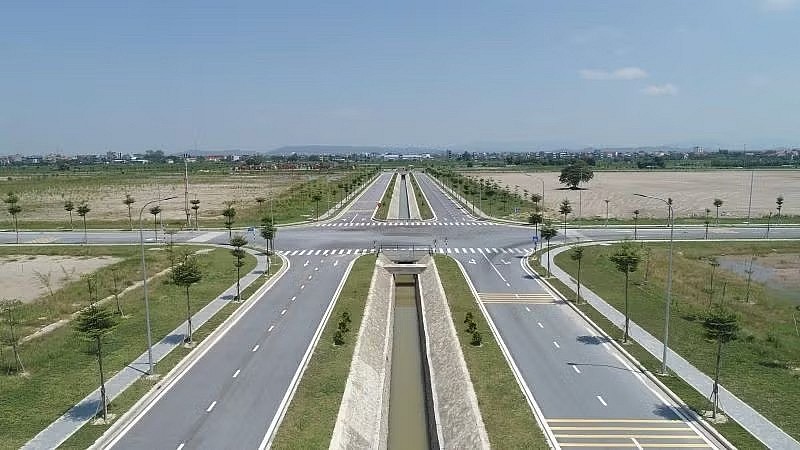 |
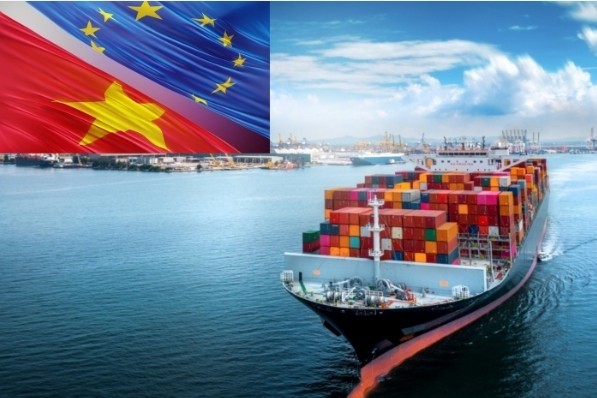
| Vietnam’s industrial real estate market still has significant room for growth. (Photo: nhandan.vn) |
In addition to physical infrastructure, investment in digital infrastructure is also accelerating. Data centres, artificial intelligence systems, and digital connectivity are becoming essential components of modern industry, supporting advanced manufacturing processes and more efficient supply chain management.
Accelerating towards scale expansion and quality enhancement
According to John Campbell, Head of Industrial Real Estate Services at Savills Vietnam, market growth momentum will continue to strengthen in 2026. Infrastructure development will open new industrial clusters, while policies supporting high-value sectors are expected to attract higher-quality investment flows. At the same time, Vietnam’s digital capacity is expanding with the development of large-scale data centres.
These factors are helping to reinforce Vietnam’s competitive position in the region, as the country continues to shift towards advanced manufacturing and increasingly technology-driven supply chains.
At the core of this transformation is the trend of scaling up and improving quality, driven by the alignment of infrastructure, technology, human resources, and policy. In the future, growth is expected to come from high-value sectors that depend on stable energy supply, modern industrial and distribution systems, as well as integrated digital infrastructure.
For investors and businesses, this signals an increasingly mature and competitive industrial environment in which efficiency, resilience, and technological capability will be key to long-term success.
This industrial expansion is also expected to generate demand beyond manufacturing and logistics, particularly in the housing sector, as the growing workforce and continued foreign investment reshape urban development patterns.
Heatwave intensifies, temperatures to hit 38°C across southern Vietnam
A heatwave is expected to intensify across southern Vietnam from early next week, with temperatures in Ho Chi Minh City and neighboring provinces forecast to reach as high as 38°C, according to local meteorologists.
Hot conditions have already been building across the region under the influence of a stable subtropical high-pressure system stretching over southern and south-central Vietnam. Weak winds over southern seas are also contributing to clearer skies and stronger solar radiation, further intensifying the heat.
Temperatures in Ho Chi Minh City and southeastern provinces ranged between 36°C and 37°C over the weekend, and could rise by about one degree from early next week.
The heat is also forecast to expand into the Mekong Delta, with some areas experiencing particularly intense conditions. Border provinces such as Dong Thap and An Giang could see temperatures of up to 37°C, while Vinh Long and Can Tho are expected to record seasonal highs of around 36°C.
Nationwide, hot weather is set to develop across northern regions starting April 6. The northwestern and Red River Delta areas may experience widespread heat, with temperatures ranging from 35°C to 37°C and exceeding 38°C in some locations. The heat is expected to extend to northeastern provinces from April 7, accompanied by relatively low humidity levels of 45% to 55%, cited VOV.
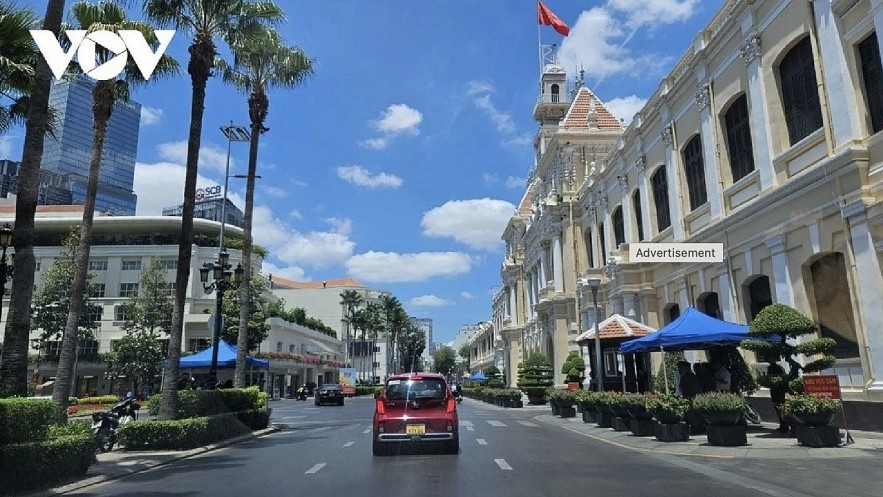 |
| A heatwave is expected to intensify across southern Vietnam from early next week, with temperatures in Ho Chi Minh City and neighboring provinces forecast to rise to 38°C. |
Meteorological authorities noted that actual “feels-like” temperatures outdoors may be 2–4°C higher than recorded levels due to heat absorption from surfaces such as concrete and asphalt.
Prolonged hot weather combined with low humidity increases the risk of fires and electrical incidents, particularly in residential areas where power demand is high. Health risks are also elevated, including dehydration and heat-related illnesses for those exposed to high temperatures for extended periods.
 | Vietnam News Today (Mar. 31): Vietnam Makes Strong Cultural Mark at Macau International Parade 2026 Vietnam News Today (Mar. 31): Can Tho seeks to expand investment cooperation with Indian partners; Vietnam makes strong cultural mark at Macau International Parade 2026; ... |
 | Vietnam News Today (Apr. 1): Vietnam, Greece step up labor cooperation; Russia-Vietnam cooperation holds strong potential in multipolar world; Vietnam’s 16th National Assembly elections hailed ... |