
When Community Becomes an Anchor: Early Progress in Reducing HIV and TB Stigma in Champasak
 | USD 25,600 donated for equipment purchase for Friendship Primary School in Champasak, Laos |
| Champasak Proposes Expanded Cooperation with Can Tho Across Multiple Sectors |
Stigma and discrimination cause people to delay testing, avoid services, conceal their health status, or abandon treatment altogether. For groups that are already vulnerable - men who have sex with men (MSM), transgender individuals, female sex workers, people living with HIV, TB patients, rural women, ethnic minorities, and those facing economic hardship - stigma pushes access to care even further out of reach.
The "Intercountry Partnership for Ending AIDS and TB in Vietnam and Lao PDR" project, funded by the Australian Department of Foreign Affairs and Trade (DFAT) through the Partnerships for a Healthy Region initiative, is being implemented in Champasak by the Center for Community Health Research and Development (CCRD) and its Lao partner, (Community Health & Inclusion Association (CHIAs). In Champasak, the project aims to improve early detection and treatment uptake among people at risk of, or affected by, HIV and TB, while enhancing the quality, inclusiveness, and sustainability of community-based HIV and TB services.
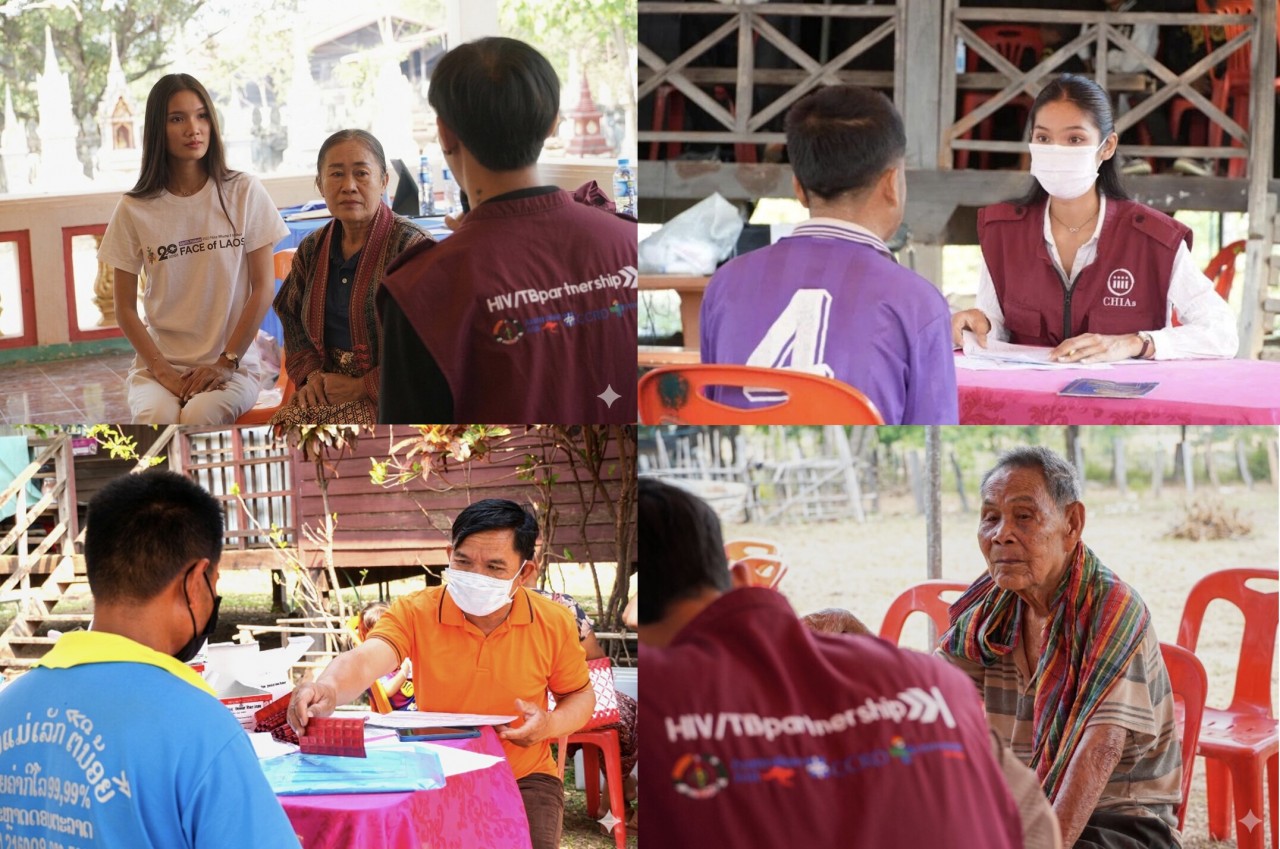 |
| Nongtae District Health Center, Champasak District, March 31 – April 2, 2026: a community health worker conducting a counselling session with a high-risk client. |
Baseline assessments and gender equality, disability, and social inclusion (GEDSI) analyses conducted in Champasak confirm that stigma remains a significant barrier to accessing HIV and TB services. People living with HIV may face stigma from their communities, their own families, and even from within themselves. TB patients may fear being associated with images of illness, poverty, or contagion. High-risk groups such as MSM, transgender individuals, and female sex workers face additional barriers rooted in social prejudice and the lack of inclusive services.
Against this backdrop, the project treats stigma reduction not as a standalone communications activity, but as a core pillar of the intervention model. Principles of non-stigma, non-discrimination, gender equality, disability inclusion, and rights-based service delivery are integrated into training, communications, community outreach, patient support, and service quality monitoring.
Perhaps the most immediate shift has been attitudinal. Health workers, village health volunteers, and community supporters have gone through training on integrated HIV/TB services, GEDSI, and behavior change communication - but the deeper goal was never just knowledge transfer. It was to change how they see the people they serve: not as "cases" or "risk groups," but as individuals with an unconditional right to care, confidentiality, and dignity.
The practical effects are straightforward, even if the change itself is not. People are more willing to disclose, test, and stay in treatment when the person across the table isn't judging them. Confidentiality stops being a procedural checkbox and starts being the reason someone comes back. And for people in high-risk groups who have learned - often the hard way - not to trust institutions, being met by someone who genuinely understands their world can be the thing that finally closes the gap.
Beyond the clinic, the project extends its reach into communities directly. Outreach teams work across HIV, TB, and STIs - finding cases actively rather than waiting for people to come forward - and stay alongside patients through testing, treatment, and follow-up, not just at the point of first contact. For someone already afraid of being seen at a health facility, having a trusted person navigate that process with them isn't a convenience. It's often what makes the difference between starting treatment and not.
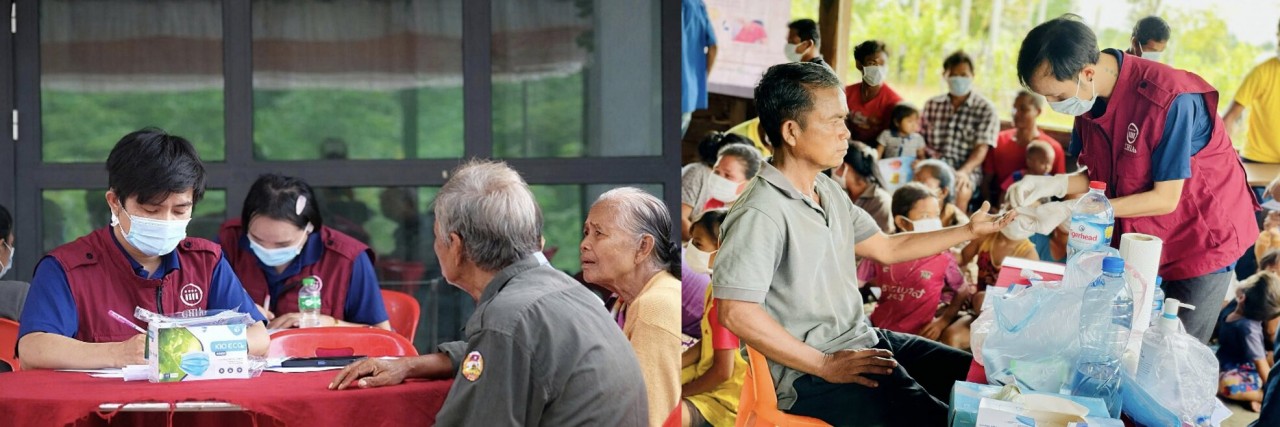 |
| World TB Day event, Champasak Province, March 24, 2026: community health workers providing counselling and finger-prick HIV testing for high-risk clients. |
For people living with HIV and TB patients alike, community support is about more than technical assistance - it is about accompaniment. A well-timed counselling session, a clear explanation of a treatment regimen, an assurance that their information will be kept private, or simply having someone accompany them to a health facility can make all the difference. These forms of support help patients feel that they are not walking this path alone, and that they are not defined by their diagnosis.
Social and behavior change communication (SBCC) forms another key pillar of the project. Materials and campaigns are developed to be culturally appropriate, accessible in terms of literacy and language, and relevant to the local social context. The messaging emphasizes that HIV and TB are health conditions that can be prevented, treated, and managed. Those who fall ill deserve support - not avoidance. High-risk individuals deserve access to appropriate services - not judgment.
This kind of communication helps shift community attitudes from fear and avoidance toward understanding and support. When HIV treatment is understood as something that allows people to live full, healthy lives, the calculus around disclosure and testing starts to shift. When TB is talked about as a curable disease rather than a mark of poverty or failure, the shame attached to it loosens. Language, it turns out, is not just a delivery mechanism for health information. It's part of the intervention itself.
Underlying all of this is a deliberate shift in who gets to define what "good service" looks like. Through community-led monitoring, feedback from people living with HIV, TB patients, and marginalized groups is built into the project's quality assessment - not as an afterthought, but as the primary lens. When community members are no longer simply recipients of services, the question being asked is not whether services were delivered, but whether they felt safe, respectful, and worth returning to.
This matters because stigma and exclusion don't always announce themselves in data. They show up in a dismissive tone at a reception desk, in materials written for an audience that doesn't match the one receiving them, in the quiet non-return of someone who found the clinic unwelcoming. Community-led monitoring creates a channel for exactly these signals - and treats them as actionable, not anecdotal.
What's notable at this stage isn't a dramatic result - it's a deliberate design. It has clearly identified stigma as a barrier to service access. Stigma has been named as a structural barrier, not a background condition. The response has been built into the project's foundations: how staff are trained, how services are framed, how communities are consulted. And it is actively promoting the role of communities in outreach, patient support, and service quality.
None of these changes will show up immediately in treatment numbers or case detection rates. But they shape the conditions under which those numbers move. People who feel less exposed are more likely to test. People who trust a service are more likely to stay in it. And communities that understand HIV and TB as health issues - rather than moral failures - are more likely to support, rather than isolate, the people living with them. The groundwork being laid in Champasak is unglamorous. But it is the kind that holds.
And the shift is already happening - not in any single intervention, but in the texture of how the work is done. A health worker who chooses their words carefully. A volunteer who shows up without judgment. A community that is starting to talk about HIV and TB as health issues, not moral failures. These are not dramatic turning points. But they are the moments in which trust is either built or lost - and in which the distance between a person in need and the care they deserve either closes or doesn't.
That is the essential foundation on which Champasak can move closer to ending AIDS and TB. Because in the fight against HIV and TB, tests and medicines are necessary - but they are not sufficient. For people to come forward for services, those services must be truly accessible. For people to stay in treatment, those services must earn their trust. And for no one to be left behind, communities must be open-hearted enough that every person can seek care without having to trade their dignity for it.
 | Champasak Proposes Expanded Cooperation with Can Tho Across Multiple Sectors Dong Van Thanh, Member of the Party Central Committee, Permanent Deputy Secretary of the Can Tho Party Committee, and Chairman of the Can Tho People's ... |
 | STEM Robotics Training for 30 Teachers and Students at Lao-Vietnamese Friendship School in Sekong On June 27-28, 2026, the Consulate General of Vietnam in Pakse, in collaboration with the Vietnamese Association of Sekong Province, Champasak - Lam Dong Gifted ... |


Most read
Related Stories
 World
World
Laos Advances Bold Biodiversity Conservation Plans
 Friendship
President Khamtay Siphandone: Outstanding Lao Leader, Great Friend of Vietnam
 Friendship
HCM City Congratulates Laos’ National Day
 Friendship
Annual Tea Party Strengthens Bonds among Female Diplomats in Laos
Recommended
National
When Community Becomes an Anchor: Early Progress in Reducing HIV and TB Stigma in Champasak
Popular article
 National
More Than 50 Records Provide New Leads for Identifying Fallen Soldiers
 National
Vietnam News Today (July 21): Standard Chartered Raises 2026 GDP Growth Forecast for Vietnam to 9.5%
 National
Party Central Committee’s Third Meeting Opens in Hanoi
 National