Malaysia, Vietnam promote tourism growth
A “Visit Malaysia 2026” seminar was held in Hanoi on April 8 by the Malaysia Tourism Promotion Board (Tourism Malaysia), as part of the Visit Malaysia Year 2026 (VM2026) campaign.
Vietnam is always one of Malaysia’s key tourism markets in Southeast Asia. In 2025, Malaysia welcomed more than 331,000 visitors from Vietnam, making Vietnam one of its top 15 international source markets. Tourism cooperation between the two countries has continued to develop positively, as seen in steady growth in two-way travel and improved air connectivity.
There are currently about 180 flights per week between Vietnam and Malaysia, offering more than 32,500 seats, operated by multiple airlines connecting Hanoi, Ho Chi Minh City, Da Nang, Phu Quoc and Nha Trang with destinations in Malaysia.
A representative of Batik Air in Vietnam said the airline plans to expand its regional flight network this year, including a new route from Kuala Lumpur (KUL) to Phu Quoc (PQC), scheduled to launch in summer 2026 with a frequency of four flights per week.
In his address, Malaysian Ambassador to Vietnam Dato' Tan Yang Thai said similarities in culture, geographical proximity and their location within Southeast Asia provide favourable conditions for deeper cooperation between Vietnam and Malaysia.
As part of the campaign, Malaysia introduced the theme “Surreal Experiences”, with travel programs designed to offer deeper experiences, more meaningful connections and personalised journeys, according to VOV.
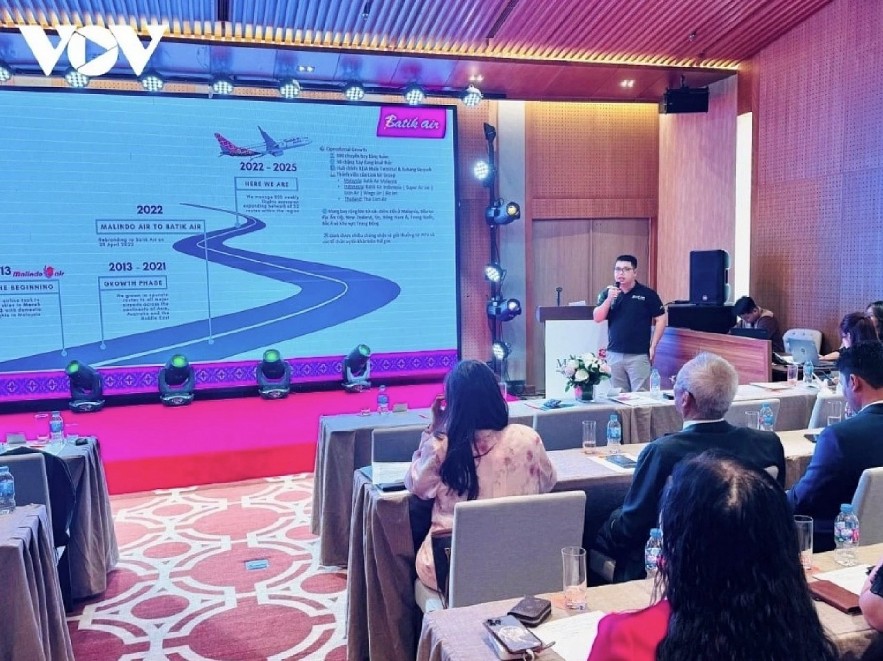 |
| A representative of Batik Air in Vietnam speaks at the event. |
Niche tourism products such as stargazing tours, golf tourism, wellness tourism and study tours are also being promoted, along with seasonal shopping campaigns in summer and at year-end to attract visitors.
From April 9 to 12, Tourism Malaysia will take part in the Vietnam International Travel Mart 2026 in Hanoi with a view to showcasing a wide range of tourism products and interactive experiences to connect directly with visitors and partners in Vietnam.
The agency is also expanding its activities on digital platforms through widely shared content and cooperation with well-known figures, to keep up with modern travel trends and habits among Vietnamese tourists.
Vietnam sees ample opportunities in AI-powered economy
Artificial intelligence (AI) is far more than a new technology, emerging as a foundational production infrastructure and an emerging economy, unlocking massive upside for Vietnam.
AI to power 25% of economy
The “Vietnam AI Economy 2025” report, released by the National Innovation Centre, Japan International Cooperation Agency (JICA), and Boston Consulting Group, puts hard numbers on the opportunity for the first time. It forecasts that AI could add up to 130 billion USD to Vietnam’s GDP by 2040, equivalent to roughly 25% of the country’s current economy.
Vietnam has moved faster than most in Southeast Asia, issuing a national strategy for AI research, development, and application. In a new decision, the Prime Minister listed 11 strategic technology groups and 35 priority tech products, with AI ranked at the very top.
Minister of Science and Technology Nguyen Manh Hung called AI the best shot for Vietnam to break into the high-income nation on par with major powers, reported VNA.
 |
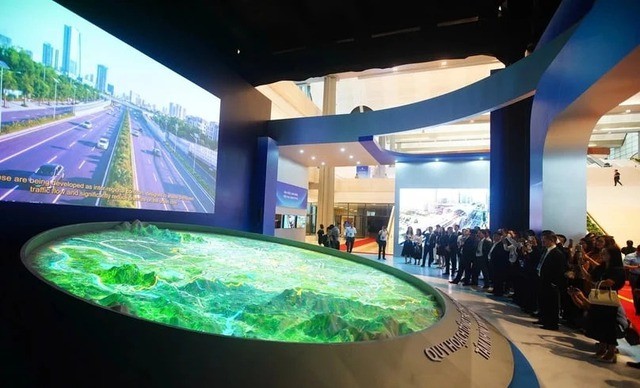
| Product showcase area at AI Day 2026. (Photo: VNA) |
CMC Executive Chairman Nguyen Trung Chinh said achieving sustainable growth and escaping the middle-income trap demands a powerful new engine underpinned by sci-tech, innovation, and sharp gains in labor productivity. Against such a backdrop, AI stands out as the foundational technology capable of reshaping production, governance, services, and the entire economy.
Call for a national AI strategy
As suggested by Chinh, the Government will approve and roll out a national AI strategy that runs to 2045.
The CMC proposed building an action plan for the AI-X program this year. complete with a detailed roadmap and clear responsibilities. It also called for establishing a National Council on AI led by a Government leader to coordinate AI adoption nationwide, pooling all possible resources for 2026-2028, while introducing special mechanisms on financing, land and workforce to accelerate AI infrastructure buildout
The company also suggested incorporating AI indicators in socio-economic performance evaluation criteria and running pilots in selected localities before scaling countrywide.
Strategy for AI infrastructure needed
Minister Hung said Vietnam must build infrastructure for AI, and could come a long way thanks to national AI computing power, robust data ecosystem, homegrown “Make in Vietnam” tech firms, start-ups and a young, digitally fluent workforce.
Chairman and CEO of Viettel Tao Duc Thang declared AI as the group’s fifth pillar, vowing to study, develop and commercialise AI-powered technologies and apps till 2040, contributing to realising Vietnam’s AI strategy, especially the Politburo’s Resolution 57.
Executive Chairman of the VNG Corporation Le Hong Minh pushed for sovereign AI, including practical business apps and foundational models developed in Vietnam. He noted that current investment levels lag behind peers and called for building a critical mass of researchers and developers who truly master core AI technologies.
Domestic tech players, he added, must shift focus from hype to concrete product development and real commercial opportunities.
Taken together, AI is Vietnam’s single biggest strategic opportunity that will largely determine the country’s global standing till 2045.
FTSE Russell: Vietnam will be upgraded from a frontier market to an emerging market in September
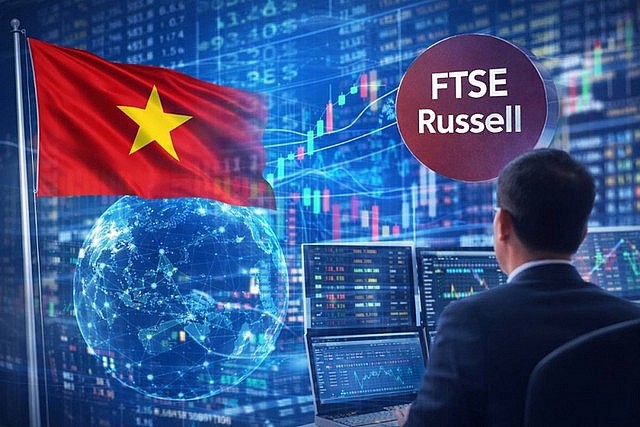
FTSE Russell has confirmed that Vietnam will be upgraded from a frontier market to an emerging market in September, following an interim review—marking the long-anticipated final approval for the transition.
Vietnamese equities will be gradually included in FTSE Russell's global index system starting September 21, with the process expected to continue through 2027.
The decision reflects the Index Governance Board's satisfaction with the country's progress, particularly in implementing the global broker model, a key requirement for effective index replication.
This upgrade places Vietnam alongside major emerging markets such as India and China, and is expected to open the door for greater participation from passive investment funds in the local stock market.
The move follows a series of market-oriented reforms aimed at improving accessibility and transparency. These include the introduction of a non-pre-funding mechanism, a framework to handle failed trades, and expanded access for foreign investors through global brokerage channels—measures that help reduce transaction risks and enhance investor confidence.
Although Vietnam had already met the criteria for "secondary emerging market" status in a previous review, the latest assessment signals meaningful improvements in actual trading conditions and market operations. This marks a shift from meeting formal requirements on paper to achieving practical standards expected by international investors.
 |
| Photo: VGP |
According to Christine Le, President of the Vietnam Finance and Investment Association in the UK, the development reflects both the consistency of recent reforms and a tangible improvement in market inevitability.
Vietnam is now moving closer to being included in the core asset allocation strategies of global institutional investors, rather than remaining a high-growth but non-essential frontier market.
As a result, the upgrade is expected not only to increase capital inflows but also to improve their quality, with a stronger emphasis on long-term, stable investment.
However, the transition also brings higher expectations. Going forward, Vietnam will need to focus on maintaining emerging market standards by strengthening legal enforcement, improving corporate governance, modernizing market infrastructure, and ensuring consistent policy implementation. Maintaining macroeconomic stability will remain essential to sustaining investor trust and long-term market attractiveness.
As one of the world's leading index providers—alongside MSCI and S&P Dow Jones Indices—FTSE Russell plays a critical role in shaping global investment flows. Its latest assessment is therefore both a milestone in Vietnam's market upgrade journey and a test of the depth and durability of its reform efforts.
Vietnam – a safe destination amid global uncertainties
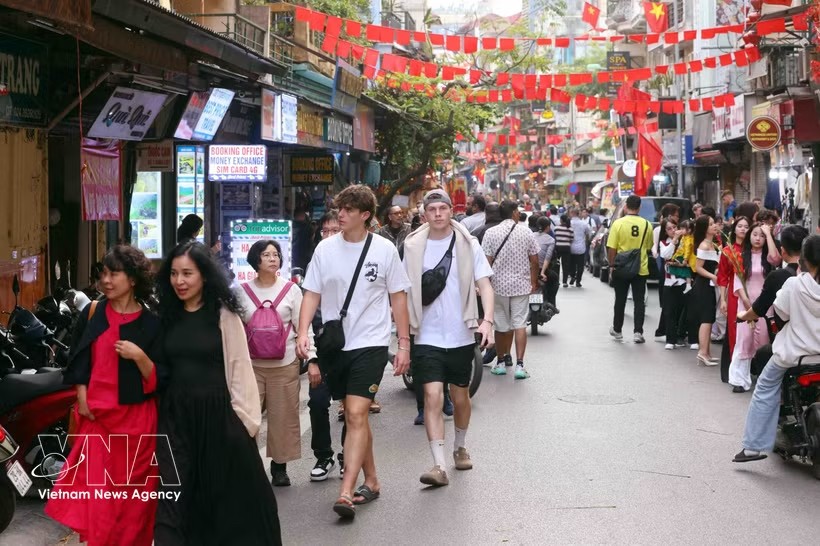
As global instability and rising travel costs reshape tourism trends, Vietnam is increasingly positioning itself as a safe, accessible and cost-competitive destination, drawing a growing influx of international visitors and strengthening its reputation as a resilient and trusted tourism hub.
Strong connectivity drives growth momentum
Data from the Vietnam National Authority of Tourism (VNAT) show that Vietnam welcomed nearly 2.1 million foreign visitors in March 2026, raising total arrivals in the first quarter to 6.76 million, up 12.4% year-on-year. The figure represents a record high for the first quarter and marks the first time the country has received more than two million international visitors for three consecutive months.
Air travelers accounted for 82.3% of total arrivals, highlighting Vietnam’s strong pull for medium- and long-haul markets despite geopolitical tensions and higher fuel prices. Authorities said the sustained volume of air passengers reflects not only expanding global connectivity but also growing confidence among travelers in Vietnam as a safe, stable and convenient destination.
Land arrivals made up 15.5%, underscoring the continued importance of neighbouring markets such as China, Laos, Cambodia and Thailand. Benefiting from short travel distances and affordable costs, these markets have provided a stable buffer for tourism growth amid rising global transport expenses.
Cruise tourism, meanwhile, represented only 2.2% of international arrivals, signalling substantial untapped potential in a high-spending segment supported by Vietnam’s extensive coastline and diverse tourism assets, VNA reported.
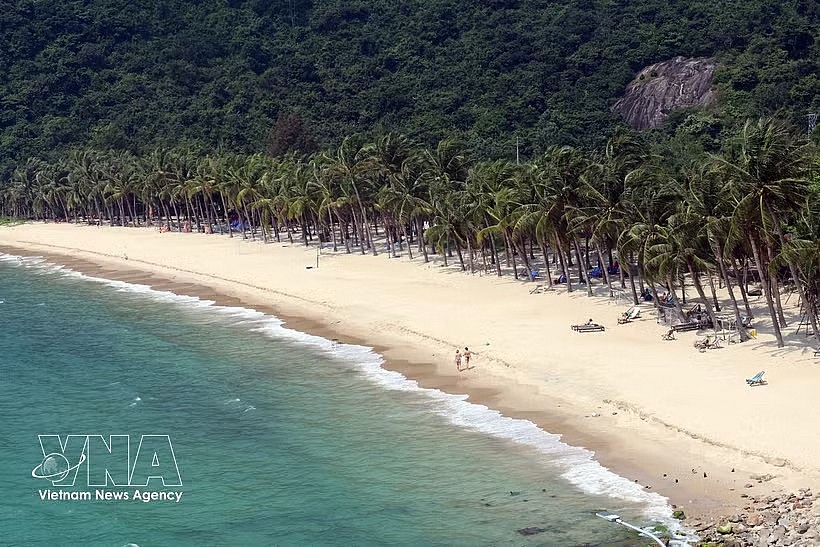 |
| Pristine white-sand beach on Cu Lao Cham Island, Da Nang city, is a magnet for visitors. (Photo: VNA) |
Industry experts noted that significant opportunities remain to enhance tourism quality and value creation, particularly through investment in specialised cruise ports and the development of premium short-stay experiences.
Despite global tourism headwinds linked to geopolitical conflicts, transport disruptions and surging travel expenses, Vietnam’s tourism sector has sustained strong growth, underscoring the destination’s resilience and rising international profile.
Safety emerges as key factor in travel decisions
With security concerns playing an increasingly crucial role in travel planning, safety has become a decisive factor for international tourists. The VNAT emphasised that Vietnam’s stable political environment, secure social conditions and effective risk management capabilities have strengthened its appeal as a reliable destination, helping build traveler confidence amid global volatility.
Vietnam’s attractiveness is further reinforced by its rich natural landscapes and cultural diversity. The growing popularity of experiential travel, green tourism and local cultural discovery continues to boost the appeal of destinations across the country.
In the first quarter of 2026, tourism growth reflected not only expanding visitor numbers but also broader market diversification, contributing to greater sustainability, cited VNA.
China and the Republic of Korea remained the largest source markets, with 1.4 million and 1.3 million visitors respectively, accounting for roughly 40% of total arrivals. Southeast Asian markets posted robust growth, particularly the Philippines (69.3%) and Indonesia (43.9%), while India continued to emerge as a high-potential market with growth of 69.3%. Vietnam also recorded encouraging signals in visitors from North America and Oceania.
Europe stood out as a bright spot, posting overall growth of 55.6%, while arrivals from Russia surged by 163.4%, demonstrating Vietnam’s increasing attractiveness to long-haul travelers despite aviation disruptions caused by the Middle East conflict.
According to the VNAT, as safety becomes an essential criterion in destination choice, Vietnam’s sustained growth, especially from distant markets, highlights the country’s steady progress toward becoming a safe, stable and sustainably appealing destination on both regional and global tourism maps.
By further improving service quality, enriching visitor experiences and expanding air connectivity with key markets, Vietnam’s tourism industry is expected to maintain strong growth momentum in the time ahead.
 | Vietnam News Today (Apr. 5): Vietnam's GDP Growth Reaches 7.83% in January-March Period Vietnam News Today (Apr. 5): PM seeks stronger energy security cooperation with Kuwait; Vietnam's GDP growth reaches 7.83% in January-March period; FDI inflows to Vietnam ... |
 | Vietnam News Today (Apr. 6): Prime Minister Pham Minh Chinh receives Chinese Ambassador He Wei; PM seeks stronger energy ties with Kuwait amid global uncertainty; ... |