Vietnam fulfils key targets at 33rd SEA Games: delegation head
The Vietnamese sports delegation has successfully fulfilled three major objectives set ahead of the 33rd Southeast Asian (SEA) Games in Thailand, head of the Vietnamese delegation Nguyen Hong Minh said at a meeting with reporters covering the SEA Games in Bangkok on December 19.
The three major goals are maintaining and enhancing Vietnam’s position among the region’s leading sporting nations; achieving breakthroughs in key sports, particularly Olympic disciplines; and projecting the image of a civilised, professional and disciplined delegation to the international community, Minh said.
Vietnam has so far secured 73 gold medals on the official medal table. Including five golds from demonstration events, the total stood at 78 gold medals. To meet its target of around 90 golds, Vietnam continues to place hopes on remaining competitions in sports such as wrestling, fencing, shooting, boxing, sepak takraw, open-water swimming and e-sports, he stated.
In football, Vietnam completed its objectives, with all three national teams advancing to the finals. The women’s futsal team and the men’s U22 team claimed gold medals. Minh said that football successfully met its targets, highlighting the U22 team’s gold medal as particularly impressive, reflecting careful and thorough preparation.
The delegation head said Vietnam has recorded significant breakthroughs in key sports, especially Olympic disciplines. Of the 78 gold medals won so far, 50 have come from Olympic sports, accounting for nearly 70% of the total, reflecting clear progress in disciplines featured at future Olympic Games and Asian Games.
The games have also seen the emergence of a new generation of promising Vietnamese athletes in Olympic sports such as athletics, swimming, shooting and martial arts. Several athletes aged just 16 or 17 have already won medals, including swimmers Nguyen Thuy Hien, Tran Van Nguyen Quoc and Duong Van Hoang Quy.
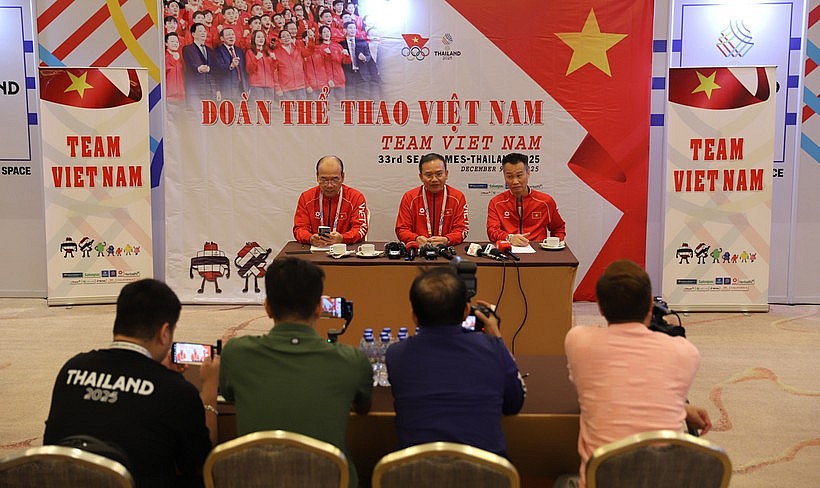 |
| Head of the Vietnamese sports delegation Nguyen Hong Minh (center) and two deputy heads of the delegation preside over the meeting with reporters covering the SEA Games in Bangkok. (Photo: VNA) |
Minh affirmed that throughout competition and interactions at the SEA Games, members of the Vietnamese delegation, particularly athletes, conducted themselves in a civilised and appropriate manner, reflecting Vietnamese cultural values and promoting the image of a friendly and hospitable Vietnam.
Overall, the Vietnamese delegation has largely fulfilled its mission, with many sports delivering strong results. Football earned two gold medals and one silver; athletics claimed 12 golds; swimming secured six golds; shooting collected five golds; rowing won four golds to top the rankings; wrestling earned seven golds; karate took six golds; taekwondo won four golds; and artistic gymnastics secured three golds.
Among the standout performers was shooter Trinh Thi Thu Vinh, who claimed two individual gold medals, two team golds and one silver in the mixed pistol event, while breaking four records.
Minh also pointed out challenges facing the delegation, noting that although the SEA Games is a regional competition, many world-class athletes competed in events such as athletics, weightlifting, gymnastics, badminton, taekwondo and boxing. He also mentioned the trend of naturalising athletes from outside Southeast Asia and concerns over refereeing standards.
Looking ahead, he stressed that Vietnamese sport must continue to improve professional skills and competitive resilience, striving for more convincing victories as it targets higher goals at the Asian Games and the Olympic Games.
Halal market offers significant growth opportunities for Vietnamese exporters
As the global economy faces growing uncertainty, including geopolitical tensions, persistent inflation, and rising trade protectionism, diversifying export markets has become an urgent priority for Vietnamese businesses.
Against this backdrop, the Halal market in the Middle East is increasingly viewed not as an alternative, but as a strategic pillar for sustaining long-term export growth, said Tran Phu Lu, director of the Investment and Trade Promotion Center of HCM City (ITPC) at the conference “Export Prospects to the Middle East and Türkiye: Opportunities and Challenges for Vietnamese Enterprises,” held in HCM City on December 18.
According to Lu, the Middle East is among the world’s most dynamic import markets, with annual imports exceeding US$1.2 trillion and GDP growth of 5–6%.
In the first 11 months of 2025, Vietnam’s exports to key markets in the region continued to perform strongly, reaching US$5.4 billion to the UAE, US$1.9 billion to Saudi Arabia, and US$1.6 billion to Türkiye.
Major retailers such as Lulu Hypermarket (UAE), Al Othaim Markets (Saudi Arabia), Choithrams, and Citi Hypermarkets (Kuwait) are also showing growing interest in sourcing quality products from Vietnam, he said.
Türkiye, meanwhile, is regarded as a strategic gateway, enabling Vietnamese goods to reach not only Middle Eastern markets but also a wider Muslim consumer base of more than two billion people worldwide, he added.
Nguyen Phuong Tra, general director of the Middle East and Africa Department at the Ministry of Foreign Affairs, underscored the vast potential of the global Halal economy. Muslims account for around 25% of the world’s population, while the Halal economy is projected to reach US$10 trillion before 2028.
The Halal food sector alone is expected to expand from US$2.7 trillion in 2024 to US$5.9 trillion by 2033, with annual growth of around 9%, cited VOV.
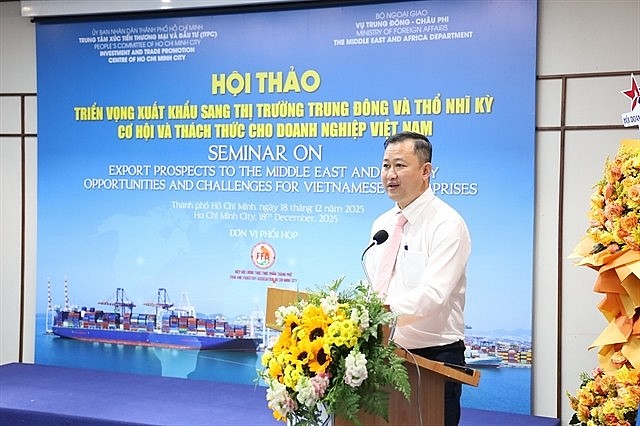 |
| Tran Phu Lu, director of the Investment and Trade Promotion Center of HCM City, speaks at the conference on December 18. (Photo courtesy of ITPC) |
Tra noted that the Middle East, home to about 500 million people and with GDP of US$3.6 trillion, has particularly strong purchasing power. Food imports in the region reached US$132 billion in 2023, while Gulf Cooperation Council (GCC) countries depend on imports for up to 85% of their food needs.
Despite the opportunities, Vietnamese enterprises face challenges in accessing Halal markets, notably the complexity of certification systems. Businesses must navigate multiple standards, including GSO 993:2015 in GCC countries, Indonesia’s HAS 23103:2012, Malaysia’s MS 1500:2019 and OIC/SMIIC 1:2019, recognised by 56 OIC member states, Tra said.
High certification costs, short validity periods and intense competition from established exporters further complicate market entry. She also warned of trade fraud risks, urging enterprises to strengthen partner verification and adopt secure payment terms.
Türkiye positioned as Halal hub and logistics gateway
Nguyen Viet Hang, Vietnam’s Commercial Counsellor in Türkiye, said that despite global volatility, bilateral economic and trade cooperation between Türkiye and Vietnam in 2025 continued to record positive progress.
She identified the Halal market as a key strategic focus for future cooperation, noting that Vietnamese enterprises made a strong impression at the Global Halal Summit and Halal Expo 2025 in Istanbul with products ranging from food and agricultural goods to cosmetics and herbal medicines.
With a Muslim population of nearly 90 million and its role as a key member of the Organisation of Islamic Cooperation, Türkiye offers a valuable entry point for HCM City firms to integrate more deeply into global Halal supply chains, she added.
From a standards perspective, Ramlan Osman, director of the Vietnam Halal Certification Authority (HALCERT), said Halal principles align closely with international frameworks such as the United Nations Global Compact and Environmental, Social and Governance criteria.
As such, adopting Halal practices complements existing industrial standards and benefits both Muslim and non-Muslim consumers, he said.
He outlined a nine-step Halal food certification process to help enterprises prepare for compliance.
Sharing practical insights, Thi Hong Uytun, founder of HM Dragon Logistics and Consulting Company, highlighted Türkiye’s dual role as a consumer market and a gateway to the Middle East and the European Union. Vietnam is currently Türkiye’s third-largest trading partner within ASEAN, with exports reaching US$1.93 billion in 2024, up 9.1% year-on-year.
However, Vietnamese goods still account for only about 0.5% of Türkiye’s total imports.
She recommended enterprises to be mindful of trade defence measures, currency volatility and payment risks when entering the market.
To mitigate risks related to payment practices, she recommended prioritising irrevocable letters of credit confirmed by reputable banks and strengthening financial due diligence before contract signing.
The conference was jointly organised by ITPC, the Ministry of Foreign Affairs’ Middle East and Africa Department and the HCM City Food and Foodstuff Association, as part of the Business Matching and HCM City Products Week 2025 – Food and Beverages, held from December 16–22.
Circular economy powers Vietnam’s green growth ambitions
As Vietnam pursues green growth and sustainable development, the circular economy has emerged as a critical pillar in the country’s new growth model.
That was the key message of the thematic session “Promoting green transition and developing the circular economy to realize high growth and sustainable development goals” - held under the umbrella of the Vietnam Economic Forum 2025, looking ahead to 2026.
Vietnam's new model: Growth with sustainability and inclusion
According to Pham Dai Duong, Deputy Head of the Central Economic Commission’s Policy and Strategy Department, Vietnam’s economy is facing the strategic challenge of transforming its growth model to meet national development goals.
By 2030, the country aims to become a modern industrial nation with upper-middle income, and by 2045, a high-income developed economy.
Achieving such ambitions requires Vietnam to consistently reach double-digit growth from 2026 onwards - growth that must now be sustainable, inclusive, and based on quality and long-term competitiveness.
This transformation will rest on four revolutionary transitions: digital, green, energy, and workforce restructuring.
Agriculture: A paradox of growth and emissions
Vietnam’s agriculture sector contributes over 15% of national GDP, but also accounts for nearly 30% of total greenhouse gas emissions.
That duality makes agriculture both a vital economic driver and a key area for climate action. Building a low-emission, technology-driven agricultural model is essential for Vietnam’s green transition and sustainability roadmap, VNN reported.
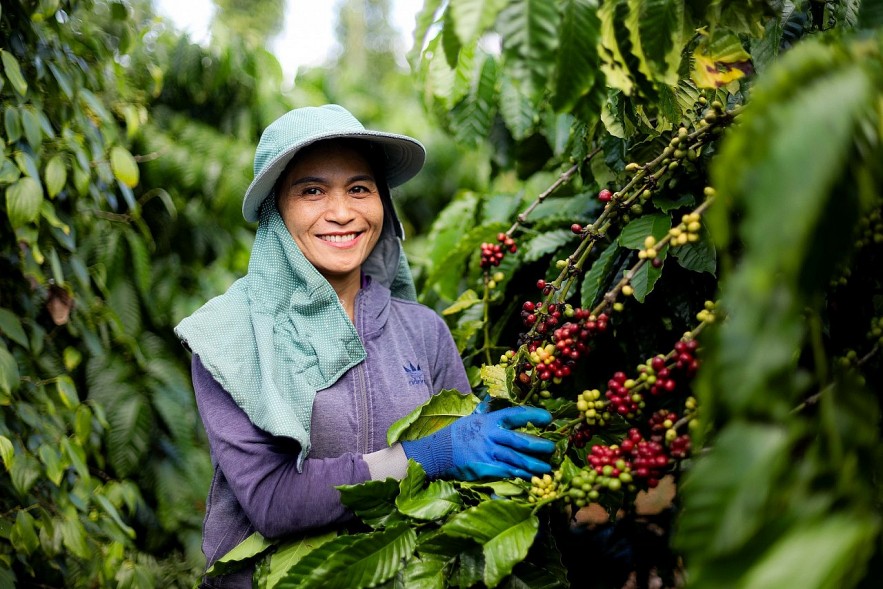 |
| Photo: VNN |
Since 2011, initiatives like the National Context Program (NCP) have improved farmers’ livelihoods while producing measurable environmental benefits.
Low-carbon agriculture takes root
Le Cong Thanh, Deputy Minister of Agriculture and Environment, pointed to promising trends in the greening of production and consumption, particularly within agriculture.
Numerous ecological and low-carbon farming models have been launched, involving businesses and cooperatives in applying advanced technology to monitor and control production environments - raising both yield and product quality.
In September 2025, the Ministry approved a national low-emission crop farming roadmap for 2025–2035. This strategy aims to bring Vietnam’s crop production in line with low-carbon goals, safeguard national food security, and boost the global competitiveness of Vietnamese agricultural exports.
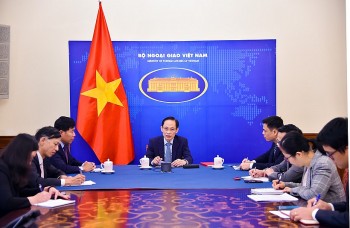 | Vietnam News Today (Dec. 16): Vietnamese, Philippine Foreign Ministers Hold Phone Talks Vietnam News Today (Dec. 16): Vietnamese, Philippine foreign ministers hold phone talks; Vietnam, Thailand lay stress on importance of peace, stability and regional security; Ample ... |
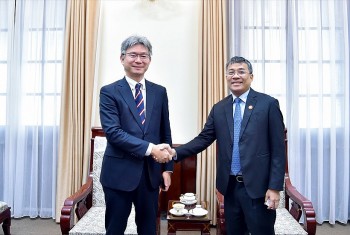 | Vietnam News Today (Dec. 17): Vietnamese economy demonstrates resilient strength, PM Chinh says; Minister of Foreign Affairs receives Japan’s Tochigi Governor; JICA praised for contributions ... |