Vietnam’s economy surges in 2025, sets sights on double-digit growth in 2026
Vietnam’s 2025 GDP is expected to reach $510B, with per capita income surpassing $5,000.
A government report on the implementation of Vietnam’s 2025 socio-economic development plan presents a dynamic picture of the national economy, marked by major breakthroughs.
Nine-month GDP growth reached 7.85%, with full-year growth estimated at around 8% - among the highest in Asia and globally.
Vietnam’s GDP is projected to hit $510 billion in 2025, while average per capita income is expected to exceed $5,000 for the first time - a pivotal milestone in the country’s transition to a high-middle-income economy.
This impressive result stems from the government’s resolute, flexible, and consistent leadership throughout 2025.
Despite global headwinds such as slow recovery, inflation, and geopolitical uncertainty, the government prioritized macroeconomic stability, inflation control, and key economic balances.
A range of coordinated policy measures were rolled out, including prudent monetary policy, interest rate reduction support, accelerated disbursement of public investment - especially in strategic infrastructure - and export promotion through market diversification.
Particular focus was also placed on improving the business and investment environment, removing bottlenecks for enterprises, advancing digital transformation, developing the green economy, and fostering innovation.
Social welfare policies and support for individuals and businesses affected by disasters and epidemics were implemented in a timely and effective manner.
Unified direction from central to local levels generated strong momentum, enabling the economy to recover swiftly, maintain high growth, and improve incomes across the population.
At a glance: During the 10th National Assembly session, a resolution was passed outlining the 2026 socio-economic development plan, aiming for GDP growth of 10% or higher, and targeting per capita income of $5,400–$5,500, cited VNN.
Dr. Can Van Luc, Chief Economist at BIDV and a member of the Prime Minister’s Economic Advisory Council, forecasts Vietnam’s GDP growth in 2026 will reach 9–10%.
According to Dr. Luc, key growth drivers are expected to recover evenly. Notably, public investment will be vigorously promoted, with a planned disbursement rate of 100%, equivalent to about $34–35 billion, or 7% of GDP - the highest public investment-to-GDP ratio in Asia.
He noted that successful public investment disbursement could contribute up to 2 percentage points to GDP growth.
In parallel, domestic consumption - currently accounting for 60% of growth - is emerging as the most critical driver of Vietnam’s economic momentum.
Prof. Vu Minh Khuong from the Lee Kuan Yew School of Public Policy (Singapore) emphasized that Vietnam has entered a pivotal stage - one that could see the country "take off" in the next two decades.
With strong macroeconomic fundamentals, a reawakened national ambition, and rapid digital and innovation advancements, Vietnam is well-positioned to transition to the next stage of development.
To achieve and sustain double-digit growth, Prof. Khuong recommends Vietnam focus on three strategic directions:
Institutional reform with policy-making processes grounded in evidence and pilot models;
Enhancing export value-add, especially in major markets such as China;
Investing in high-quality human capital and establishing “free trade zones” linked to universities and research hubs to foster innovation ecosystems.
Vietnam poised to become regional LNG hub amid energy transition
Speaking at the forum on strategic directions and development trends of the natural gas market (CNG, LNG, LPG) in Vietnam and ASEAN on December 23, Nguyen Mai Bich Tien, project development manager at GreenYellow Vietnam, revealed that global natural gas demand currently stands at around 4,250 billion cubic meters and is projected to rise to 4,700 billion cubic meters by 2030. The Asia-Pacific region is expected to record the fastest demand growth, followed by the Middle East and North America.
Data from the ASEAN Center for Energy (ACE) show that while regional energy demand rebounded strongly after the COVID-19 period, ASEAN’s power generation mix is heavily dependent on fossil fuels, accounting for more than 80% of total supply. Coal’s share rose sharply from around 20% in 2015 to nearly 35% in 2022, while natural gas declined from over 30% to just above 20%.
As domestic oil and gas production declines, ASEAN is projected to become a net LNG importer. By 2030, LNG imports are expected to rise to 120–130 billion cubic meters, while exports may remain around 50 billion cubic meters, underscoring the urgent need for investment in LNG terminals, regasification facilities and transmission infrastructure to avoid future energy security bottlenecks.
Regional LNG re-export center
In Vietnam, liquefied natural gas (LNG) has been identified as a key transitional energy source under the National Power Development Plan VIII, helping reduce reliance on coal and facilitate the integration of renewable energy. By 2030, Vietnam’s total gas-fired power capacity is projected to reach 9,000–10,000 MW, with annual output of approximately 50–58 billion kWh.
Several large-scale LNG-to-power projects, including Nhon Trach 3 and 4, Phuoc An, Son My and Hai Lang, are under development and are expected to come online during the 2027–2030 period, reported VOV.
According to Dr. Nguyen Quoc Thap, chairman of the Vietnam Petroleum Association, LNG is increasingly viewed as a flexible solution for countries with limited domestic gas resources. The world’s top LNG suppliers currently include the United States, Qatar, Australia, Russia, and Canada, while importing countries such as Vietnam, the Philippines, Bangladesh and India are rapidly expanding their LNG import capacity.
“With its strategic location, Vietnam could develop into a regional LNG re-export center, an LNG dispatch hub, and a reliable energy supplier for FDI-driven manufacturing supply chains,” Dr. Thap said.
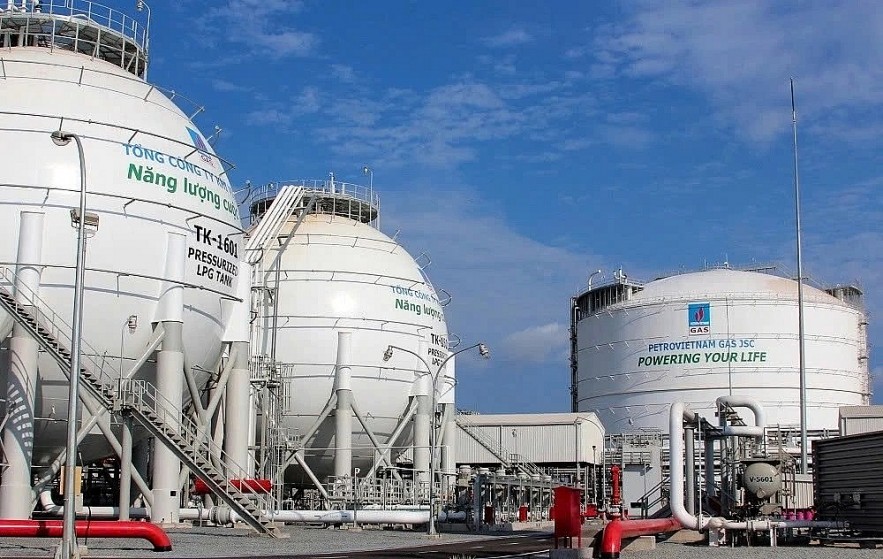 |
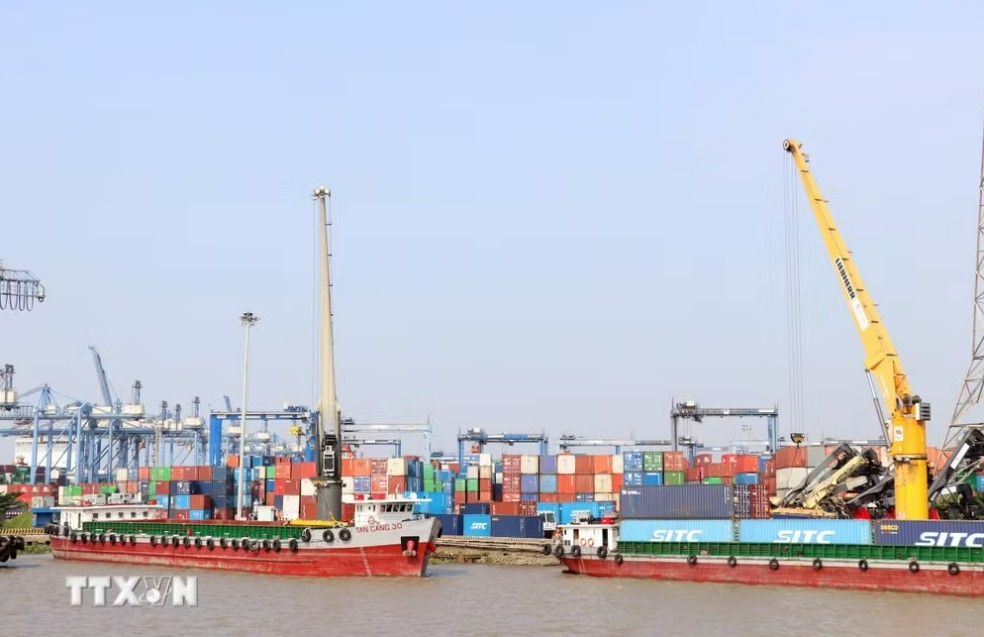
| Vietnam's largest LNG terminal at Thi Vai port in Vung Tau, part of Ho Chi Minh City. |
Vietnam also retains opportunities to develop domestic gas resources through major projects such as Block B, Ca Voi Xanh (Blue Whale), as well as smaller and medium-sized gas fields in the Nam Con Son and Malay–Tho Chu basins.
Major recommendations for domestic LNG market
However, experts cautioned that the LNG market faces multiple challenges, including price volatility linked to global energy trends, supply chain disruptions and geopolitical risks. Policy-related risks, such as electricity and gas pricing mechanisms, offtake arrangements and investment guarantees, remain key concerns.
To address these challenges, the Vietnam Petroleum Association called for improvements to the policy framework, better synchronisation of LNG terminal planning with power plants, transmission networks and large industrial consumers, and streamlined investor selection procedures. The association also advocated for the completion of a competitive electricity market and the introduction of mechanisms allowing private sector participation in power transmission and direct power purchase agreements.
Meanwhile, economist Assoc. Prof. Dr. Ngo Tri Long warned that the natural gas market in Vietnam and ASEAN is at a critical turning point.
“If we move too slowly, we risk missing major opportunities; if we move too fast without clear rules, market distortions could emerge and risks may be transferred to the State and consumers,” he said.
Dr. Long emphasized the need to develop the gas market based on market principles, supported by a modern legal framework, aligned with Net Zero targets and deeper integration with ASEAN and global markets. He proposed placing a Gas Law, or a dedicated gas chapter within an Energy Law, on the medium-term legislative agenda, and clearly separating the roles of the State, enterprises and system operators to enhance transparency and independence.
The forum brought together policymakers, regulators, scientists, energy experts and business leaders to assess the outlook for the CNG, LNG and LPG market in Vietnam and ASEAN, share international experience, and propose solutions to promote a transparent, efficient and sustainable natural gas market in the region.
Vietnam becomes popular end-of-year destination for families in region
Vietnam is becoming an increasingly popular choice for families in the region and beyond, according to a new report from Agoda.
Based on searches made between September and November for stays during December 2025 and January 2026, Agoda recorded a 30% increase in family travel interest to Vietnam compared with the same period last year.
Agoda data shows that the country is attracting more international families than ever this season.
Vu Ngoc Lam, country director at Agoda, said: “It is wonderful to see Vietnam increasingly chosen as an end-of-year holiday destination for families from across Asia and beyond. Agoda’s data shows that travelers are recognising Vietnam’s family-friendly appeal, which further strengthens its position on the global travel map. As more families plan their festive-season or year-end getaways, we are delighted to support them through Agoda’s simple, intuitive platform and our wide range of stays, flights, and activities.”
The Republic of Korea take the lead as the top market interested in traveling to Vietnam in December and January, with families from India, Singapore, Australia, and Malaysia rounding out the top five, VNA reported.
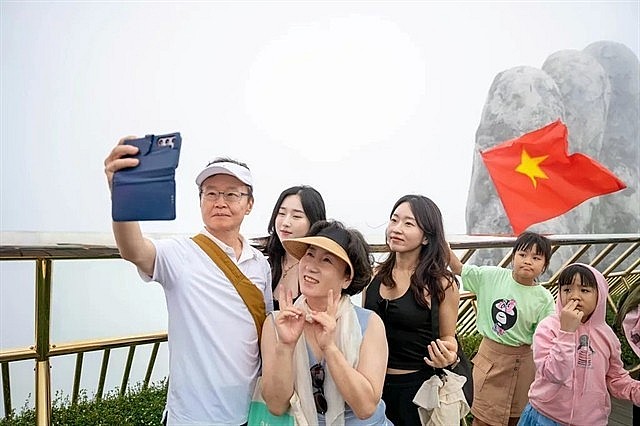 |
| Da Nang is among top choices for families from the Republic of Korea. (Photo: VNA) |
Notably, Agoda reported that Indian families showed the highest growth in travel interest to Vietnam during this period, with a 186% increase in searches. Malaysians are also expressing strong growth in interest, with a 74% increase in searches, highlighting Vietnam’s appeal as a family destination in Southeast Asia and beyond.
Families are choosing Vietnam for its storied culture and cuisine, diverse landscapes, and abundance of family-friendly resorts and attractions, it said.
Phu Quoc Island leads as the most sought-after destination among international family travelers with a 47% increase in searches, popular for its sandy beaches, calm waters, and nature parks ideal for multi-generation vacations.
Da Nang follows with 42% growth in travel interest, noted for its beaches, soft adventure activities, and access to Ba Na Hills theme park. Nha Trang comes in third place, remaining a favourite for its long coastline, family-oriented resorts, and island experiences. In the fourth place, HCM City appeals with its vibrant food scene, entertainment complexes, and day trips to the Mekong Delta.
In the North, Hanoi continues to draw families with its cultural landmarks, museums, and festive atmosphere, rounding out the top five most family-friendly year-end destinations in Vietnam.
Meanwhile, though Vietnamese families traditionally travel less internationally at the end of the year – typically preferring to wait for the Lunar New Year – China is becoming a noticeable exception.
Among the top 20 outbound destinations preferred by Vietnamese families during the December–January period, searches for Shanghai increased 58%, while Beijing increased 59%. This shift is supported by the launch of new direct routes between Hanoi and selected Chinese cities earlier this year, making end-of-year overseas trips more accessible than ever.
 | Vietnam News Today (Dec. 20): Vietnam–Singapore Trade Hits Record High as Re-exports Drive Growth Vietnam News Today (Dec. 20): Vietnam–Laos step up cooperation in procuracy sector; Vietnam–Singapore trade hits record high as re-exports drive growth; Vietnam fulfils key targets ... |
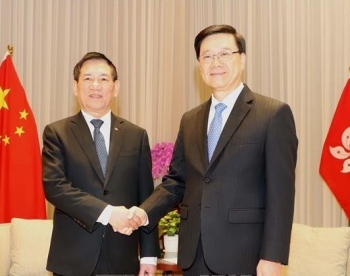 | Vietnam News Today (Dec. 21): Vietnam, Hong Kong Enhance Trade, Finance, Investment Cooperation Vietnam News Today (Dec. 21): Vietnam, Hong Kong enhance trade, finance, investment cooperation; Vietnam, US vow to boost political, security, defense ties at 14th dialogue; ... |