| Vietnam News Today (Feb. 26) notable headlines Vietnam’s foreign affairs in 2025: Seizing opportunities, overcoming challenges Russia backs stronger strategic ties with Vietnam following Party Congress Taiwanese high-tech group chooses Vietnam as Southeast Asia manufacturing hub Vietnam enters decisive EU inspection phase to lift IUU “Yellow Card” Lim festival recognized as national intangible cultural heritage Fireworks becomes Phu Quoc’s new "signature" on global tourism map: Travel + Leisure Prime Minister urges closer ties between Vietnamese, Russian news agencies Vietnam approves implementation plan for Hague Apostille Convention Agricultural exports gain strong early-year momentum |
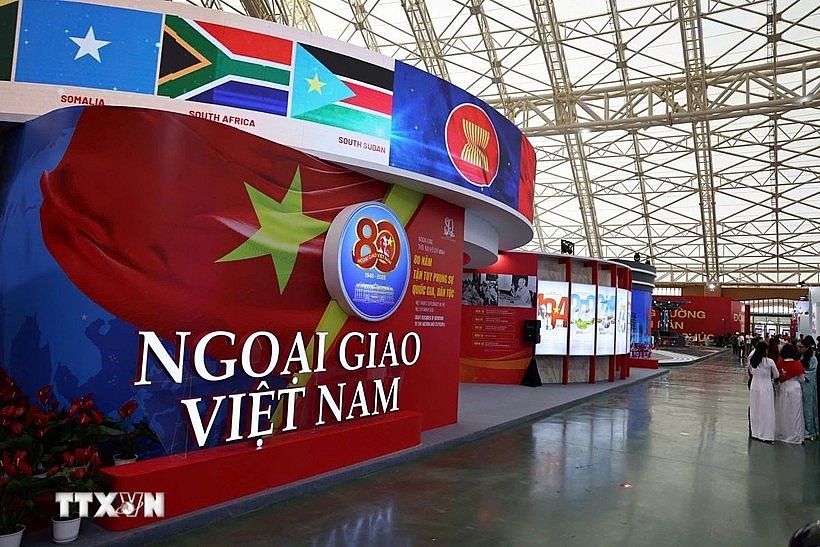 |
| The booth of the Ministry of Foreign Affairs at the exhibition on the country's 80-year achievements. (Photo: VNA) |
Vietnam’s foreign affairs in 2025: Seizing opportunities, overcoming challenges
Vietnam’s foreign affairs in 2025 recorded outcomes of strategic and long-term significance as the country effectively seized opportunities, addressed challenges and helped shape a new external complexion amidst profound global volatility.
Granting an interview to VietnamPlus, Minister of Foreign Affairs Le Hoai Trung said 2025 was one of the most turbulent years in recent history, marked by heightened instability, conflicts in multiple regions and deep shifts described in the 14th National Party Congress documents as “changes of an epochal nature”.
Against that backdrop, he said, foreign affairs efforts in 2025 showed the highest sense of responsibility to realise the strategic tasks of “maintaining a peaceful and stable environment, promoting fast and sustainable socio-economic development, and improving people’s life quality, all for the sake of the people” as underscored by Party General Secretary To Lam.
The official highlighted that a defining achievement of the year was the upgrade and expansion of relations with partners. Vietnam elevated ties with 17 countries, bringing the total number of partners at the comprehensive partnership level or higher to 42. Nearly 350 cooperation agreements were signed, 2.5 times higher than in 2024, reflecting a strong focus on substance and effectiveness. Relations with political parties were also consolidated while people-to-people diplomacy continued to expand in diverse forms.
On the multilateral front, Vietnam further affirmed its sense of responsibility and commitment at a time when multilateral institutions faced mounting challenges. The country made substantive contributions to shaping norms and orientations at international mechanisms. It was commended for actively engaging in peacekeeping operations, search and rescue, energy and food security safeguarding, and governing roles at the UN Human Rights Council and six out of seven UNESCO mechanisms. Vietnam also successfully hosted major multilateral events such as the ASEAN Future Forum, the P4G Summit and the signing ceremony for the UN Convention against Cybercrime, thus reinforcing its role, credibility and organizational capacity, he noted.
Economic diplomacy continued to play a pioneering role, contributing to the realisation of the national growth target of 8%. External economic activities were closely integrated into high-level diplomatic events. As a result, a record number of commitments were achieved, helping expand markets, attract investment and enhance Vietnam’s position in regional and global supply chains, cited VNA.
Science – technology diplomacy emerged as a spearhead, supporting innovation, digital transformation, green transition and the implementation of 11 strategic technology areas, according to Trung.
Foreign affairs also helped strengthen Vietnam’s soft power, he went on, elaborating that cultural diplomacy was deployed in a more methodical and impactful manner, with the successful organization of the UN Day of Vesak celebrations and the UNESCO recognition of seven new more elements in 2025, raising Vietnam’s total to 77. The external relations information work became more proactive, promoting the national image while safeguarding the ideological foundation and national interests.
Citizen protection efforts were carried out promptly in hotspots, enabling thousands of Vietnamese nationals to return home safely. Work related to overseas Vietnamese communities helped foster patriotism and national pride while encouraging remittance inflows that reached a record high and became an important development resource.
The Foreign Minister noted that alongside performing tasks, the diplomatic sector underwent significant apparatus restructuring, reducing 42.5% of units. It assumed duties related to the Party’s foreign affairs and part of the National Assembly’s external relations responsibilities. Many important legal frameworks were also advanced, including the amended laws on international treaties and nationality, as well as National Assembly Resolution 250 on special mechanisms and policies to enhance international integration effectiveness, thereby reinforcing the institutional basis for foreign relations.
Trung emphasized that the 14th National Party Congress’s designation of foreign affairs, alongside national defence and security, as a “key and regular” task reflects a shift in the strategic mindset rooted in Ho Chi Minh Thought on diplomacy. This position underscores foreign affairs as a matter of national survival, prosperity and long-term development. Given this, the diplomatic sector is aware that promoting foreign affairs and international integration is a shared responsibility of the entire Party, people, and armed forces – one of the whole political system, rather than any single institution.
Looking ahead, the minister said that Vietnam’s diplomatic sector will focus on three major orientations – safeguarding peace, stability and national independence, sovereignty, unity and territorial integrity through close coordination with defence and security forces, as well as minsitries, sectors, and localities nationwide; maximising external resources and favorable conditions – particularly through economic and technology diplomacy – to support the realisation of development goals and the two centenary objectives for 2030 and 2045; and helping enhance Vietnam’s international role, stature and credibility so that the country can stand shoulder to shoulder with global powers.
To implement the Politburo’s Resolution 59-NQ/TW on international integration in the new context, four groups of breakthrough solutions will be prioritised. These include shifting the integration thinking from “receiving assistance to making contributions”, from “extensive integration to full integration”, and from “starting late to taking the lead in new areas”.
Other groups of solutions are to draft and issue special mechanisms to boost comprehensive and effective integration into the world in different fields; strengthening coordination among Party diplomacy, State diplomacy and people-to-people diplomacy; and promoting a strong implementation culture that prioritises feasibility, substance and alignment of domestic institutional frameworks with international commitments.
To build a comprehensive, modern and professional diplomatic service, the Ministry of Foreign Affairs will focus on thoroughly grasping the Party and State’s guidelines; building a contingent of capable and moral personnel at place interests of the Fatherland and the people above all else; comprehensively developing the Party diplomacy, State diplomacy and people-to-people diplomacy, along with political, economic and cultural diplomacy, with businesses and citizens at the centre of service delivery.
Cultural diplomacy will continue to be an important pillar in enhancing national soft power. In the coming period, efforts will focus on renewing thinking, launching impactful initiatives, deepening international cultural integration, strengthening digital communication, and developing specialized human resources, particularly for overseas missions.
These orientations, Trung said, aim to ensure that Vietnam’s diplomacy remains proactive, resilient and forward-looking, contributing to national development and firmly positioning the country in the new era.
Russia backs stronger strategic ties with Vietnam following Party Congress
Russia consistently attaches importance to strengthening and deepening the Comprehensive Strategic Partnership with Vietnam for the benefit of both countries and for peace, stability, and sustainable development in the region and the world, said President Vladimir Putin.
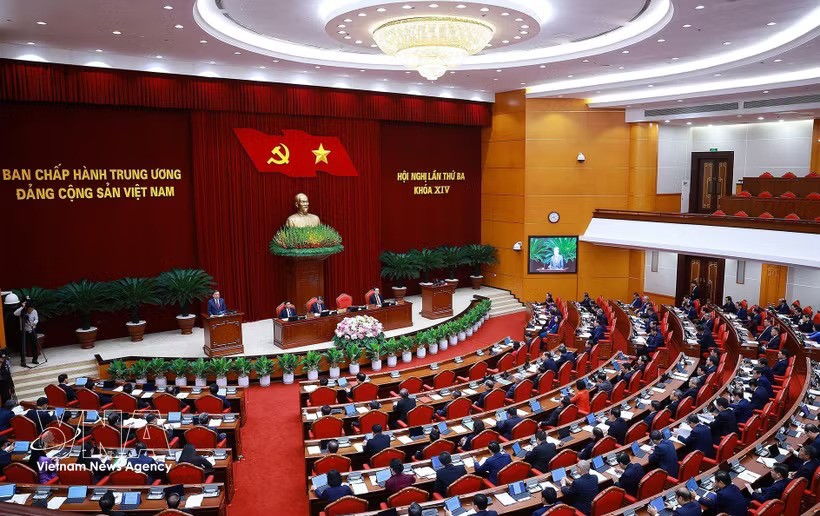
Putin made the statement during his reception in Moscow on February 24 for Le Hoai Trung, Foreign Minister and Special Envoy of Vietnamese Party General Secretary To Lam, who was on a working visit to Russia to convey the outcomes of the recent 14th National Congress of the Communist Party of Vietnam (CPV).
He congratulated the CPV on the success of the 14th National Congress and extended his congratulations to To Lam on his re-election as General Secretary of the CPV Central Committee. He emphasised that the continued trust placed in General Secretary To Lam reflects the strong confidence of the Party and the Vietnamese people.
Putin expressed his confidence that under the leadership of the CPV, headed by General Secretary To Lam, Vietnam would successfully implement its strategic priorities and achieve its development goals in the new era. He also reaffirmed that Vietnam is one of Russia’s key partners in the Asia-Pacific region.
Highlighting the importance of enhancing substantive cooperation, Putin stated that the two countries should further improve the quality and effectiveness of collaboration in traditional pillars such as energy, oil and gas, and military-technical cooperation, while expanding cooperation into nuclear energy, science and technology, transport, and other promising sectors.
He noted his readiness to maintain regular strategic exchanges with General Secretary To Lam and hoped to welcome the Vietnamese leader to Russia in the near future.
For his part, Trung conveyed a message from General Secretary To Lam, underscoring that the 14th National Congress marked a significant historical milestone, comprehensively reviewing 40 years of Đổi mới (Renewal) and setting out major orientations and strategic breakthroughs for Vietnam’s development in a new era.
He reaffirmed that Vietnam is committed to building a peaceful, independent, democratic, prosperous, civilised, and happy socialist country, and expressed confidence that Russia would continue to be a reliable and steadfast partner accompanying Vietnam in its development journey, according to VOV.
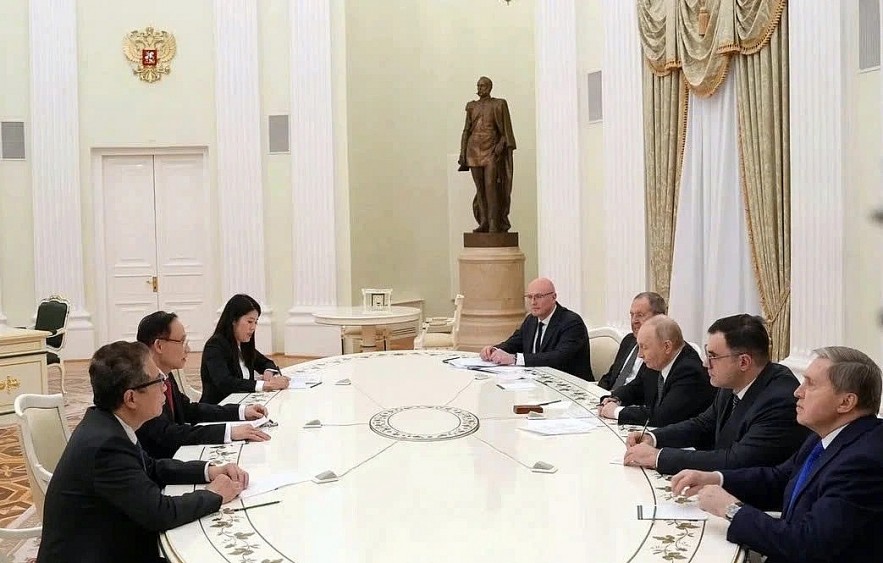 |
| Russian President Vladimir Putin receives Le Hoai Trung, Foreign Minister and Special Envoy of Vietnamese Party General Secretary To Lam, in Moscow on February 24. (Photo: MOFA) |
The diplomat also conveyed General Secretary To Lam’s invitation to President Putin to visit Vietnam. President Putin thanked him for the invitation and gladly accepted.
Earlier the same day, Minister Le Hoai Trung held talks with his Russian counterpart Sergey Lavrov. In a cordial and trusting atmosphere, the two sides discussed Vietnam’s foreign policy orientations following the 14th Party Congress, which for the first time identified foreign affairs and international integration as regular and key tasks.
Lavrov maintained that Vietnam remains a priority partner in Russia’s Asia-Pacific foreign policy. The two sides reviewed bilateral cooperation, including coordination between their foreign ministries, and agreed on measures to further strengthen their role in promoting and deepening ties. They also exchanged views on regional and international issues of mutual concern.
Taiwanese high-tech group chooses Vietnam as Southeast Asia manufacturing hub
UNIVACCO Technology Inc., a high-tech company headquartered in Tainan (Taiwan, China), has leased 29,742.4 sq.m of industrial land at Long Thanh Industrial Park in the southern province of Dong Nai, officially designating Vietnam as its strategic manufacturing base in Southeast Asia.
Founded in 1990, UNIVACCO specializes in vacuum metallised films and surface-coating technologies serving printing, packaging and advanced materials industries. Its flagship products, including hot-stamping foil, cold-stamping foil and functional vacuum-coated films, are widely distributed across the Americas, Europe and Asia.
The nearly three-hectare lease in Dong Nai reflects a selective relocation trend among high-tech manufacturers, with Vietnam emerging as a preferred destination thanks to its stable manufacturing base, competitive costs and deepening integration into global supply chains.
Under its plan, UNIVACCO’s Vietnam project will be developed to global manufacturing standards, integrating advanced technologies, optimising logistics and strengthening market responsiveness, particularly in premium packaging, digital applications and environmentally friendly materials, according to VNA.
According to UNIVACCO CEO Bruce, Vietnam was chosen as the company’s overseas production base to capitalise on favorable international tariff policies and the country’s cost competitiveness.
Data from Savills Vietnam show that in 2025, Dong Nai attracted over 2.7 billion USD in FDI, exceeding 144% of its annual target. The province currently hosts more than 2,200 valid FDI projects with total registered capital surpassing 42 billion USD. In 2026, Dong Nai is expected to continue drawing fresh investment into high-tech manufacturing, logistics and financial services, driven by major infrastructure projects such as Long Thanh International Airport and Phuoc An Port, alongside administrative reform and digital transformation.
Phan Cuu Chi, Manager of Industrial Real Estate Services at Savills Ho Chi Minh City, noted that high-tech FDI into Vietnam is shifting from opportunistic moves to long-term strategic commitments. “Investors like UNIVACCO are not merely seeking production sites; they are choosing Vietnam as an integrated platform for sustained manufacturing and innovation,” she said.
Meanwhile, Sonadezi Long Thanh, the park’s developer, said the 488-ha industrial park features synchronised technical infrastructure, completed internal transport networks, and power, water and wastewater treatment systems meeting the requirements of high-tech projects.
This project reflects our strategy to attract high-quality, technology-oriented manufacturers that create long-term value for the industrial ecosystem, a Sonadezi Long Thanh representative said.
In the transaction, Savills Vietnam acted as exclusive adviser, providing end-to-end support from site selection and negotiation to deal completion, while continuing to accompany UNIVACCO and Sonadezi Long Thanh during project implementation.
Vietnam enters decisive EU inspection phase to lift IUU “Yellow Card”
The Prime Minister has requested relevant ministries, agencies and coastal localities to take urgent and coordinated action to address outstanding shortcomings and secure the removal of the European Union’s “yellow card” warning on Vietnamese seafood exports.
The PM made the request in an official dispatch dated February 25, as a delegation from the European Commission (EC) prepares for its fifth review of the country’s efforts to combat illegal, unreported and unregulated (IUU) fishing.
The upcoming EC inspection, expected in early March, could determine whether the EU lifts the warning or escalates measures. The inspection is widely seen as a critical milestone after nearly eight years since the warning was first imposed.
The Prime Minister acknowledged progress made by ministries, enforcement forces and fishing communities in aligning Vietnam’s fisheries management framework with EU recommendations. However, he reminded that violations persist, including fishing vessels operating without meeting required conditions and cases of encroachment into foreign waters, while some violations have not been fully addressed.
The government leader instructed relevant agencies to intensify enforcement efforts, strictly manage fishing fleets, strengthen monitoring and surveillance systems, and ensure full traceability of seafood products from catch to export. Officials have also been directed to prepare comprehensive documentation and technical evidence for the EC inspection team.
Particular emphasis has been placed on preventing vessels from operating without proper authorisation and ensuring that vessel monitoring systems (VMS) function effectively and consistently. Authorities are also required to handle violations decisively and improve coordination among central and local agencies.
The directive underscores the responsibility of the ministers and provincial leaders, especially in coastal provinces with significant fishing and seafood export activities, to personally oversee implementation and ensure measurable results, reported VOV.
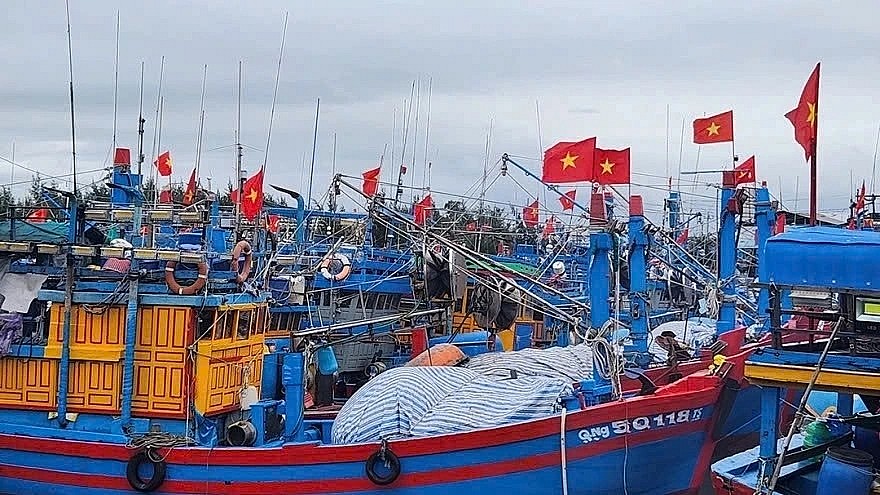 |
| Fishermen from the Mekong Delta province of Dong Thap commit to zero IUU violations on every fishing trip. |
The European Commission issued a “yellow card” warning to Vietnam in October 2017 over illegal, unreported and unregulated (IUU) fishing. It has since then conducted several inspection missions and has maintained the warning, urging Vietnam to strengthen its legal framework, tighten fleet management, improve traceability systems and enhance law enforcement.
Vietnam views the removal of the “yellow card” not only as a trade objective but as part of broader efforts to reform fisheries governance, strengthen compliance with international standards, and promote sustainable development of the seafood sector.
The outcome of the EC’s fifth inspection is expected to play a decisive role in shaping the future of Vietnam’s seafood exports to the European Union, one of its key markets.
Lim festival recognized as national intangible cultural heritage
Tien Du announces the Spring 2026 Lim Festival alongside the ceremony to receive national intangible cultural heritage status, featuring solemn rituals and vibrant folk activities.
According to the plan, the Spring 2026 Lim Festival will take place over two days, February 28 and March 1, corresponding to the 12th and 13th days of the first lunar month. The festival space spans villages of the former Noi Due area, now Tien Du commune, including Due Dong, Due Nam, Due Khanh, Dinh Ca, Lung Giang, Lung Son and Lo Bao. The heart of the celebration is Hong Van mountain, also known as Lim mountain, and Van Tuong Lake.
The ceremonial section will be conducted solemnly in accordance with traditional rituals, featuring the incense offering ceremony to open the festival at Hong An pagoda; a commemorative ceremony at the mausoleum of General Nguyen Dinh Dien; the procession of royal decrees; and traditional rites at the system of communal houses, temples and pagodas in the area.
The festive section will unfold vibrantly, imbued with cultural identity, with Quan ho folk singing sessions at 12 pavilions, the central stage, traditional Quan ho houses, artisans’ homes and boat singing on Van Tuong Lake. A variety of cultural and sporting activities will also be held, including human chess, bamboo swings, blindfolded goat catching, poetry gatherings, calligraphy, culinary showcases and art exchange programs.
A highlight of this year’s Lim Festival is the ceremony to receive the National Intangible Cultural Heritage title, which will be held at the center of Hong Van mountain. On the evening of the 12th day of the first lunar month, a special art program will take place on the main stage atop Lim mountain, followed by a low-altitude fireworks display at 9pm over Van Tuong Lake.
In addition, from February 26 to March 1, traditional and freestyle wrestling competitions across various age groups will be organized within the framework of the first Bac Ninh Provincial Sports Festival and an open tournament hosted by the Department of Culture, Sports and Tourism, attracting hundreds of athletes.
At the briefing, Duong Minh Ngoc, Vice Chairman of the People’s Committee of Tien Du commune and Deputy Head of the Steering Committee for the Spring 2026 Lim Festival, provided further details on preparations and expressed hope that media agencies would continue to promote the distinctive traditional cultural values of the Lim Festival in particular and the culture of Tien Du and Kinh Bac more broadly.
He emphasized that the Spring 2026 Lim Festival aims to honor and spread the cultural legacy of the Kinh Bac land and its people, especially the intangible cultural heritage of Quan ho Bac Ninh folk singing recognized by UNESCO. The event also serves as an opportunity to promote the image of Tien Du and foster a vibrant spirit of emulation among residents, contributing to the successful realization of local socio-economic development goals, cited VNN.
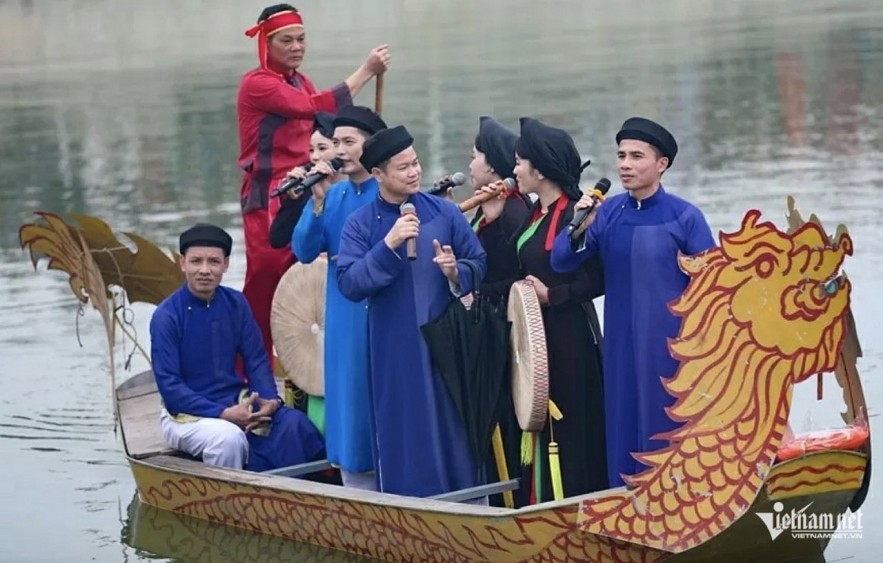 |
| Quan ho male and female singers perform traditional love duets at the Lim Festival. |
The organizing committee stated that ensuring public security, traffic safety and service management will be given special attention. Parking fees at designated areas serving visitors will be publicly listed in accordance with regulations to ensure transparency and convenience for residents and tourists.
A hotline number will also be made public to promptly receive and handle feedback and recommendations from residents and visitors throughout the festival. The hotline information will be posted at central areas, parking sites, the main stage and other crowded locations to ensure all feedback is quickly addressed, helping to build a civilized, safe and friendly festival environment.
 | Vietnam News Today (Feb. 21): Vietnam, US Step Up Dialogue to Facilitate Trade Ties Vietnam News Today (Feb. 21): Vietnam, US step up dialogue to facilitate trade ties; Dutch Ambassador admires Vietnam’s economic performance; Vietnam officially becomes IEA associate ... |
 | Vietnam News Today (Feb. 22): Vietnamese FM Meets Counterparts of UAE, Egypt and Türkiye Vietnam News Today (Feb. 22): Vietnam and US vow to deepen Comprehensive Strategic Partnership; Vietnamese FM meets counterparts of UAE, Egypt and Türkiye; Vietnam eyes ... |