Vietnam supports global efforts for energy efficiency at IEA conference
Vietnam is among the countries participating in the 11th Annual Global Conference on Energy Efficiency hosted by the International Energy Agency (IAE) in Montreal, Canada, and has joined consensus on the Montreal Declaration on energy efficiency.
Through the declaration, Vietnam and the international community reaffirmed the principle that energy efficiency should be a top priority and backed the goal of doubling the global rate of energy efficiency improvement by 2030.
Organized in late June, this year’s conference gathered more than 600 delegates, including dozens of ministers and senior officials from more than 40 governments, along with over 70 leaders from major global energy, finance and technology companies. It also marked the first time the IEA’s annual energy efficiency conference was held in North America.
The conference took place as global energy markets saw continued sharp fluctuations due to conflict in the Middle East and disruptions to shipping through the Strait of Hormuz, a key route for oil, liquefied natural gas and other essential energy commodities.
In this context, participating countries agreed that improving energy efficiency is one of the fastest and most cost-effective solutions to help lower energy bills for households and businesses while strengthening national energy security.
The message that energy efficiency should be a top priority was also central to the Montreal Declaration, also known as the Montreal Action Plan, released at the close of the conference.
The declaration reiterated the goal of doubling the global average annual rate of energy efficiency improvements by 2030, a target previously agreed at COP28 in 2023.
Ministerial discussions focused on two main priorities: protecting vulnerable groups such as low-income households and small and medium-sized enterprises from energy price shocks, and strengthening long-term resilience through building retrofits, higher equipment standards, electrification, grid modernisation and greater private investment in energy-saving projects.
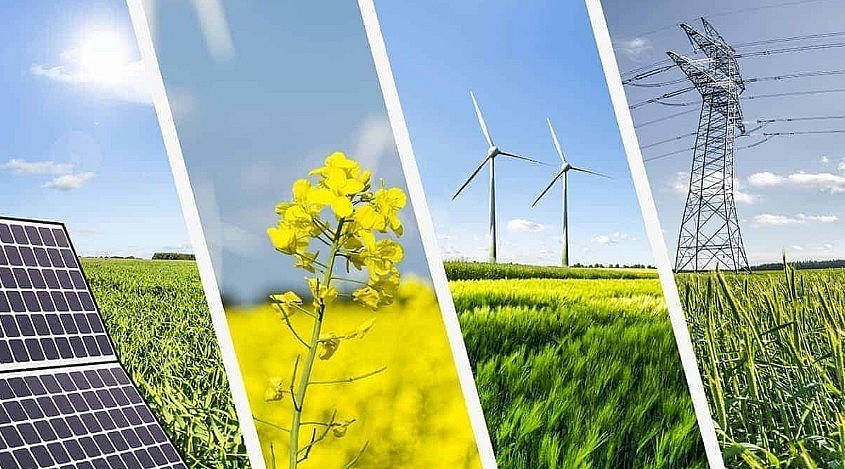
At thematic sessions, energy efficiency was also linked to industrial competitiveness. Businesses and financial institutions said many energy-saving solutions are already available, ranging from high-efficiency equipment and motor drives to building standards, energy consumption data and smart grids. They said stable, transparent and predictable policy frameworks are essential to encourage investment, reported VOV.
 |
| Photo: VOV |
A key topic at this year’s conference was the link between energy efficiency, artificial intelligence (AI), data centres and rising electricity demand. Global electricity demand is increasing rapidly due to the electrification of transport, heating and industry, alongside the rapid expansion of AI and digital infrastructure. Participating countries noted that without greater efficiency in electricity use, new demand from data centres and high-tech sectors could place great pressure on power systems.
For Canada, hosting the conference provided an opportunity to reinforce its role as a reliable energy partner. Canada also stressed that energy efficiency is an important part of its clean energy strategy, green industrial development and efforts to improve productivity.
For Vietnam, joining consensus on the declaration carries important significance as domestic electricity demand continues to rise alongside industrialisation, urbanisation and digital transformation.
Issues discussed at the conference, including higher equipment efficiency standards, building retrofits, support for small and medium-sized enterprises, demand-side management, energy data development and preparations for electricity demand from data centres, are all areas of interest for Vietnam as it works to ensure energy security and fulfil its green transition commitments.
In addition, joining the declaration opens the way for Vietnam to continue monitoring and exploring opportunities for deeper participation in the IEA’s multilateral cooperation mechanisms on energy efficiency.
This could serve as a useful channel for Vietnam to access data, policy experience, technical tools and public-private partnership models in energy-saving initiatives.
The conference took place as global energy markets remained highly volatile due to conflict in the Middle East and disruptions to shipping through the Strait of Hormuz, a key route for oil, liquefied natural gas and other essential energy commodities.
Vietnam's GDP grows 8.18% in first half of 2026
Vietnam's economy maintained solid growth momentum in the first half of 2026, with gross domestic product (GDP) expanding by 8.18%, while average inflation, measured by the consumer price index (CPI), rose 4.38%.
GDP rises 8.18% as trade approaches US$550 billion
Speaking at a press conference announcing Vietnam's socio-economic performance for the second quarter of 2026 on July 3, Nguyen Thi Huong, Director General of the Statistics Office under the Ministry of Finance, said GDP in the second quarter was estimated to have increased by 8.39% compared with the same period last year.
For the first six months of the year, GDP grew by 8.18%, exceeding the 7.63% growth recorded in the same period of 2025.
The agriculture, forestry and fisheries sector maintained stable growth, meeting domestic consumption demand while benefiting from expanding export markets for agricultural products. Value added in agriculture increased by 3.57% year-on-year.
In the industry and construction sector, industrial production continued its positive momentum as growth drivers strengthened, export orders recovered and public investment generated broader spillover effects. Total industrial value added rose by 9.86%, contributing 40.35% to the economy's overall value-added growth.
The services sector also delivered encouraging results as trade, transportation and tourism expanded on the back of strong consumer demand and increased mobility. Value added in services increased by 8.09% compared with a year earlier.
According to the Statistics Office, Vietnam's total import-export turnover reached US$549.69 billion in the first six months of the year, up 27.1% year-on-year. Exports rose 21%, while imports increased by 33.4%.
The faster growth in imports than exports reflects expanding demand for production inputs and a strong recovery in manufacturing activities, particularly among foreign-invested enterprises. As imports outpaced exports, Vietnam recorded a trade deficit of US$16.65 billion.
The United States remained Vietnam's largest export market, with exports reaching US$86.5 billion, while China continued to be the country's largest source of imports at US$115.2 billion.
Huong said the 8.18% GDP growth achieved in the first half of 2026 represented a positive outcome and provided an important foundation for meeting the country's annual development targets, VNN reported.
However, she noted that significant challenges remain. As a highly open economy, Vietnam will continue to be affected by uncertainties in the global economy and geopolitics, as well as disease outbreaks and natural disasters. Achieving double-digit growth in 2026 will therefore require coordinated efforts from the entire political system, the Government, businesses, the public and continued support from international partners.
She said ministries, sectors and local authorities should proactively monitor developments and improve forecasting to ensure flexible policymaking and timely responses to emerging risks, while remaining committed to promoting growth alongside macroeconomic stability, inflation control, social welfare and improvements in people's living standards.
At the same time, Vietnam should maintain major economic balances, closely monitor global economic and political developments, regularly update growth and inflation scenarios, manage fuel prices flexibly and avoid simultaneous price adjustments for state-managed goods and services in order to ease inflationary pressure.
Average CPI rises 4.38%, core inflation at 4.12%
The Statistics Office reported that average CPI in the second quarter increased by 5.25% compared with the same period last year. For the first six months of 2026, average CPI rose by 4.38%.
The increase was mainly driven by a 4.79% rise in food and catering services prices and a 6.72% increase in housing, electricity, water and construction material costs, together contributing 1.53 percentage points to overall inflation.
Transportation prices increased by 5.23%, adding 0.52 percentage points to CPI growth, including an 8.9% increase in fuel prices.
Education prices rose by 3.3% as some private schools and vocational education institutions adjusted tuition fees for the 2025–2026 academic year.
Prices for household equipment and appliances increased by 2.63%, while culture, entertainment and tourism services rose by 2.4%. Clothing, hats and footwear prices increased by 1.96%, and beverages and tobacco prices rose by 3.52%.
Core inflation averaged 4.12% during the first half of 2026, lower than the headline CPI increase of 4.38%. The Statistics Office attributed the difference mainly to sharp fluctuations in fuel, gas and food prices, which affect headline inflation but are excluded from the calculation of core inflation.
Among other price indicators, the average gold price index rose by 36.84% in the second quarter and by 58.12% during the first six months of the year compared with the same periods of 2025.
Meanwhile, the average US dollar price index increased by 0.93% in the second quarter and by 1.75% during the first half of the year.
 | Vietnam News Today (Jun. 29): Vietnam Joins World's Top 30 Most Competitive Economies Vietnam News Today (Jun. 29): Vietnam, Singapore eye stronger cooperation to build ASEAN Halal value chain; Vietnam joins world's top 30 most competitive economies, eyes ... |
 | Vietnam News Today (Jun. 30): Government chief pushes for breakthroughs in Vietnam-Australia relations; Vietnam wishes to elevate ties with Canada to new level; Vietnam, RoK ... |